
TL;DR:
- Choosing the right social media platforms aligned with your audience and content capacity is essential.
- Focusing on one or two platforms with consistent, strategic effort yields better results than spreading thin.
- Measuring success through industry benchmarks and aligning metrics with business goals guides effective social media use.
Most small business owners know they need to be on social media, but that’s where the clarity often ends. With dozens of platforms competing for your attention and budget, choosing the wrong ones wastes time, money, and energy your business can’t afford to lose. Research shows that SMBs rely heavily on social media for growth, yet a large share still struggle to figure out which platforms actually fit their business. This guide breaks down the key differences between the major platforms so you can stop guessing and start marketing with purpose.
Table of Contents
- Why platform choice matters for SMB marketing
- Comparing the major social platforms for business use
- Key differences in platform features and engagement
- How to measure success across different platforms
- Tips for choosing the right mix and avoiding common pitfalls
- Why the “be everywhere” strategy holds SMBs back
- Set your SMB up for social media success
- Frequently asked questions
Key Takeaways
| Point | Details |
|---|---|
| Platform choice impacts results | Selecting the right social channels drives better engagement and reduces wasted effort. |
| Consider features and workload | Match platform features to your business goals and your team’s ability to consistently create content. |
| Focus then expand | Start strong on 1-2 platforms before adding more to avoid burnout and ensure quality. |
| Benchmark for clarity | Track key metrics and compare your results to industry averages for smart decision making. |
Why platform choice matters for SMB marketing
There’s a strong case for investing in social media. Over three-quarters of SMBs agree that social media positively impacts their business performance. That’s a powerful signal. But here’s where it gets complicated: being present on the wrong platforms, or spreading yourself too thin across too many of them, can actually work against you.
“The platforms you choose don’t just determine your audience. They determine your workload, your content strategy, and ultimately whether your marketing is sustainable.”
The biggest mistake SMBs make is treating all social platforms as interchangeable. They’re not. Each one has its own algorithm priorities, content formats, and user expectations. A plumbing business posting polished product photography on Instagram will struggle just as much as a fashion boutique trying to build a LinkedIn following. The platform must match both the business and the content you can realistically produce.
There’s a practical reason this matters so much. Keeping content fresh and up to date across multiple platforms creates real content and strategic challenges for most SMBs. When you’re managing content on three or four platforms simultaneously, quality drops fast. Posts become infrequent. Engagement falls. And you end up with a scattered presence that fails to build momentum anywhere.
Understanding the role of social media in your specific business model is the first step. Before you post anything, you need to know which platforms your ideal customers actually use, and which content formats you can produce consistently without burning out your team.
Here are the core questions to ask before picking your platforms:
- Who is your target customer, and which platforms do they spend time on?
- What content formats can you realistically produce? (video, photos, text, live sessions)
- How much time can you dedicate weekly to content creation and engagement?
- What business goals are you trying to achieve? (brand awareness, leads, sales, community)
These four questions alone will eliminate half the platforms from your list. Knowing this upfront is one of the smartest marketing tips for SMBs you can apply before spending a dollar on ads.
Pro Tip: Start with one platform where you can actually commit to posting three to five times per week. Consistency beats volume every single time.
Comparing the major social platforms for business use
Let’s get specific. Research shows that 82% of SMBs use Facebook, 71% use Instagram, 69% use YouTube, and 58% use TikTok. But usage doesn’t equal results. Here’s a breakdown of what each platform actually offers, and which businesses tend to benefit most from each.

| Platform | Best for | Audience | Content type | Algorithm priority |
|---|---|---|---|---|
| Local services, retail, events | 25 to 55+ age range | Mixed: text, images, video, links | Relationship and group content | |
| Visual brands, hospitality, fashion | 18 to 40 age range | Photos, Reels, Stories | Reels and saves | |
| YouTube | Education, how-to, service businesses | All ages | Long and short video | Watch time and subscriber growth |
| TikTok | Product demos, entertainment brands | 16 to 35 age range | Short-form vertical video | Rapid virality, discovery |
| B2B, professional services, consulting | 25 to 55+ professionals | Articles, posts, case studies | Thought leadership and connections |
Understanding social media marketing basics helps clarify what each platform is truly built for. Facebook remains the most versatile for local businesses because it supports community building through Groups, has the most robust local advertising tools, and reaches a wide age range. A local restaurant can use Facebook to promote events, run targeted ads to nearby residents, and engage regulars in a community group all at once.
Instagram works best when your product or service is inherently visual. Hair salons, interior designers, food businesses, and clothing retailers thrive here because they can let imagery do the selling. The key is Reels. Instagram’s algorithm heavily favors short video content right now, which means even photo-focused businesses need to incorporate video to stay visible.
YouTube rewards businesses willing to create educational content. A home renovation company that posts detailed project walkthroughs will build trust with potential customers long before those customers ever pick up the phone. YouTube videos also appear in Google search results, giving your content a longer shelf life than any other platform.
TikTok is often dismissed by more traditional SMBs, and that’s actually an opportunity. Less competition in your niche combined with TikTok’s powerful discovery algorithm means new businesses can build a following surprisingly fast. But it requires comfort with casual, often unpolished video content. Overly produced TikTok content tends to underperform.
LinkedIn is the clear winner for B2B businesses, professional services, and anyone selling to corporate clients. If your customers are other businesses or decision-makers, LinkedIn gives you direct access to them in a professional mindset that no other platform replicates.
Key differences in platform features and engagement
Beyond audience demographics, each platform has distinct features that directly shape how you market your business and what results you can expect.
Here’s a practical overview of the major operational differences:
- Facebook Groups: Building a community around your brand or service creates repeat touchpoints with potential buyers. Groups can dramatically extend your organic reach when managed well.
- Instagram Stories: Stories disappear after 24 hours, making them ideal for time-sensitive offers, behind-the-scenes content, and quick polls that boost engagement without requiring polished production.
- YouTube Shorts vs. long-form video: Long-form video builds trust and ranks in search. Shorts accelerate discovery. Most effective YouTube strategies use both.
- TikTok’s For You Page: Unlike other platforms where followers drive reach, TikTok pushes content to new users based on interests. This makes it possible to go viral with zero existing audience.
- LinkedIn Articles and newsletters: LinkedIn lets you publish long-form content directly on the platform, which is great for establishing authority if you serve a professional market.
One of the most common mistakes is managing every platform the same way. Each platform’s users have very different expectations for post frequency, content tone, and engagement style. Keeping content fresh across all of them is a challenge that 54% of SMBs actively struggle with.
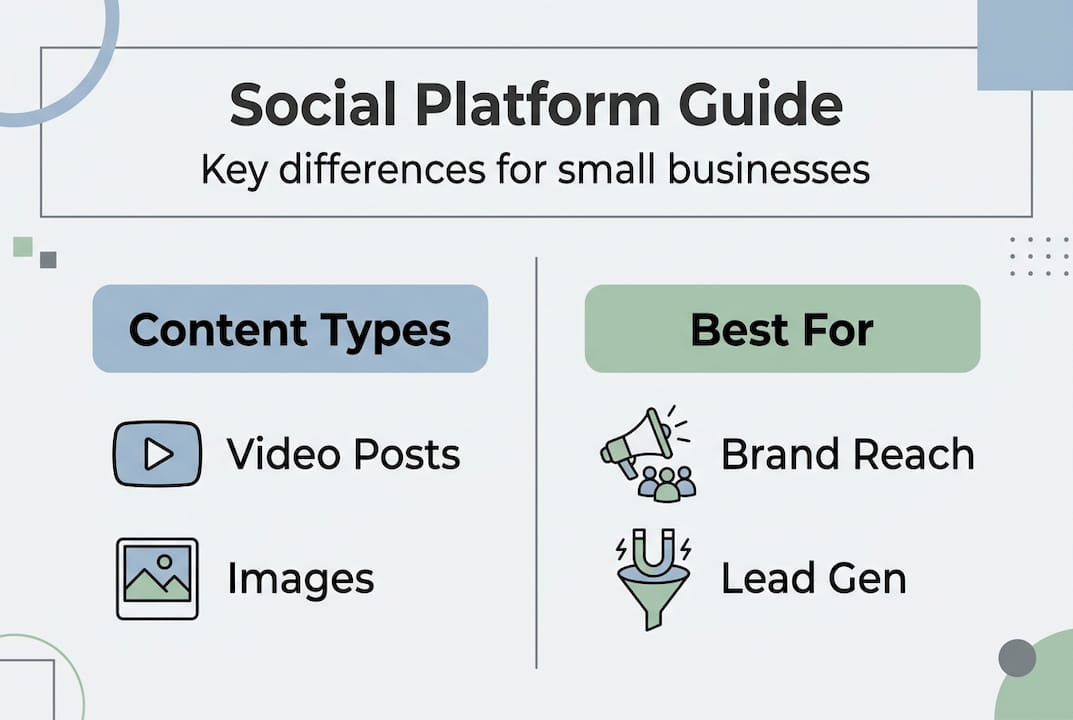
According to Hootsuite’s platform benchmarks, SMBs should focus on tracking engagement, reach, audience growth, clicks, and video plays, but benchmark those numbers against industry averages for each platform specifically. An engagement rate of 1% on Facebook might be solid, while the same rate on Instagram for a product-based business could signal underperformance.
Good social media management basics for SMBs include batching content creation, using scheduling tools, and setting platform-specific goals rather than applying one blanket strategy everywhere. Investing in the right social management tools can reduce your weekly workload significantly, making multi-platform management genuinely sustainable.
Pro Tip: Repurpose content across platforms rather than creating unique content for each. A YouTube video can become a TikTok, an Instagram Reel, and a LinkedIn post with minimal extra effort.
How to measure success across different platforms
Knowing which metrics to track is just as important as knowing which platforms to use. Without clear measurement, you’re flying blind. In 2026, measuring platform performance should focus on comparable metrics and benchmarking against industry averages so your numbers actually mean something.
Follow this process to set up meaningful performance tracking:
- Define your goal per platform. Are you building brand awareness, generating leads, or driving website traffic? Your goal determines which metrics matter most.
- Identify your key metrics. For awareness, focus on reach and impressions. For engagement, track likes, comments, shares, and saves. For conversions, track clicks and link traffic.
- Record your baseline. Before you optimize anything, document where you are right now. A baseline gives you something real to measure improvement against.
- Benchmark against your industry. General benchmarks vary widely by sector. A 3% engagement rate is excellent for a B2B LinkedIn page but modest for a consumer Instagram account.
- Review monthly, adjust quarterly. Monthly reviews help you spot trends. Quarterly adjustments let you make strategic changes without overreacting to short-term fluctuations.
- Consolidate reporting. Use a single dashboard or spreadsheet that pulls data from all your active platforms so you can see the full picture side by side.
Stat callout: 54% of SMBs say keeping content fresh and tracking results across multiple channels is one of their top operational challenges.
Tracking digital marketing ROI becomes much easier when you standardize your measurement process across platforms. You want to be able to say “Instagram is driving three times more website clicks than Facebook for us” rather than just “Instagram seems to be doing well.” That kind of specific insight is what helps you reallocate time and budget with confidence. Pair your platform analytics with a broader tracking marketing success framework so your social data connects to real business outcomes like leads and revenue.
Tips for choosing the right mix and avoiding common pitfalls
73% of SMBs plan to expand their social presence in the next year, yet many haven’t solved the content and management challenges they already face on their current platforms. Expanding before you’ve stabilized your existing presence is one of the most common and costly mistakes in SMB social media marketing.
Here’s how to build a smart, sustainable platform mix:
- Start with one or two platforms. Pick based on where your customers spend time, not where you personally feel comfortable. Master those before adding more.
- Match your content capacity to your platform choice. If you can’t produce video consistently, don’t build your strategy around TikTok or YouTube as your primary channels.
- Don’t default to what’s popular. TikTok might be the hot platform right now, but if your customers are 45-plus business owners, LinkedIn or Facebook will serve you far better.
- Build a content calendar. Even a simple monthly plan prevents the scramble that causes inconsistent posting and content that feels rushed.
- Evaluate every six months. Business goals change. Your audience evolves. The platform landscape shifts. Build in regular reviews to make sure your platform mix still makes sense.
- Look for repurposing opportunities. Content that works on one platform can often be adapted for another with small changes, reducing your total content production load significantly.
When you’re ready to think about choosing marketing channels, the process should feel like a strategic decision based on data, not a gut feeling driven by what competitors seem to be doing.
Pro Tip: Audit your existing content every quarter. Identify your three highest-performing posts on each platform and ask yourself why they worked. Use those patterns to guide your next batch of content.
Why the “be everywhere” strategy holds SMBs back
Here’s an uncomfortable truth that most social media advice won’t tell you: trying to be on every platform is one of the fastest ways to fail at all of them.
The conventional wisdom says more platforms equal more visibility, which equals more customers. Sounds logical. But in practice, content and strategic challenges multiply faster than results when you spread your effort across too many channels simultaneously. What you end up with is a Facebook page that posts once a month, an Instagram that hasn’t been updated since a staff member left, and a TikTok account with three videos from six months ago. That doesn’t build credibility. It actually damages it.
When a potential customer finds your stale or inactive profiles, the signal they receive isn’t “this business is everywhere.” It’s “this business can’t follow through.” That perception is hard to undo.
We’ve seen this pattern repeatedly with SMBs who come to us after trying to manage five platforms with a team of two. They’re exhausted, their content quality is low, their engagement is minimal, and they’ve convinced themselves that social media just doesn’t work for them. It does work. They just diluted their effort past the point of effectiveness.
The smarter strategy is almost always narrower than business owners expect. Pick one or two platforms where your specific customers are active and where your content style fits naturally. Execute consistently there for three to six months. Build real engagement, learn what your audience responds to, and get your systems in place before even thinking about expansion.
Explore practical social media tips that prioritize sustainability over volume. The businesses that win on social media long-term aren’t the ones doing the most. They’re the ones doing the right things, repeatedly and well.
Set your SMB up for social media success
You now have a clear picture of how the major social platforms differ and how to build a strategy that actually fits your business. The next step is putting that knowledge into action without having to figure it all out alone.
At ibrand.media, we help small and medium-sized businesses take the guesswork out of social media marketing. Whether you’re deciding which platforms to focus on, need help creating consistent content, or want expert oversight of your full strategy, we build personalized plans around your goals and budget. Explore the benefits of social media management and see how professional support can multiply your results, or compare the best social media management tools to find the right fit for your team’s needs.
Frequently asked questions
Which social media platform is best for small businesses in 2026?
The best platform depends on your audience and content style, but Facebook and Instagram are the most widely used, with 82% of SMBs on Facebook and 71% on Instagram, while TikTok and YouTube are growing fast for visual-first brands.
How do I measure if my social media is working?
Track engagement, reach, audience growth, and clicks, and benchmark against industry averages for each platform to understand whether your results are actually strong or just average.
Why is it hard to keep up with multiple platforms?
Each platform demands unique content formats and frequent updates, and 54% of SMBs report struggling to keep content fresh across all of them due to limited time and resources.
Should I use every social platform available?
No. Most SMBs get significantly better results by focusing on one or two platforms, since content and strategic challenges compound quickly when you try to maintain an active presence across every available channel.
Recent Comments