
Most American small business owners underestimate how much the right marketing channels can impact their growth. Nearly 50 percent of new businesses fail within five years, often because they miss key details about reaching their ideal customer. Understanding your true target audience and making smart choices about where to invest can make all the difference. In this guide, you will get clear steps to refine your strategy, stretch your budget, and see better results fast.
Table of Contents
- Step 1: Identify Your Target Audience Needs
- Step 2: Assess Available Marketing Channel Options
- Step 3: Align Channels With Your Budget and Goals
- Step 4: Test Selected Channels With Real Campaigns
- Step 5: Measure Results and Refine Your Strategy
Quick Summary
| Key Point | Explanation |
|---|---|
| 1. Understand Your Audience’s Needs | Create detailed customer profiles including demographics, pain points, and preferences to tailor marketing strategies. |
| 2. Choose the Right Marketing Channels | Evaluate different marketing avenues and select 2-3 channels where your target audience is most engaged. |
| 3. Align Your Budget with Goals | Establish measurable marketing goals and maintain flexibility in your budget for unexpected opportunities. |
| 4. Test Channels with Small Campaigns | Run small experiments on selected channels to gauge effectiveness without significant financial risk. |
| 5. Measure and Refine Your Strategy | Continuously track performance metrics and be ready to adjust your investment based on data-driven insights. |
Step 1: Identify your target audience needs
Knowing exactly who wants your product or service sounds simple. But most small business owners miss crucial details that can transform their marketing strategy. Identifying demographic characteristics means digging deeper than basic assumptions about who might buy from you.
Start by creating a comprehensive customer profile that goes beyond surface level demographics. Look at more than just age and gender—consider income levels, professional backgrounds, lifestyle preferences, and specific pain points your business solves. Research shows that understanding detailed audience attributes allows you to craft marketing messages that genuinely resonate. Think about their daily challenges. What keeps them up at night? What solutions are they actively seeking?
One practical tip: Talk directly to existing customers or potential clients. Run short surveys, conduct brief interviews, or analyze previous purchase data. This real world insight beats generic market research every time. Your goal is building an accurate snapshot of who actually needs what you offer.
Next up? You’ll transform these audience insights into a targeted marketing strategy that speaks directly to your ideal customers.
Step 2: Assess available marketing channel options
Choosing the right marketing channels can make or break your small business growth strategy. Analyzing different marketing channels requires a systematic approach that matches your unique business needs and target audience characteristics.

Start by evaluating multiple channel options critically. Comprehensive channel selection involves understanding the pros and cons of each potential marketing avenue. Consider digital platforms like social media, email marketing, search advertising, and content marketing alongside traditional channels such as print advertisements, local networking events, and direct mail. Each channel has specific strengths and weaknesses that align differently with various business models and customer segments.
One practical tip: Don’t spread yourself too thin. Select 2-3 marketing channels where your target audience is most active and concentrate your resources there. Track your performance meticulously and be prepared to pivot if certain channels aren’t delivering the expected results.
Next, you’ll develop a strategic approach to implementing these chosen marketing channels effectively.
Step 3: Align channels with your budget and goals
Successful marketing isn’t about spending the most money. It’s about spending smartly and strategically. Determining affordable marketing channels requires careful planning that matches your financial constraints with realistic business objectives.
Start by establishing clear measurable goals for each marketing channel. Setting precise marketing goals helps you allocate resources more effectively. Calculate potential return on investment by estimating how much you can spend versus the expected revenue each channel might generate. Digital platforms like social media advertising and email marketing often provide the most cost effective options for small businesses with limited budgets. They offer granular targeting capabilities and transparent performance metrics that allow you to track spending and results in real time.
One practical tip: Always create a buffer in your marketing budget. Unexpected opportunities or necessary adjustments can arise quickly. Aim to keep 10-15% of your marketing funds flexible for strategic pivots or emerging channel opportunities.
Next, you’ll develop a systematic approach to implementing and monitoring your chosen marketing channels.
Step 4: Test selected channels with real campaigns
Running small marketing experiments helps you validate which channels actually deliver results for your business. Choosing marketing channels for maximum growth success requires a strategic testing approach that minimizes financial risk while gathering actionable insights.
Start with small budget allocations across your selected channels. Create targeted campaigns with clear objectives and measurable metrics. Track key performance indicators like click through rates, conversion rates, customer acquisition costs, and total return on investment. Each marketing channel behaves differently digital platforms like social media and search advertising offer precise targeting options that allow you to refine your approach quickly. Running multiple small tests enables you to compare performance and double down on the most effective channels without overspending.
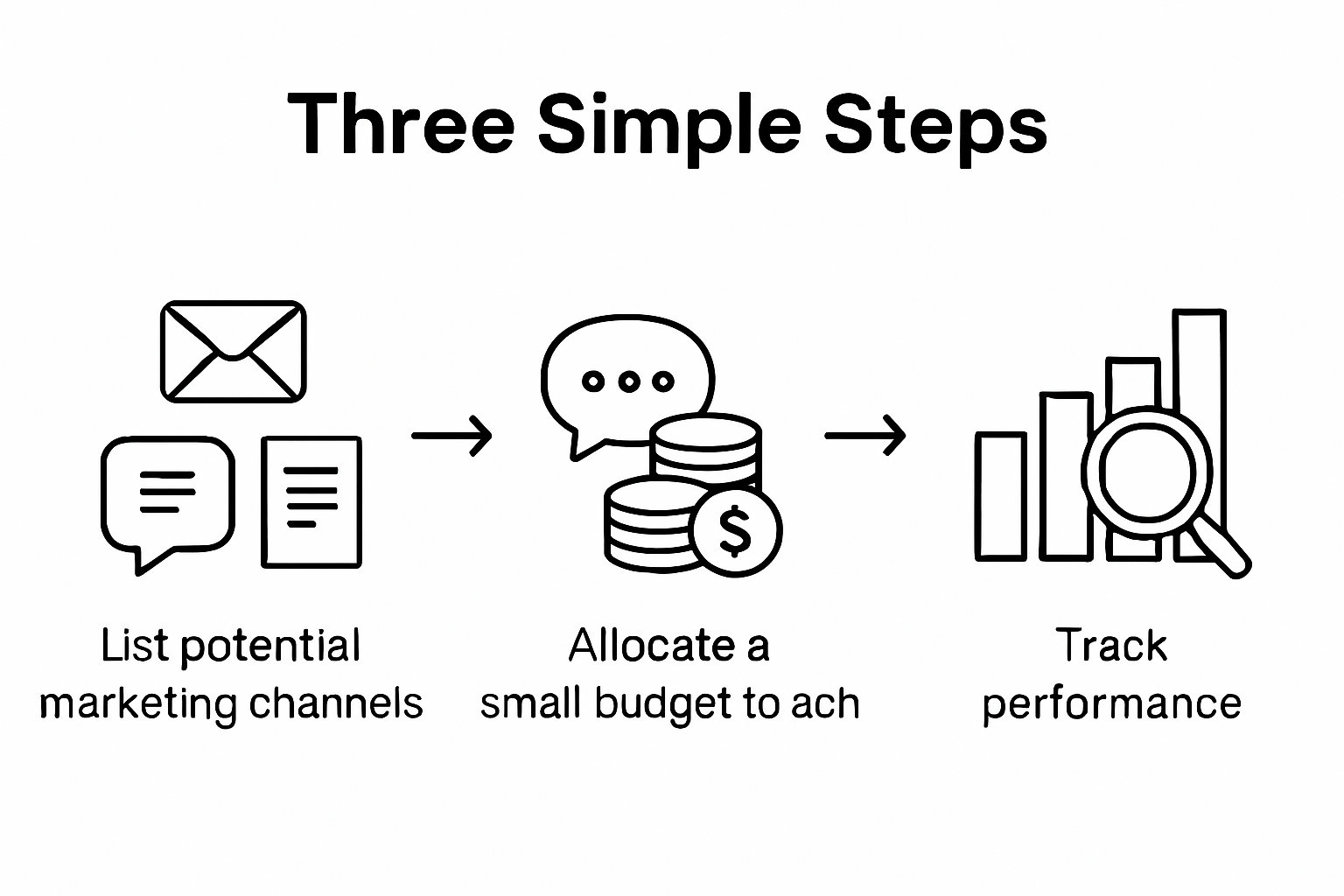
One practical tip: Never commit your entire marketing budget to a single channel. Maintain a diversified approach that allows flexibility for adjustment. Aim to test 3-4 channels simultaneously with modest budgets around 10-20% of your total marketing funds. This strategy provides robust data while protecting your financial resources from potential underperformance.
Next, you’ll analyze the results of your marketing channel experiments and make informed scaling decisions.
Step 5: Measure results and refine your strategy
Successful marketing requires continuous analysis and strategic adjustments. Tracking digital marketing success means developing a systematic approach to evaluating your marketing channel performance with precision and objectivity.
Establish clear key performance indicators (KPIs) for each marketing channel before launching campaigns. Focus on metrics that directly connect to your business objectives like conversion rates, customer acquisition cost, return on ad spend, and total revenue generated. Create a standardized tracking dashboard that allows you to compare performance across different channels quickly. Digital analytics tools can help you drill down into granular data showing exactly how potential customers interact with your marketing materials. Pay close attention to not just total numbers but also qualitative indicators like engagement rates, audience demographics, and conversion quality.
One practical tip: Schedule monthly review sessions to assess your marketing channel performance. Be prepared to reallocate resources swiftly. If a channel consistently underperforms despite optimization attempts, do not hesitate to reduce investment and redirect funds to more productive platforms. Successful marketing strategies are built on data driven decision making and a willingness to adapt.
Finally, you will synthesize your learnings to create a more refined and effective marketing approach.
Unlock Your Small Business Growth With the Right Marketing Channels
Choosing the perfect marketing channels can feel overwhelming when every option promises success. This article clearly shows that understanding your target audience, aligning channels with your budget, and testing campaigns are essential steps for small businesses striving to stand out. If you are facing challenges in pinpointing which platforms will truly connect with your customers or how to efficiently manage your marketing spend, you are not alone. Many businesses struggle to balance investment with measurable results while navigating ever-changing digital landscapes.
At Ibrandmedia, we specialize in transforming these challenges into growth opportunities. Through our tailored digital marketing strategies, we help you discover and leverage the best channels for your unique business needs. From expert SEO optimization and social media management to targeted advertising and real-time performance tracking, we focus on delivering affordable solutions that drive actual sales. Experience firsthand how strategic channel selection combined with ongoing analysis can significantly boost your online presence and customer engagement.
Ready to stop guessing and start growing? Visit our Uncategorized | Ibrandmedia page for insights and practical advice, then connect with us at Ibrandmedia to craft your personalized marketing plan. Take action today to secure clear results and make every marketing dollar count.
Frequently Asked Questions
How do I identify the right target audience for my small business?
Understanding your target audience involves creating a detailed customer profile that includes demographics, income levels, and specific pain points. Start by surveying existing customers or analyzing purchase data to gain real insights about who needs your product or service.
What factors should I consider when choosing marketing channels?
Evaluate the pros and cons of each potential marketing avenue, such as digital platforms and traditional methods. Focus on 2-3 channels where your target audience is most active to maximize your marketing efforts and budget.
How can I ensure my marketing budget is used effectively?
Establish clear measurable goals for each selected marketing channel to align spending with your business objectives. Aim to keep a flexible budget of 10-15% to accommodate unexpected opportunities or necessary changes.
What is a good strategy for testing marketing channels?
Start by allocating a small budget across 3-4 channels with specific campaign objectives. Track key performance indicators such as conversion rates and return on investment to determine which channels yield the best results without overspending.
How do I measure the success of my marketing channels?
Establish key performance indicators (KPIs) for each channel before launching campaigns. Create a standardized tracking system to compare performance metrics regularly and adjust your strategy based on data-driven insights.
Recommended
- Choosing Marketing Channels for Maximum Growth Success | Ibrandmedia
- Choosing a Marketing Agency in 2025: A Small Business Guide | Ibrandmedia
- Best Online Advertising Channels for Small Businesses in 2025 | Ibrandmedia
- Developing a Digital Marketing Plan: A 2025 Guide for Small Businesses | Ibrandmedia
- Tech for Small Businesses: Complete Guide for 2025 – Projector Display
Recent Comments