
Keeping up with larger competitors can feel overwhelming when you run a small business in the United States. The pressure to stand out online is real, but costly marketing campaigns are rarely an option. Social media offers unique opportunities for direct customer engagement and brand growth, providing affordable ways to reach local clients and build lasting connections. This article highlights practical strategies, platform comparisons, and simple steps to maximize impact without breaking your budget.
Table of Contents
- Defining Social Media’s Business Impact
- Essential Social Media Platforms Compared
- Key Social Media Strategies For Growth
- Risks, Legal Issues, And Brand Safety
- Common Mistakes And How To Avoid Them
Key Takeaways
| Point | Details |
|---|---|
| Direct Customer Engagement | Social media allows real-time communication, fostering deeper relationships with customers and enhancing brand loyalty. |
| Platform-Specific Strategies | Tailor content and marketing approaches to fit the unique characteristics of each social media platform for optimal effectiveness. |
| Legal and Ethical Awareness | Small businesses must understand and navigate the legal ramifications and content policies on social media to protect their brand. |
| Continuous Learning and Adaptation | Regularly review engagement metrics and adapt strategies to stay relevant and effectively connect with the audience. |
Defining Social Media’s Business Impact
Social media has fundamentally transformed how small businesses connect, communicate, and compete in the digital marketplace. Unlike traditional marketing channels, these platforms offer unprecedented opportunities for direct customer engagement and brand visibility. Social media’s complex business impacts extend far beyond simple advertising, creating dynamic ecosystems of interaction and value creation.
The core business advantages of social media can be distilled into several key strategic dimensions:
- Direct Customer Communication: Real-time interactions and feedback mechanisms
- Cost-Effective Marketing: Low-investment channels with high potential reach
- Brand Storytelling: Platforms for sharing authentic business narratives
- Market Intelligence: Insights gathered through audience engagement
Businesses now recognize social media not just as a promotional tool, but as a critical infrastructure for understanding consumer behavior. By leveraging strategic communication approaches, small businesses can transform these digital platforms into powerful relationship-building environments.
Traditional marketing boundaries have dissolved, replaced by more fluid, interactive models of brand-customer relationships. Social media enables businesses to move beyond one-way broadcasting, creating genuine dialogues that foster trust, loyalty, and community.
Pro tip: Develop a consistent, authentic social media voice that reflects your brand’s unique personality and values.
Essential Social Media Platforms Compared
For small businesses seeking to maximize their digital presence, understanding the unique characteristics of different social media platforms is crucial. Platform engagement metrics reveal significant variations in audience interaction and potential marketing effectiveness across different networks.
Key social media platforms for small businesses include:
- Facebook: Largest user base with robust advertising tools
- Instagram: Visual-first platform ideal for product showcase
- LinkedIn: Professional networking with B2B marketing potential
- Twitter: Real-time communication and brand personality platform
- TikTok: Emerging platform with younger demographic reach
Each platform offers distinct advantages based on social network demographics and functionalities. Business owners must strategically select platforms that align with their target audience, industry, and marketing objectives.
Here’s how major social media platforms differ in business usefulness:
| Platform | Best For | Typical Audience | Key Strength |
|---|---|---|---|
| Community building | Wide age range | Targeted ads & groups | |
| Visual promotion | Millennials, Gen Z | Product showcase | |
| B2B networking | Professionals | Thought leadership | |
| Real-time updates | Broad & tech-savvy | Brand personality | |
| TikTok | Creative outreach | Young, Gen Z | Viral content |
Successful social media strategy requires understanding platform-specific nuances. For instance, Instagram prioritizes visual storytelling, while LinkedIn emphasizes professional content and networking. Small businesses can leverage these differences by tailoring content and messaging to each platform’s unique communication style.
Pro tip: Develop platform-specific content strategies that respect each network’s unique audience expectations and communication norms.
Key Social Media Strategies for Growth
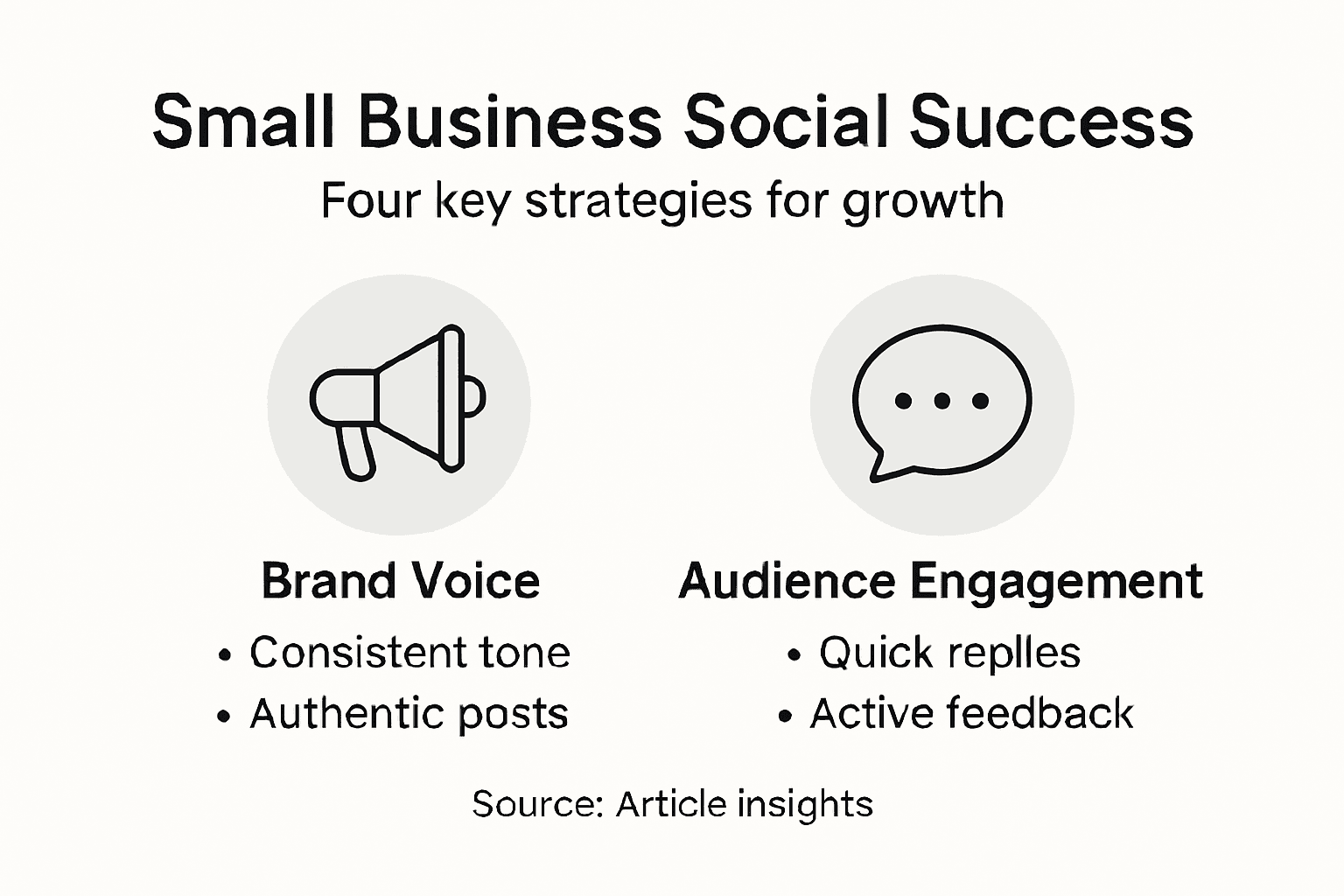
Small businesses can unlock significant growth potential by implementing targeted social media strategies that go beyond basic posting. Strategic social network approaches demonstrate the importance of creating a comprehensive, data-driven marketing plan that adapts to evolving digital landscapes.
Key strategies for social media growth include:
- Content Diversification: Creating varied content types to maintain audience interest
- Consistent Branding: Maintaining uniform messaging across all platforms
- Audience Targeting: Developing precise demographic and interest-based targeting
- Engagement Optimization: Responding quickly and authentically to user interactions
- Performance Analytics: Regularly tracking and adjusting social media performance
Successful social media marketing requires a nuanced approach that balances strategic planning with creative execution. Small businesses must focus on creating valuable, shareable content that resonates with their target audience while leveraging platform-specific features and algorithms.

The most effective social media strategies involve continuous learning and adaptation. By monitoring engagement metrics, testing different content approaches, and staying agile, businesses can develop a dynamic social media presence that drives meaningful growth and customer connection.
Pro tip: Invest in a social media management tool that provides comprehensive analytics and scheduling capabilities to streamline your digital marketing efforts.
Risks, Legal Issues, and Brand Safety
Small businesses must navigate a complex landscape of legal and ethical challenges when using social media platforms. Content governance frameworks743400_EN.pdf) highlight the critical importance of understanding potential risks and implementing robust safety strategies.
Key legal and brand safety considerations include:
- Content Moderation: Ensuring posts align with platform guidelines
- Intellectual Property Protection: Avoiding copyright and trademark violations
- Data Privacy Compliance: Protecting customer information and following regulations
- Reputation Management: Monitoring and addressing potential negative interactions
- Advertising Compliance: Adhering to marketing regulations and disclosure requirements
Advertiser-driven platform governance demonstrates the evolving nature of brand safety. Small businesses must proactively develop strategies that balance creative expression with legal and ethical considerations, understanding that each social media platform has unique content standards and potential risks.
Navigating these challenges requires a comprehensive approach. Business owners should regularly review their social media practices, stay informed about changing regulations, and develop clear guidelines for content creation and engagement that protect both their brand reputation and legal standing.
A quick overview of top risk management practices for social media:
| Challenge | Recommended Practice | Potential Business Benefit |
|---|---|---|
| Copyright issues | Use licensed content | Avoid legal disputes |
| Data privacy risks | Follow GDPR/CCPA standards | Maintain user trust |
| Reputation threats | Monitor reviews/comments | Protect brand image |
| Compliance failures | Train staff on regulations | Ensure ad transparency |
Pro tip: Develop a comprehensive social media policy document that outlines acceptable content, engagement protocols, and potential risk mitigation strategies.
Common Mistakes and How to Avoid Them
Navigating social media marketing requires strategic awareness and proactive planning. Common social media pitfalls can significantly hinder small business growth, making it crucial to understand and prevent typical errors that undermine digital marketing efforts.
Most critical social media mistakes include:
- Inconsistent Posting: Irregular content schedules that diminish audience engagement
- Over-Promotion: Constant selling without providing genuine value
- Ignoring Analytics: Failing to track and interpret performance metrics
- Generic Content: Creating non-targeted, impersonal messaging
- Neglecting Audience Interaction: Not responding to comments or messages
Business social media strategy challenges demonstrate that successful digital marketing requires more than just sporadic content creation. Small businesses must develop a comprehensive, intentional approach that balances authentic communication, strategic planning, and consistent audience engagement.
Effective social media management demands continuous learning and adaptation. Businesses should regularly audit their social media practices, stay updated on platform algorithm changes, and remain flexible in their content and engagement strategies to maintain relevance and connection with their target audience.
Pro tip: Create a content calendar and set specific, measurable social media goals to maintain consistency and track meaningful progress.
Unlock Your Small Business Potential with Strategic Social Media Support
Growing a small business through social media brings exciting opportunities but also critical challenges. From maintaining consistent branding to mastering audience engagement and managing legal risks, the journey requires expert guidance and tailored strategies. This article underscores how your business needs more than sporadic posting — you need clear, data-driven plans that foster genuine customer connections and deliver measurable growth.
At Ibrandmedia, we specialize in transforming those social media challenges into your strongest assets. Our affordable, customized digital marketing services cover everything from consistent content creation and targeted advertising to real-time performance tracking and mobile-friendly web design. We understand the importance of creating authentic brand voices and managing platform-specific nuances—helping you avoid common pitfalls while maximizing your social media impact. Discover how our collaborative approach can bring your social media strategy to life and accelerate your path to success.
Ready to stop guessing and start growing? Explore practical insights and actionable solutions in our Uncategorized | Ibrandmedia resources and take the first step toward elevating your online presence today at Ibrandmedia. Connect with us now to get a personalized plan designed specifically for your small business’s unique goals and challenges.
Frequently Asked Questions
How can social media benefit small businesses?
Social media benefits small businesses by enhancing direct customer communication, providing cost-effective marketing channels, enabling brand storytelling, and offering valuable market intelligence through audience engagement.
What are the best social media platforms for small businesses?
The best social media platforms for small businesses include Facebook for community building, Instagram for visual promotion, LinkedIn for B2B networking, Twitter for real-time updates, and TikTok for creative outreach and younger demographics.
What strategies can small businesses implement for social media growth?
Small businesses can implement strategies like content diversification, consistent branding, audience targeting, engagement optimization, and performance analytics to drive social media growth and enhance customer connections.
What are common mistakes small businesses make on social media?
Common mistakes include inconsistent posting, over-promotion without providing value, ignoring analytics, creating generic content, and neglecting audience interaction. Avoiding these pitfalls is crucial for effective social media marketing.
Recommended
- Social Media Marketing: Everything You Need to Know | Ibrandmedia
- Social Media Marketing for Businesses: Strategies That Work in 2025 | Ibrandmedia
- Social Media Marketing for Businesses: Strategies That Work in 2025 | Ibrandmedia
- Top Benefits of Social Media Presence for Small Businesses 2025 | Ibrandmedia
Recent Comments