
Did you know 78% of consumers are more likely to buy from brands they recognize and trust online? That single statistic reveals why digital branding is no longer optional for small to medium-sized businesses. Digital branding goes far beyond logos and color palettes. It encompasses every touchpoint where customers interact with your business online, from your website design to your social media voice. Understanding the role of digital branding is critical for SMB owners who want to compete effectively and grow sales in 2026’s crowded digital marketplace.
Table of Contents
- Why Digital Branding Matters For SMBs
- Key Components Of Effective Digital Branding For SMBs
- Common Misconceptions About Digital Branding
- Step-By-Step Framework For Implementing Digital Branding
- Measuring Success And Iterating Your Digital Brand
- Unlock Your SMB’s Growth With Expert Digital Branding Support
- Frequently Asked Questions
Key takeaways
| Point | Details |
|---|---|
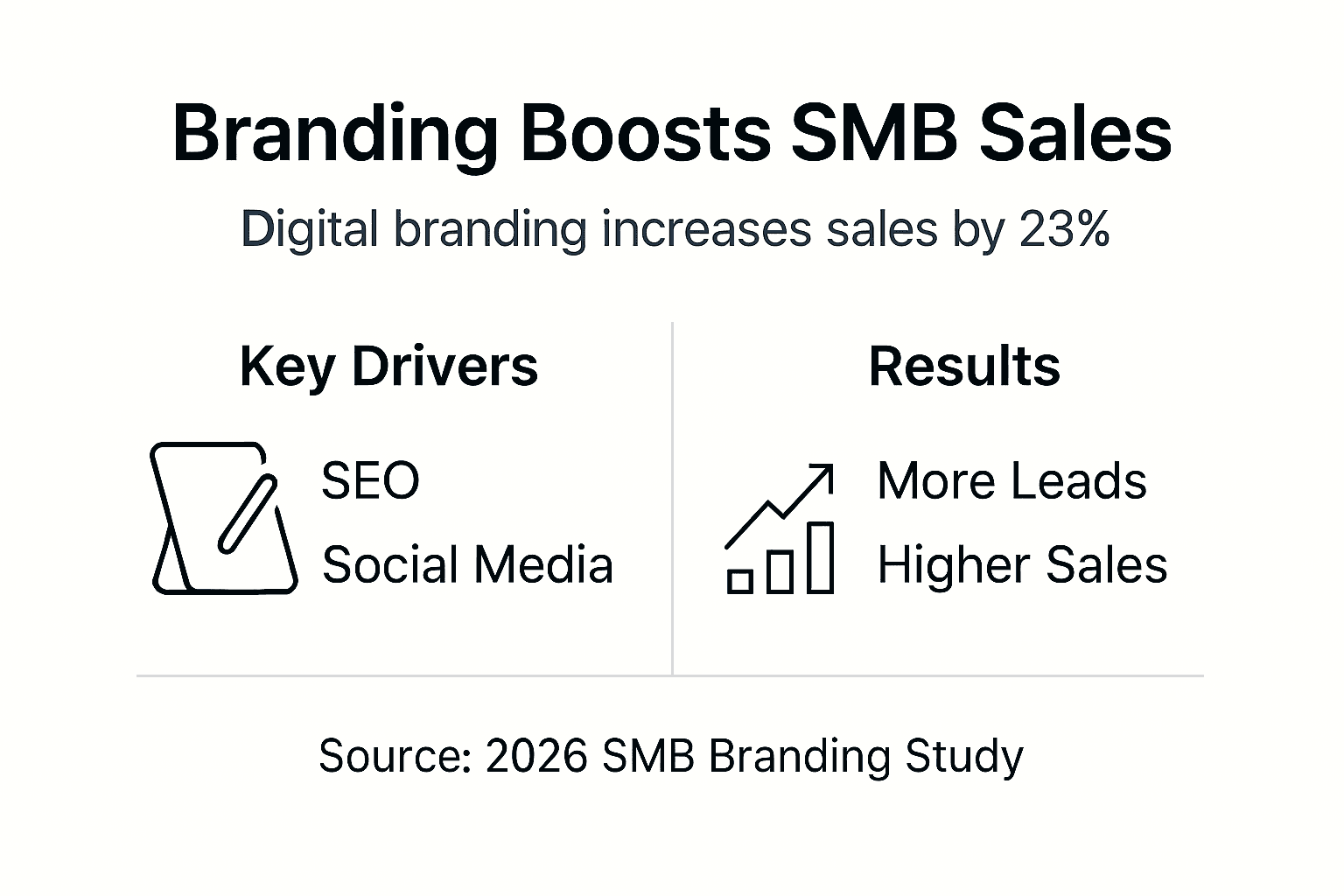
| Sales impact | Digital branding increases sales on average by 23% for SMBs, making it a high-ROI investment. |
| Mobile engagement | Mobile-friendly design boosts user engagement by 50%, essential for reaching today’s consumers. |
| Conversion boost | Transparent messaging increases conversion rates by 15%, turning visitors into buyers. |
| Budget reality | Affordable digital branding strategies exist for SMB budgets, focusing on scalable, high-impact tactics. |
| Performance tracking | Tracking performance metrics is essential for continuous improvement and maximizing branding ROI. |
Why digital branding matters for SMBs
Small business owners often wonder whether investing in digital branding actually translates to revenue growth. The answer is clear: digital branding increases sales on average by 23% for SMBs, according to the 2026 SBA report. This connection between digital branding and sales growth stems from how branding builds trust and credibility in an online environment where customers can’t physically interact with your business.
Trust drives every purchasing decision. When your business presents a consistent, professional image across all digital channels, potential customers feel confident choosing you over competitors. This online credibility becomes particularly important for SMBs competing against larger corporations with established brand recognition.
Digital branding impacts several critical business outcomes:
- Customer acquisition becomes easier when your brand stands out in search results and social feeds
- Long-term retention improves as customers develop emotional connections to brands they recognize
- Price sensitivity decreases because trusted brands can command premium pricing
- Word of mouth amplifies as satisfied customers share branded content with their networks
Without strong digital branding, SMBs face serious obstacles. Potential customers scroll past generic websites, ignore inconsistent social media profiles, and choose competitors who project professionalism and reliability. Your product or service quality becomes irrelevant if customers never trust you enough to make that first purchase.
Consistent, trust-building messaging forms the foundation of effective digital branding. When your value proposition, tone, and visual identity align across every platform, you create a cohesive experience that reinforces brand recognition. This consistency signals stability and professionalism, two qualities that matter enormously to risk-averse small business customers.
Key components of effective digital branding for SMBs
Three core components drive affordable digital branding success: SEO optimization, social media engagement, and responsive website design. Each plays a distinct role in building your online presence and attracting customers.
SEO for SMBs ensures potential customers discover your business when searching for solutions you provide. Optimizing your website content, meta descriptions, and local listings puts you in front of high-intent buyers actively looking for your services. This organic visibility costs less than paid advertising while delivering sustainable, long-term results.

Social media strategies build relationships and keep your brand top of mind. Regular posting, authentic engagement, and community building transform followers into loyal customers. Social platforms also provide affordable advertising options with precise targeting capabilities perfect for SMB budgets.
Mobile-friendly web design has become non-negotiable. Mobile-friendly web design increases user engagement by 50%, according to Google’s 2026 Mobile Playbook for Small Businesses. When visitors land on a site that loads quickly and displays perfectly on their smartphones, they stay longer and convert at higher rates.
Transparent messaging amplifies these technical components. Transparent, clear pricing increases conversion rates by roughly 15%, HubSpot’s 2026 marketing data reveals. Customers appreciate straightforward communication about what you offer, what it costs, and why they should choose you. This honesty builds the trust foundation that digital branding requires.
| Component | Primary Benefit | Implementation Cost |
|---|---|---|
| SEO Optimization | Organic discovery and sustained traffic | Low to moderate |
| Social Media | Relationship building and engagement | Low |
| Website Design | Professional first impression and conversions | Moderate |
| Transparent Messaging | Trust and higher conversion rates | Very low |
Pro Tip: Start with one component and master it before expanding. Many SMBs spread resources too thin trying to execute everything simultaneously, resulting in mediocre performance across all channels.
Common misconceptions about digital branding
Many SMB owners believe digital branding simply means creating an attractive logo and picking brand colors. This visual-only approach misses the strategic depth that drives real business results. Effective digital branding encompasses messaging, customer experience, value proposition, and consistent engagement across all touchpoints.
Focusing exclusively on aesthetics creates polished brands with no substance. You might have a beautiful website and professionally designed social graphics, yet still struggle to convert visitors into customers. Why? Because visual appeal without clear messaging, authentic engagement, and customer-focused value fails to build the trust necessary for purchasing decisions.
Consistent messaging matters more than most business owners realize. 48% of SMBs neglect messaging and engagement, reducing branding impact significantly, according to AMA Expert Insights 2025. When your website promises one thing, your social media says something different, and your email campaigns contradict both, customers feel confused and move on to competitors with clearer positioning.
Active customer engagement separates memorable brands from forgettable ones. Responding to comments, addressing concerns promptly, and creating dialogue transforms passive followers into brand advocates. This engagement costs nothing but time, yet many SMBs ignore it while chasing expensive advertising campaigns.
Affordability myths prevent countless small businesses from pursuing digital branding. You don’t need massive budgets to build an effective online presence. Strategic choices about where to invest time and money deliver strong results even with limited resources. Avoiding common digital branding mistakes saves money while accelerating your path to brand recognition.
Pro Tip: Audit your current digital presence for consistency. Check whether your website, social profiles, and review responses convey the same brand personality and value proposition. Inconsistencies confuse potential customers and weaken your brand.
Step-by-step framework for implementing digital branding
Building a strong digital brand requires following a structured approach. This four-step framework provides an affordable, scalable path for SMBs:
-
Define your brand identity and core messaging. Start by articulating who you serve, what problems you solve, and why customers should choose you. This brand identity and messaging foundation guides every subsequent decision about content, design, and customer interaction.
-
Optimize your digital assets for discovery and conversion. Ensure your website loads quickly, displays properly on mobile devices, and communicates your value proposition clearly. Update your Google Business Profile, create consistent social media profiles, and claim directory listings. These optimizing digital assets activities make your business findable when customers search.
-
Engage consistently across social platforms. Choose two or three platforms where your target customers spend time and post valuable content regularly. Respond to comments, participate in relevant conversations, and build genuine relationships. Consistency matters more than frequency, so commit to a sustainable posting schedule.
-
Track performance and iterate continuously. Monitor which content resonates, where traffic originates, and what drives conversions. Use these insights to refine your approach, doubling down on what works and eliminating what doesn’t. This tracking and continuous improvement cycle ensures your branding efforts deliver increasing returns over time.
Common failure points include:
- Skipping the identity definition step and jumping straight to tactics
- Creating beautiful assets that don’t address customer needs or pain points
- Posting sporadically then abandoning social media when immediate results don’t materialize
- Neglecting to measure results and adjust based on data
These affordable branding strategies work regardless of budget size because they prioritize smart resource allocation over expensive campaigns.
| Framework Step | Primary Goal | Key Outcome |
|---|---|---|
| Brand Identity | Clarity and differentiation | Clear positioning that resonates with target customers |
| Asset Optimization | Discoverability and professionalism | Increased organic traffic and credibility |
| Social Engagement | Relationships and loyalty | Stronger customer connections and advocacy |
| Performance Tracking | Continuous improvement | Data-driven decisions that maximize ROI |
Pro Tip: Document your brand identity decisions in a simple one-page guide. Reference this document whenever creating content or making design choices to maintain consistency.
Measuring success and iterating your digital brand
Tracking the right metrics reveals whether your digital branding efforts deliver results. Four categories of metrics matter most for SMBs:
Brand recognition metrics show how many people know your business exists. Monitor social media follower growth, branded search volume in Google Analytics, and direct traffic to your website. Increasing numbers indicate your brand awareness is expanding.
Website traffic metrics reveal discovery and interest. Track total visitors, traffic sources, pages per session, and bounce rates. Growing traffic from organic search signals effective SEO, while social referrals indicate successful community building.
Social engagement metrics measure relationship strength. Follow likes, comments, shares, and saves on your content. High engagement rates suggest your messaging resonates with your audience, while declining engagement signals the need for content adjustments.
Conversion metrics connect branding to revenue. Monitor contact form submissions, phone calls, email signups, and actual sales. Calculate conversion rates by dividing conversions by total visitors to understand how effectively your brand messaging drives action.
Transparent reporting makes these metrics actionable. Use free tools like Google Analytics and social platform insights to gather data, then review performance monthly. Look for trends rather than obsessing over daily fluctuations.
Tracking branding success enables iterative improvements that compound over time. When you discover that blog posts about specific topics drive more conversions, create more content on those subjects. If Instagram engagement outperforms Facebook, shift resources toward the more effective platform.
Measuring branding ROI doesn’t require expensive software. Simple spreadsheets tracking monthly metrics against business goals provide sufficient insight for most SMBs. The key is consistent measurement and willingness to adjust based on what the data reveals.
Pro Tip: Set specific, measurable goals for each metric category. Instead of vague aspirations like “increase brand awareness,” commit to concrete targets such as “gain 100 new Instagram followers monthly” or “increase organic website traffic by 20% quarterly.”
Unlock your SMB’s growth with expert digital branding support
You now understand how strategic digital branding drives measurable sales growth for small businesses. Implementing these affordable strategies yourself is possible, but partnering with experienced professionals accelerates results while freeing you to focus on running your business.
ibrand.media specializes in helping SMBs build powerful digital brands that attract customers and increase revenue. Our SEO services for small businesses boost your visibility in search results, our social media management solutions build engaged communities around your brand, and our professional website design creates mobile-friendly sites that convert visitors into customers. We offer transparent pricing and personalized strategies tailored to your specific goals and budget. Start building a brand that drives real business growth today.
Frequently asked questions
What is digital branding and why is it important for small businesses?
Digital branding is how a business presents itself online to build recognition and trust among potential customers. It encompasses your website design, social media presence, content strategy, and customer interactions across all digital touchpoints. For small businesses, strong digital branding is critical because it levels the playing field against larger competitors and drives the trust necessary for customer acquisition.
How can small businesses afford digital branding on a limited budget?
Focus on scalable strategies like local SEO optimization, consistent social media engagement, and mobile-friendly website design rather than expensive advertising campaigns. Leverage free tools for content creation and analytics, and prioritize high-impact activities that directly drive customer discovery and conversions. Many effective branding tactics require time investment more than financial resources.
What are the most effective digital branding strategies for increasing sales?
Consistent messaging across all platforms, transparent pricing that builds customer trust, and authentic social media engagement that fosters relationships deliver the strongest sales impact. Combine these with a well-optimized website and strong local SEO to ensure customers can discover your business when searching for solutions you provide. This integrated approach addresses both visibility and conversion.
How do I measure if my digital branding efforts are working?
Track four key metric categories: brand awareness through follower growth and branded searches, website traffic from various sources, social engagement rates on your content, and actual sales conversions from your digital channels. Use free analytics tools to review these metrics monthly, looking for positive trends that indicate your branding is strengthening. Adjust your strategy based on what the data reveals about customer behavior and preferences.
Recent Comments