
Most American small business owners face a tough challenge when building trust online, especially with more than 80 percent of local customers researching companies before making contact. If you run a plumbing or HVAC service, your digital reputation can be the difference between a new job and a lost lead. Affordable credibility strategies help you stand out among local competitors and transform skeptical browsers into loyal customers who trust your American business from the very first click.
Table of Contents
- Defining Online Credibility for Small Businesses
- Key Trust Signals That Build Confidence
- The Role of Social Proof and Reviews
- Managing Your Online Reputation Effectively
- Common Mistakes That Hurt Credibility
Key Takeaways
| Point | Details |
|---|---|
| Establish Online Credibility | Small businesses should create a compelling digital narrative to build trust with potential customers through professional online interactions. |
| Utilize Trust Signals | Incorporate professional credentials, high-quality visuals, and genuine customer reviews to enhance perceived reliability and attract clients. |
| Manage Reputation Proactively | Regularly monitor and respond to online feedback while generating positive content to shape a trustworthy digital reputation. |
| Avoid Common Pitfalls | Maintain consistent and accurate information across platforms to prevent eroding customer trust and damaging online credibility. |
Defining Online Credibility for Small Businesses
Online credibility represents the digital reputation and trustworthiness that small businesses build through strategic online interactions. For local service providers like plumbers, HVAC contractors, and electricians, establishing this credibility means creating a compelling digital narrative that transforms potential customers’ perception from skeptical strangers to confident buyers.
At its core, online credibility involves systematically demonstrating professional competence through multiple digital touchpoints. Digital technology applications in small business operations have fundamentally transformed how companies communicate their value proposition. Small businesses now need comprehensive online strategies that showcase expertise, reliability, and customer commitment across websites, social platforms, review sites, and professional networks.
The critical components of online credibility include authentic customer testimonials, professional website design, consistent and transparent communication, verifiable credentials, and responsive online engagement. Potential customers evaluate businesses by searching online reviews, checking social media presence, and assessing the overall digital professionalism. A well-maintained Google My Business profile, professional website, and active social media accounts signal that a business is legitimate, current, and trustworthy.
Pro Business Tip: Start by conducting a comprehensive online audit of your digital presence. Systematically review your website, social profiles, and online listings to ensure consistent, professional information that accurately represents your business and builds immediate customer trust.
Key Trust Signals That Build Confidence
Small businesses must strategically deploy multiple digital trust signals to transform potential customer skepticism into genuine confidence. Trust signals are critical evidence points that help customers feel secure when making purchasing decisions, representing a complex ecosystem of digital credibility markers that go far beyond simple marketing tactics.

These trust signals encompass several key categories that potential customers unconsciously evaluate. Professional credentials like verified business licenses, industry certifications, and clear contact information form the foundational layer of digital trustworthiness. Visual trust signals such as high-quality website design, professional photography, and consistent branding communicate stability and attention to detail. Customer reviews, testimonials, and case studies provide social proof that validates a business’s claims and demonstrates real-world performance.
Technology plays a significant role in building digital trust. Effective visual design and transparent information usage are critical in helping potential customers feel confident about engaging with a business. Small service providers should focus on creating clean, responsive websites with clear navigation, prominently displayed contact information, secure payment badges, and authentic customer feedback sections. Strategic placement of trust badges from recognized organizations like the Better Business Bureau can significantly enhance perceived reliability.
Here’s a comparison of key digital trust signals and their impact on small business credibility:
| Trust Signal Type | Example Element | Impact on Credibility |
|---|---|---|
| Professional Credentials | Verified licenses, certifications | Shows legitimacy and expertise |
| Visual Presentation | Quality website design, branding | Signals professionalism and stability |
| Social Proof | Customer reviews, testimonials | Provides real-world validation |
| Security Indicators | Payment badges, HTTPS, BBB badges | Instills confidence in transactions |
Pro Business Tip: Audit your digital presence monthly. Systematically review all online platforms to ensure consistent, professional information that builds immediate customer trust and eliminates potential credibility gaps.
The Role of Social Proof and Reviews
For small businesses, social proof represents a powerful psychological mechanism that transforms potential customer skepticism into genuine trust. Systematic research on online review credibility demonstrates how authentic customer experiences can dramatically influence purchasing decisions across multiple industries.
Customer reviews serve as critical trust-building mechanisms that go beyond simple testimonials. Potential clients actively seek out detailed, specific feedback that validates a business’s claims and demonstrates real-world performance. Positive reviews that include specific details about service quality, professionalism, and problem-solving capabilities carry significantly more weight than generic, vague endorsements. Consumer review platforms like Yelp play a crucial role in shaping user perceptions and judgments, making it essential for businesses to actively manage their online reputation.
Successful businesses understand that social proof extends beyond written reviews. Video testimonials, case studies, client logos, industry awards, and verified ratings from recognized platforms all contribute to building a comprehensive trust ecosystem. Small service providers should focus on creating a diverse range of social proof elements that showcase their expertise, reliability, and commitment to customer satisfaction. Strategic placement of these trust signals across websites, social media profiles, and marketing materials can significantly enhance credibility and attract potential customers.
Pro Business Tip: Implement a systematic review collection process. Develop a simple, non-intrusive method for requesting customer feedback immediately after service completion, making it easy for satisfied clients to share their positive experiences online.
Managing Your Online Reputation Effectively
Online reputation management represents a critical strategic process for small businesses seeking to control their digital narrative and attract potential customers. The ethical environment in online communities significantly impacts information credibility, making proactive reputation management more than just damage control.
Successful reputation management requires a multifaceted approach that combines monitoring, responding, and strategically generating positive content. Small businesses must systematically track mentions across multiple platforms, including Google reviews, social media channels, industry-specific review sites, and local business directories. Prompt and professional responses to both positive and negative feedback demonstrate transparency and commitment to customer satisfaction. Research into trust and reputation information reveals that user judgments are heavily influenced by how businesses handle online interactions, highlighting the importance of a thoughtful, measured approach.
Effective online reputation management involves creating a consistent, authentic digital presence that reflects the business’s actual values and service quality. Small service providers should develop a comprehensive content strategy that includes generating positive, detailed case studies, sharing customer success stories, and showcasing professional achievements. Encouraging satisfied customers to leave genuine reviews, responding to feedback constructively, and maintaining active and professional social media profiles can help build a robust online reputation that attracts and retains customers.
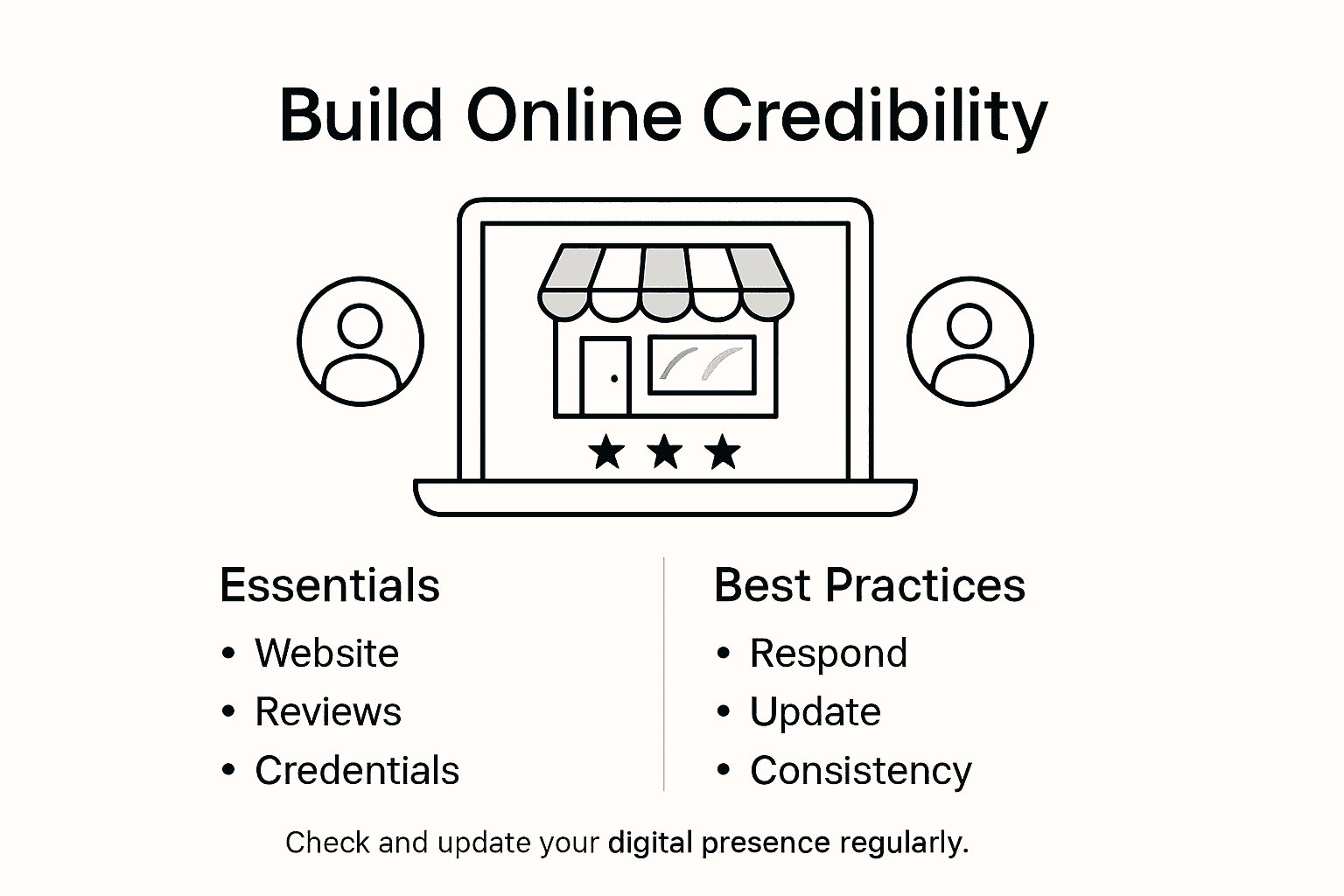
Pro Business Tip: Create a weekly reputation management routine. Set aside 30 minutes each week to systematically review and respond to online reviews, monitor social media mentions, and update your digital profiles with fresh, positive content.
Common Mistakes That Hurt Credibility
Small businesses often undermine their online credibility through seemingly minor yet impactful digital missteps. Legal and ethical challenges in e-business can significantly compromise a company’s online reputation, making it crucial to understand and avoid common pitfalls that erode customer trust.
One of the most damaging mistakes is inconsistent or incomplete online information. Outdated contact details, mismatched business names across platforms, incorrect service descriptions, and irregular posting schedules signal unprofessionalism to potential customers. Businesses that fail to maintain accurate and current digital profiles create doubt about their reliability and operational competence. Transparency plays a critical role in building user confidence, which means every digital touchpoint must reflect the business’s commitment to accuracy and professionalism.
Another significant credibility killer is mishandling negative feedback or attempting to hide critical reviews. Potential customers are sophisticated and can quickly detect inauthentic reputation management tactics. Deleting negative comments, posting fake positive reviews, or responding defensively to criticism can cause more damage than the original complaint. Successful small businesses approach online reputation as an opportunity for transparent communication, using negative feedback as a chance to demonstrate problem-solving skills, empathy, and a genuine commitment to customer satisfaction.
Below is a summary of common online credibility mistakes and their potential impacts:
| Mistake | Potential Impact | How to Avoid |
|---|---|---|
| Inconsistent online information | Erodes trust, confuses customers | Regularly audit and update profiles |
| Ignoring negative feedback | Damages reputation, lost business | Respond promptly and constructively |
| Posting fake or defensive reviews | Destroys authenticity, legal risks | Foster open, honest communication |
| Outdated business details | Suggests inattention, loss of trust | Set updates as recurring tasks |
Pro Business Tip: Perform a monthly digital audit. Systematically review all online profiles, ensuring consistent information, removing outdated content, and addressing any potential discrepancies that could undermine your business’s perceived reliability.
Strengthen Your Online Credibility with Expert Digital Marketing Support
Building trust and showcasing professionalism online are essential challenges for small businesses aiming to attract and retain customers. This article highlights the importance of consistent information, authentic social proof, and proactive reputation management to overcome skepticism and boost confidence. If you are looking to transform your digital presence with clear, credible messaging and a professional online identity, tailored digital marketing strategies are the key to success.

Discover how ibrand.media helps small to medium-sized businesses like yours by offering affordable SEO optimization, local marketing, and mobile-friendly web design that highlight your true expertise and build trust quickly. Explore practical tips and resources in our Uncategorized | Ibrandmedia section to get started on elevating your business credibility today. Don’t wait — take the first step to winning customer confidence and growing your sales by visiting ibrand.media now and request a custom plan to fit your unique needs.
Frequently Asked Questions
How can small businesses improve their online credibility?
To improve online credibility, small businesses should focus on creating a professional website, showcasing authentic customer testimonials, ensuring consistent communication across platforms, and maintaining an active social media presence.
What are trust signals and why are they important for small businesses?
Trust signals are elements like verified credentials, professional website design, and customer reviews that help build confidence in potential customers. They are important because they reassure customers of a business’s legitimacy and expertise.
How do customer reviews impact my business’s online reputation?
Customer reviews significantly impact online reputation as they provide social proof of your service quality. Positive, detailed reviews can enhance credibility, while negative reviews must be handled constructively to maintain trust.
What common mistakes should small businesses avoid to maintain online credibility?
Common mistakes include inconsistent online information, ignoring negative feedback, posting inauthentic reviews, and having outdated business details. Avoiding these pitfalls helps maintain trust and credibility with potential customers.
Recent Comments