
Most American consumers trust recommendations from strangers online as much as advice from friends, with over 80 percent relying on reviews before making purchases. Understanding how social proof shapes our decisions is vital for anyone hoping to influence public perception or build business credibility. This guide breaks down what social proof truly means, clears up common misconceptions, and gives practical insights to help both American entrepreneurs and shoppers make smarter choices.
Table of Contents
- Social Proof Defined And Common Misconceptions
- Major Types Of Social Proof In Marketing
- How Social Proof Boosts Credibility Online
- Best Practices For Leveraging Social Proof
- Common Pitfalls And What To Avoid
Key Takeaways
| Point | Details |
|---|---|
| Understanding Social Proof | Social proof is a psychological phenomenon where individuals look to others’ actions to guide their decisions, particularly in uncertain situations. |
| Types of Social Proof | Four primary types include Expert, Celebrity, User, and Wisdom of the Crowd, each offering unique benefits for building consumer trust. |
| Importance of Authenticity | Genuine customer experiences are crucial for effective social proof; businesses should avoid fabricated testimonials and focus on real feedback. |
| Best Practices for Implementation | Regularly refresh social proof elements and strategically display them across multiple digital touchpoints to enhance credibility. |
Social Proof Defined and Common Misconceptions
Social proof is a powerful psychological phenomenon where people instinctively follow the actions of others to guide their own behavior. Introduced by Robert Cialdini in 1984, this concept reveals how individuals seek validation from peers when making decisions, especially in uncertain situations.
Contrary to popular belief, social proof isn’t simply about blindly following the majority. It encompasses a sophisticated mechanism of behavioral influence that includes expert opinions, user reviews, testimonials, and recommendations from respected figures. Small business owners can leverage this psychological principle by strategically showcasing customer experiences, professional endorsements, and real-world success stories.
Common misconceptions about social proof often stem from oversimplification. Many believe it’s manipulative or that consumers are passive followers. In reality, social proof works because humans are inherently social creatures who seek trusted guidance. People naturally want to understand what others like them have experienced before making a decision. This means authentic, transparent representations of customer satisfaction are far more powerful than manufactured or fake endorsements.
Pro Business Strategy: Collect and prominently display genuine customer testimonials, case studies, and quantifiable results to build credibility and trust with potential clients.
Pro Tip: Create a systematic approach to gathering and showcasing social proof by implementing a simple feedback collection process after each customer interaction.
Major Types of Social Proof in Marketing
Social proof in marketing represents a strategic approach to building consumer trust through multiple influential channels. Each type of social proof leverages different psychological triggers that help potential customers feel more confident about their purchasing decisions.

Four primary types of social proof emerge as particularly powerful for small businesses. Expert Social Proof involves recommendations from industry professionals or recognized authorities who validate a product or service. Celebrity Social Proof utilizes the endorsement of well-known personalities to create immediate recognition and credibility. User Social Proof focuses on genuine customer testimonials, reviews, and experiences that provide real-world validation. Wisdom of the Crowd demonstrates popularity through metrics like total users, customer count, or widespread adoption.
Small business owners can strategically implement these social proof types by collecting and showcasing customer experiences. Authentic reviews, case studies, and testimonials carry significant weight. Visual elements like video testimonials, screenshots of positive feedback, and detailed success stories can transform abstract social proof concepts into tangible marketing assets that potential customers can relate to and trust.
Here’s a comparison of the main types of social proof and their unique business benefits:
| Social Proof Type | Influencing Factor | Business Impact |
|---|---|---|
| Expert Social Proof | Authority endorsement | Increases perceived trustworthiness |
| Celebrity Social Proof | Public figure recognition | Enhances brand awareness rapidly |
| User Social Proof | Customer feedback | Builds authenticity and relatability |
| Wisdom of the Crowd | Popularity statistics | Demonstrates widespread acceptance |
Pro Business Strategy: Develop a systematic approach to collecting and displaying diverse forms of social proof, ensuring each type represents genuine customer experiences.
Pro Tip: Create a dedicated section on your website or marketing materials that highlights customer success stories and quantifiable results to maximize the impact of social proof.
How Social Proof Boosts Credibility Online
Building online credibility is challenging for small businesses, but strategic social proof implementation can transform digital perception dramatically. Online platforms provide unprecedented opportunities to showcase customer experiences, validate business claims, and create trust through transparent, authentic representations of real-world success.
The digital landscape offers multiple channels for enhancing credibility through social proof. User-Generated Content becomes a powerful trust signal, with customer reviews, testimonials, and social media interactions serving as genuine endorsements. Case studies, detailed client success stories, and quantifiable results demonstrate a business’s actual performance. Visual elements like screenshots of positive feedback, video testimonials, and verified customer ratings create tangible evidence that potential clients can immediately understand and appreciate.
Technical implementation of social proof requires strategic placement and thoughtful curation. Businesses should integrate customer experiences across multiple digital touchpoints – website landing pages, product sections, about pages, and social media profiles. Displaying total customer numbers, showcasing industry certifications, featuring expert endorsements, and highlighting media mentions can collectively build a comprehensive narrative of reliability and expertise.
Pro Business Strategy: Develop a systematic approach to collecting, updating, and prominently displaying diverse social proof elements that represent your business’s authentic customer experiences.
Pro Tip: Create a dedicated digital showcase that rotates real customer stories, ensuring potential clients see dynamic, current social proof that reflects your ongoing business success.
Best Practices for Leveraging Social Proof
Strategic social proof implementation requires a nuanced approach that goes beyond simply collecting customer feedback. Small businesses must carefully curate and present social proof to maximize its psychological impact, transforming raw testimonials into compelling narratives that resonate with potential customers.
Effective social proof strategies involve multiple key elements. Authenticity stands as the cornerstone of successful implementation, meaning businesses should prioritize genuine, verifiable customer experiences over manufactured endorsements. This includes collecting detailed testimonials that provide specific outcomes, sharing video reviews that showcase real customer emotions, and displaying verified ratings from reputable platforms. Businesses should aim to represent diverse customer experiences that demonstrate the breadth and depth of their service capabilities.
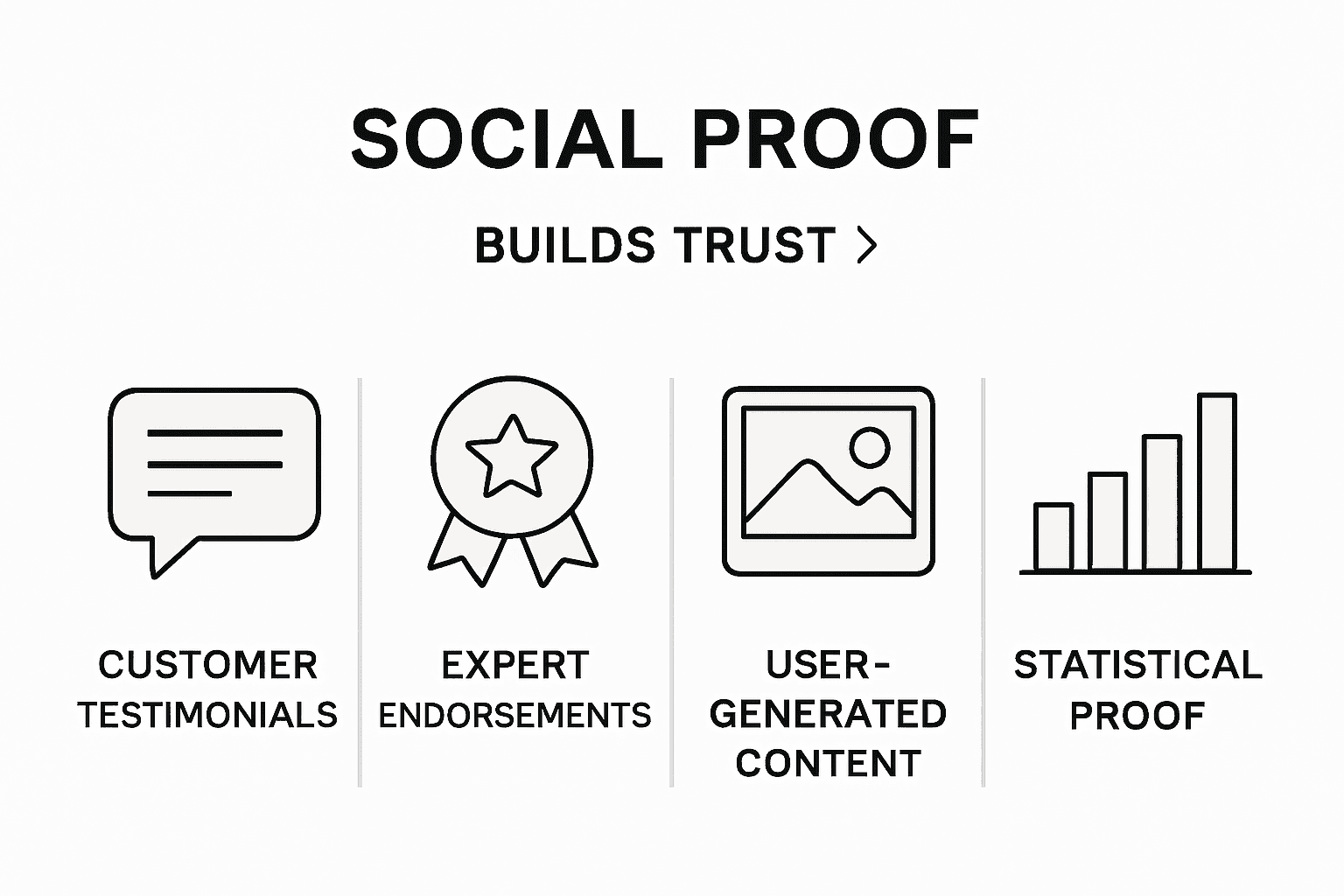
Technical execution matters as much as content quality. Businesses should integrate social proof across multiple digital touchpoints – website headers, product pages, checkout processes, and social media profiles. Dynamic elements like real-time customer count, scrolling testimonial feeds, and interactive review sections can create engaging visual representations of social validation. Highlighting specific metrics such as total customers served, success rates, or quantifiable client achievements transforms abstract social proof into concrete evidence of business performance.
Pro Business Strategy: Create a systematic approach to continuously collecting, verifying, and prominently displaying social proof that reflects your business’s most compelling customer success stories.
Pro Tip: Implement a quarterly review process to refresh your social proof content, ensuring potential clients always see current, relevant testimonials that reflect your most recent business achievements.
Common Pitfalls and What to Avoid
Avoiding inauthentic social proof strategies requires careful navigation of psychological trust mechanisms. Small businesses often inadvertently undermine their credibility by making critical mistakes that can instantly erode potential customer confidence.
Fabricated Testimonials represent the most dangerous pitfall in social proof implementation. Customers have become increasingly sophisticated at detecting manufactured endorsements, with sophisticated online verification tools making fake reviews increasingly easy to spot. Businesses should never create fictional testimonials or pay for positive reviews. Instead, focus on collecting genuine customer experiences that highlight specific, measurable outcomes. Authentic social proof demands transparency, nuanced storytelling, and verifiable results that demonstrate real value.
Other significant mistakes include overwhelming potential customers with excessive social proof, using irrelevant or outdated testimonials, and failing to represent diverse customer experiences. Businesses must carefully curate their social proof, ensuring each piece of evidence feels genuine, current, and directly relevant to potential clients. This means regularly updating testimonials, featuring a range of customer stories that represent different service scenarios, and presenting social proof in a balanced, thoughtful manner that doesn’t feel manipulative or desperate.
Review this summary of common social proof pitfalls and recommended avoidance strategies:
| Pitfall | Why It’s Problematic | How to Avoid |
|---|---|---|
| Fabricated Testimonials | Destroys credibility | Only use real customer feedback |
| Overuse of Social Proof | Overwhelms decision-makers | Curate and limit quantity displayed |
| Outdated Evidence | Suggests lack of relevance | Regularly refresh testimonials |
| Lack of Diversity | Limits audience connection | Showcase varied client experiences |
Pro Business Strategy: Develop a rigorous verification process for collecting and displaying customer testimonials that prioritizes authenticity and specific, measurable outcomes.
Pro Tip: Create a systematic review process that validates each social proof element, ensuring every testimonial or endorsement meets strict standards of verifiability and representativeness.
Boost Your Small Business Credibility with Proven Digital Marketing Solutions
Understanding the power of social proof is just the first step toward building lasting trust with your customers. This article highlights the challenge small businesses face in establishing authenticity and boosting online credibility through genuine customer testimonials and expert endorsements. If your goal is to transform real customer experiences into compelling narratives that truly connect and convert, you need strategic support that goes beyond simple advice.
At ibrand.media, we specialize in helping small to medium-sized businesses leverage social proof with tailored digital marketing strategies. From SEO optimization and local marketing to web design focused on user experience and mobile friendliness, our services ensure your authentic customer success stories shine across all digital touchpoints. We build websites and campaigns designed to showcase your genuine social proof and generate measurable results quickly and affordably.
Take the next step to turn your customer feedback into your strongest marketing asset. Experience a collaborative and personalized approach at ibrand.media that helps you collect, display, and amplify social proof effectively. Don’t wait—boost your online credibility now with real, verifiable social proof that builds trust and drives sales.
Start building trust today with ibrand.media’s proven digital marketing services.

Frequently Asked Questions
What is social proof and why is it important for small businesses?
Social proof is a psychological phenomenon where individuals look to others for guidance in decision-making. For small businesses, it helps build trust and credibility by showcasing genuine customer experiences and endorsements, ultimately influencing potential customers to make purchases.
How can small businesses effectively use social proof?
Small businesses can effectively use social proof by collecting and displaying authentic customer testimonials, reviews, and success stories on their websites and marketing materials. Utilizing visual elements like video testimonials and user-generated content also enhances engagement and relatability.
What are the major types of social proof?
The major types of social proof include expert social proof (endorsements from industry professionals), celebrity social proof (endorsements from well-known figures), user social proof (customer testimonials and reviews), and wisdom of the crowd (demonstrating popularity through user statistics).
What common mistakes should small businesses avoid when implementing social proof?
Common mistakes include using fabricated testimonials, overwhelming potential customers with excessive social proof, displaying outdated evidence, and lacking diversity in customer experiences. It’s crucial to maintain authenticity and relevance to foster genuine trust.
Recent Comments