
Managing a small business in North America often means wearing many hats, from serving customers to handling digital tasks. Website security can feel overwhelming, yet risks are real for local service providers like HVAC and plumbing businesses. Strong protection goes beyond antivirus software and demands a focused strategy. This guide reveals practical ways to achieve affordable website security, demonstrating how a secure site builds customer trust and safeguards vital business data without straining your budget.
Table of Contents
- Defining Website Security For Small Businesses
- Major Threats Facing Business Websites Today
- How Website Security Impacts Customer Trust
- Legal And Financial Consequences Of Breaches
- Affordable Solutions For Improving Website Security
Key Takeaways
| Point | Details |
|---|---|
| Importance of Multi-Layer Security | Small businesses need a comprehensive strategy that includes secure hosting, regular updates, and strong authentication to protect against cyber threats. |
| Impact of Cybersecurity on Customer Trust | Businesses must prioritize website security to build customer confidence, as a breach can severely damage their reputation. |
| Financial and Legal Consequences | Security breaches can lead to significant financial losses and legal repercussions, making it vital for small businesses to be proactive in their security measures. |
| Affordable Security Solutions | Implementing cost-effective security measures like SSL certificates, security plugins, and employee training is essential for small businesses to enhance their cybersecurity without breaking the bank. |
Defining Website Security for Small Businesses
Website security represents the comprehensive set of protective measures designed to safeguard digital assets, customer data, and online infrastructure from potential cyber threats. For small businesses, this goes far beyond simply installing an antivirus program—it involves a strategic approach to protecting your digital presence.
At its core, website security fundamentals involve multiple layers of defense that work together to prevent unauthorized access, data breaches, and potential system compromises. These layers typically include:
- Secure hosting platforms
- Regular software updates
- Strong password protocols
- Data encryption technologies
- Robust authentication mechanisms
- Continuous threat monitoring
Small businesses face unique cybersecurity challenges that require proactive strategies. According to CISA guidance, establishing a security culture means more than just implementing technical solutions—it demands organizational commitment. This includes training employees about potential risks, creating incident response plans, and maintaining vigilant oversight of digital systems.
Modern website security also encompasses protection against evolving threats like malware, phishing attempts, SQL injections, and cross-site scripting attacks. Small businesses must recognize that cybercriminals often target them precisely because they assume smaller organizations have weaker defenses.
Pro tip: Conduct a free website security assessment every six months to identify and address potential vulnerabilities before they become critical problems.
Major Threats Facing Business Websites Today
Small business websites face an increasingly complex landscape of cybersecurity threats that can potentially devastate their digital operations. Cybersecurity research reveals that a staggering 64% of business websites have critical vulnerabilities related to third-party application access and data permissions.
The most significant threats confronting small business websites include:
- Malware infections: Harmful software designed to infiltrate and damage computer systems
- Phishing attacks: Deceptive attempts to steal sensitive login credentials
- Ransomware: Malicious software that locks critical business data until a payment is made
- DDoS attacks: Overwhelming website servers to disrupt online operations
- SQL injection: Manipulating database queries to access or manipulate sensitive information
- Cross-site scripting: Inserting malicious scripts into trusted websites
These cybersecurity challenges are not just theoretical risks. Advanced persistent threats and social engineering tactics have become increasingly sophisticated, targeting small businesses precisely because they often lack comprehensive digital defense strategies. Criminals exploit outdated software, weak authentication protocols, and inadequate security monitoring to breach digital infrastructure.
Here’s a comparison of major website security threats and their typical impacts on small businesses:
| Threat Type | Primary Impact | Common Entry Point |
|---|---|---|
| Malware infection | System damage or data loss | Infected downloads, emails |
| Phishing attack | Stolen credentials | Fake login pages or emails |
| Ransomware | Locked data, ransom demand | Compromised attachments |
| DDoS attack | Website downtime | Massive traffic influx |
| SQL injection | Database compromise | Vulnerable web forms |
| XSS (Cross-site scripting) | Code execution in browser | Unsafe user input |
Understanding these threats is crucial for developing a proactive security approach. Small businesses must recognize that cybersecurity is not a one-time setup but an ongoing process of monitoring, updating, and adapting to emerging digital risks.
Pro tip: Implement multi-factor authentication and conduct quarterly security audits to significantly reduce your website’s vulnerability to potential cyber attacks.
How Website Security Impacts Customer Trust
Customer trust is the cornerstone of online business success, and website security plays a pivotal role in building and maintaining that critical relationship. Research in digital service contexts demonstrates that perceived security directly influences users’ willingness to engage with a website, making cybersecurity more than just a technical requirement—it’s a fundamental trust mechanism.
Customers evaluate website security through multiple psychological and practical lenses:
- Data Protection: How well the website safeguards personal and financial information
- Transparency: Clear communication about security practices
- Response Mechanisms: How quickly and effectively potential breaches are addressed
- Authentication Processes: Robust login and verification systems
- Privacy Policies: Comprehensive and understandable data handling guidelines
A single security breach can devastate customer confidence, potentially destroying years of carefully cultivated business reputation. Visitors unconsciously assess website security through visual cues like SSL certificates, privacy badges, and secure payment icons. When customers feel their sensitive information is at risk, they quickly abandon websites and seek more trustworthy alternatives.

Beyond immediate transactional concerns, website security demonstrates a business’s professionalism and commitment to customer well-being. Small businesses that invest in robust cybersecurity signals send a powerful message about their operational integrity and long-term sustainability.
Pro tip: Display visible security certifications and regularly communicate your security practices to proactively build customer confidence and trust.
Legal and Financial Consequences of Breaches
Website security breaches represent far more than technical failures—they are potential legal and financial catastrophes for small businesses. Legal frameworks governing cyber incidents have evolved to hold organizations directly accountable for protecting sensitive customer data, with severe penalties for negligence.
The potential financial impacts of a security breach can be devastating:
- Direct Monetary Losses: Immediate expenses for incident response and system recovery
- Regulatory Fines: Penalties from government agencies for inadequate security
- Legal Settlements: Potential lawsuits from affected customers
- Business Interruption: Lost revenue during system downtime
- Reputation Damage: Long-term loss of customer trust and potential business
Small businesses are particularly vulnerable, as they often lack the financial cushion to absorb significant cyber incident costs. A single breach can trigger a cascade of financial challenges, including forensic investigation expenses, mandatory security upgrades, potential legal actions, and increased insurance premiums. The cumulative impact can easily exceed hundreds of thousands of dollars, potentially pushing a small business toward bankruptcy.
Moreover, legal consequences extend beyond immediate financial penalties. Businesses may face mandatory reporting requirements, government audits, and long-term regulatory scrutiny. Compliance with data protection regulations like GDPR and CCPA becomes increasingly complex, with potential criminal liability for severe negligence.
Pro tip: Invest in comprehensive cyber insurance and develop a documented incident response plan to mitigate potential legal and financial risks from security breaches.
Affordable Solutions for Improving Website Security
Website security does not have to break the bank for small businesses. Cost-effective cybersecurity strategies can significantly enhance digital protection without requiring massive financial investment, making robust online defense accessible for budget-conscious entrepreneurs.
Key affordable solutions include:
- SSL Certificates: Low-cost encryption for secure data transmission
- Security Plugins: Free or inexpensive WordPress and website protection tools
- Multi-Factor Authentication: Often included with existing account platforms
- Regular Software Updates: No-cost method of patching potential vulnerabilities
- Employee Training: Minimal expense with maximum preventative impact
- Automated Backup Systems: Inexpensive cloud storage solutions
Small businesses can leverage several strategic approaches to maximize security while minimizing expenses. Choosing hosting providers that include built-in security features, utilizing open-source security tools, and implementing systematic update protocols can create robust defensive infrastructures without substantial monetary investment. Many cybersecurity tools now offer tiered pricing models specifically designed for smaller organizations, making professional-grade protection increasingly attainable.
The most critical aspect of affordable website security involves creating a consistent, proactive approach. This means developing internal processes for monitoring potential threats, establishing clear security protocols, and maintaining ongoing awareness of emerging digital risks.
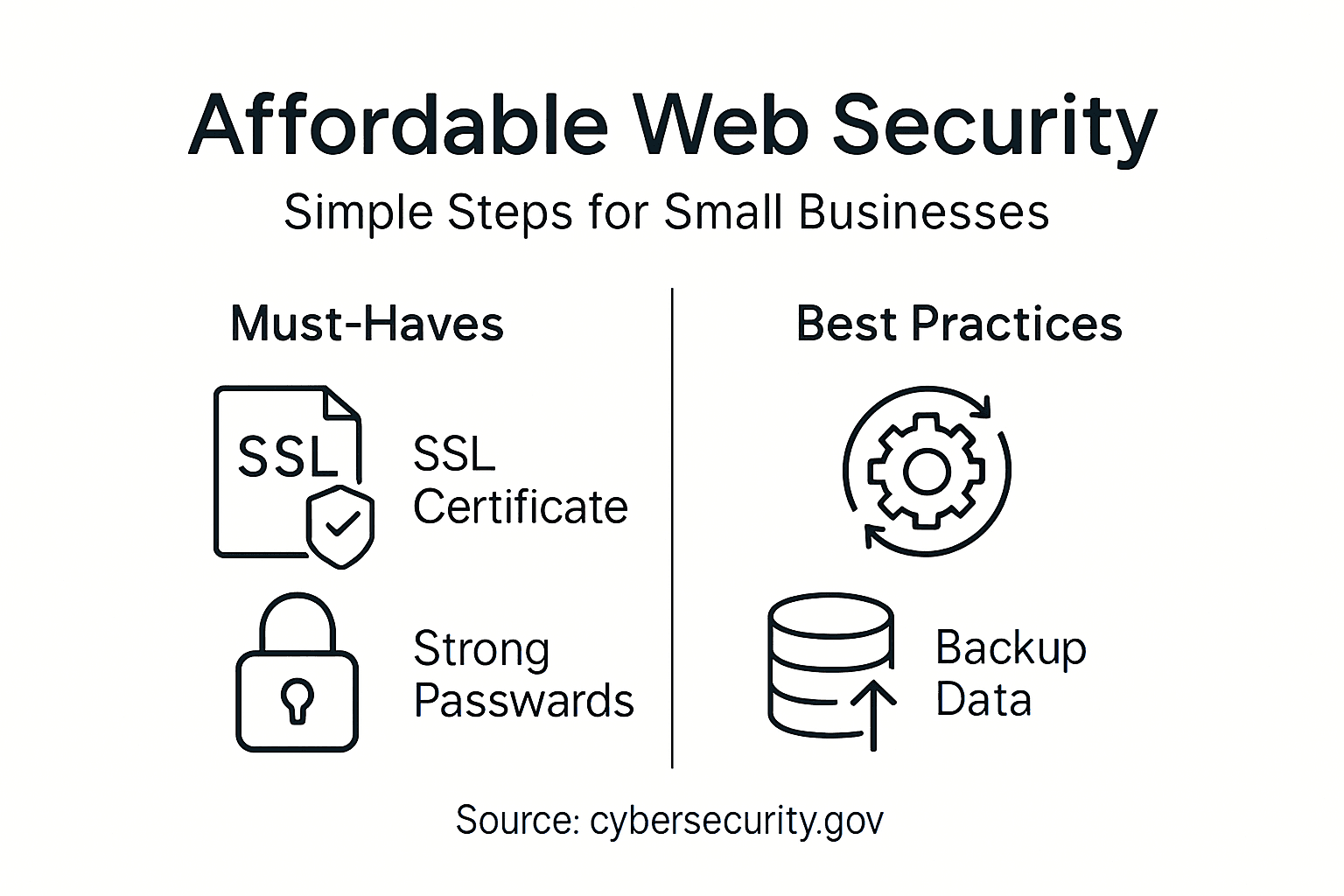
This table summarizes affordable website security measures and their business benefits:
| Solution | Typical Cost | Business Benefit |
|---|---|---|
| SSL Certificate | Low annual fee | Builds customer trust |
| Security Plugins | Free to low cost | Prevents common website attacks |
| Multi-Factor Authentication | Usually free | Increases account protection |
| Regular Software Updates | No additional fee | Reduces vulnerability window |
| Automated Backups | Low monthly fee | Enables fast system recovery |
Pro tip: Allocate a small monthly budget for cybersecurity and treat it as an essential business operating expense, not an optional luxury.
Strengthen Your Small Business Website Security with Proven Digital Solutions
Small businesses face real risks from cyber threats like malware, phishing, and ransomware that can damage your reputation and bottom line. This article highlights how essential strong website security is for building customer trust and avoiding costly breaches. If you are concerned about protecting your digital presence while growing your online sales, ibrand.media offers tailored strategies that integrate security-minded web design and trustworthy marketing practices. Our approach helps you boost visibility, engage local customers securely, and maintain ongoing protection without breaking your budget.

Explore how our expert team at ibrand.media crafts affordable, effective solutions that align with the cybersecurity priorities outlined here. Whether you want to learn more about digital marketing benefits on our Uncategorized page or start with a personalized plan through our main site, the time to act is now. Protect your business, build lasting customer trust, and watch your online results grow by partnering with us today.
Frequently Asked Questions
Why is website security important for small businesses?
Website security is crucial for small businesses as it protects digital assets and customer data from cyber threats. A secure website builds customer trust, enhances business reputation, and avoids costly legal and financial consequences resulting from data breaches.
What are the major threats to small business websites?
Small business websites face several threats, including malware infections, phishing attacks, ransomware, DDoS attacks, SQL injection, and cross-site scripting. These threats can lead to data loss, business interruption, and significant financial damage.
How can small businesses improve their website security affordably?
Small businesses can enhance their website security by implementing SSL certificates, using security plugins, enabling multi-factor authentication, performing regular software updates, providing employee training, and utilizing automated backup systems. Many of these solutions involve minimal or no cost.
What are the consequences of a website security breach for small businesses?
The consequences of a website security breach can be severe, including direct monetary losses, regulatory fines, legal settlements, business interruption, and long-term damage to reputation. These impacts can threaten the viability of a small business, making robust website security essential.
Recommended
- Complete Guide to Cybersecurity Basics for Small Business | Ibrandmedia
- Why Website Updates Matter for Small Businesses | Ibrandmedia
- 8 Essential Website Optimization Tips for Small Businesses | Ibrandmedia
- Building Online Credibility: Keys to Attracting Customers | Ibrandmedia
- Comprendre la sécurité paiement en ligne : enjeux et solutions
Recent Comments