
Almost half of American small businesses report losing customers due to outdated websites. With online reviews and fast searches shaping consumer decisions, your website acts as the front door to your business. Affordable updates can ensure you stay ahead of competitors, keep customers engaged, and avoid common myths that hold many back. This article clears up misconceptions and reveals practical ways to maximize your website’s impact on visibility and trust.
Table of Contents
- Defining Website Updates And Common Myths
- Types Of Website Updates: Content, Design, Security
- How Updates Improve Search Ranking And Trust
- Business Risks Of Outdated Websites
- Best Practices For Budget-Friendly Website Refreshes
Key Takeaways
| Point | Details |
|---|---|
| Website updates are essential | Regular website updates enhance functionality, security, and user experience, keeping your business competitive. |
| Types of updates | Focus on content, design, and security updates to maintain an engaging and secure online presence. |
| Risks of neglect | Outdated websites can lead to financial losses, reduced search visibility, and reputational damage. |
| Budget-friendly strategies | Small businesses can achieve impactful updates using cost-effective tools and phased improvement strategies. |
Defining Website Updates and Common Myths
A website update involves strategic modifications to your online platform that enhance functionality, security, and user experience. While many small business owners perceive updates as complex or unnecessary, modern digital strategies demand consistent maintenance. Understanding website maintenance processes reveals that regular updates are critical for staying competitive in today’s digital marketplace.
Contrary to popular belief, website updates are not just about changing visual design or adding new images. They encompass multiple dimensions, including technical improvements, security patches, content refreshment, and performance optimization. Small businesses often mistakenly assume that once a website is launched, it requires minimal attention. However, websites are dynamic digital assets that need ongoing care to remain effective and secure.
Common myths surrounding website updates include beliefs that they are expensive, time-consuming, or only necessary when something breaks. In reality, proactive updates can prevent costly repairs, improve search engine rankings, and demonstrate professional credibility. Regular maintenance helps protect against potential security vulnerabilities, ensures compatibility with modern browsers and devices, and keeps your digital presence aligned with evolving customer expectations.
Pro tip: Schedule quarterly website audits to systematically review and implement necessary updates, treating your website as a living digital asset that requires consistent nurturing.
Types of Website Updates: Content, Design, Security
Small businesses must understand three primary types of website updates: content, design, and security. These updates serve distinct but interconnected purposes in maintaining a robust online presence. Content updates play a critical role in website maintenance, involving strategic refreshment of text, images, and multimedia elements that keep your digital platform engaging and relevant.

Content updates go beyond simple text changes. They include adding blog posts, updating service descriptions, refreshing product information, and incorporating current testimonials or case studies. Design updates, meanwhile, focus on visual and functional improvements that enhance user experience. These might involve modernizing color schemes, improving navigation structures, optimizing mobile responsiveness, or implementing more intuitive page layouts that guide visitors smoothly through your sales funnel.
Website security updates represent perhaps the most critical category of maintenance. These updates protect your digital infrastructure from emerging cyber threats, patch potential vulnerabilities, and ensure your customers’ data remains secure. Cybercriminals constantly develop new methods of infiltration, making regular security patches essential for preventing potential breaches. Small businesses are particularly vulnerable, as they often lack extensive IT resources to monitor and respond to complex digital security challenges.
Pro tip: Create a quarterly website update checklist that systematically covers content relevance, design optimization, and security patch implementation to maintain a proactive digital strategy.
Here’s a summary of how different website update types benefit small businesses:
| Update Type | Main Focus | Key Business Impact |
|---|---|---|
| Content | Keeping information relevant | Improves SEO and engagement |
| Design | Enhancing user experience | Increases conversions, reduces bounce rate |
| Security | Protecting site infrastructure | Prevents data breaches, builds trust |
How Updates Improve Search Ranking and Trust
Search engines like Google prioritize websites that demonstrate consistent, high-quality content updates. The frequency of content updates directly impacts search engine rankings, signaling to algorithms that your website is active, relevant, and valuable to users. When small businesses regularly refresh their online content, they send powerful signals of credibility and expertise to both search engines and potential customers.
Trust is a critical component of search ranking that goes beyond simple content updates. Websites that consistently provide accurate, current information build reputation and authority within their industry. This means updating not just blog posts or service descriptions, but also ensuring technical elements like site speed, mobile responsiveness, and security certificates are current. Search engines reward websites that demonstrate ongoing commitment to user experience and information quality, which translates directly into improved search visibility.
For small businesses, strategic website updates represent more than just technical maintenance. They are an opportunity to showcase expertise, respond to emerging customer needs, and differentiate from competitors. By regularly publishing fresh, relevant content, implementing user-friendly design improvements, and maintaining robust security protocols, businesses can create a dynamic online presence that attracts both search engine algorithms and potential customers. The cumulative effect of these consistent updates builds long-term digital credibility that can significantly enhance online visibility and customer trust.
Pro tip: Create a content calendar that schedules monthly website updates, focusing on adding value through informative, current content that addresses your target audience’s evolving needs.
Business Risks of Outdated Websites
Small businesses face significant financial and reputational consequences from maintaining outdated websites. Hidden costs of an obsolete online platform can dramatically impact business performance, ranging from lost customer trust to reduced search engine visibility. An aging website signals neglect and can inadvertently communicate that a business is out of touch or unprofessional, potentially driving potential customers toward more modern competitors.
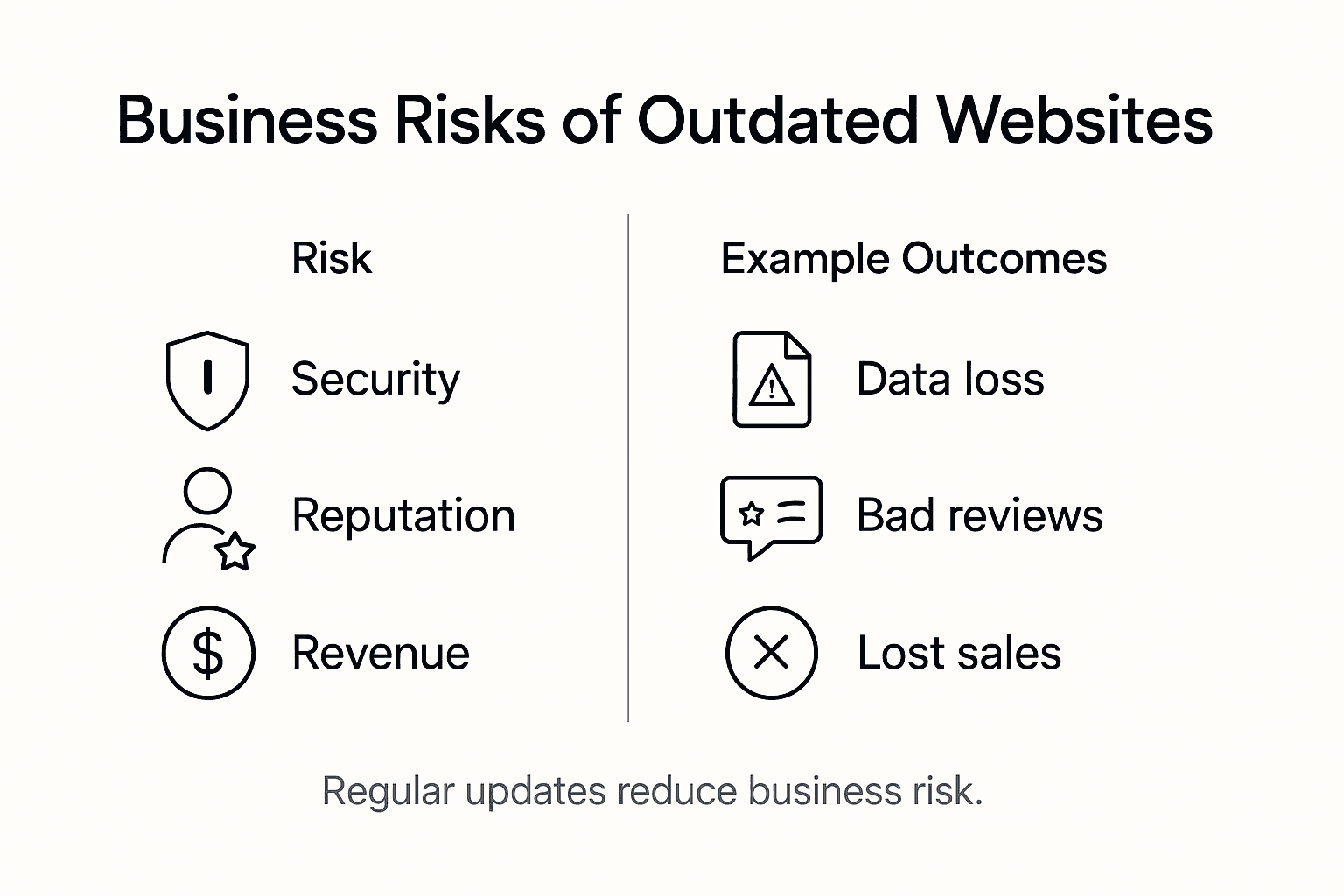
Technical vulnerabilities represent another critical risk of neglected websites. Outdated platforms often lack modern security protocols, making them prime targets for cybercriminals. Potential security breaches can compromise customer data, expose sensitive business information, and create legal liabilities that far exceed the cost of routine website maintenance. Moreover, older websites typically suffer from poor performance issues like slow loading times, non-responsive design, and broken navigation links that frustrate users and increase bounce rates.
The competitive landscape increasingly demands digital excellence. Businesses with stagnant online platforms risk becoming invisible to potential customers who expect seamless, modern digital experiences. Search engines penalize websites with outdated content and poor user interfaces, effectively pushing these businesses further down search rankings. This digital invisibility translates into tangible business losses: reduced web traffic, fewer lead conversions, and diminished market credibility. Small businesses cannot afford to treat their websites as static billboards but must view them as dynamic, evolving marketing platforms that require consistent investment and strategic updates.
Pro tip: Conduct a comprehensive website audit every six months to identify and address potential technical, design, and content gaps that could be undermining your online performance.
Below is a comparison of common risks faced by businesses with outdated websites:
| Risk Area | Consequence | Example Outcome |
|---|---|---|
| Security | Higher vulnerability to attacks | Data breaches or hacked website |
| Performance | Slow speeds frustrate users | Increased bounce rate, lost sales |
| Reputation | Perceived as unprofessional | Decline in customer trust |
| Search Visibility | Lower search engine rankings | Reduced web traffic |
Best Practices for Budget-Friendly Website Refreshes
Small businesses can achieve significant website improvements without breaking the bank by adopting strategic, cost-effective approaches. Budget-friendly website options emphasize essential features while maintaining functionality, focusing on core customer needs and avoiding unnecessary expenses. The key is understanding which updates provide maximum impact with minimal financial investment.
Prioritizing website elements can help small businesses allocate resources wisely. Critical updates should target mobile compatibility, page loading speed, and user navigation. This might include optimizing existing content, streamlining page designs, and ensuring responsive layouts that work across different devices. Free and low-cost tools like open-source content management systems, template-based website builders, and integrated SEO plugins can significantly reduce development costs while maintaining professional quality.
Technology has made website refreshes more accessible than ever for budget-conscious businesses. Stock image libraries, free design tools, and template marketplaces offer affordable alternatives to custom design work. Small businesses can leverage these resources to create modern, clean interfaces without hiring expensive design agencies. Strategic updates should focus on clear messaging, intuitive navigation, and performance optimization rather than complex, costly redesigns. By incrementally improving website elements and staying current with basic design trends, businesses can maintain a competitive digital presence without substantial financial strain.
Pro tip: Develop a phased website improvement strategy that tackles one critical update area every quarter, spreading costs and preventing overwhelming financial commitments.
Keep Your Website Updated and Grow Your Small Business Today
Small business owners often struggle with keeping their websites fresh, secure, and user-friendly. As the article explained, regular content updates, design improvements, and security patches are vital to maintaining trust, improving search rankings, and avoiding costly issues. If your website feels outdated or you worry about falling behind competitors, you are not alone. The good news is that you can take proactive steps now to transform your website into a powerful tool that attracts and converts customers.
At Ibrand.media, we specialize in helping small to medium-sized businesses like yours implement tailored digital marketing solutions that keep your online presence active and effective. Whether you need affordable website design updates, expert SEO optimization, or security enhancements, our team delivers fast, professional results that fit your budget. Don’t let an outdated site hold your business back. Visit our Uncategorized | Ibrandmedia page to explore services designed for small businesses or get started with a personalized plan at https://ibrand.media. The time to update your website and boost your growth is now.
Frequently Asked Questions
Why are regular website updates important for small businesses?
Regular website updates are crucial for small businesses because they enhance functionality, security, and user experience. Keeping content fresh helps improve search engine rankings and demonstrates credibility and professionalism to customers.
What types of updates should small businesses focus on for their websites?
Small businesses should focus on three primary types of updates: content updates (refreshing text, images, and multimedia), design updates (improving user experience through visual changes), and security updates (protecting the website from cyber threats).
How can website updates improve search engine rankings?
Search engines prioritize websites that consistently update their content, signaling that the site is active and relevant. Regular updates can enhance both user experience and site authority, leading to improved search visibility.
What risks do small businesses face if they neglect website updates?
Neglecting website updates can lead to technical vulnerabilities, poor performance issues, and damage to a business’s reputation. This can result in security breaches, reduced search engine visibility, and loss of customer trust.
Recommended
- 10 Essential Website Design Tips for Small Businesses | Ibrandmedia
- 10 Essential Website Design Best Practices for Small Businesses | Ibrandmedia
- 8 Essential Website Optimization Tips for Small Businesses | Ibrandmedia
- Understanding the Latest SEO Trends 2025 for Small Businesses | Ibrandmedia
- Cutting Edge Image-to-Video Generators for Small Businesses – ThinkZipper
Recent Comments