
TL;DR:
- Effective event marketing starts with a compelling value proposition and a mobile-friendly landing page that prioritizes conversion.
- Maximizing attendance involves targeted promotion, confirmation follow-ups, and optimizing registration flow to reduce drop-offs.
You put months into planning an event, and registration day arrives to a trickle of sign-ups. Or worse, you sell out only to watch a third of those registrants ghost you on the day. Knowing how to increase event bookings is one thing. Translating that knowledge into a full room with paying, engaged attendees is where most event planners and business owners get stuck. This guide walks you through the full arc, from building a booking-ready foundation to executing promotion that actually converts, optimizing your registration flow, and locking in attendance after the sign-up.
Table of Contents
- Key takeaways
- How to increase event bookings: start with your foundation
- Executing promotion that actually moves people to register
- Optimizing your registration and booking flow
- Verifying and forecasting actual attendance
- Troubleshooting drop-offs, no-shows, and lulls
- My honest take on what actually moves the needle
- Get more bookings with smarter event marketing
- FAQ
Key takeaways
| Point | Details |
|---|---|
| Mobile-first registration wins | Over 60% of registrations happen on mobile, so your landing page and forms must load fast and convert easily. |
| Confirmed attendees show up | Registrants who confirm via SMS or email attend at 80 to 90%, versus 30 to 40% for unconfirmed sign-ups. |
| Segment your promotions | Tailored messages to past attendees, prospects, and VIPs dramatically outperform generic broadcast campaigns. |
| Early-bird urgency drives action | Discounts of 20 to 30% paired with countdown timers are the most reliable way to generate early registration momentum. |
| Forecasting protects profitability | Tracking engagement signals instead of raw registration numbers helps you staff, cater, and plan more accurately. |
How to increase event bookings: start with your foundation
Before you spend a dollar on ads or write a single email, your event needs a clear, compelling reason for someone to register. That means two things: a distinct value proposition and a landing page built to convert.
Define what makes your event different
Ask yourself what a prospective attendee cannot get anywhere else. Is it an exclusive speaker? A unique venue format? Hands-on workshops with a 10-person cap? The answer to that question becomes your headline. Your landing page should lead with a benefit, not a description. “Learn to close $10K consulting deals in one afternoon” beats “Consulting Workshop, Saturday, March 8” every time.
According to Eventbrite’s 2026 social study, Gen Z and Millennials now actively prefer unique venues with authentic, unforced social experiences over conventional, choreographed formats. If your event leans into that, say so loudly on the page.
Build a landing page that converts
A landing page that looks great on desktop but crawls on a phone is quietly killing your registrations. More than 60% of registrations happen on mobile devices, and friction in those flows leads to real abandonment. Pair your mobile design with guidance from Ibrand’s responsive design best practices to keep your page fast, clear, and built for conversion.
Here is what a high-converting event landing page must include:
- A benefit-driven headline that speaks to a specific outcome the attendee will walk away with
- One visible call-to-action button above the fold, repeated at the bottom of the page
- A short form asking for name and email only at the initial stage. Collect dietary preferences and session choices later.
- Social proof near the top, including testimonials, past attendee photos, or a simple “Join 400+ professionals already registered” line
- An urgency element, such as a countdown timer tied to early-bird pricing or a seats-remaining counter
Pro Tip: Test your registration page on three different phones before launch. A button that renders perfectly on an iPhone may be cut off on an Android browser, and that alone can cost you registrations.
Executing promotion that actually moves people to register
Getting people to your landing page is a separate challenge from converting them once they arrive. Effective event booking strategies rely on reaching the right people through the right channels at the right moment.
Here is the sequence that consistently outperforms single-channel campaigns:
- Launch to your warmest audience first. Email past attendees before you open registration publicly. They already trust you and convert at higher rates. Segmented campaigns targeting past attendees, VIPs, and prospects by interest level deliver significantly better registration rates than generic mass announcements.
- Activate social channels with engagement content. Speaker spotlights, behind-the-scenes setup photos, and countdown posts keep the event top of mind. Polls and Q&A prompts on Instagram Stories and LinkedIn give you engagement data while building anticipation.
- Run retargeting ads for landing page visitors who did not register. Someone who visited your page already showed interest. A short retargeting window of three to seven days with a specific offer, such as an early-bird reminder, is one of the highest-return moves in tips for event marketing.
- Partner with aligned businesses or communities. A co-promotion with a complementary brand or a guest post in a relevant newsletter gives you access to a pre-warmed audience without paid spend.
- Lean on user-generated content from past events. Post-event UGC including candid attendee photos and testimonial clips makes a powerful promotional tool because it shows the real experience rather than the marketed version.
Pro Tip: Segmented and timed campaigns that emphasize exclusivity and social proof generate more momentum than big announcements. Consider releasing a “VIP early access” window 48 hours before general registration opens. It costs nothing and creates genuine scarcity.
Influencer partnerships are worth considering for the right event type. Micro-influencers in your niche can drive authentic attendee interest more effectively than broad paid placements, especially for community-focused or experiential events.
Optimizing your registration and booking flow
You can have a beautiful landing page and a well-targeted campaign, and still lose people at the moment they try to register. Registration drop-off is one of the most underrated problems in event booking strategies.

The goal is a checkout that takes under 60 seconds on a phone. That is not an exaggeration. Every additional field you require and every extra screen you add reduces your conversion rate.
Here is what the data supports:
- Single-page forms with minimal fields and clear progress indicators measurably reduce abandonment compared to multi-step flows that feel endless
- Early-bird discounts of 20 to 30% paired with visible countdown timers are the most effective pricing lever for driving early registration commitment
- Group registration discounts work because they activate peer pressure in the best way. When someone can register their whole team at a discount, they become an internal advocate selling the event for you.
- Autofill compatibility and Apple Pay or Google Pay options remove the biggest friction points in mobile checkout
The psychology here matters. Urgency and simplicity are not tricks. They respect the attendee’s time and reward the ones who commit early. A firm early-bird deadline with a real date and a visible timer converts far better than a vague “limited spots available” line.
Pro Tip: Do not ask for a phone number, company size, or dietary requirements at the time of registration unless they are required to process the booking. Send a short follow-up email 24 hours later to collect that information. You will get better completion rates and fewer abandoned forms.
Verifying and forecasting actual attendance
Registration numbers feel good. Confirmed attendees are what actually matter for your budget, your catering order, and your staff schedule.
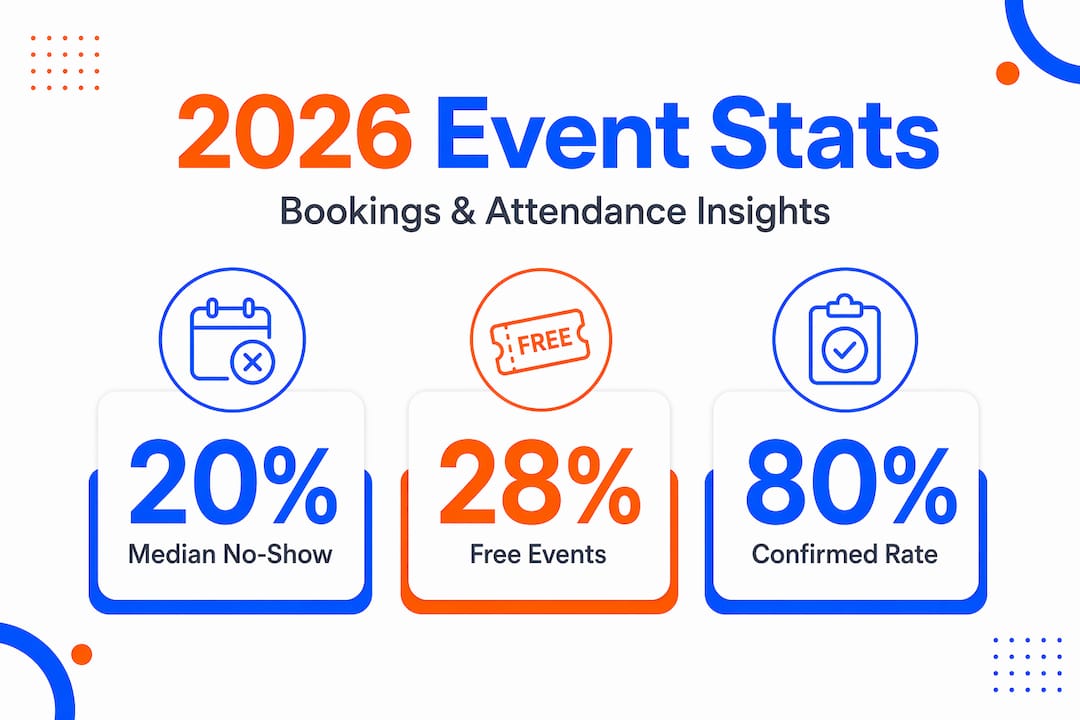
The median no-show rate across all event types is around 20% in 2026. Free events run closer to 28%, and small events with under 50 attendees can see no-show rates as high as 32%. If you are planning for 100 people and 32 might not show, that is a staffing and catering problem hiding in your registration dashboard.
The solution is a confirmation system that actively separates committed attendees from passive registrants.
| Strategy | Unconfirmed registrants | Confirmed attendees |
|---|---|---|
| Attendance rate | 30% to 40% | 80% to 90% |
| Best engagement tool | Re-engagement email sequence | SMS reminder 24 hours before |
| Commitment signal | Email open only | Calendar save or confirmation reply |
| Operational use | Planning buffer | Actual headcount for catering, staffing |
SMS reminders sent 24 hours before an event can reduce no-show rates by 38 to 50%, especially when the message includes a one-tap cancellation option. The cancellation option is not a risk. It gives you accurate data and fills open spots through your waitlist.
Tracking calendar saves is another underused tool. A link to add the event to Google Calendar or Apple Calendar, included in the confirmation email, is now a more reliable commitment signal than an email open. Recent email privacy updates mean open rates are inflated by bots and preview panes. A calendar save requires a deliberate human action.
For operational planning, use engagement data to forecast attendance 48 to 72 hours before the event. Look at email clicks, confirmation responses, and calendar saves. That combination will tell you more about your actual headcount than raw registration totals ever will.
Pro Tip: Build a waitlist from day one, even if you do not expect to sell out. It signals demand, creates urgency, and gives you a ready pool of replacements when late cancellations happen.
Troubleshooting drop-offs, no-shows, and lulls
Even well-planned events hit friction points between registration and the event date. Here are the most common issues and how to address them directly:
- No-shows from forgetting: Send a multi-touch reminder sequence at one week, 48 hours, and 24 hours before the event. Include logistics details like parking, dress code, and agenda so logistics uncertainty does not become a last-minute excuse to skip.
- Registration abandonment mid-form: Review your form analytics for where people drop off. If most exits happen on page two, your form has too many screens. Add a progress bar and cut any non-essential field from the first screen.
- Engagement lulls between registration and the event: Send one piece of value between sign-up and event day. A pre-event resource, a speaker preview video, or a short attendee survey all maintain connection without feeling spammy.
- Late cancellations leaving gaps: Activate your waitlist immediately and use direct outreach via SMS to fill spots quickly. Real-time waitlist management is worth setting up in your registration platform before you ever need it.
My honest take on what actually moves the needle
I’ve seen event planners obsess over registration numbers the week of launch and completely miss what those numbers are actually telling them. High registrations feel like success. But if your email open rate for that registrant cohort is below 20% and nobody has clicked a single pre-event update, you are looking at a no-show problem in slow motion.
What I’ve found actually works, more than any single tactic, is treating the period between registration and the event as its own marketing campaign. Most planners go quiet after the sign-up confirmation. The best ones keep delivering value. A short video from a speaker, a “here’s what to expect” email, a logistics guide that removes every possible reason to bail. These touchpoints build psychological commitment in a way that a single reminder cannot.
I’ve also noticed that personalization is the most underused lever in event marketing. Not first-name personalization in an email subject line. Real segmentation where your past attendees get a completely different message than first-timers, and your VIPs get something that feels genuinely exclusive. The attendance metrics back this up: engagement signals predict show-up rates far better than registration counts.
My honest advice? Stop optimizing for registrations and start optimizing for confirmed, engaged attendees. That shift changes every decision you make, from how you write your confirmation email to how you structure your reminder sequence.
— TONY
Get more bookings with smarter event marketing
If the strategies in this article feel like a lot to manage on top of running your actual business, that is where Ibrand comes in. Ibrand works with event businesses and venues to build the kind of digital presence that converts browsers into booked attendees. From venue-specific SEO that puts you in front of people actively searching for events like yours, to mobile-optimized landing pages and social media campaigns built for registrations, every service is tailored to your specific event and audience. Explore Ibrand’s local marketing guide or reach out for a personalized plan that fits your goals and budget.
FAQ
What is the average no-show rate for events?
The median no-show rate in 2026 is approximately 20% across all event types, with free events reaching 28% and small events as high as 32%.
How do I reduce no-shows after registration?
Send SMS reminders 24 hours before your event, which can cut no-show rates by up to 50%. Include a one-tap cancellation link to keep your attendee count accurate.
How many fields should an event registration form have?
Keep your initial form to name and email only. Single-page forms with minimal fields consistently reduce abandonment. Collect additional details in a follow-up email after registration.
Do early-bird discounts actually increase event registrations?
Yes. Early-bird pricing at 20 to 30% off paired with a countdown timer is one of the most proven ways to drive early commitment and build registration momentum before the general public push.
How can I predict actual attendance from registration numbers?
Track engagement signals like email clicks, confirmation replies, and calendar saves rather than raw registration counts. Confirmed attendees show up at 80 to 90%, while unconfirmed registrants attend at only 30 to 40%.
Recent Comments