
Struggling to attract more local event bookings despite having an appealing space? For venue owners and managers across North America, understanding and improving your local online visibility can make or break your booking rates. Leveraging local data assessment and implementing affordable SEO strategies positions your venue directly in front of potential customers searching for their next event location. This guide reveals actionable steps to maximize search exposure, increase bookings, and build consistent digital credibility in your local market.
Table of Contents
- Step 1: Assess Local Search Potential For Your Venue
- Step 2: Optimize Your Venue Website Content For SEO
- Step 3: Enhance Online Listings And Citations For Visibility
- Step 4: Implement Targeted Local Keywords In All Channels
- Step 5: Verify Rankings And Monitor Traffic Improvements
Quick Summary
| Key Point | Explanation |
|---|---|
| 1. Assess Local Search Potential | Conduct thorough research on local demographics and event trends to enhance online visibility and booking opportunities. |
| 2. Optimize Website for SEO | Create engaging, keyword-rich content, focusing on local searches and specific event types to attract more clients. |
| 3. Enhance Online Listings | Maintain consistent and detailed business information across multiple directories to build credibility and improve search rankings. |
| 4. Implement Local Keywords | Use precise geographic and event-specific keywords in all marketing channels to better connect with potential clients. |
| 5. Monitor Rankings and Traffic | Regularly track website performance metrics to identify trends and optimize strategies for improved bookings and visibility. |
Step 1: Assess local search potential for your venue
Understanding your venue’s local search potential requires strategic research and smart digital positioning. By carefully analyzing your local market, you can dramatically improve your event booking opportunities and online visibility.
Start by conducting a comprehensive local data assessment that helps you understand your community’s unique characteristics and event market. Your research should focus on several critical areas:
- Geographic demographics of potential event customers
- Local business and event trends in your area
- Competitive landscape for similar event venues
- Online search volume for event-related keywords
- Community event patterns and preferences
Local data isn’t just numbers – it’s a roadmap to understanding your market’s specific needs and opportunities.
To get accurate insights, leverage tools like Google Analytics, Google Business Profile, and local business directories. These platforms provide granular data about search behaviors, user engagement, and geographic interest in your venue’s services.
Document your research findings systematically, creating a clear snapshot of your local search potential. Look for patterns in search queries, peak booking seasons, and demographic trends that can inform your marketing strategy.
Here’s a comparison of key tools for assessing your local search potential:
| Tool Name | Main Function | Insights Provided |
|---|---|---|
| Google Analytics | Track user website activity | Visitor demographics, traffic sources |
| Google Business Profile | Manage local venue presence | Search impressions, customer actions |
| Local Directories | Boost online visibility | Business info, reviews, engagement patterns |
Pro tip: Regularly update your local market research every 6-12 months to stay ahead of shifting community dynamics and search trends.
Step 2: Optimize your venue website content for SEO
Prepare to transform your venue’s online presence by strategically crafting website content that attracts both search engines and potential event customers. Implementing targeted SEO techniques will help you rise through search rankings and connect with your ideal audience.
Your website content optimization strategy should focus on several critical elements:
- Keyword research specific to event venues and local markets
- Compelling, descriptive page titles and headers
- Location-specific content that highlights your venue’s unique attributes
- High-quality, original event descriptions
- Clear, engaging service information
- Mobile-responsive design
Effective SEO is about creating valuable content that speaks directly to your potential customers’ needs and search intentions.
When writing content, prioritize natural language that incorporates event-related keywords seamlessly. Avoid keyword stuffing – instead, focus on creating informative, engaging descriptions that showcase your venue’s strengths. Include specific details like event capacity, amenities, location features, and past event successes.

Consider creating dedicated pages for different event types (weddings, corporate events, celebrations) to capture diverse search traffic. Each page should have unique, detailed content that answers potential customers’ most common questions.
Pro tip: Update your website content quarterly to reflect current offerings and maintain fresh, relevant information that search engines will reward.
Step 3: Enhance online listings and citations for visibility
Unlock the power of strategic online listings to dramatically improve your venue’s digital presence and attract more potential clients. Local business citations are crucial for establishing your venue’s credibility and search engine visibility.
Your citation enhancement strategy should include:
- Consistent business name, address, and phone number across all platforms
- Comprehensive listings on major directories like Google Business Profile
- Industry-specific venue and event listing websites
- Local chamber of commerce and business association directories
- Social media business profiles
- Regional event and tourism websites
Accurate and widespread citations are your digital reputation’s foundation, signaling trustworthiness to both search engines and potential clients.
Ensure every listing includes high-quality images, detailed descriptions, and current contact information. Pay special attention to accuracy – even minor discrepancies can negatively impact your search rankings. Create a spreadsheet to track all your online listings and schedule regular audits to keep information current.
Focus on platforms most relevant to event venues, such as wedding directories, corporate event sites, and local tourism resources. Each listing is an opportunity to showcase your venue’s unique features and attract your ideal client demographic.
Pro tip: Conduct a quarterly audit of your online citations, correcting any outdated information and exploring new listing opportunities to maintain optimal visibility.
Step 4: Implement targeted local keywords in all channels
Master the art of local keyword strategy to connect with potential clients searching specifically for venues in your area. Local search engine optimization requires a nuanced approach that goes beyond generic marketing techniques.
Your local keyword implementation strategy should encompass:
- Precise geographic location keywords
- Specific event type descriptors
- Neighborhood and community-related terms
- Venue-specific amenities and features
- Localized long-tail keyword variations
- Natural language search phrases
Effective local keywords bridge the gap between your venue’s unique offerings and potential customers’ specific search intentions.
Research and integrate keywords that reflect how local customers actually search for event spaces. This means going beyond simple location tags and understanding the specific language your target market uses. For wedding venues, this might include phrases like “rustic barn wedding venue in [City Name]” or “affordable outdoor wedding location near [Neighborhood]”
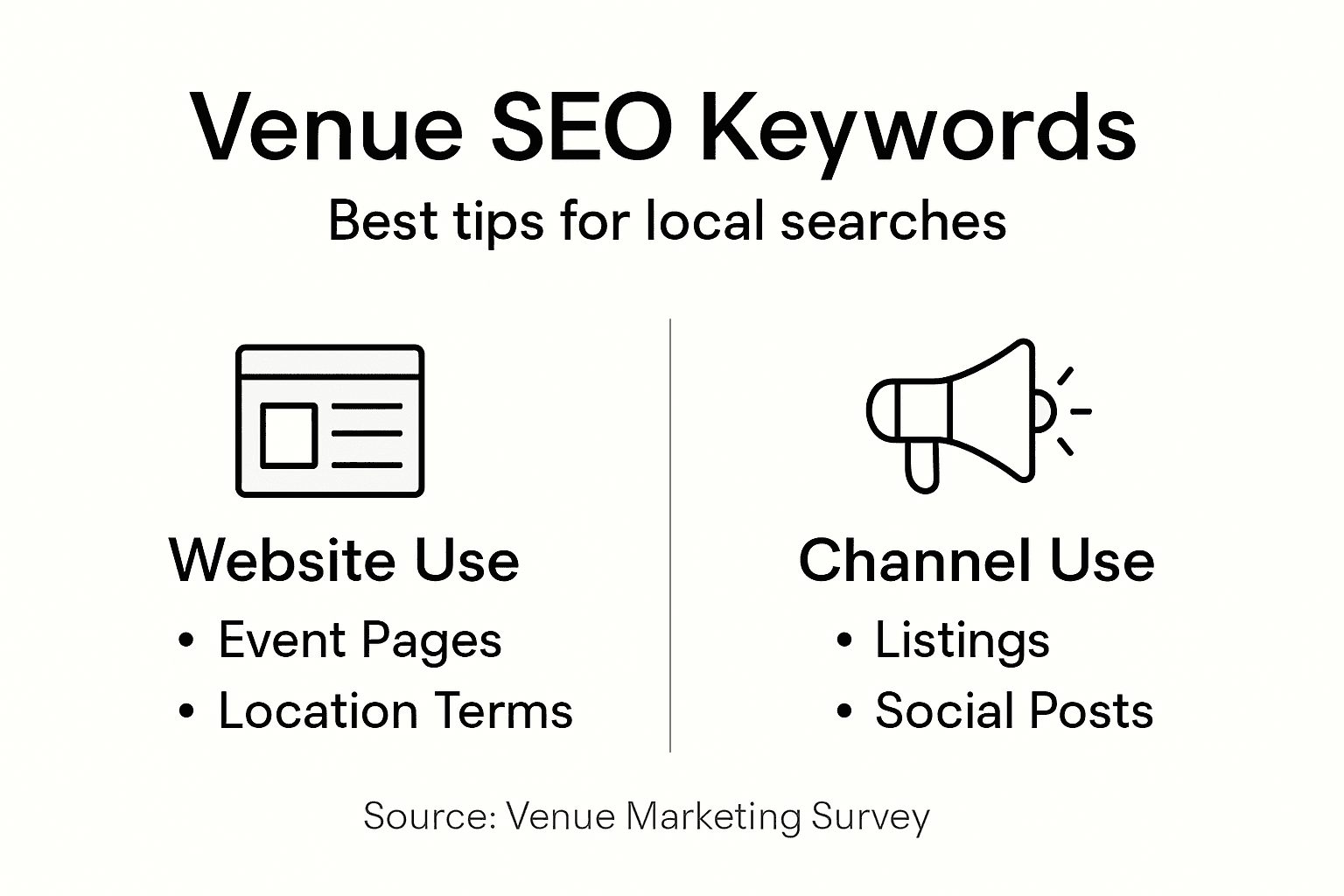
Apply these keywords strategically across all digital channels – website content, social media profiles, online listings, and marketing materials. Ensure the language feels natural and authentic, not forced or overly stuffed with keywords.
Pro tip: Use local keyword research tools to continuously refine your strategy, tracking which location-specific phrases generate the most engagement and bookings.
Step 5: Verify rankings and monitor traffic improvements
Transform your venue’s digital performance by mastering the art of tracking and analyzing your search rankings. Conducting comprehensive SEO audits will help you understand exactly how your online presence is performing.
Establish a robust monitoring strategy with these key tracking methods:
- Google Analytics for detailed traffic insights
- Google Search Console performance reports
- Third-party rank tracking tools
- Monthly comparative traffic analysis
- Conversion rate monitoring
- Keyword ranking progress tracking
Consistent monitoring transforms raw data into actionable strategies that drive real booking improvements.
Set up automated reporting systems that provide clear, visual representations of your website’s performance. Look beyond simple ranking numbers and focus on metrics that directly impact your venue’s booking potential – such as click-through rates, time on site, and inquiry conversions.
Pay special attention to trends over time, noting how changes in your SEO strategy correlate with shifts in website traffic and event booking rates. This data-driven approach allows you to continuously refine and optimize your digital marketing efforts.
A summary of critical metrics to track for measuring local SEO success:
| Metric | Purpose | Impact on Venue Bookings |
|---|---|---|
| Keyword Rankings | Measure search visibility | Higher ranks mean more inquiries |
| Website Traffic | Track site visits growth | Increased visits boost opportunities |
| Conversion Rate | Assess inquiry effectiveness | More conversions equal more bookings |
| Click-Through Rate | Evaluate listing appeal | High CTR draws more prospects |
Pro tip: Schedule monthly SEO performance reviews, comparing current metrics against previous periods to identify consistent improvement patterns and potential optimization opportunities.
Take Your Venue’s SEO Strategy to the Next Level with Expert Support
Struggling to boost your venue’s online visibility and event bookings? The article highlights critical challenges like optimizing local keywords, enhancing online listings, and tracking SEO performance to attract more clients. At Ibrandmedia, we understand these pain points and offer tailored SEO solutions that focus on creating compelling content, managing your local presence, and continuously improving your search rankings.
Explore our range of services in Uncategorized | Ibrandmedia to find out how we can help you master local SEO and digital marketing without breaking your budget. Take control of your venue’s future today by visiting Ibrandmedia and requesting your custom digital marketing plan. The sooner you act, the faster your event bookings will grow.
Frequently Asked Questions
How can I assess my venue’s local search potential?
To assess your venue’s local search potential, conduct a comprehensive local data assessment that examines geographic demographics, local event trends, and competitive landscapes. Utilize tools like Google Analytics and local business directories to gather insights and document your findings for better marketing strategies.
What are effective ways to optimize my venue website content for SEO?
To optimize your venue website content for SEO, focus on keyword research, engaging page titles, and high-quality event descriptions. Aim to update your website content quarterly to reflect current offerings and integrate specific keywords relevant to your location and events to attract potential customers.
How can I enhance my online listings and citations?
Enhance your online listings by ensuring your venue’s name, address, and phone number are consistent across all platforms. Provide comprehensive information, including high-quality images and current details, on major local directories and industry-specific websites to boost your venue’s visibility.
What local keywords should I implement for my venue?
Implement local keywords that include your specific geographic location and the types of events you host. Use natural language phrases that potential clients might search for, such as “outdoor wedding venue in [City Name],” to connect effectively with your target audience.
How do I track the effectiveness of my SEO efforts for my venue?
Track the effectiveness of your SEO efforts by using tools like Google Analytics and third-party ranking trackers to monitor website traffic and keyword rankings. Set up automated reporting systems to analyze metrics and establish a monthly review process to make necessary adjustments that can improve your venue’s bookings.
Recommended
- Venue Marketing Strategies for Small Business Success 2025 | Ibrandmedia
- Top Venue Email Marketing Tips for Local Businesses 2025 | Ibrandmedia
- Benefits of Online Scheduling: Boosting Business Efficiency | Ibrandmedia
- How to Get Found Online: Boost Your Local Business Fast | Ibrandmedia
- How To Optimise Pages Of Your Website – Paul Baguley
Recent Comments