
Most American small business owners underestimate how much digital presence shapes customer trust today. With more than half of local searches leading to a store visit within a single day, competition in the online space is fierce. Whether you run a cafe or a contractor service, connecting with your audience starts by understanding what sets your American business apart and how targeted online strategies drive lasting results.
Table of Contents
- Step 1: Define Your Target Audience And Goals
- Step 2: Optimize Your Website For Search Engines
- Step 3: Claim And Update Business Listings
- Step 4: Leverage Social Media Channels
- Step 5: Track And Refine Your Online Performance
Quick Summary
| Key Insight | Explanation |
|---|---|
| 1. Clearly define your target audience | Understanding your potential customers ensures targeted marketing that resonates and drives sales. |
| 2. Optimize your website for SEO | Implement key SEO strategies to increase search visibility and attract more potential customers. |
| 3. Maintain consistent business listings | Claim and update your business profiles to provide accurate information, boosting trust with customers. |
| 4. Leverage social media effectively | Choose the right platforms to authentically showcase your business and engage with your audience. |
| 5. Regularly track online performance | Use analytics tools to monitor your digital presence and refine your strategies for continuous improvement. |
Step 1: Define your target audience and goals
Successfully growing your local business starts with laser sharp clarity about who you want to reach and what you aim to achieve. Understanding your target audience means creating a strategic roadmap that connects your business directly with potential customers who are most likely to need your products or services.
To pinpoint your ideal customer, begin by examining key demographics like age, income, location, and professional background. Consider creating a detailed customer persona that represents your typical buyer. For instance, if you run a home contractor business, your target might be homeowners aged 35 to 55 with moderate to high income, living in suburban areas and interested in home improvement. Next, align these demographic insights with clear business goals. Conducting keyword research can help you understand search behaviors and interests, enabling you to craft marketing strategies that truly resonate.

One critical tip: avoid being too broad. The more specific you can get about your target audience, the more effectively you can tailor your marketing messages and services. This precision helps you stand out in a crowded marketplace and connect more meaningfully with potential customers. As you move forward, your clearly defined audience and goals will become the compass guiding your online marketing efforts.
Step 2: Optimize your website for search engines
Turning your website into a powerful online marketing tool requires strategic search engine optimization that helps potential customers find you easily. Implementing key SEO practices allows search engines to understand and rank your content more effectively, dramatically increasing your online visibility.
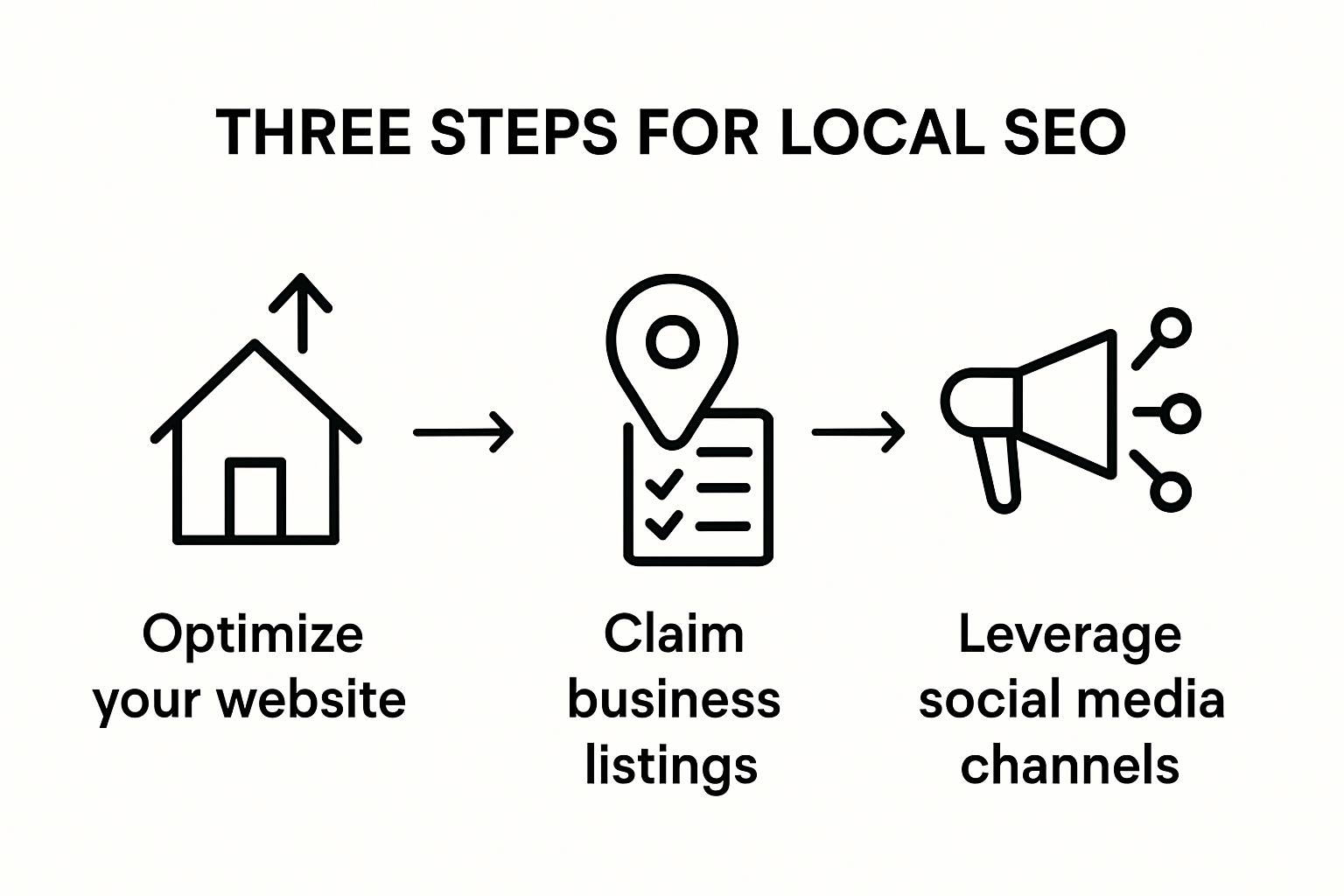
Start by focusing on technical and content-based optimization strategies. Create descriptive and keyword-rich page titles that clearly communicate what each webpage offers. Craft unique meta descriptions that entice users to click through from search results. Structure your content using appropriate header tags to help search engines understand your page hierarchy. When adding images, include descriptive alt tags that provide context and improve accessibility. Strategically incorporating keywords naturally throughout your content helps search engines recognize the relevance of your webpages.
One critical tip: avoid keyword stuffing. Your content should read naturally and provide genuine value to readers. Search engines prioritize high-quality, informative content that genuinely helps users. As you continue optimizing, remember that SEO is an ongoing process of refinement and improvement. Each small optimization brings you closer to better search rankings and increased online visibility for your local business.
Step 3: Claim and update business listings
Taking control of your online business listings is crucial for establishing a strong digital presence and ensuring potential customers can find accurate information about your business. Conducting a comprehensive website audit helps you identify and manage all existing online business profiles across various platforms.
Start by searching for your business name on major platforms like Google, Yelp, Facebook, and industry-specific directories. For each listing, claim ownership by following the platform-specific verification process. This typically involves receiving a verification code via mail or phone. Once verified, update each listing with current and consistent information including your business name, address, phone number, website, hours of operation, and a compelling business description. Using Google Search Console can help you track and manage your online visibility across search results.
One critical tip: consistency is key. Ensure your business information is identical across all platforms to build trust with both search engines and potential customers. Even minor variations in your business name or contact details can confuse search algorithms and potential clients. Regularly review and update your listings every few months to maintain accuracy and relevance, keeping your online presence fresh and engaging.
Step 4: Leverage social media channels
Social media platforms offer powerful opportunities to connect with potential customers and amplify your local business visibility. Applying innovative SEO contest strategies can help you maximize your social media presence and attract more engaged followers who are genuinely interested in your services.
Choose 2 to 3 social media platforms that align best with your target audience demographics and business type. For service based businesses like contractors or home services, platforms like Facebook and Instagram work exceptionally well. Create a consistent brand profile with high quality images, clear contact information, and compelling descriptions that showcase your expertise. Share a mix of content including behind the scenes glimpses of your work, customer testimonials, helpful tips related to your industry, and occasional promotional offers. Integrating AI driven SEO techniques can help you analyze and optimize your social media content for maximum reach and engagement.
One critical tip: authenticity wins. Potential customers want to see the real people and genuine value behind your business. Respond promptly to comments and messages, share actual client success stories, and demonstrate your commitment to quality service. Your social media channels should feel like a welcoming extension of your business personality not just another advertising platform.
Step 5: Track and refine your online performance
Measuring and improving your online presence is crucial for sustainable business growth. Utilizing Google Search Console provides powerful insights into how your website performs in search results and helps you understand your digital marketing effectiveness.
Start by setting up free analytics tools like Google Analytics and Google Search Console. These platforms offer comprehensive data about website visitors including their demographics, how they found you, which pages they visited, and how long they stayed. Pay close attention to key performance indicators such as website traffic, bounce rate, conversion rate, and engagement metrics. Conducting a thorough website audit will help you identify areas for improvement and understand your online strengths and weaknesses.
One critical tip: review your analytics monthly. Consistent monitoring allows you to quickly adapt your strategy based on real data. Look for patterns in user behavior track which content attracts the most engagement and be ready to adjust your approach. Small incremental improvements can lead to significant long term growth for your local business online presence.
Elevate Your Local Business with Proven Digital Marketing Solutions
Struggling to get found online despite your best efforts is a major challenge for many local businesses. If defining your target audience, optimizing your website for search engines, or managing your social media presence feels overwhelming, you are not alone. The key pain points outlined in the article such as needing sharper audience clarity and ongoing SEO refinement highlight why tailored, expert support makes all the difference. At ibrand.media, we specialize in transforming these challenges into growth opportunities through personalized strategies that focus on quick results and affordable pricing.
Ready to boost your local business visibility today The uncategorized | Ibrandmedia page offers insights into how our services in SEO optimization, local marketing, and social media management can accelerate your online presence. Visit ibrand.media now to explore customized digital marketing plans designed specifically for small to medium-sized businesses looking for real growth. Take the first step toward turning your online potential into measurable success.
Frequently Asked Questions
How can I define my target audience for my local business?
To define your target audience, start by examining key demographics such as age, income, and location. Create detailed customer personas that represent your ideal customers, which will help tailor your marketing efforts effectively.
What are essential steps to optimize my website for search engines?
Essential steps for optimizing your website include using keyword-rich page titles, writing unique meta descriptions, and structuring content with appropriate header tags. Focus on naturally incorporating relevant keywords throughout your content to improve your visibility on search engines.
How do I claim and update my business listings?
Claim your business listings by searching for your business name on major platforms like Google and Yelp, and follow their verification process. After claiming your listings, ensure you update them with accurate information, including your business name, address, phone number, and hours of operation.
Which social media channels should I use to reach my audience?
Choose social media channels that align with your target audience, such as Facebook or Instagram for service-based businesses. Create engaging profiles with consistent branding and share various content types, like tips and testimonials, to connect more authentically with potential customers.
How can I track my online performance effectively?
To track your online performance effectively, set up analytic tools that provide data on website visitors and user behavior. Regularly review key metrics like website traffic and engagement rates to identify areas for improvement and optimize your overall online strategy.
How often should I update my online business listings?
You should update your online business listings every few months or whenever there’s a change to your information. Consistent updates help maintain accuracy across all platforms, which builds trust with potential customers and search engines.
Recommended
- How to Use Local Listings to Boost Business Visibility | Ibrandmedia
- Boosting Online Sales Locally: Step-by-Step Guide for SMBs | Ibrandmedia
- Marketing to Local Customers Online: A Step-by-Step Guide | Ibrandmedia
- Boost Your Revenue: Increasing Local Sales Online | Ibrandmedia
- The Top 3 Ways to Optimize Your Video for Search Engines – Kicker Video
Recent Comments