
TL;DR:
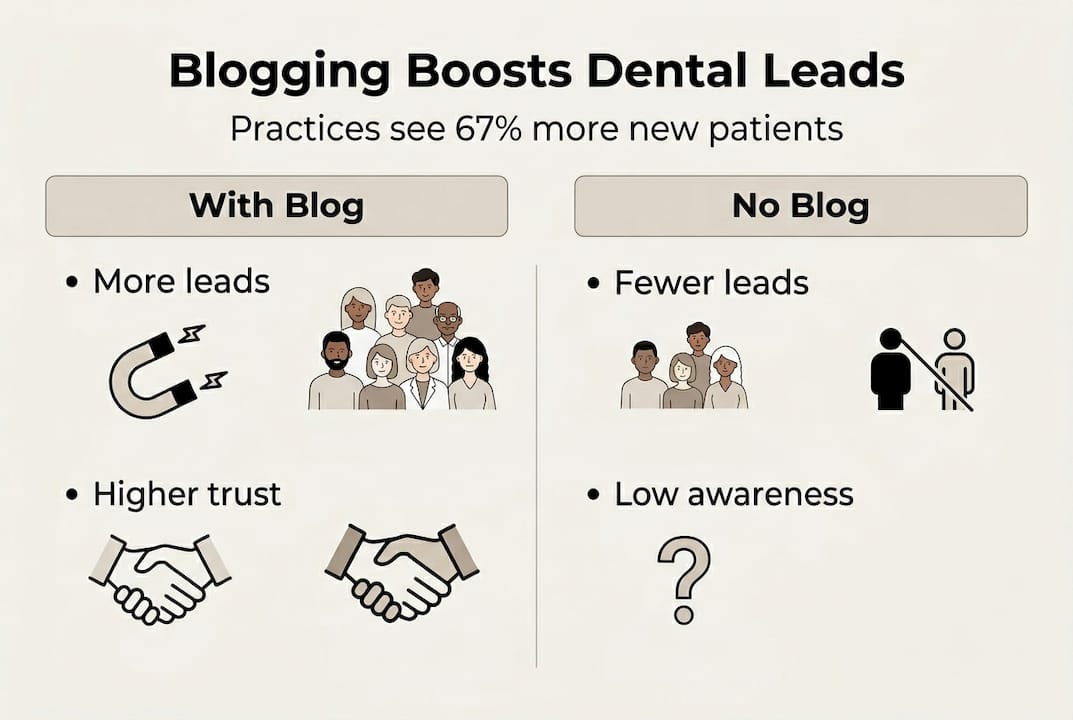
- Consistent blogging increases dental practice leads by 67% and improves online visibility.
- Blogs answer patient questions, build trust, and enhance search engine rankings over time.
- Effective blogs convert readers into loyal patients with calls to action and easy online booking.
Businesses that blog consistently generate 67% more leads than those that don’t, yet most dental practices still treat their website as a digital business card and nothing more. That’s a missed opportunity. Blogging is one of the most cost-effective tools available to attract new patients, keep current ones engaged, and position your practice as the go-to dental authority in your area. This article breaks down exactly why blogging works for dental practices, how it lifts your search rankings, and how to turn casual readers into loyal, long-term patients.
Table of Contents
- Why blogging matters for dental practices
- Boosting your dental practice’s online visibility
- Building trust and educating current and potential patients
- Turning blog readers into loyal patients
- Why most dentists miss out on blogging’s real value
- Ready to grow your dental practice online?
- Frequently asked questions
Key Takeaways
| Point | Details |
|---|---|
| Blogging boosts patient leads | Dental practices that blog regularly can see up to 67 percent more patient inquiries and leads. |
| Improves search visibility | Consistent blogging helps practices appear in more local searches and attract new patients online. |
| Builds trust and engagement | Educational blog posts address patient worries and create lasting relationships with both new and loyal patients. |
| Low-cost marketing channel | Blogging is a cost-effective way to reach and educate patients compared to traditional advertising. |
Why blogging matters for dental practices
Most dental practice owners face the same core challenges: standing out in a crowded local market, keeping patients engaged between appointments, and educating the community well enough to earn their trust before they ever walk through the door. Blogging addresses all three at once, and it does so without the recurring cost of paid ads.
Think about how patients actually search for dental care. They don’t usually type “dentist near me” and book the first result. They search questions like “is teeth whitening safe?” or “what happens if I skip a cleaning?” A blog that answers these questions puts your practice directly in front of people at the exact moment they’re looking for guidance. That’s not just traffic. That’s warm, intent-driven traffic.
“Consistent, informative blogging builds the kind of patient relationship that no billboard or social media ad can replicate. It’s education that earns trust.”
Here’s why blogging is such a strong fit for dental practices specifically:
- Answers real questions: Patients research before they commit. A blog that covers topics like dental anxiety, insurance coverage, and treatment options meets them where they already are.
- Keeps current patients engaged: Regular posts remind existing patients about seasonal care tips, new services, or office updates, reducing drop-off between visits.
- Establishes authority: Publishing expert content signals to both patients and search engines that your practice knows its field.
- Supports lead generation: Businesses with active blogs generate 67% more leads, a figure that applies directly to patient acquisition for dental offices.
Understanding these dental marketing challenges is the first step. Blogging isn’t a magic fix, but it is a reliable, compounding strategy that rewards consistency over time.
Boosting your dental practice’s online visibility
Now that we know why blogging matters, let’s examine how it can directly impact your online visibility and search rankings.
Search engine optimization, or SEO, is the process of making your website easier for search engines like Google to find and rank. Every blog post you publish is a new page that Google can index. More indexed pages mean more opportunities to rank for the keywords your potential patients are searching. A static website with five pages competes on five fronts. A blog with fifty posts competes on fifty.
Local SEO is especially powerful for dental practices. When you write posts that answer location-specific questions, such as “best options for dental implants in [your city]” or “how to find an emergency dentist in [your neighborhood],” you attract readers who are already nearby and actively looking for care. That’s the highest-quality traffic you can get.
| Feature | Practice with active blog | Practice with static site |
|---|---|---|
| Indexed pages | 50+ | 5 to 10 |
| Monthly organic traffic | High and growing | Flat or declining |
| New patient inquiries | Consistently increasing | Sporadic |
| Local search visibility | Strong | Limited |
| Keyword reach | Broad and varied | Narrow |
The data tells a clear story. Practices that blog regularly generate 67% more leads compared to those that don’t, and that gap widens the longer blogging continues. You can explore proven SEO strategies for dentists that pair well with a consistent blogging schedule.
Pro Tip: When writing a blog post, include your city or neighborhood name naturally in the title, the first paragraph, and at least one subheading. For example, “Teeth whitening options for patients in Austin” will outperform a generic post on the same topic every time. This is the foundation of effective online marketing for dentists.
Building trust and educating current and potential patients
Improved online visibility is just one half of the equation. Equally important is how your practice is perceived by patients.

Patients are anxious. Studies consistently show that dental anxiety affects a significant portion of the population, and that anxiety often starts before the appointment, during the research phase. A blog that speaks directly to those fears, explains procedures in plain language, and offers reassurance can be the difference between a patient booking with you or a competitor.
Trust signals are the small cues that tell a potential patient your practice is credible, current, and genuinely cares. A regularly updated blog is one of the strongest trust signals a dental website can have. It shows you’re active, engaged, and invested in patient education.
“Patients who feel informed before their appointment are more likely to show up, follow through with treatment, and refer friends and family.”
Here are the content types that build the most trust for dental practices:
- FAQ posts: Answer the questions your front desk hears every week. Insurance coverage, payment plans, what to expect during a root canal.
- Myth-busting articles: “Does teeth whitening damage enamel?” These posts attract searchers and immediately demonstrate expertise.
- Treatment explainers: Walk patients through a procedure step by step. Reducing the unknown reduces anxiety.
- Seasonal oral health tips: Back-to-school checkups, holiday candy and cavity prevention, summer sports and mouthguards.
- Technology updates: If your practice just added digital X-rays or same-day crowns, a blog post explaining the benefit to patients is both informative and promotional.
Strong reputation management for dentists starts with being the most helpful, transparent voice in your market. Blogging is how you do that at scale, reaching hundreds of potential patients without spending a dollar on ads. Businesses that generate 67% more leads through blogging do so precisely because their content answers real questions with real authority.
Turning blog readers into loyal patients
Trust and education are just the beginning. The ultimate goal is converting those blog readers into loyal, lifelong patients.
Blogging doesn’t just attract traffic. When done right, it moves readers through a clear path from curious visitor to booked appointment. The key is pairing great content with smart conversion elements.
| Marketing channel | Average lead quality | Cost over time | Patient retention impact |
|---|---|---|---|
| Paid search ads | Medium | High and ongoing | Low |
| Social media ads | Medium | Medium to high | Low to medium |
| Active blog with SEO | High | Low after setup | High |
| Email newsletter from blog | Very high | Very low | Very high |
The numbers favor blogging, especially for practices watching their marketing budget. Consistent blogging generates 67% more leads than not blogging, and those leads tend to be better informed and more ready to commit.
Here’s how to turn your blog readers into patients:
- Add a clear call to action: Every post should end with an invitation to book an appointment, call the office, or ask a question.
- Enable online booking links: Make the next step frictionless. A reader who is already on your site should be able to book in two clicks.
- Invite comments or questions: Engagement signals to Google that your content is valuable, and it opens a direct line with potential patients.
- Repurpose posts into email newsletters: Send your best blog content to your existing patient list. It keeps your practice top of mind between visits.
Pro Tip: Ask satisfied patients for permission to share their experience as a short story on your blog. A real patient journey, told with warmth and their consent, is more persuasive than any polished ad copy. Pair this with affordable dentist marketing tactics and consider remarketing for dentists to re-engage readers who visited but didn’t book.
Why most dentists miss out on blogging’s real value
Stepping back from the tactical, here’s what our real-world experience suggests dentists often miss about blogging.
Most practices that try blogging treat it as a one-time project. They publish three posts, see no immediate flood of new patients, and quietly abandon the effort. That’s the wrong frame entirely. Blogging is a relationship-building habit, not a campaign. Its value compounds over months and years, not days.
The other mistake we see constantly is writing for colleagues instead of patients. A post titled “Advances in osseointegration for implant therapy” might impress another dentist, but it won’t help the anxious 45-year-old searching “does getting a dental implant hurt?” Write for the person in the waiting room, not the person in the dental school lecture hall.
Here’s the uncomfortable truth: a well-maintained blog paired with strategic calls to action will outperform expensive ad campaigns over a 12-month period for most local dental practices. The dental marketing engagement data backs this up. Ads stop working the moment you stop paying. Blog posts keep ranking and converting for years.
Ready to grow your dental practice online?
Putting these lessons into practice is easier with the right digital partners on your side.
At ibrand.media, we help dental practices build content strategies that attract real patients, not just website visitors. From keyword research to blog writing, local SEO, and patient acquisition funnels, we handle the digital side so you can focus on patient care.
If you’re just getting started, our guide on optimizing your website for search is a practical first step. For practices newer to digital marketing, our SEO basics for beginners resource breaks down exactly what you need to know without the jargon. Reach out today and let’s build a blogging strategy that fills your appointment calendar.
Frequently asked questions
How often should a dental practice publish blog posts?
Publishing at least once or twice a month keeps your practice visible and shows patients your expertise is current. Consistency matters more than volume, and even a steady monthly post builds real momentum over time.
What topics should dentists cover in their blog?
Focus on patient questions, oral health tips, treatment explainers, and myth-busting posts that address common concerns. The best topics are the ones your front desk already answers on the phone every day.
Can blogging really help attract new dental patients?
Yes. Practices that blog consistently generate 67% more leads than those that don’t, making it one of the most reliable patient acquisition tools available to dental offices.
How does blogging support a dental practice’s SEO?
Each blog post adds a new indexed page with fresh, keyword-rich content that helps Google rank your practice higher in local search results. More posts mean more chances to appear when potential patients search for dental care in your area.
Recommended
- Dental Marketing in 2026: 40% More Engagement with Videos | Ibrandmedia
- SEO strategies for dentists to attract patients in 2026 | Ibrandmedia
- Dental Clinic Marketing Challenges: Growing in 2024 | Ibrandmedia
- 7 Affordable Marketing Strategies for Dentists | Ibrandmedia
- How website design drives lead generation: 2026 guide
Recent Comments