
Social media has become the digital front door for dental practices across America. Dental practices using social media see a 25% boost in new patient inquiries within six months, yet many dentists still struggle to harness this powerful marketing channel effectively. This guide reveals proven strategies to transform your social media presence into a patient acquisition engine that drives measurable practice growth.
Table of Contents
- Understanding The Role Of Social Media In Dental Marketing
- Effective Social Media Platforms And Content Types For Dentists
- Common Misconceptions In Dental Social Media Marketing
- Strategic Framework And Comparative Insights For Social Media Use
- Implementation Best Practices: How Dentists Can Leverage Social Media Effectively
- Measuring Success And Adjusting Strategies In Dental Social Media Marketing
- Boost Your Dental Practice Growth With Expert Social Media Strategies
- Frequently Asked Questions
Key Takeaways
| Point | Details |
|---|---|
| Video content drives engagement | Patient engagement improves by 40% when educational videos are used instead of static images. |
| Facebook dominates patient interaction | Facebook accounts for 60% of patient interactions with dental practices on social media platforms. |
| Quality beats posting frequency | High-quality posts outperform daily low-value content by 35% in patient engagement metrics. |
| Results require patience | Measurable ROI from social media marketing typically appears after 3 to 6 months of consistent effort. |
| Paid ads accelerate growth | Combining paid social ads with organic posts boosts new patient bookings by approximately 50%. |
Understanding the Role of Social Media in Dental Marketing
Social media has evolved from a nice-to-have luxury into an essential component of dental practice online marketing strategies. The numbers tell a compelling story about why dentists can no longer afford to ignore these platforms.
The connection between social presence and practice growth is direct. Dental social media use correlates with a 25% increase in new patient inquiries within six months, making it one of the most cost-effective marketing investments available. Unlike traditional advertising methods that interrupt potential patients, social media creates opportunities for authentic engagement that builds trust before the first appointment.
Patient expectations have shifted dramatically. Today’s dental patients research practices online before picking up the phone. They expect to see active social profiles showcasing your expertise, office environment, and patient care philosophy. An inactive or absent social presence signals that your practice may be outdated or unresponsive.
Key benefits of dental social media marketing:
- Direct communication channel with current and prospective patients
- Cost-effective method to showcase expertise and build authority
- Platform for patient education that reduces anxiety and builds trust
- Opportunity to humanize your practice and differentiate from competitors
- Measurable impact on appointment bookings and practice revenue
The most successful dental practices treat social media as a two-way conversation rather than a broadcast channel. They respond quickly to comments, answer questions publicly, and create content that addresses real patient concerns.
Effective Social Media Platforms and Content Types for Dentists
Not all platforms deliver equal results for dental marketing. Understanding where your patients spend time and what content resonates most can multiply your marketing effectiveness without increasing your workload.
Facebook remains the undisputed champion for dental practices, accounting for 60% of patient interactions with dentists on social media. Its demographic skews toward older adults who typically have higher treatment acceptance rates and better insurance coverage. Facebook’s robust advertising platform also enables precise geographic and demographic targeting essential for local practices.
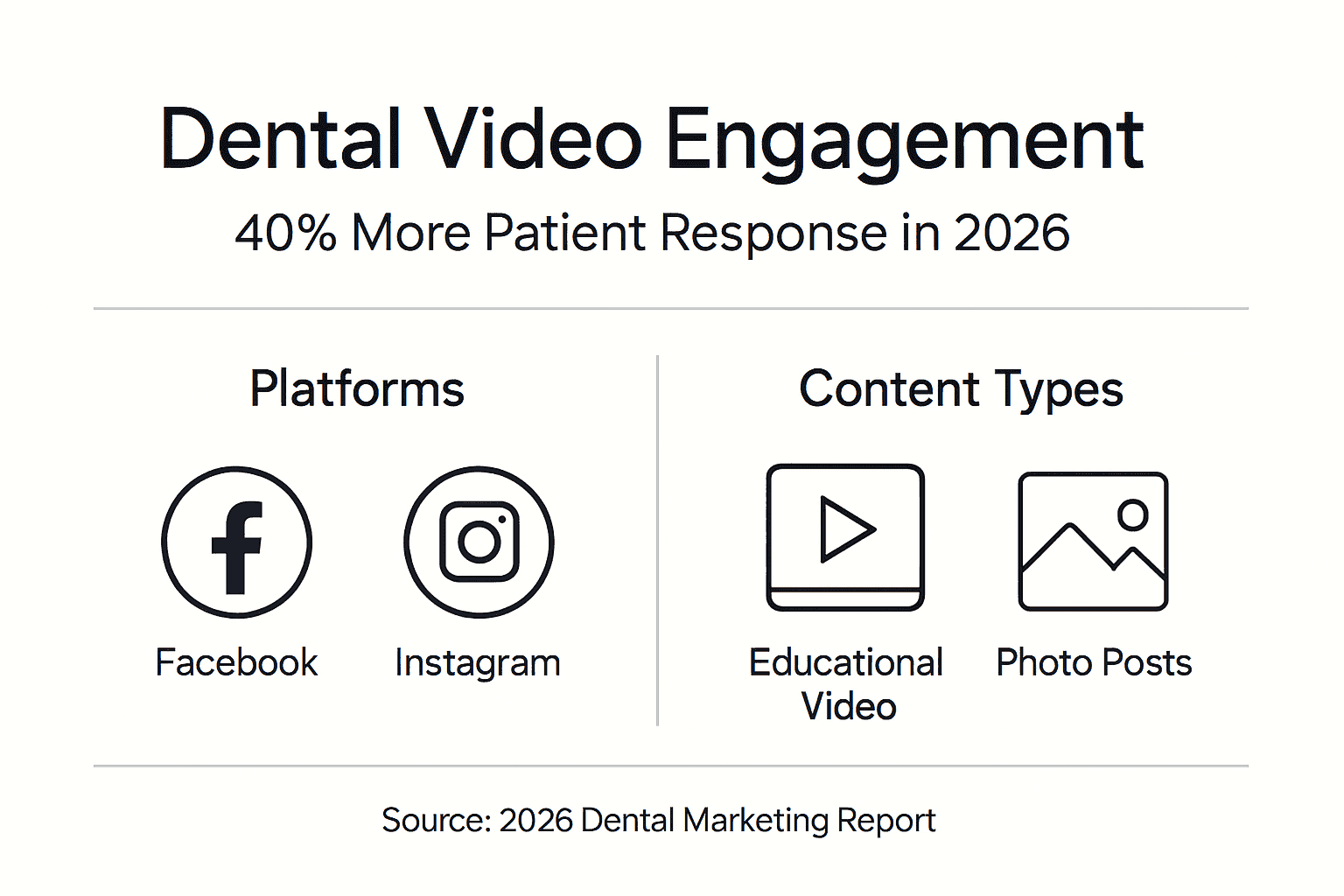
Video content has emerged as the clear winner in engagement metrics. Patient engagement improves by 40% when educational videos are used instead of static images. Short educational clips explaining procedures, addressing common fears, or showcasing patient testimonials build trust faster than any other content format.
Instagram offers unique advantages for practices targeting younger demographics. Instagram Stories with polls, questions, and behind-the-scenes content create interactive experiences that boost engagement. The platform’s visual focus makes it ideal for showcasing cosmetic dentistry results.
Before-and-after patient photos increase appointment bookings by 28%, making them perhaps the most valuable content type for practices offering cosmetic services. These visual transformations provide social proof while helping potential patients envision their own results.
| Platform | Best For | Top Content Types | Typical Engagement Rate |
|---|---|---|---|
| Adults 35+ | Educational videos, patient testimonials, office updates | 2.5-3.5% | |
| Adults 25-45 | Before/after photos, Stories, Reels | 3.5-5% | |
| YouTube | All ages | Procedure explanations, patient education series | 4-6% (views to subs) |
| Professional networking | Practice updates, industry insights | 1.5-2% |
Pro Tip: Create one high-quality educational video per month addressing a common patient question. Repurpose this content across multiple platforms with platform-specific formatting to maximize reach without multiplying production effort.
The video impact on patient engagement extends beyond immediate likes and shares. Video content positions you as an approachable expert while addressing patient anxiety, the single biggest barrier to treatment acceptance. Many practices face dental marketing content challenges, but focusing on video solves multiple problems simultaneously.
Common Misconceptions in Dental Social Media Marketing
Misguided beliefs about social media marketing cause dentists to waste time, money, and effort on ineffective strategies. Correcting these misconceptions can dramatically improve your results.
Myth 1: Posting more frequently always delivers better results. Reality contradicts this assumption. Quality over frequency improves patient engagement by 35% because infrequent high-quality posts consistently outperform daily low-value content. Patients scroll past generic dental health tips but stop for compelling stories, useful information, or emotional transformations.
Myth 2: Social media marketing delivers immediate results. Many practices abandon their efforts prematurely because they expect instant patient floods. Social media marketing typically takes 3 to 6 months to show measurable impact on patient engagement and new appointment bookings. This timeline reflects the trust-building process essential for healthcare decisions.
Myth 3: All platforms work equally well for dental practices. Platform performance varies dramatically based on your target demographic and service mix. While Facebook outperforms other platforms for most U.S. dentists, a practice focused on younger patients seeking cosmetic treatments might find Instagram more effective. Understanding these common social media myths for dentists prevents wasted effort on wrong platforms.
Myth 4: Organic reach alone suffices for practice growth. Organic social media builds trust but delivers slower patient acquisition. Strategic paid advertising accelerates results while maintaining authenticity.
“The biggest mistake I see dentists make is posting randomly whenever they remember, then wondering why social media doesn’t work. Strategic consistency beats sporadic enthusiasm every time.”
Pro Tip: Audit your posting history over the past three months. Identify your three highest-performing posts by engagement and appointment inquiries. Create more content in those proven formats rather than experimenting with random ideas.
Many dentists also fall victim to digital marketing mistakes dentists make by treating social media as an afterthought rather than a core component of their marketing strategy. These social media marketing myths persist because they feel intuitively correct despite contradicting actual performance data.
Strategic Framework and Comparative Insights for Social Media Use
Effective dental marketing integrates social media with local SEO and paid advertising rather than treating these channels as separate efforts. This integrated approach multiplies effectiveness while reducing overall marketing costs.
Organic social media builds trust and authority gradually. It establishes your expertise, humanizes your practice, and creates ongoing touchpoints with your audience. However, organic reach has declined significantly as platforms prioritize paid content. Most posts now reach only 5 to 10% of your followers without paid promotion.

Paid social ads accelerate new patient bookings by approximately 50% when combined with consistent organic posting. The combination works because paid ads expand reach while organic content provides the social proof that converts interest into appointments. Potential patients who see your ad then visit your profile to verify credibility through your organic content history.
Social media signals increasingly influence local search rankings. Top-ranking dental practices leverage social media signals to boost local search rankings and patient acquisition. Active social profiles with regular engagement demonstrate practice vitality to both search algorithms and potential patients.
| Strategy Component | Patient Acquisition Speed | Trust Building | Cost Efficiency | Best Use Case |
|---|---|---|---|---|
| Organic Social Media | Slow (3-6 months) | High | High | Long-term brand building |
| Paid Social Ads | Fast (1-2 weeks) | Medium | Medium | Immediate appointment needs |
| Local SEO + Social | Medium (2-4 months) | High | Very High | Sustained practice growth |
| Combined Approach | Fast + Sustained | Highest | Highest ROI | Comprehensive marketing strategy |
Layered marketing approach benefits:
- Paid ads drive immediate visibility and appointment bookings
- Organic content builds long-term trust and patient relationships
- Local SEO integration improves search rankings and maps visibility
- Combined signals create marketing momentum that compounds over time
Successful practices integrate their online marketing for dental practices with affordable dental marketing strategies that maximize budget efficiency. Understanding digital ads comparison for dentists helps optimize spending across platforms.
The social media impact on local SEO extends beyond direct ranking factors. Social platforms drive traffic to your website, generate reviews, and create brand searches that all signal practice authority to search engines. This synergy explains why top-ranking practices rarely rely on a single marketing channel.
Implementation Best Practices: How Dentists Can Leverage Social Media Effectively
Transforming social media strategy into practice requires a systematic approach that balances quality content creation with consistent engagement and strategic promotion.
1. Define your target patient demographics and platform preferences. Are you targeting families with young children, seniors needing restorative work, or young professionals seeking cosmetic enhancements? Each demographic gravitates toward different platforms and responds to distinct content styles.
2. Develop a content calendar emphasizing educational videos and visual transformations. Plan one signature piece per week: an educational video explaining a procedure, a before-after transformation showcasing results, or a patient testimonial building social proof. Supplement with lighter content like office culture posts or dental health tips.
3. Incorporate local community topics to boost relevance and engagement. Share posts about local events, sponsor community activities, or highlight team members’ local involvement. This localization strengthens your connection with the community you serve.
4. Combine paid advertising with organic content for optimal appointment growth. Allocate 60 to 70% of social media budget to organic content creation and 30 to 40% to paid promotion of your best-performing content. This balance maintains authenticity while accelerating reach.
5. Respond promptly to comments, messages, and reviews. Real-time engagement demonstrates responsiveness that patients value in their healthcare providers. Set up notifications to ensure no inquiry goes unanswered for more than a few hours during business days.
6. Schedule posts strategically for sustained visibility without constant manual effort. Use scheduling tools to maintain consistency even during busy weeks. Post during high-engagement windows: weekday mornings (7 to 9 AM) and evenings (5 to 7 PM) when people browse during commutes or after work.
Content mix recommendation:
- 40% educational content addressing patient questions and concerns
- 30% social proof including testimonials and before-after transformations
- 20% behind-the-scenes content humanizing your practice
- 10% promotional content for services or special offers
Pro Tip: Batch-create content during dedicated production sessions. Record multiple videos in one filming session, then edit and schedule them across several weeks. This approach maintains quality while reducing the time burden on busy practice schedules.
Practices focused on social media for dental growth should prioritize systems over sporadic inspiration. Consistent execution of a simple plan outperforms brilliant ideas implemented inconsistently.
Measuring Success and Adjusting Strategies in Dental Social Media Marketing
Tracking the right metrics transforms social media from a hopeful experiment into a measurable marketing investment that drives practice growth and revenue.
Typical ROI from social media marketing appears after 3 to 6 months of consistent effort. This timeline reflects the patient decision-making process for healthcare services. Most patients discover your practice, follow for weeks or months while building familiarity, then book when they need services.
Essential metrics to track monthly:
- Engagement rate (likes, comments, shares per post)
- Profile visits and follows indicating growing awareness
- Click-through rate to website from social posts
- Direct messages and comment inquiries about appointments
- New patient bookings attributed to social media discovery
- Cost per appointment acquisition from paid campaigns
Link social media activities directly to patient bookings by asking new patients how they discovered your practice. Train front desk staff to record this information systematically. Many practices are surprised to discover social media drives more new patients than they realized.
| Metric Category | What to Track | Success Benchmark | Action Threshold |
|---|---|---|---|
| Engagement | Likes, comments, shares per post | 2-4% of followers | Below 1% requires content audit |
| Reach | Profile visits, post impressions | 15-25% follower growth per quarter | Stagnant growth needs paid boost |
| Conversion | Appointment inquiries via social | 3-5 per month per 1,000 followers | Below 2 requires CTA optimization |
| ROI | Cost per new patient acquisition | $50-150 depending on average case value | Above $200 needs strategy revision |
Monitor which content types generate the most appointment inquiries, not just engagement. A funny meme might earn hundreds of likes but zero bookings, while a detailed explanation of a common procedure might generate fewer likes but multiple appointment requests. Optimize for business results, not vanity metrics.
Pro Tip: Create a simple spreadsheet tracking monthly social media statistics alongside new patient numbers. Review quarterly to identify trends and correlation between social media activity and practice growth. This data guides budget allocation and content strategy decisions.
Practices should implement tracking social media ROI systems from the beginning rather than trying to reconstruct attribution later. Understanding measuring marketing success principles helps optimize spending across all marketing channels, not just social media.
Adjust your strategy based on quarterly performance reviews. If video content consistently outperforms static images, shift more resources to video production. If Facebook drives more bookings than Instagram despite similar follower counts, reallocate ad spending accordingly. Let data guide decisions rather than assumptions.
Boost Your Dental Practice Growth with Expert Social Media Strategies
Building an effective social media presence requires consistent effort, strategic planning, and expertise that busy practice owners rarely have time to develop. Professional social media management amplifies your patient engagement while freeing you to focus on patient care.
Ibrandmedia specializes in social media management for dentists, delivering proven strategies that boost practice growth through targeted content and strategic advertising. Our dental practice online marketing solutions integrate social media with local SEO and paid advertising to maximize your marketing ROI. We provide transparent digital marketing ROI tracking so you always know exactly how your marketing investment translates into new patients and revenue. Partner with experts who understand dental marketing specifically, saving time while maximizing your online impact and practice growth.
Frequently Asked Questions
How often should I post on social media for my dental practice?
Focus on consistent, high-quality, and relevant posts instead of frequent low-value content. Three to four strategic posts per week significantly outperform daily generic content because quality engagement drives patient trust and appointment bookings. Check out guidance on social media posting frequency to optimize your schedule.
Which social media platform yields the highest patient engagement?
Facebook currently drives about 60% of dental patient interactions in the U.S. and delivers the best ROI for most practices. It offers robust advertising tools, demographic targeting, and the largest audience of adults most likely to need dental services. Start with Facebook before expanding to other platforms.
How long does it take to see results from dental social media marketing?
Social media marketing typically takes 3 to 6 months to show measurable patient engagement and practice growth. This timeline reflects the trust-building process essential for healthcare decisions. Patience and consistent strategy execution are critical for long-term success and sustained patient acquisition.
What types of content best attract new dental patients?
Educational videos and before-and-after photos significantly increase engagement and appointment bookings by demonstrating expertise and results. Interactive content like Instagram Stories with polls or questions also attracts attention. Focus on content that addresses patient concerns, showcases transformations, and builds trust through transparency.
Should my dental practice invest in paid social media ads?
Yes, paid ads combined with organic content can increase new patient appointments by approximately 50% compared to organic efforts alone. Paid advertising offers precise demographic and geographic targeting essential for local practices. Start with modest budgets, test different approaches, and scale investment based on measurable appointment acquisition costs.
Recent Comments