
Most American small business owners face rising costs with limited clarity on which marketing dollars truly pay off. This creates ongoing pressure to justify every advertising expense while trying to stand out locally. By focusing on practical steps to define goals, set up data tracking, and analyze results, you gain control over your marketing ROI and give your business an edge in a crowded American market. Discover how even basic tracking can make a measurable difference for home services or retail operations.
Table of Contents
- Step 1: Define Marketing Goals And Key Metrics
- Step 2: Set Up Tracking Tools And Conversion Paths
- Step 3: Collect And Organize Campaign Data
- Step 4: Calculate ROI Using Actionable Formulas
- Step 5: Analyze Results And Refine Strategies
Quick Summary
| Major Insight | Explanation |
|---|---|
| 1. Define SMART marketing goals | Use the SMART framework to create specific, measurable, actionable, relevant, and time-bound marketing objectives. |
| 2. Set up comprehensive tracking tools | Implement tracking tools like Google Analytics to capture customer interactions and optimize marketing strategies. |
| 3. Collect and organize campaign data | Systematically gather and analyze data from various digital channels to inform your marketing decisions. |
| 4. Calculate accurate marketing ROI | Use the ROI formula to assess financial impacts and inform resource allocation for marketing initiatives. |
| 5. Regularly analyze and refine strategies | Continuously review KPIs and adjust strategies based on performance analytics to improve marketing effectiveness. |
Step 1: Define marketing goals and key metrics
Defining clear marketing goals and key metrics is the strategic foundation for tracking your business’s marketing return on investment (ROI). By establishing precise objectives, you create a roadmap that helps you measure performance, allocate resources effectively, and understand what strategies are truly driving your business growth.
To set meaningful marketing goals, leverage the SMART objective framework. This approach ensures your goals are Specific, Measurable, Actionable, Relevant, and Time-bound. Start by identifying your core business objectives such as increasing brand awareness, generating leads, boosting sales, or expanding market share. Each goal should connect directly to a specific metric you can track and quantify.
Typical marketing metrics for small businesses include website traffic, conversion rates, customer acquisition cost, social media engagement, email open rates, and total revenue generated from marketing efforts. Select 3-5 key performance indicators (KPIs) that align most closely with your business goals. For example, if your objective is lead generation, track metrics like form submissions, consultation requests, and email sign-ups. Always ensure your chosen metrics provide actionable insights that help you make informed marketing decisions.
Pro tip: Review and adjust your marketing goals quarterly to maintain alignment with your evolving business strategy and market conditions.
Step 2: Set up tracking tools and conversion paths
Tracking marketing performance requires strategically implementing tools that capture how potential customers interact with your business online. By setting up comprehensive tracking systems, you gain invaluable insights into which marketing channels and strategies are driving real results for your small business.
Start by configuring conversion tracking across digital platforms. This involves installing tracking pixels and tags on your website that monitor specific user actions like form submissions, product purchases, or consultation requests. Google Analytics 4 and Google Ads provide robust tracking capabilities that help you understand user journeys from initial contact through final conversion. Focus on identifying key touchpoints where potential customers engage with your marketing materials and track the complete conversion path.
To maximize the effectiveness of your tracking, map out each stage of your customer journey. Identify critical conversion points such as website visits, email sign-ups, content downloads, and final sales. Use analytics platforms to create custom event tracking that reveals how users move through your marketing funnel. Pay special attention to drop-off points and areas where potential customers lose interest, as these insights can help you optimize your marketing strategies and improve overall conversion rates.
Pro tip: Test your tracking setup regularly by completing conversions yourself and verifying that all data points are correctly captured and reported.
Here’s a quick comparison of popular tracking tools and their best applications:
| Tool Name | Best Use Case | Data Accuracy | Platform Integration |
|---|---|---|---|
| Google Analytics | Website behavior tracking | High | Works with most websites |
| Facebook Pixel | Paid ad performance | Medium | Integrates with Facebook |
| HubSpot | Lead and CRM management | High | Combines marketing channels |
| Mailchimp | Email campaign insights | Medium | Syncs with major websites |
Step 3: Collect and organize campaign data
Collecting and organizing marketing campaign data transforms raw information into actionable business intelligence. Your ability to systematically gather and analyze data will directly impact your marketing strategy effectiveness and overall business performance.
Start by implementing a comprehensive data collection strategy that captures marketing campaign insights across multiple digital channels. This means integrating data from sources like website analytics, social media platforms, email marketing tools, customer relationship management systems, and advertising platforms. Use spreadsheets or specialized marketing analytics software to consolidate these diverse data streams into a centralized repository. Standardize your data collection process by creating consistent tracking parameters and naming conventions that allow for easy comparison and analysis.

Organize your collected data into meaningful segments that reveal customer behaviors and campaign performance. Break down information by key metrics such as channel source, demographic details, engagement levels, and conversion rates. Create visual dashboards that transform complex data into easy-to-understand graphics, enabling you to quickly identify trends, successful marketing channels, and areas requiring improvement. Focus on developing a systematic approach that allows you to track performance over time and make data driven decisions that optimize your marketing investments.
Pro tip: Implement a monthly data review process where you analyze campaign performance and adjust your strategies based on the most recent insights.
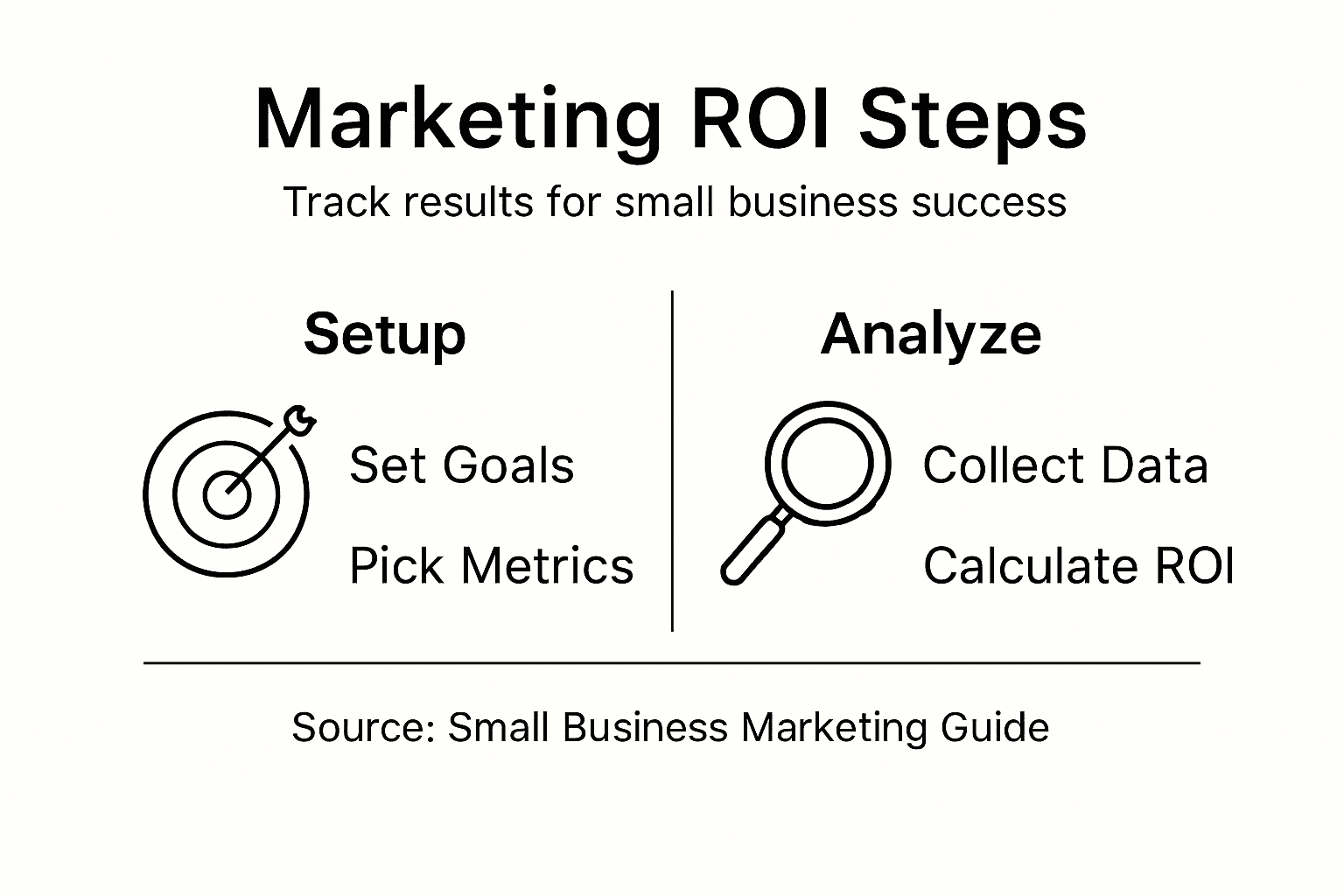
Step 4: Calculate ROI using actionable formulas
Calculating your marketing return on investment (ROI) transforms complex data into clear financial insights that reveal the true performance of your marketing efforts. Understanding how to accurately measure your marketing investments will help you make smarter business decisions and allocate resources more effectively.
Learn to apply marketing ROI calculation techniques using a straightforward formula: ROI = ((Revenue Generated Marketing Campaign Cost) / Marketing Campaign Cost) × 100. This percentage based approach allows you to quickly assess the financial impact of your marketing strategies. Remember to include all associated expenses such as advertising spend, creative costs, staff time, software subscriptions, and any additional marketing related investments. For a more comprehensive analysis, consider breaking down your calculations by individual marketing channels like social media, email campaigns, or paid advertising to understand which strategies deliver the most value.
To refine your ROI calculations, incorporate advanced measurement techniques that go beyond simple revenue tracking. Factor in metrics like customer lifetime value, lead generation quality, and the time lag between marketing activities and actual conversions. This nuanced approach provides a more holistic view of your marketing performance, helping you understand not just immediate financial returns but also long term business growth potential. Use spreadsheet tools or marketing analytics software to streamline these calculations and create consistent tracking methods that allow for accurate comparisons across different marketing initiatives.
Pro tip: Create a standardized ROI tracking template that automatically calculates your marketing performance metrics to save time and ensure consistent reporting.
Step 5: Analyze results and refine strategies
Analyzing your marketing results transforms raw data into powerful strategic insights that can dramatically improve your business performance. This critical step moves you beyond simply collecting information to understanding the true impact of your marketing efforts.
Begin by evaluating marketing ROI performance metrics through a comprehensive review of your key performance indicators. Look beyond surface level numbers to understand the deeper story behind your data. Examine metrics like customer acquisition cost, conversion rates, engagement levels, and revenue generated across different marketing channels. Pay special attention to which strategies delivered the highest returns and which fell short of expectations. Use attribution models to trace how different touchpoints contribute to final conversions, helping you understand the complex journey customers take before making a purchase.
Refine your marketing strategies by creating a systematic approach to continuous improvement. Break down your analysis into actionable insights that can guide future decision making. This might mean reallocating budget from underperforming channels to more effective ones, adjusting messaging to better resonate with your target audience, or developing more targeted campaigns based on your most successful previous efforts. Remember that marketing is an iterative process where ongoing analysis and adaptation are key to long term success. Implement a quarterly review cycle that allows you to make data driven adjustments and stay ahead of changing market conditions.
Pro tip: Create a standardized monthly performance dashboard that highlights your most critical marketing metrics to quickly identify trends and opportunities for strategic refinement.
This summary highlights key factors for refining your marketing strategy each quarter:
| Review Focus | Value to Business | Recommended Frequency | Impact on Results |
|---|---|---|---|
| KPI Trends Analysis | Reveals strong/weak areas | Quarterly | Enables smart adjustments |
| Attribution Review | Clarifies conversion paths | Quarterly | Improves targeting |
| Budget Allocation | Maximizes ROI potential | Quarterly | Boosts cost efficiency |
| Messaging Tuning | Increases audience response | Quarterly | Enhances engagement |
Maximize Your Marketing ROI with Expert Support
Tracking your marketing ROI for small business success is crucial but can feel overwhelming without the right tools and strategies. This article highlights the importance of clear goals, precise tracking, and data-driven analysis—key challenges for many business owners aiming to turn marketing efforts into real revenue. If you want to overcome hurdles like setting measurable KPIs, organizing complex campaign data, and calculating accurate ROI, professional guidance can streamline your path to growth.
Partner with a digital marketing agency that understands these challenges and delivers tailored solutions to boost your online presence efficiently. At ibrand.media, we specialize in helping small to medium-sized businesses track performance in real time and optimize campaigns for maximum return. Explore our range of services and insights in our Uncategorized | Ibrandmedia section to learn how personalized marketing can make a lasting impact. Don’t wait to turn your data into profits. Visit ibrand.media today and take the first step toward smarter marketing decisions.
Frequently Asked Questions
How can I define clear marketing goals for my small business?
To define clear marketing goals, utilize the SMART objective framework, ensuring your goals are Specific, Measurable, Actionable, Relevant, and Time-bound. Identify your core business objectives, such as increasing brand awareness or generating leads, and connect each goal to specific metrics you can track.
What metrics should I focus on to track marketing ROI?
Focus on 3-5 key performance indicators (KPIs) that align with your business goals, such as conversion rates, customer acquisition cost, and total revenue generated from marketing efforts. For example, if your goal is lead generation, monitor metrics like form submissions and email sign-ups to gauge effectiveness.
How do I set up tracking tools for my marketing campaigns?
To set up tracking tools, start by installing tracking pixels and tags on your website to monitor key user actions like form submissions or purchases. Ensure you use analytics platforms to identify customer touchpoints and track the complete conversion path for better insights.
What should I do with the data collected from my marketing campaigns?
Use the collected data to analyze customer behavior and campaign performance, organizing it into meaningful segments. Create visual dashboards to quickly identify trends and areas for improvement, allowing for data-driven decision making in your marketing strategy.
How can I calculate the ROI of my marketing efforts?
Calculate your marketing ROI using the formula: ROI = ((Revenue Generated – Marketing Campaign Cost) / Marketing Campaign Cost) × 100. Make sure to include all associated expenses, and consider analyzing ROI by individual marketing channels for a clearer understanding of your investments.
How often should I analyze my marketing results?
Analyze your marketing results at least once a month to evaluate performance metrics and adjust your strategies accordingly. For optimal performance, implement a quarterly review cycle that allows for data-driven adjustments based on recent insights.
Recommended
- How to Track Digital Marketing ROI for Small Businesses | Ibrandmedia
- Understanding Why Track Marketing Performance Matters | Ibrandmedia
- Tracking Digital Marketing Success: Complete Guide | Ibrandmedia
- Developing a Digital Marketing Plan: A 2025 Guide for Small Businesses | Ibrandmedia
- Why Measure Conversion on Instagram: Complete Guide
Recent Comments