
Turning website visitors into customers remains one of the biggest challenges for startups. You might attract hundreds of visitors, but without a solid lead generation strategy, most leave without converting. This guide shows you affordable, effective tactics to capture leads across multiple channels, helping you build a sustainable customer pipeline that supports growth and secures funding in 2026.
Table of Contents
- Introduction To Lead Generation For Startups
- What You Need Before You Start: Prerequisites And Preparation
- Step-By-Step Lead Generation Process For Startups
- Common Mistakes And How To Avoid Them
- Measuring Your Success And Expected Results
- Boost Your Startup’s Lead Generation With Expert Digital Marketing Help
- FAQ
Key takeaways
| Point | Details |
|——-|———||
| Multi-channel approach works best | Combine SEO, content marketing, social media, and email to maximize reach and conversions. |
| Preparation prevents failure | Build a mobile-friendly site, define your audience, and set clear goals before launching campaigns. |
| Avoid critical mistakes | Neglecting SEO and delayed follow-up are the top reasons startups lose leads and waste budget. |
| Measure and optimize continuously | Track conversion rates and cost per lead, expecting measurable improvements within 3 to 6 months. |
Introduction to lead generation for startups
Lead generation is the process of attracting potential customers and converting them into prospects who show genuine interest in your product or service. For startups, this process serves as the foundation for sustainable growth, helping you build a pipeline of qualified buyers that investors value when evaluating your business model.
Without consistent lead generation, startups struggle to predict revenue, demonstrate traction, or justify their market potential. Effective lead generation creates measurable proof that your solution solves real problems for real people, making it essential for securing funding rounds and planning expansion.
Startups should focus on these primary digital channels:
- SEO: Organic search drives 53% of traffic to small business websites, making it your most cost-effective long-term channel.
- Content marketing: Educational blog posts, guides, and videos build authority and attract prospects actively searching for solutions.
- Social media: Platforms like LinkedIn, Instagram, and Twitter let you reach targeted audiences organically and through paid campaigns.
- Email marketing: Nurture sequences keep prospects engaged, moving them through your sales funnel with timely, personalized messaging.
Each channel contributes differently to your lead pipeline. SEO provides steady, compounding traffic over time. Content marketing establishes your expertise and answers prospect questions before they even contact you. Social media builds brand awareness and community engagement. Email marketing maintains relationships and converts warm leads into customers.
SEO deserves special attention because it delivers qualified traffic without ongoing ad spend. Unlike paid ads that stop working when your budget runs out, SEO investments compound over months and years. A well-optimized site continues attracting leads long after you publish content, making it the backbone of startup lead generation.
What you need before you start: prerequisites and preparation
Successful lead generation requires foundational elements in place before you launch campaigns. Skipping preparation wastes budget and delivers poor results, so invest time setting up these essentials first.
You need a mobile-friendly website or dedicated landing page optimized for conversions. Most prospects browse on smartphones, so slow-loading or poorly designed mobile experiences kill conversions before they start. Test your site on multiple devices and fix any usability issues.
Understanding your target audience separates effective campaigns from wasted spending. Create detailed buyer personas that outline demographics, pain points, goals, and preferred communication channels. These personas guide every decision, from keyword selection to ad targeting to content topics.
Set specific lead generation goals with realistic budgets. Decide how many leads you need monthly, what you can afford to spend per lead, and which channels you will test first. Clear goals let you measure success and adjust tactics based on performance data.
Access to analytics tools is non-negotiable. Install Google Analytics to track website behavior, set up conversion tracking for form submissions, and choose a CRM system to manage leads. Free options like HubSpot CRM or Zoho CRM work well for startups just beginning their lead generation journey.
Pro Tip: Document your current conversion rate before starting new campaigns. This baseline helps you prove ROI and identify which tactics deliver the biggest improvements.
You also need basic knowledge of digital marketing channels and content creation. You do not need to become an expert overnight, but understanding how SEO works, what makes good content, and how email sequences nurture leads helps you make smarter decisions. Explore resources like the online lead generation guide to build this foundational knowledge.
| Prerequisite | Why It Matters | Action Step |
|---|---|---|
| Mobile-friendly site | 60%+ of traffic comes from mobile devices | Test site speed and usability on smartphones |
| Buyer personas | Guides targeting and messaging decisions | Interview 5-10 ideal customers about pain points |
| Analytics setup | Tracks performance and proves ROI | Install Google Analytics and set conversion goals |
| Clear budget | Prevents overspending and guides channel selection | Allocate monthly spend across 2-3 test channels |
Step-by-step lead generation process for startups
Start by optimizing your website and landing pages for both search engines and user experience. Poor optimization leads to bounce rates exceeding 70%, meaning most visitors leave without taking action. Focus on fast load times, clear value propositions above the fold, and prominent calls to action that guide visitors toward conversion.

Publish targeted content that directly addresses your prospects’ biggest challenges. Generic blog posts attract generic traffic that rarely converts. Instead, create guides, case studies, and how-to articles answering specific questions your ideal customers ask during their buying journey. This positions you as a trusted advisor, not just another vendor.
Use social media strategically by mixing organic posts with targeted paid campaigns. Organic posts build community and brand awareness without cost, while small paid budgets let you test audience segments and messaging. Start with one platform where your target audience spends time, master it, then expand to additional channels.
Implement email nurturing sequences that deliver value over time. Capture email addresses through lead magnets like free guides or webinars, then send a series of helpful emails that educate prospects and build trust. Timely follow-up dramatically improves conversion rates compared to single-touch outreach.
Pro Tip: Test different lead magnets to see which attracts the highest-quality prospects. A detailed industry report might convert better than a generic checklist for your specific audience.
Continuously measure campaign performance using analytics tools. Track which channels drive the most leads, which content pieces generate engagement, and where prospects drop off in your funnel. Use this data to double down on what works and eliminate tactics that waste budget.
Follow these steps in order:
- Audit your website for mobile usability and conversion optimization opportunities
- Create 5-10 pieces of targeted content addressing specific prospect pain points
- Set up basic SEO by optimizing titles, meta descriptions, and headers with relevant keywords
- Launch one social media channel with a mix of organic posts and small paid tests
- Build an email nurture sequence of 5-7 emails delivered over 2-3 weeks
- Install tracking on all conversion points to measure lead sources and costs
- Review performance weekly and adjust budget allocation based on results
SEO offers superior long-term ROI compared to paid social ads, though each serves different purposes. SEO builds compounding traffic that costs nothing per click once you rank, making it ideal for startups with limited budgets but time to invest. Paid ads deliver faster results and precise targeting, perfect for testing messaging or generating immediate leads during product launches. Most successful startups use both, allocating 60-70% of effort to SEO for sustainable growth and 30-40% to paid campaigns for quick wins and testing.
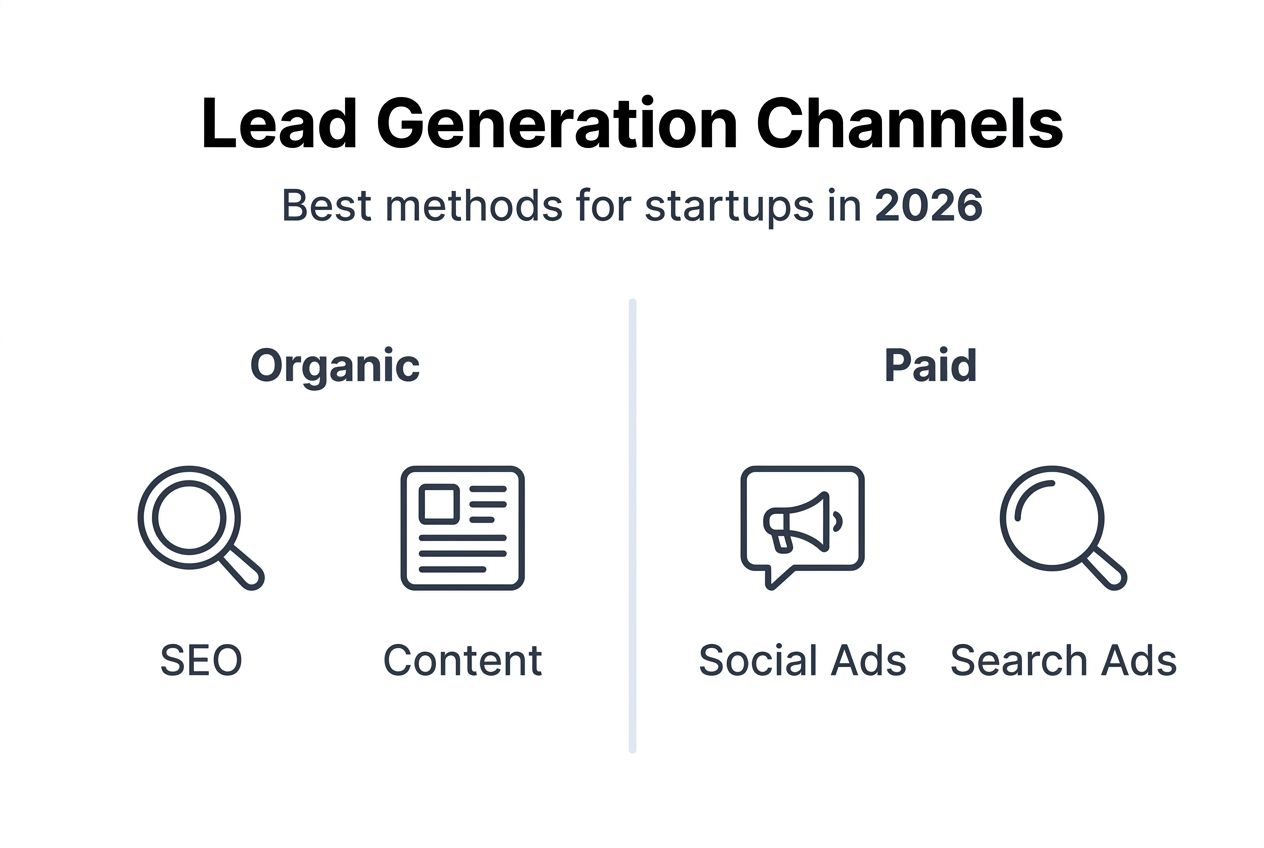
| Channel | Timeline to Results | Cost Structure | Best For |
|---|---|---|---|
| SEO | 3-6 months | Upfront content investment, minimal ongoing cost | Long-term sustainable lead flow |
| Paid Social | Immediate | Pay per click or impression, stops when budget ends | Quick testing and immediate lead needs |
| Content Marketing | 2-4 months | Content creation time and promotion costs | Building authority and organic traffic |
| Email Nurturing | 2-8 weeks | CRM costs and email creation time | Converting warm leads into customers |
Explore proven tactics in the online lead generation guide and discover additional approaches in these lead generation strategies to find the right mix for your startup.
Common mistakes and how to avoid them
Ignoring SEO from the start costs startups thousands in lost organic traffic. Many founders focus exclusively on paid ads because results appear faster, but this creates dependency on ad spend that becomes unsustainable as you scale. Build SEO foundations early, even if results take months, to create a traffic source that compounds over time.
Poor or delayed follow-up destroys conversion rates, even when you successfully attract qualified leads. Research shows that contacting leads within 5 minutes increases conversion likelihood by 21 times compared to waiting 30 minutes. Set up automated email responses immediately after form submissions, then follow up personally within hours, not days.
Untargeted paid ads waste budget by showing your message to people who will never buy. Broad targeting might generate clicks and even leads, but these prospects rarely convert into customers. Narrow your audience using detailed demographic and interest-based targeting, accepting fewer total leads in exchange for much higher quality prospects.
Neglecting data tracking prevents you from learning what works and improving over time. Without analytics, you cannot identify which channels drive the best leads, which content resonates, or where prospects abandon your funnel. This forces you to guess instead of making data-driven decisions that optimize spending.
Pro Tip: Set up weekly performance reviews where you examine lead sources, conversion rates, and cost per lead. Consistent monitoring catches problems early and identifies opportunities to scale what works.
Unoptimized landing pages increase bounce rates and lose potential leads who would otherwise convert. Elements like slow load times, unclear value propositions, too many form fields, or missing trust signals all reduce conversion rates. Test different versions of your landing pages to identify which combinations of headlines, images, and form designs convert best.
Avoid these critical errors:
- Launching campaigns before installing proper tracking and analytics
- Creating generic content that fails to address specific prospect pain points
- Neglecting mobile optimization when most traffic comes from smartphones
- Giving up on channels too quickly before gathering enough data to evaluate performance
- Failing to nurture leads with ongoing email communication after initial contact
Learn from successful small businesses by implementing affordable marketing tactics that maximize impact while controlling costs.
Measuring your success and expected results
Track these key performance indicators to evaluate your lead generation effectiveness:
- Conversion rate: Percentage of visitors who become leads, typically 2-5% for well-optimized campaigns
- Cost per lead: Total campaign spend divided by leads generated, varies widely by industry and channel
- Lead quality score: System for rating leads based on fit with ideal customer profile and likelihood to buy
- Channel attribution: Which traffic sources drive the most and best leads
- Email engagement: Open rates, click rates, and reply rates for nurture sequences
Expect measurable improvements within 3 to 6 months of consistent effort across multiple channels. Early months focus on testing, learning what resonates with your audience, and optimizing underperforming elements. Results accelerate as you refine targeting, improve content, and scale successful tactics.
Monitor engagement metrics beyond just lead counts. Content views, time on page, social shares, and email click-throughs indicate whether your messaging resonates with prospects. High engagement with low conversion suggests your content attracts the right audience but your offer or call to action needs improvement.
Pro Tip: Create a simple dashboard showing your top 5-7 metrics updated weekly. This makes performance trends obvious and helps you spot problems or opportunities quickly.
Adjust budget allocation based on ROI and channel performance data. If SEO delivers leads at $20 each while paid ads cost $80 per lead, shift more resources toward SEO even though results build slower. Balance immediate needs with long-term sustainability, maintaining some investment in channels that compound over time.
| Metric | Good Benchmark | How to Improve |
|---|---|---|
| Website conversion rate | 2-5% | Optimize page speed, clarify value proposition, reduce form fields |
| Email open rate | 20-30% | Write compelling subject lines, segment lists, send at optimal times |
| Cost per lead | Varies by industry | Improve targeting, optimize landing pages, focus on high-ROI channels |
| Lead to customer rate | 10-20% | Better lead qualification, stronger nurture sequences, faster follow-up |
Set realistic lead growth goals aligned with your startup’s resources and market position. A brand new startup might target 50 qualified leads in month one, growing to 200-300 leads by month six as content compounds and campaigns optimize. Established startups with existing traffic might aim higher, focusing on improving lead quality and conversion rates rather than just volume.
“Sustainable lead generation requires patience and consistent effort. The startups that succeed are those that commit to testing, measuring, and optimizing their approach over months, not those chasing overnight success.”
Review detailed metrics and improvement strategies in this lead generation results guide to set appropriate benchmarks for your specific situation.
Boost your startup’s lead generation with expert digital marketing help
Building an effective lead generation system takes time, testing, and expertise across multiple channels. Professional digital marketing services accelerate your path to consistent lead flow by implementing proven strategies tailored to startup budgets and growth goals.
Expert teams handle SEO optimization, content strategy development, and social media management while you focus on product development and serving customers. This division of labor helps resource-constrained startups compete effectively without hiring full-time marketing staff or learning complex tactics through trial and error.
Explore the website SEO optimization guide to understand ranking factors, review SEO optimization basics for foundational knowledge, and discover social media management benefits that complement your lead generation efforts. Professional support helps you implement these strategies faster and avoid costly mistakes that waste budget and delay results.
FAQ
What is lead generation and why is it important for startups?
Lead generation is the process of attracting potential customers and converting them into prospects who express interest in your products or services. For startups, consistent lead generation builds a predictable sales pipeline that demonstrates market traction to investors and supports sustainable revenue growth.
How long does it take to see results from lead generation efforts?
Most startups see measurable results within 3 to 6 months of consistent, multi-channel lead generation work. Early months focus on testing and optimization, with results accelerating as you refine targeting and scale successful tactics.
What are the most cost-effective lead generation methods for startups?
SEO and content marketing deliver the best long-term ROI because they create compounding traffic that costs nothing per visitor once you rank. Targeted social media ads provide faster results with controlled budgets, making them ideal for testing messaging while building your organic presence.
How can startups avoid common lead generation mistakes?
Focus on SEO from day one to build sustainable organic traffic over time. Implement automated and personal follow-up within hours of capturing leads, not days later. Use analytics to track every campaign and make data-driven decisions about budget allocation and tactical adjustments.
What metrics should startups track to measure lead generation success?
Monitor conversion rates, cost per lead, lead quality scores, and channel attribution to understand what drives results. Track email engagement and content performance to identify which messaging resonates with your target audience and guide future campaign development.
Recommended
- Lead Generation Strategies for Business Growth Success | Ibrandmedia
- How to Get More Leads: A Step-by-Step Guide for 2025 | Ibrandmedia
- How to Generate Leads Online for Small Businesses | Ibrandmedia
- Challenges in Lead Generation – Impact on Small Business Growth | Ibrandmedia
- What Is Lead Generation: Fueling Tech Startup Growth – seo analytic
Recent Comments