
Nearly half of American and Canadian small business owners say finding new customers is their biggest challenge. For local companies in home services or retail, each missed lead means lost revenue and wasted effort. Smart lead generation strategies do more than create contacts—they build real relationships that drive sustainable growth. This guide unpacks proven digital marketing tactics to help American small businesses attract quality leads, compete effectively, and grow within a limited budget.
Table of Contents
- Defining Lead Generation for Small Businesses
- Types of Lead Generation Channels
- Key Obstacles Facing Local Businesses
- Impact of Technology and Data Privacy
- Common Mistakes That Reduce Lead Quality
Key Takeaways
| Point | Details |
|---|---|
| Lead Generation is Crucial for Small Businesses | It combines marketing and sales strategies to convert prospects into customers, essential for survival in competitive markets. |
| Understand Lead Categories | Leads vary in temperature—cold, warm, and hot—each requiring tailored approaches for effective engagement. |
| Leverage Multichannel Strategies | Utilize a mix of digital and traditional marketing channels to maximize reach and efficiency in attracting leads. |
| Avoid Common Mistakes | Focus on precise targeting, clear value propositions, and streamlined processes to enhance lead quality and conversion rates. |
Defining Lead Generation for Small Businesses
Lead generation represents the strategic process of attracting and converting potential customers into individuals interested in a business’s products or services. For small businesses, this approach goes beyond simple marketing—it is a critical survival mechanism in competitive markets. The process combines marketing and sales strategies to identify and nurture prospects who might become paying customers.
At its core, lead generation involves creating targeted awareness and developing specific tactics to draw potential clients into a business’s ecosystem. Small businesses must recognize that leads are not just random contacts, but potential relationships that require careful cultivation. The process typically involves multiple stages: initial awareness, engagement, interest development, and ultimately conversion. Potential leads can be categorized into different temperature segments—cold (minimal interest), warm (moderate curiosity), and hot (ready to purchase)—each requiring a nuanced approach.
Small businesses often face unique challenges in lead generation, primarily related to limited budgets and resources. Developing targeted strategies becomes crucial for growing their clientele without exhausting financial reserves. Effective lead generation strategies might include digital marketing techniques like content creation, social media engagement, search engine optimization, email marketing, and targeted advertising. The goal remains consistent: transforming interested individuals into committed customers who provide sustainable revenue.
Here’s a summary of lead categories and recommended strategies for small businesses:
| Lead Type | Description | Effective Strategies |
|---|---|---|
| Cold Leads | Minimal awareness, low interest | Educational content, gentle outreach |
| Warm Leads | Some interest, evaluating options | Personalized engagement, follow-up emails |
| Hot Leads | Ready to buy, high intent | Direct sales offers, clear calls to action |
Pro Tip for Small Business Lead Generation: Focus on quality over quantity. Target your marketing efforts toward ideal customer profiles rather than casting an overly broad net, which can waste resources and reduce conversion rates.
Types of Lead Generation Channels
Lead generation channels represent the diverse pathways through which small businesses can attract and engage potential customers. These channels can be comprehensively classified into inbound and outbound strategies, each offering unique approaches to reaching target audiences. Inbound strategies focus on drawing customers through valuable content and organic interactions, while outbound methods involve more direct outreach techniques.
Digital channels have become increasingly prominent for small businesses seeking cost-effective lead generation. These include:
- Search engine optimization (SEO)
- Content marketing
- Social media platforms
- Email marketing
- Pay-per-click advertising
- Webinars and online workshops
Traditional lead generation channels remain relevant, particularly for local businesses targeting specific geographic markets. These channels include:
- Networking events
- Trade shows
- Print advertising
- Direct mail campaigns
- Local community sponsorships
- Referral programs
Successful small businesses often implement a hybrid approach, combining digital and traditional methods to maximize lead generation potential. Online and offline strategies can work synergistically to create a comprehensive marketing ecosystem that captures leads from multiple touchpoints.
Compare how digital and traditional channels support small business lead generation:
| Channel Type | Reach Potential | Cost Efficiency | Best For |
|---|---|---|---|
| Digital | Nationwide, scalable audience | Lower costs, faster results | Tech-savvy or broad markets |
| Traditional | Local, targeted audience | Higher costs, slower pace | Niche or community-based markets |
Pro Tip for Multichannel Lead Generation: Develop a strategic channel mix that aligns with your target audience’s preferences. Track performance metrics for each channel and be willing to adjust your approach based on real-world results and engagement rates.
Key Obstacles Facing Local Businesses
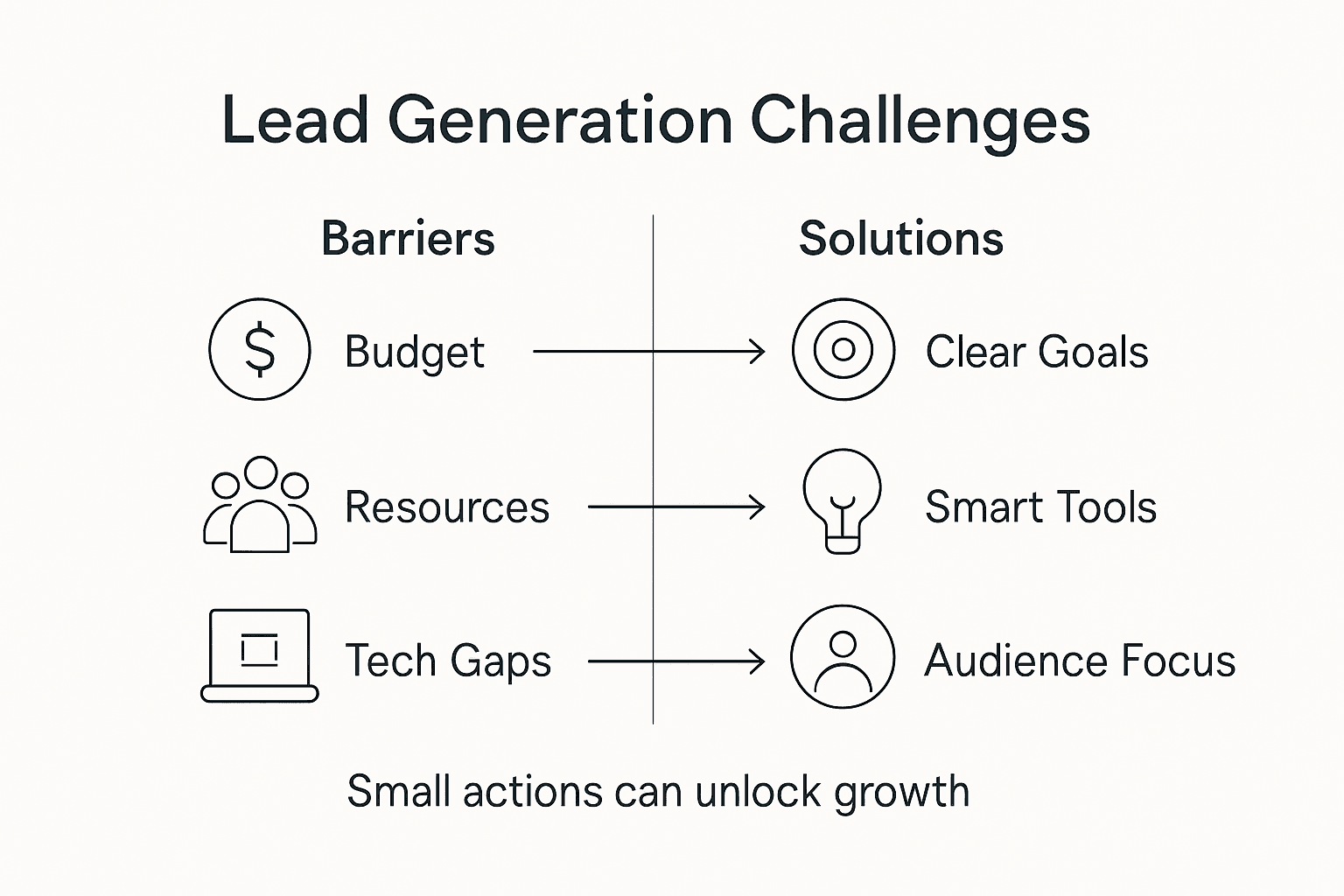
Small businesses encounter significant challenges in lead generation that fundamentally impact their growth and sustainability. These obstacles range from financial constraints to technological limitations, creating a complex landscape of strategic hurdles that require nuanced navigation. Understanding these challenges is crucial for developing targeted approaches that can overcome systemic barriers to business expansion.
Financial Constraints represent the most immediate obstacle for local businesses. Limited budgets restrict marketing investments, technological upgrades, and comprehensive lead generation strategies. Specific financial challenges include:
- Insufficient capital for sophisticated marketing tools
- High customer acquisition costs
- Limited funds for digital advertising
- Restricted ability to hire specialized marketing personnel
Strategic Limitations further compound lead generation difficulties. Many small businesses struggle with underdeveloped marketing strategies that fail to effectively target and engage potential customers. These strategic weaknesses manifest through:
- Unclear target audience definition
- Inconsistent messaging
- Poor understanding of customer pain points
- Ineffective follow-up processes
Technological barriers also play a significant role in limiting lead generation potential. Small businesses often lack the sophisticated digital infrastructure required to compete effectively in modern markets. This includes limited access to advanced analytics, customer relationship management systems, and integrated marketing platforms that could streamline lead generation efforts.

Pro Tip for Overcoming Business Obstacles: Prioritize strategic planning over quick fixes. Invest time in understanding your target market, develop a clear value proposition, and create a systematic approach to lead generation that maximizes your available resources.
Impact of Technology and Data Privacy
Digital technologies have fundamentally transformed lead generation strategies for small businesses, creating a complex landscape of opportunities and challenges. The rapid evolution of technological capabilities has introduced sophisticated tools for targeting, tracking, and engaging potential customers, while simultaneously raising critical concerns about data privacy and ethical marketing practices.
Technological Advancements in lead generation have dramatically reshaped how small businesses approach customer acquisition. These innovations include:
- Advanced customer relationship management (CRM) systems
- Artificial intelligence driven targeting algorithms
- Automated marketing platforms
- Real-time analytics and performance tracking
- Personalization technologies
Privacy Regulations have emerged as a critical counterpoint to technological capabilities. Small businesses must now navigate increasingly complex legal frameworks that protect consumer data, including:
- General Data Protection Regulation (GDPR) requirements
- California Consumer Privacy Act (CCPA) guidelines
- Strict consent management protocols
- Transparent data collection practices
- Comprehensive data security measures
The intersection of technology and privacy creates a challenging environment where businesses must balance innovative marketing techniques with robust ethical considerations. Small businesses face the delicate task of leveraging powerful digital tools while maintaining customer trust and complying with evolving regulatory standards. This requires a nuanced approach that prioritizes both technological efficiency and responsible data management.
Pro Tip for Technology and Privacy Management: Implement a transparent data collection policy that clearly communicates to customers how their information will be used, stored, and protected. Regularly audit your technological systems to ensure compliance with current privacy regulations.
Common Mistakes That Reduce Lead Quality
Lead generation is a nuanced process where seemingly minor errors can significantly diminish the potential of attracting high-quality prospects. Small businesses frequently encounter critical mistakes that undermine their marketing efforts and reduce the overall effectiveness of their lead generation strategies.
Targeting Errors represent a fundamental challenge that dramatically impacts lead quality. Common targeting mistakes include:
- Overly broad audience selection
- Insufficient market research
- Neglecting customer persona development
- Failing to segment potential leads effectively
- Using generic, non-personalized messaging
Conversion Process Weaknesses further compromise lead generation potential. These critical mistakes often manifest through:
- Complicated contact or inquiry forms
- Slow response times to initial inquiries
- Lack of clear value proposition
- Inconsistent communication channels
- Absence of trust-building elements like testimonials or credentials
Technical implementation issues can also substantially reduce lead quality. Many small businesses inadvertently create barriers in their digital marketing infrastructure that discourage potential customers. These technical limitations might include non-mobile-responsive websites, slow loading speeds, unclear navigation paths, and inadequate tracking mechanisms that prevent understanding customer interaction patterns.
Pro Tip for Lead Quality Improvement: Implement a systematic lead scoring process that objectively evaluates potential customer interactions. Regularly audit your marketing funnel to identify and eliminate friction points that might deter high-potential prospects from engaging with your business.
Overcome Lead Generation Challenges to Drive Your Small Business Growth
Small businesses face critical obstacles in lead generation such as limited budgets, unclear target audiences, and technological barriers as explored in the article. These challenges can cause costly targeting errors and reduce lead quality, making it difficult to transform prospects into loyal customers. At ibrand.media, we understand these pain points and offer tailored digital marketing solutions including SEO optimization, local marketing, advertising, and social media management designed specifically to help small and medium-sized businesses conquer these hurdles efficiently.
Ready to stop struggling with lead generation and start growing your business with a clear, personalized strategy? Explore our comprehensive services at ibrand.media and discover expert guidance backed by real success stories. Visit our Uncategorized Services Page to see how we combine affordable pricing with mobile-friendly designs and real-time tracking so you can see results fast. Take control of your lead generation efforts today and partner with a digital marketing agency that prioritizes your unique business goals.
Frequently Asked Questions
What are the main challenges small businesses face in lead generation?
Small businesses commonly encounter challenges such as financial constraints, strategic limitations, and technological barriers that impact their ability to generate quality leads effectively.
How can small businesses improve their lead generation strategies?
To enhance lead generation, small businesses should focus on clearly defining their target audience, utilizing multichannel marketing approaches, and employing data analytics to understand customer behavior.
Why is data privacy important in lead generation for small businesses?
Data privacy is crucial as it helps maintain customer trust and ensures compliance with regulations such as GDPR and CCPA. Proper management of consumer data protects against legal issues and promotes ethical marketing practices.
What mistakes should small businesses avoid to enhance lead generation quality?
Common mistakes include targeting overly broad audiences, using generic messaging, and failing to streamline the conversion process, such as slow response times or complicated inquiry forms.
Recommended
- How to Get More Leads: A Step-by-Step Guide for 2025 | Ibrandmedia
- How to Generate Leads Online for Small Businesses | Ibrandmedia
- Top Small Business Marketing Challenges and Smart Solutions | Ibrandmedia
- Understanding Startup Marketing Challenges for Growth | Ibrandmedia
- How to Improve Google Business Profile Rankings | Local SEO Guide 2025
- Forget the Headlines: AI Is Fueling Explosive Economic Growth
Recent Comments