
TL;DR:
- Effective local partnerships require clear criteria like audience alignment and measurable results.
- Start with internal testing and small pilots before expanding collaborative efforts.
- Success depends on timing, preparation, and treating partnerships as amplifiers, not rescue plans.
Finding the right local partners can feel like searching for a needle in a haystack. Many small business owners have spent weeks building collaborations that looked promising on paper but delivered almost nothing in practice. The difference between a productive partnership and a time drain usually comes down to one thing: strategy. This guide walks you through clear selection criteria, proven partnership formats, a side-by-side comparison, and a step-by-step decision process so you can identify opportunities that genuinely move the needle for your business online and in your community.
Table of Contents
- Setting criteria for effective local partnerships
- Top local partnership ideas for small businesses
- Comparison table: partnership ideas at a glance
- Making the best local partnership decision for your goals
- Why small business partnerships succeed (and when they don’t)
- Get expert support for local partnerships and growth
- Frequently asked questions
Key Takeaways
| Point | Details |
|---|---|
| Start internally | Validate your marketing tactic in-house before bringing in external partners for best results. |
| Choose the right fit | Match partnership types to your audience goals and growth stage for maximum impact. |
| Pilot, then scale | Begin with a small collaboration and expand only after measurable success. |
| Protect value capture | Engage external partners at the right time to avoid losing out on long-term benefits. |
| Measure and adapt | Track results and adjust your partnership strategy based on what works in practice. |
Setting criteria for effective local partnerships
Before you reach out to a single potential partner, you need a filter. Without one, you end up saying yes to everything that sounds reasonable and no to nothing. That leads to scattered efforts, wasted time, and partnerships that produce goodwill but no actual results.
Here are five criteria every strong local partnership should meet:
- Audience alignment: Your partner’s customers should overlap with yours, or represent a group you genuinely want to reach. A yoga studio and a health food café share an audience. A yoga studio and a car detailer generally don’t.
- Mutual value: Both sides need to gain something real. Partnerships where one business is clearly doing the other a favor tend to collapse fast. Think about what you bring to the table before you ask anything of someone else.
- Complementary strengths: You want a partner who fills a gap you have, not one who duplicates what you already do well. If your strength is social media and theirs is email marketing, that’s a natural fit.
- Clear marketing goals: Know what outcome you’re chasing before you start. Is it foot traffic? Email subscribers? Online reviews? Social followers? Vague goals produce vague results.
- Measurable results: Build tracking in from day one. Use UTM links, coupon codes, or dedicated landing pages so you can actually see whether the collaboration is working.
The benefits of local marketing multiply significantly when you go in with clear expectations and defined success metrics rather than simply hoping a handshake agreement turns into sales.
One often-overlooked trap is reaching out to outside partners before you’re internally ready. Research shows that engaging external partners too early can actually reduce how much value your business captures from the collaboration. Successful small businesses tend to test and optimize their approach in-house first, then bring in outside collaborators once the process is solid.
“Test and validate partnership concepts internally before involving outside collaborators. Clarity on your own offer, audience, and metrics will make every external conversation stronger.”
Pro Tip: Use a phased approach. In month one, run your intended co-promotion offer as an internal campaign. Measure the response. In month two, bring in a partner to amplify what’s already working. This protects you from value leakage and gives your partner a proven concept to get excited about.
When you’re ready to start reaching out, strong strategies to attract local customers can help you identify which types of businesses are already visible to your ideal audience.
With criteria in mind, let’s explore actionable partnership formats suited for local businesses.
Top local partnership ideas for small businesses
Not all collaboration formats work the same way. Some are better for brand visibility. Others drive direct sales. A few are great for building trust over time. Here’s a breakdown of the most effective options for small and medium-sized businesses, along with honest pros and cons for each.
1. Joint events or workshops
Two businesses co-host an event, in-person or virtual, that serves both audiences.
- Benefits: Strong community presence, great for list-building, positions both brands as authorities.
- Drawbacks: Requires coordination and upfront effort. Success depends heavily on how well each partner promotes it.
2. Co-marketing on social media
You and a partner create shared content, cross-promote posts, or run a joint giveaway on Instagram, Facebook, or another platform.
- Benefits: Quick to set up, wide reach, low cost, easy to track.
- Drawbacks: Results depend on follower quality, not just size. A partner with 10,000 disengaged followers may outperform less than one with 2,000 loyal ones.
3. Local contest or sweepstakes
Both businesses contribute prizes and promote a shared contest to their audiences.
- Benefits: High engagement, viral potential, fast follower growth.
- Drawbacks: You may attract prize-seekers who don’t convert into customers.
4. Guest blogging or podcast swaps
You write content for a partner’s blog or appear on their podcast, and vice versa.
- Benefits: Excellent for SEO, builds authority, generates long-lasting traffic.
- Drawbacks: Takes more time than social posts; results are slower to appear.
5. Charity or community campaigns
Both businesses align around a local cause, donating a portion of sales or volunteering together.
- Benefits: Builds deep community trust and goodwill. Generates press interest.
- Drawbacks: Results are harder to quantify. Sales lift is often indirect.
6. Cross-referral programs
You formally agree to refer customers to each other, sometimes with a small incentive or commission.
- Benefits: Drives warm, high-intent leads. Very low cost.
- Drawbacks: Requires trust and consistent follow-through from both sides.
When targeting a local audience, the best approach is usually to pilot one format before adding complexity. Research confirms that co-marketing scales better when businesses begin with a small, contained initiative rather than jumping straight into multi-channel campaigns.
Pro Tip: When pitching a co-promotion to a potential partner, lead with what they get, not what you want. Prepare a one-page summary that shows their likely audience gain, effort required, and expected timeline. That makes it easy for them to say yes.
Understanding why use local marketing as a foundation helps you explain the value of joint efforts to potential partners who may be skeptical about whether collaboration actually pays off. Strong online marketing strategies can guide how you structure the digital components of any partnership you pursue.
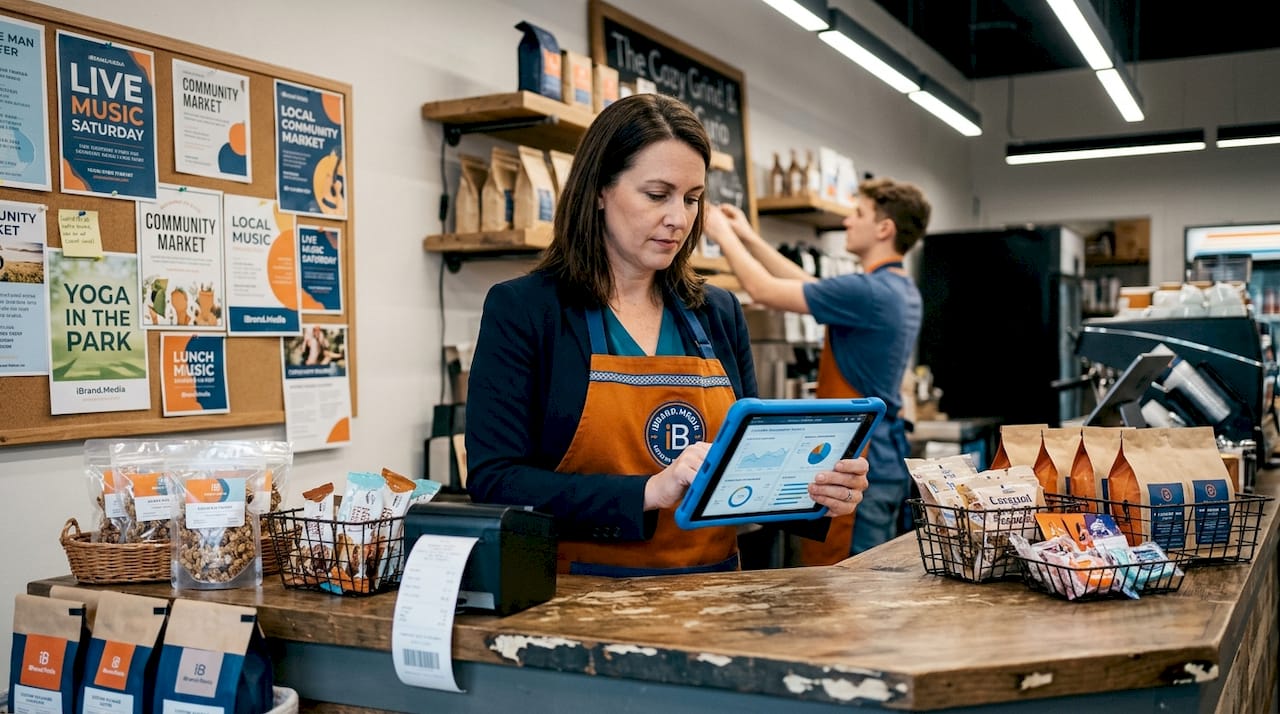
Now that you have a sense of what partners and approaches might work, see how these options compare head-to-head.
Comparison table: partnership ideas at a glance
Use this table as a quick reference when you’re weighing your options. It shows how each format performs across the factors that matter most to growing businesses.
| Partnership type | Marketing reach | Ease of setup | Best for | Typical results |
|---|---|---|---|---|
| Joint events or workshops | Local to regional | Medium | Service businesses, coaches, retail | Leads, email subscribers, brand authority |
| Social media co-marketing | Local to national | Easy | All business types | Follower growth, engagement, website traffic |
| Local contest or sweepstakes | Local to regional | Easy | Retail, food and beverage, e-commerce | Rapid email list growth, short-term sales |
| Guest blogging or podcast swaps | National or niche | Hard (time-intensive) | B2B, consultants, specialists | Long-term SEO, authority, referral traffic |
| Charity or community campaigns | Local | Medium | Established businesses, community brands | Brand loyalty, press coverage, goodwill |
| Cross-referral programs | Local | Easy | Service businesses, professionals | Warm leads, direct sales, strong conversion |
It’s worth noting that sequencing matters here. Research shows that less successful businesses partner externally before their internal processes are ready, which means they hand off value they haven’t fully captured yet. Match the format to where your business actually is, not where you hope it will be in six months.
For businesses focused on online marketing to local customers, social media co-marketing and cross-referral programs tend to offer the fastest visible results with the lowest barrier to entry.
Selecting the right idea for your business depends on your goals and context.
Making the best local partnership decision for your goals
Now it’s time to apply everything above in a clear, repeatable process. This four-step framework helps you move from idea to execution without overcomplicating things.
Step 1: Validate your marketing tactics internally
Before you approach anyone, run your intended campaign on your own channels. Test the offer, the messaging, and the call to action. If it doesn’t resonate with your existing audience, a partner’s audience isn’t going to save it. The most successful small businesses begin by exploiting their current assets, then layer in external collaboration once they know what works.
Step 2: Shortlist partnership ideas
Use the five criteria from the first section to score at least three potential partners or formats. Don’t chase the most exciting option. Chase the one that fits best. A cross-referral program with the right neighbor business will beat a splashy event with the wrong one every time.
Step 3: Pilot one partnership
Start small. One format. One partner. One campaign with a clear start date, end date, and one or two metrics you’re tracking. Keep it contained so you can isolate what’s working. Common local marketing challenges become much more manageable when you pilot before you scale.
Step 4: Assess and optimize
At the end of the pilot, review your numbers. Did you reach the target audience? Did traffic or sales move? What did your partner experience? Use those answers to decide whether to expand the partnership, tweak it, or try a different format. Understanding the basics of local marketing gives you the language and context to evaluate results honestly.
Matching partnership type to your business stage also matters. Startups benefit most from low-effort formats like referrals and social swaps. Growth-stage businesses can invest in joint events. Established businesses can lead charity campaigns that reinforce their existing community presence.
Beyond the frameworks and comparisons, here’s a hard-won perspective on what actually leads to partnership success.
Why small business partnerships succeed (and when they don’t)
Here’s a perspective that most marketing guides won’t tell you: the biggest reason local partnerships fail has nothing to do with finding the wrong partner. It has to do with timing.
Most small business owners approach partnerships when they feel stuck. Sales are slow, growth has plateaued, or a competitor just made a move. So they reach out to someone in their network, throw something together quickly, and hope the collaboration creates momentum. Sometimes it does. More often, both sides end up mildly disappointed and quietly stop following through.
The real problem is that partnerships work best as amplifiers, not rescue plans. They take whatever you’re already doing and make it louder. If your offer isn’t clear, if your website doesn’t convert, if your follow-up process is messy, a partnership will just expose those gaps to a bigger audience.
The businesses that get consistent results from local collaboration treat it as a timed, structured process. They validate internally first. They show up to partnerships with data, not just enthusiasm. They’re clear on what the partner gets, and they build in measurement from the start.
Consider the contrast between two approaches. Business A, a local fitness studio, partnered with a nutritionist after a slow January. They co-hosted a workshop, promoted it once on Instagram, and got twelve attendees. Neither side tracked conversions and the partnership quietly fizzled. Business B, a similar studio, spent February testing a “new member plus nutrition consult” bundle with their own email list. It converted well. In March, they approached the same type of nutritionist with data in hand. The partner saw proof of concept and committed to co-promoting to their list. The workshop sold out, and a referral agreement followed.
Same partnership type. Completely different outcome. The difference was preparation, not personality.
Use partnerships intentionally. The real-world results of local marketing are real, but they require that you show up ready to multiply your strengths, not outsource your problems.
Get expert support for local partnerships and growth
Knowing the right partnership strategy is one thing. Executing it effectively, especially across digital channels, is another. If you’ve been trying to grow locally but aren’t seeing consistent traction, you don’t have to figure it out alone.
At ibrand.media, we help small and medium-sized businesses build visibility, credibility, and local momentum through tailored digital marketing strategies. Whether you’re looking to optimize your website for search, strengthen your digital presence ahead of a partnership launch, or understand which collaborations are right for your growth stage, our team can build a plan that fits your goals and budget. Explore our local marketing agency support resources or read our in-depth marketing to local customers guide to take the next step with confidence.
Frequently asked questions
What’s the best first step in forming a local partnership?
Test your concept internally to clarify value and ensure readiness before involving an external partner. Engaging external partners too early often reduces how much value each side actually captures from the collaboration.
How do I know if a partnership is working?
Track specific metrics like lead volume, online traffic, or sales from each campaign or joint activity. Define your success benchmark before the partnership launches so results are easy to evaluate objectively.
Are digital or in-person collaborations better?
Both have real merits. Digital co-marketing offers wider, faster reach, but in-person partnerships typically build deeper community ties and brand loyalty over time.
How soon should I scale a local partnership opportunity?
Start small, measure results, then expand once you see clear mutual value. Research confirms that co-marketing scales better when businesses resist the urge to rush growth before the model is proven.
Recommended
- Top Ways to Promote Your Business in 2025: Proven Strategies for Local Growth | Ibrandmedia
- Top Local Marketing Ideas 2025 for Small Business Growth | Ibrandmedia
- How to Target Local Customers for Rapid Business Growth | Ibrandmedia
- How to Attract Local Customers in 2025: Smart Strategies for Small Businesses | Ibrandmedia
- Strengthening Community Leadership & Vision for Prosperity
- Innovative outreach campaign ideas to supercharge LinkedIn leads – The Lead Lab
Recent Comments