
TL;DR:
- Search engine optimization significantly enhances banquet halls’ online visibility by targeting specific keywords and managing local search presence. Implementing location-based website content, dedicated event pages, and active reviews increases booking inquiries and improves search rankings. Ongoing SEO practices, audience segmentation, and reputation management are essential for sustained success in competitive markets.
Search engine optimization (SEO) is the primary driver of online visibility for banquet halls, connecting your venue directly with event planners, couples, and corporate clients actively searching for spaces. The role of SEO for banquet halls goes beyond basic website tweaks. It covers keyword targeting, local search presence, content creation, and reputation management, all working together to fill your calendar. Tools like Google Business Profile, Google Ads, and platforms like HoneyBook show that venue marketing strategies built on SEO consistently outperform those relying on referrals alone. This guide breaks down exactly what works and why.
How does SEO improve banquet hall visibility and bookings?
SEO for banquet halls is the practice of making your venue appear at the top of search results when someone types “wedding venue near me” or “corporate event space in Chicago.” That placement is not accidental. It results from deliberate optimization across your website, your local listings, and your content.
Optimize your website’s core elements
Your website is the foundation of every SEO effort. Start with title tags, meta descriptions, and header tags that include location-specific keywords. A page titled “Banquet Hall in Houston for Weddings and Corporate Events” tells Google exactly what you offer and where. Optimizing for location keywords like “wedding venue in Dallas” or “corporate events in the Bay Area” directly increases qualified leads. Beyond keywords, site speed matters. Mobile-first website design with fast load times improves both user experience and search rankings, since most venue visitors browse on their phones.

Build dedicated landing pages for each event type
Generic “events” pages waste SEO potential. Create separate pages for weddings, corporate meetings, birthday parties, and quinceañeras. Each page targets a distinct set of keywords, speaks to a specific audience, and converts better because the content matches what the visitor is looking for. A corporate planner searching for “conference venue with AV equipment in Atlanta” needs different information than a bride searching for “outdoor wedding venue in Savannah.” Separate pages serve both without compromise.
- Keyword optimization: Use location plus event type in page titles, URLs, and headers.
- Content depth: Include capacity, pricing ranges, catering options, and photo galleries on each page.
- Internal linking: Connect event pages to your main booking page to guide visitors toward conversion.
- Schema markup: Add event and local business schema so Google displays rich results like star ratings and address directly in search.
Pro Tip: Run Google Search Console on each landing page monthly. It shows exactly which search queries bring visitors to that page, so you can refine your keyword targeting based on real data rather than guesses.
Content marketing through blogs, case studies, and FAQ pages builds long-term organic traffic. Publishing posts like “How to Plan a Corporate Holiday Party in Phoenix” attracts planners early in their research phase and positions your venue as the obvious choice before they even start comparing options.
What are the best keyword and content strategies for banquet halls?
Keyword strategy for banquet halls works best when you treat each audience segment as a separate market. Segmenting campaigns for social celebrations, corporate planners, and wedding clients with custom messaging and keywords consistently outperforms a one-size-fits-all approach. A corporate planner values capacity, technology, and catering flexibility. A couple planning a wedding prioritizes ambiance, photography backdrops, and vendor coordination. Your keywords and content must reflect those differences.
- Research long-tail keywords with geographic modifiers. Phrases like “affordable banquet hall in Queens for 200 guests” have lower search volume but much higher purchase intent than broad terms like “event venue.” These searchers are ready to book, not just browse.
- Create event-specific landing pages with pricing. Transparency about pricing reduces friction. Venues that publish starting rates rank better for cost-related searches and attract leads who are already pre-qualified.
- Produce video tours and post them on YouTube. Video tours on YouTube rank in Google search results and convert better than stock photos. A three-minute walkthrough of your space answers more questions than ten paragraphs of text.
- Collect and publish client testimonials. Written testimonials on your website add keyword-rich content naturally. Video testimonials on YouTube create a second SEO asset that ranks independently.
- Update content quarterly. Search engines favor fresh content. Revisit your top pages every three months to add new photos, update pricing, and refresh event descriptions.
Pro Tip: Use Google’s “People Also Ask” box for your target keywords. Those questions are exactly what your potential clients are typing. Answer them directly on your landing pages and in blog posts to capture featured snippet positions.
The venue marketing approach that wins in 2026 combines long-tail keyword targeting with multimedia content. Text alone no longer dominates search results. Venues that publish real event photos, virtual tours, and client videos alongside written content rank higher and hold visitors on the page longer, which signals quality to Google.
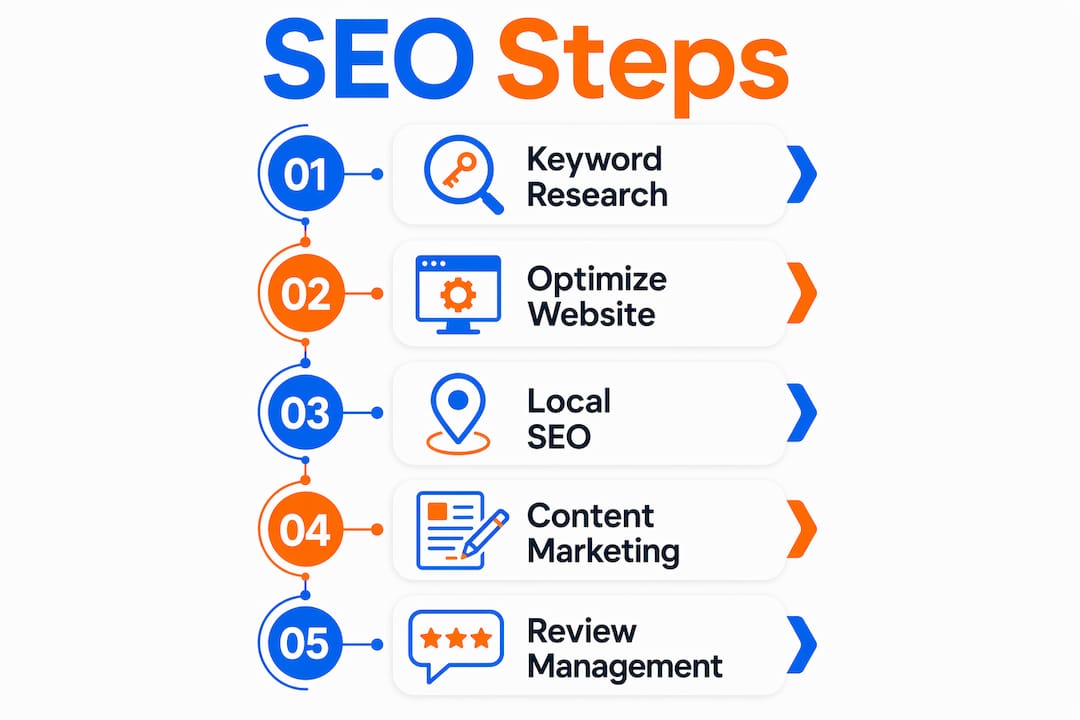
How does local SEO affect banquet hall bookings?
Local SEO is the single highest-return activity for most banquet halls. When someone searches “banquet hall near me,” Google displays a map pack of three local results above all organic listings. Appearing in that map pack can triple your inquiry volume overnight.
Google business profile optimization
Claiming and fully completing your Google Business Profile is non-negotiable. Including photos of private events, selecting the correct business category such as “banquet hall,” and responding to every review directly boosts your local ranking. Add your hours, parking information, capacity, and a link to your booking page. Profiles with complete information and recent photos consistently outrank incomplete ones.
Reviews and reputation management
Responding to every review within 48 hours builds trust and positively impacts local search rankings. Venues with higher review volumes and stronger ratings outperform local competitors in map pack results. Ask every client to leave a review on Google, Yelp, and Facebook immediately after their event while the experience is fresh. A simple follow-up email with direct links to your review profiles removes all friction from the process. For a deeper look at managing your online reputation affordably, reputation management strategies from Ibrand cover the full process.
| Local SEO Factor | Impact on Rankings |
|---|---|
| Complete Google Business Profile | High: directly affects map pack placement |
| Review volume and rating | High: venues with more reviews rank above competitors |
| Local citations and directories | Medium: builds authority and consistent NAP data |
| Mobile-friendly website | High: Google penalizes slow or broken mobile experiences |
| Location keywords on website | Medium: reinforces geographic relevance for local searches |
Local citations, meaning consistent listings of your name, address, and phone number across directories like Yelp, The Knot, WeddingWire, and local chamber of commerce sites, reinforce your authority with Google. Inconsistent information across directories confuses search engines and suppresses your ranking.
Can paid search and social media boost organic SEO results?
Paid search and social media do not replace organic SEO, but they accelerate results and fill gaps while your organic rankings build. The combination of both channels produces stronger overall performance than either one alone.
Google Ads campaigns targeting local venue rentals typically cost between $500 and $1,500 per month. That spend generates strong lead flow for high-intent searches like “banquet hall rental this Saturday” that organic SEO cannot always capture quickly. Paid ads also provide keyword data. The search terms that convert in your Google Ads campaigns are the same terms you should prioritize in your organic content strategy.
- Facebook and Instagram retargeting shows your venue ads to people who visited your website but did not book. These warm leads already know your space and convert at significantly higher rates than cold audiences.
- YouTube video ads placed before wedding planning or event planning content reach audiences in the research phase before they even run a Google search.
- Social proof amplification means sharing your best Google and Yelp reviews as social media posts. This builds credibility across platforms and drives traffic back to your website.
- Seasonal campaigns around peak booking periods like January (wedding season planning) and September (corporate Q4 events) maximize your ad spend when intent is highest.
For venue owners managing social media alongside everything else, social media management basics from Ibrand provide a practical starting framework. The key insight is that paid and organic channels share data. What works in ads informs your SEO content, and strong organic rankings lower your cost per click in paid campaigns.
Key takeaways
SEO for banquet halls drives bookings by combining local search optimization, audience-specific content, and reputation management into one connected strategy.
| Point | Details |
|---|---|
| Local SEO drives the most bookings | Optimize your Google Business Profile and build reviews to appear in the map pack. |
| Segment content by event type | Create separate landing pages for weddings, corporate events, and social celebrations. |
| Long-tail keywords convert best | Target phrases like “banquet hall for 150 guests in Austin” to attract ready-to-book clients. |
| Reviews directly impact rankings | Respond to every review within 48 hours and actively request reviews after each event. |
| Paid search accelerates organic growth | Use Google Ads data to identify high-converting keywords and prioritize them in your SEO content. |
Why most banquet halls are leaving bookings on the table
Here is what I see consistently when working with venue owners: they treat SEO as a one-time project rather than an ongoing system. They optimize their homepage, claim their Google Business Profile, and then stop. Six months later, they wonder why a competitor with a smaller space is showing up above them in search results.
The competitor is publishing new content. They are responding to reviews the same day. They built separate pages for every event type they host. That is not a technical advantage. It is a discipline advantage.
The other mistake I see constantly is treating all potential clients as one audience. A corporate planner and a mother planning her daughter’s quinceañera have nothing in common except that they both need a room. Your keywords, your photos, your pricing language, and your calls to action should be completely different for each group. Venues that segment their marketing by audience type book more events at better margins because they speak directly to what each client actually cares about.
My honest recommendation: run a full SEO audit every quarter. Check your rankings for your top ten keywords, review your Google Business Profile for completeness, and look at which pages are losing traffic. SEO is not set and forget. The venues winning in local search in 2026 are the ones treating it like a weekly operational task, not a one-time setup.
— TONY
Ready to fill your banquet hall calendar?
Ibrand works with banquet halls and event venues to build SEO strategies that generate real bookings, not just traffic. From Google Business Profile setup to event-specific landing pages and content creation, Ibrand handles the technical and creative work so you can focus on running your venue.
If you are ready to see measurable growth in your inquiry volume, start with Ibrand’s SEO optimization for venues service, built specifically for event spaces. For venue owners who want to understand the fundamentals first, the small business SEO guide covers everything you need to know before investing in professional help.
FAQ
What is the role of SEO for banquet halls?
SEO helps banquet halls appear in search results when event planners and couples search for venues online. It drives qualified traffic to your website and converts visitors into bookings through targeted keywords, local listings, and optimized content.
How long does SEO take to show results for a venue?
Most banquet halls see measurable improvements in local search rankings within 3–6 months of consistent optimization. Google Business Profile improvements and review building can produce faster results, sometimes within weeks.
What keywords should a banquet hall target?
Target long-tail phrases that combine event type, location, and capacity, such as “wedding reception hall in Denver for 200 guests.” These phrases attract visitors with high booking intent rather than casual browsers.
How do online reviews affect banquet hall SEO?
Review volume and rating directly influence Google map pack rankings. Venues with more reviews and higher average ratings consistently outrank competitors with fewer reviews, even when other SEO factors are similar.
Do banquet halls need separate pages for each event type?
Yes. Dedicated landing pages for weddings, corporate events, and social celebrations each target distinct keywords and audiences. Separate pages rank better and convert more effectively than a single generic events page.
Recent Comments