
TL;DR:
- Focusing marketing budgets on Google Local Service Ads, Google Business Profile, and referral programs yields measurable booked jobs for plumbers. Tracking cost per booked job with call tracking tools like CallRail or WhatConverts helps optimize spending and improve ROI. Consistent GBP management, rapid lead response, and strategic channel focus are keys to long-term growth and cost efficiency.
Cost effective plumber marketing means concentrating your budget on three proven channels: Google Local Service Ads, Google Business Profile, and referral programs. These are the channels that generate real booked jobs, not just clicks. Most plumbing owners waste money by spreading thin across too many platforms before mastering any single one. This guide gives you the exact budget benchmarks, channel tactics, and tracking methods to get more leads without overspending. Every strategy here is built for plumbing businesses that want measurable results from every dollar spent.
What budget should plumbers allocate for marketing?
A sustainable marketing budget for plumbing businesses ranges from 5% to 15% of gross revenue, with solo operators starting around 5% to 8%. That translates to roughly $500 to $1,500 per month for a solo operator, and $6,000 to $15,000 per month for a mid-size shop. These numbers exist because marketing below 5% of revenue rarely generates enough lead volume to sustain growth, while spending above 15% without a proven system burns cash fast.
Here is how to think about channel allocation at different business sizes:
| Business size | Monthly budget range | Priority channel split |
|---|---|---|
| Solo operator | $500 to $1,500 | 60% LSA, 30% GBP/SEO, 10% referral incentives |
| Small shop (2-5 trucks) | $2,000 to $5,000 | 50% LSA, 30% SEO, 20% Google Ads or referrals |
| Mid-size shop (6-15 trucks) | $6,000 to $15,000 | 40% LSA, 30% SEO, 20% Google Ads, 10% social/email |
| Large operation (15+ trucks) | $15,000+ | Diversified across all channels with dedicated tracking |
The biggest mistake plumbers make is scattershot spending. Putting $200 into Facebook, $150 into Yelp, $300 into Google Ads, and $100 into a local magazine ad produces nothing measurable. Concentrating that same $750 into Google Local Service Ads produces trackable leads within days.
Pro Tip: Start with LSA and GBP before spending a dollar on Google Ads. LSA leads cost a fraction of search ad leads and come with a trust badge that converts better. Add paid search only after your LSA campaigns are optimized and profitable.
How do Google Local Service Ads make plumber marketing cost effective?
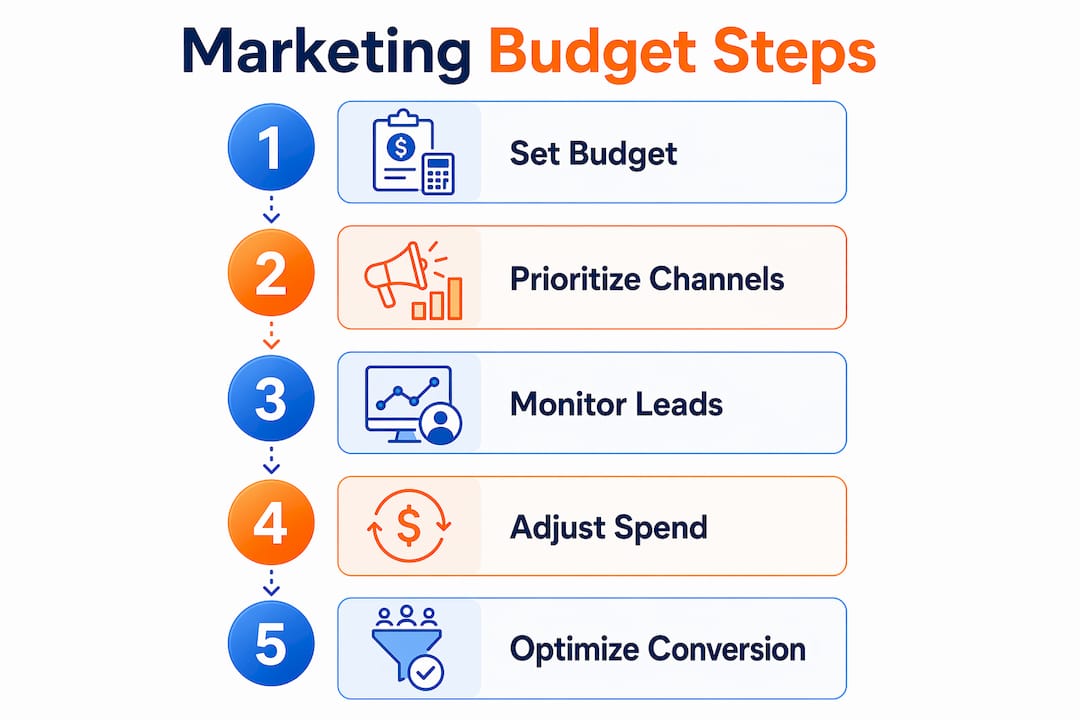
Google Local Service Ads are the single most cost effective paid channel for most plumbing businesses. The average LSA cost per lead runs between $25 and $100, compared to $183 or more for traditional Google search ads. That gap is significant. It means you can generate three to seven LSA leads for the price of one search ad lead, using the same Google platform.

The reason LSAs convert so well comes down to the Google Guaranteed badge. 84% of customers search Google before hiring a plumber, and the badge signals that Google has verified your license, insurance, and background check. That pre-sells trust before the customer even reads your profile. Competitors without the badge are fighting uphill.
Here is how to set up and optimize LSAs for maximum return:
- Complete your verification. Submit your license, insurance, and background check documents immediately. Incomplete profiles get lower placement and fewer leads.
- Set your service area precisely. Tight geographic targeting reduces wasted leads from areas you cannot serve profitably. Focus on your highest-margin zip codes first.
- Select only the services you want to book. If drain cleaning is your most profitable job type, prioritize it. LSA lets you control which service categories trigger your ads.
- Set a weekly budget, not a monthly one. Google distributes LSA spend by week. Starting with a conservative weekly budget lets you test lead quality before scaling.
- Respond to every lead within five minutes. Responding within five minutes can multiply bookings two to three times compared to responding in 30 or more minutes. The industry average response time is three hours and 47 minutes, so speed alone is a competitive advantage.
- Dispute bad leads immediately. LSA lets you dispute leads that are outside your service area, wrong job type, or spam. Disputing keeps your cost per booked job accurate and recovers wasted spend.
Pro Tip: Assign one person or an automated system to monitor LSA leads during business hours. A missed call on an LSA lead is money you already paid for and then threw away.
How does Google Business Profile drive free, sustainable plumbing leads?
Google Business Profile is the highest-ROI free tool in plumber digital marketing. The top three GBP listings capture 44% of all clicks on “plumber near me” searches in the Google Map Pack. That is nearly half of all local search traffic going to three businesses, and the cost to appear there is zero beyond your time.
Reviews are the primary ranking and conversion factor inside GBP. Plumbers with 25 or more Google reviews see conversion rates 35% higher than competitors with fewer reviews, and review count drives 17% of local pack ranking factors. Getting to 25 reviews is not optional if you want to compete in the map pack.
Here is what an actively managed GBP looks like versus a neglected one:
| GBP activity | Neglected profile | Actively managed profile |
|---|---|---|
| Review count | Under 10 | 25 or more |
| Photo uploads | Default or none | 20 or more, updated monthly |
| Posts | Never | Weekly service or offer posts |
| Q&A responses | Unanswered | Answered within 24 hours |
| Review responses | None | Every review responded to |
Beyond GBP, local SEO compounds over time in ways paid ads cannot. Building out individual service pages for “water heater repair in city]” or “emergency drain cleaning in [neighborhood]” targets high-intent searches at zero cost per click. Citations on directories like Yelp, Angi, and the Better Business Bureau reinforce your location signals to Google. Expect three to nine months before local SEO produces measurable traffic, but the [cost-per-booked-job advantage over paid ads grows every month after that.
- Claim and fully verify your GBP listing before anything else
- Upload at least 20 photos covering your team, trucks, and completed work
- Post weekly updates: seasonal offers, service reminders, or job spotlights
- Ask every satisfied customer for a Google review immediately after the job
- Respond to every review, positive or negative, within 48 hours
- Build citations on at least 15 local and industry directories for consistent NAP data
For a deeper look at how to structure your local plumber SEO, Ibrand has a full breakdown of channel-by-channel tactics built specifically for plumbing companies.
What are the most affordable ways to boost lead volume?
Referral programs and website improvements are the two most underused low-cost plumbing promotions available to plumbing businesses. One documented example shows a plumber who spent $4,200 on referral incentives and booked 121 jobs averaging $980 each. That is roughly $34 per booked job, a number that most paid ad channels cannot touch.
A referral program does not need to be complicated. Offer a $25 to $50 gift card to any customer who refers a friend that books a job. Text or email the offer to your existing customer list within 48 hours of completing a job, when satisfaction is highest. Track referral sources with a simple spreadsheet or a field service management tool like Jobber or ServiceTitan.
Your website is the other lever most plumbers leave unpulled. About 95% of plumbing website visitors leave without converting. That is not a traffic problem. It is a conversion problem. A website that converts well has three things: a click-to-call phone number visible above the fold, a short contact form that takes under 60 seconds to complete, and at least five customer testimonials with full names and job types listed.
- Place your phone number in the top right corner of every page
- Add a “Book Now” or “Get a Free Quote” button that links to a short form
- List your service areas explicitly on every service page
- Display Google review stars and count on your homepage
- Use visitor identification tools to re-engage website visitors who leave without contacting you
Automated follow-up after completed jobs is another budget-friendly tactic. A simple text message sent two hours after job completion asking for a Google review costs almost nothing and consistently produces reviews. Tools like Podium or NiceJob automate this process for under $100 per month.
Pro Tip: Set up a visitor recovery sequence using tools like Customers.ai or VisitorIQ to identify anonymous website visitors and follow up via email. This turns existing traffic into leads without spending more on ads.
How do you measure and adjust your plumbing marketing budget?
Tracking is where most plumbers lose money silently. Without dedicated tracking numbers by channel, you cannot tell whether your leads are coming from LSA, GBP, your website, or a referral. Call tracking tools like CallRail and WhatConverts cost $50 to $200 per month and give you precise data on which channels are producing booked jobs versus which are producing noise.
Here is a simple framework for calculating cost per booked job by channel:
- Assign a unique phone number to each channel. One number for LSA, one for your website, one for any print or direct mail. CallRail makes this straightforward.
- Track calls to booked jobs, not just calls. A channel that generates 20 calls but only books two jobs has a 10% close rate. A channel with 10 calls and six bookings has a 60% close rate. The second channel is worth more even with fewer leads.
- Calculate cost per booked job monthly. Divide total channel spend by the number of jobs booked from that channel. Compare across channels to find your most efficient source.
- Kill channels that exceed your target cost per booked job for three consecutive months. Do not wait six months hoping things improve. Redirect that budget to your top-performing channel.
- Scale winning channels before adding new ones. If LSA is producing booked jobs at $80 each and your target is $150, double your LSA budget before testing anything new.
| Channel | Typical cost per lead | Typical close rate | Estimated cost per booked job |
|---|---|---|---|
| Google LSA | $25 to $100 | 40% to 50% | $50 to $250 |
| Google Search Ads | $183 or more | 20% to 35% | $520 to $900 |
| GBP/Local SEO | Near zero | 30% to 50% | Under $50 at scale |
| Referral program | $25 to $50 incentive | 70% to 90% | $30 to $70 |
Avoid the common trap of chasing cheap leads that do not convert. Aggregators like Angi and Thumbtack often sell the same lead to four or five plumbers simultaneously. Your close rate on shared leads drops sharply, and your cost per booked job climbs even when the cost per lead looks low. Direct channels where you own the relationship are more defensible and more profitable over time. For a full breakdown of which channels to prioritize, the best marketing channels guide from Ibrand compares each option with real data.
Key takeaways
Cost effective plumber marketing requires concentrating budget on Google Local Service Ads, Google Business Profile, and referral programs while tracking cost per booked job by channel every month.
| Point | Details |
|---|---|
| Budget by revenue percentage | Allocate 5% to 15% of gross revenue, starting with LSA and GBP before adding paid search. |
| LSA beats traditional PPC | LSA cost per lead runs $25 to $100 versus $183 or more for standard Google search ads. |
| GBP drives free local traffic | The top three map pack listings capture 44% of clicks on local plumber searches at zero ad cost. |
| Reviews multiply conversions | Plumbers with 25 or more Google reviews convert 35% more leads than those with fewer. |
| Track cost per booked job | Use CallRail or WhatConverts to measure which channels produce jobs, not just calls. |
Why less is more in plumber marketing
I have reviewed hundreds of plumbing marketing setups over the years, and the pattern is almost always the same. The businesses spending the most money are rarely the ones growing the fastest. The ones winning are the ones who picked two or three channels, got genuinely good at them, and ignored everything else until those channels were maxed out.
The speed-to-lead insight is the most underutilized advantage I see. The industry average response time is nearly four hours. If you build a system that responds to every LSA or website lead within five minutes, you will book more jobs from the same ad spend without changing a single targeting setting. That is free money sitting on the table.
I am also cautious about over-relying on aggregators. Shared leads feel affordable until you calculate your actual close rate. When four plumbers are calling the same customer simultaneously, you are not marketing. You are competing in a race to the bottom on price. Direct channels, especially GBP and referrals, put you in front of customers who chose you specifically. That changes the entire sales dynamic.
The plumbers I see succeed long-term treat their GBP like a storefront window. They post weekly, respond to every review, and upload fresh photos consistently. It is unglamorous work, but it compounds. After 12 months of consistent GBP management, the cost per booked job from organic local search is often lower than any paid channel in their mix. Start there, master it, then add paid channels on top of a solid organic foundation.
— TONY
How Ibrand helps plumbers market smarter for less
Plumbing businesses that want to grow without overspending need a marketing partner who understands local lead generation, not just general digital advertising. Ibrand builds local SEO campaigns specifically for service businesses like plumbers, focusing on GBP optimization, service page SEO, and citation building that drives map pack rankings. Every campaign includes real-time tracking so you always know your cost per booked job.
Ibrand also designs conversion-focused websites that turn existing traffic into calls, and sets up call tracking systems so you can see exactly which channels are earning their budget. If you are ready to stop guessing and start measuring, Ibrand offers a personalized plan built around your service area, truck count, and revenue goals. Explore the local customer marketing guide to see how the process works from first click to booked job.
FAQ
What is the most cost effective marketing for plumbers?
Google Local Service Ads combined with an optimized Google Business Profile deliver the lowest cost per booked job for most plumbing businesses. LSA leads average $25 to $100 each, and GBP traffic costs nothing beyond time invested in optimization.
How much should a plumber spend on marketing per month?
Solo operators should budget $500 to $1,500 per month, representing 5% to 8% of gross revenue. Mid-size shops typically invest $6,000 to $15,000 per month across LSA, SEO, and Google Ads.
How long does plumber SEO take to produce results?
Local SEO for plumbers typically produces measurable traffic and lead increases within three to nine months. Results compound over time, making the cost per booked job from organic search lower than paid channels after the first year.
Do referral programs actually work for plumbing businesses?
Yes. One documented case shows a plumber booking 121 jobs from a $4,200 referral spend, averaging $34 per booked job. Referral programs work best when the incentive is offered immediately after a completed job while customer satisfaction is highest.
What call tracking tools should plumbers use?
CallRail and WhatConverts are the two most widely used options, costing $50 to $200 per month. Both assign unique phone numbers to each marketing channel so you can calculate exact cost per booked job and cut underperforming spend.
Recent Comments