
Local healthcare providers face mounting pressure to fill appointment books as competition intensifies in 2026. Traditional marketing methods like billboards and print ads no longer deliver the patient volume practices need to thrive. Digital channels now dominate how patients discover and choose healthcare services, making online visibility essential for growth. This comprehensive guide walks you through proven strategies to attract new patients through your website, local search optimization, social media engagement, and targeted advertising campaigns that convert browsers into booked appointments.
Table of Contents
- What You Need Before Attracting New Patients Online
- Step-By-Step Strategies To Attract New Patients Online
- Tracking Results And Refining Your Patient Attraction Strategy
- Boost Your Online Patient Attraction With Expert Help
- How Long Does It Typically Take To See Results From Online Patient Attraction Strategies?
- What Are The Most Effective Digital Channels For Attracting Local Patients?
- How Important Are Online Reviews In Influencing Patient Decisions?
Key takeaways
| Point | Details |
|---|---|
| Build an optimized local website | Create a mobile-friendly site with clear appointment booking calls to action that converts visitors into patients. |
| Leverage online reviews | Actively collect and respond to patient reviews to build trust and influence healthcare decisions in your community. |
| Use local SEO and paid ads | Combine Google My Business optimization with targeted advertising to dominate local search results for your specialty. |
| Engage on social media | Share relevant health content and community updates on platforms where your target patients spend their time. |
| Track marketing performance | Monitor key metrics like appointment requests and traffic sources to refine campaigns and maximize return on investment. |
What you need before attracting new patients online
Successful patient attraction starts with proper groundwork. You need a professional website that loads quickly on mobile devices and guides visitors toward booking appointments. Your site should answer common patient questions, showcase your expertise, and make scheduling easy with prominent contact information or online booking buttons. Optimizing your website for local search significantly influences patient acquisition by ensuring people find you when searching for healthcare services nearby.
Defining your target patient demographics sharpens every marketing decision. Consider age ranges, common health concerns, insurance acceptance, and geographic boundaries you serve. A pediatric dentist targets parents of young children within a 10-mile radius differently than a cosmetic dentistry practice attracting adults willing to travel 30 miles for specialized procedures. Clear patient personas guide your messaging, platform choices, and advertising budgets.
Set measurable goals before launching campaigns. Vague objectives like “get more patients” fail to provide actionable direction. Instead, aim for specific targets: generate 25 new patient appointment requests monthly, increase website traffic by 40%, or achieve a 15% conversion rate from inquiry to scheduled visit. These concrete numbers let you evaluate what works and adjust tactics accordingly.
Essential tools create your marketing foundation. You need a website platform, Google Analytics for tracking visitor behavior, and claimed listings on Google My Business, Yelp, and healthcare-specific directories. Email marketing software helps nurture leads, while scheduling tools reduce friction in the booking process. Start with free or low-cost options, then upgrade as patient volume justifies investment.
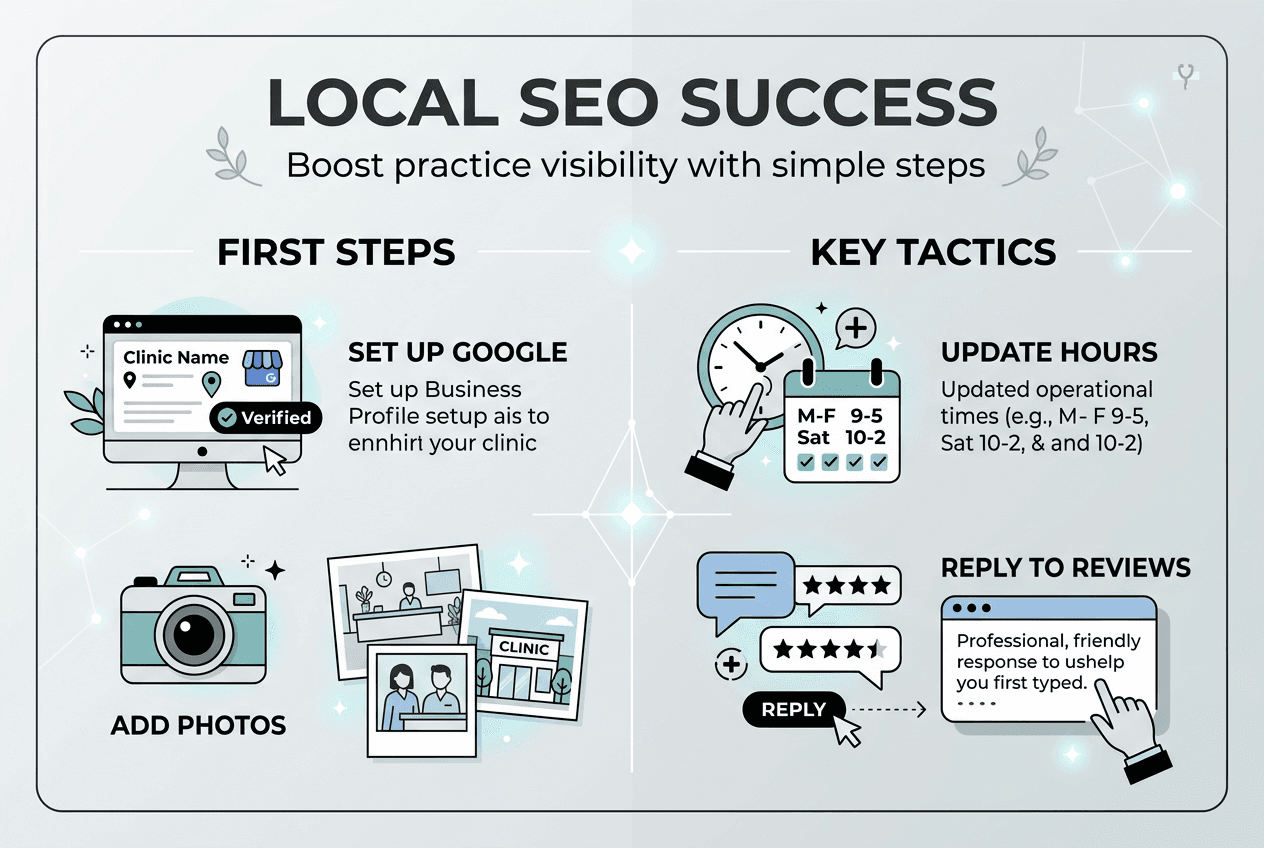
Understanding local SEO principles separates practices that dominate search results from those buried on page three. Local search optimization focuses on geographic keywords, consistent business information across directories, and positive review signals that Google uses to rank healthcare providers. Your online reputation directly impacts whether potential patients see your practice when searching for services you offer.
| Tool/Element | Purpose | Priority Level |
|---|---|---|
| Mobile-optimized website | Convert visitors into appointment requests | Critical |
| Google My Business | Appear in local map searches | Critical |
| Analytics platform | Track traffic sources and conversions | High |
| Patient demographics profile | Target marketing to ideal patients | High |
| Review management system | Collect and respond to patient feedback | Medium |
| Email marketing software | Nurture leads and retain patients | Medium |
Pro Tip: Review dentist website design tips to see how successful practices structure their sites for maximum conversions, even if you’re in a different healthcare specialty. The principles of clear navigation, trust signals, and prominent calls to action apply across all medical fields. Understanding local marketing benefits helps you appreciate why geographic targeting delivers better results than broad national campaigns for service-based healthcare businesses.
Step-by-step strategies to attract new patients online
Start by optimizing your website for local patient queries. Research keywords your ideal patients type into Google when seeking your services. A family physician might target “primary care doctor near me,” “urgent care open weekends,” or “family doctor accepting new patients.” Incorporate these phrases naturally into page titles, headings, service descriptions, and location pages. Create dedicated pages for each service you offer rather than cramming everything onto a single page.

Claim and optimize your Google My Business profile immediately. This free listing controls how your practice appears in Google Maps and local search results. Complete every section: accurate hours, services offered, accepted insurance, photos of your facility, and a detailed business description rich with relevant keywords. Post weekly updates about health tips, office news, or seasonal reminders to keep your profile active and engaging.
Patient reviews influence healthcare decisions more than any advertisement you could buy. Online reviews can increase patient inquiries significantly when managed properly through systematic collection and thoughtful responses. Ask satisfied patients to share their experiences on Google, Facebook, and healthcare review sites within days of their visit while the positive experience remains fresh. Respond to every review, thanking patients for positive feedback and addressing concerns professionally in negative reviews.
Social media builds community connections that translate into patient relationships. Choose platforms where your target demographics spend time. Facebook works well for family practices and pediatrics, while Instagram attracts younger patients interested in cosmetic procedures or wellness services. Share educational content answering common health questions, behind-the-scenes glimpses of your practice, patient success stories with permission, and community involvement. Consistency matters more than perfection; posting twice weekly beats sporadic monthly activity.
Paid advertising accelerates results while organic strategies build momentum. Google Ads places your practice at the top of search results for high-intent keywords like “emergency dentist” or “orthopedic surgeon.” Facebook and Instagram ads target specific demographics, interests, and geographic areas with visual content showcasing your services. Start with modest budgets testing different ad copy and images, then scale what performs best.
Execution steps for comprehensive patient attraction:
- Audit your current website for mobile responsiveness, loading speed, and clear appointment calls to action
- Research and implement local keywords throughout your site content and meta descriptions
- Claim your Google My Business listing and complete all profile sections with accurate information
- Set up tracking pixels and conversion goals in Google Analytics to measure campaign effectiveness
- Create a review collection system asking patients via email or text shortly after appointments
- Develop a social media content calendar with educational posts, practice updates, and community engagement
- Launch small-scale paid ad campaigns on Google and Facebook targeting your ideal patient demographics
- Monitor performance weekly and adjust targeting, budgets, and messaging based on results
| Advertising Platform | Best For | Typical Cost | Speed to Results |
|---|---|---|---|
| Google Search Ads | High-intent patients actively searching | $2-8 per click | Immediate |
| Facebook/Instagram Ads | Awareness and demographic targeting | $0.50-3 per click | 2-4 weeks |
| Google Display Network | Brand awareness and remarketing | $0.30-1.50 per click | 4-8 weeks |
| YouTube Ads | Educational content and trust building | $0.10-0.30 per view | 6-12 weeks |
Pro Tip: Maintain authenticity in patient reviews by never offering incentives or writing fake testimonials, which damages trust and violates platform policies when discovered. Genuine patient experiences resonate far more powerfully than manufactured praise. Explore affordable marketing strategies that maximize results without breaking your budget, and understand dentist remarketing benefits to recapture website visitors who didn’t book on their first visit. Compare platforms using this digital ads comparison to allocate your advertising budget effectively.
Tracking results and refining your patient attraction strategy
Marketing without measurement wastes money and misses opportunities. Install Google Analytics on your website to monitor visitor counts, traffic sources, pages viewed, and time spent on site. Set up conversion tracking for key actions like appointment request form submissions, phone calls from click-to-call buttons, and email inquiries. These metrics reveal which marketing channels deliver actual patients versus vanity metrics like social media likes.
Focus on metrics that directly impact your practice growth. Track new patient appointment requests as your primary success indicator, then work backward to understand the journey. Calculate your conversion rate by dividing appointment requests by total website visitors. Monitor cost per acquisition by dividing advertising spend by new patients gained. Measure patient lifetime value to determine how much you can profitably spend acquiring each new patient.
Tracking digital marketing ROI helps optimize campaigns and increase new patient conversions by identifying which tactics generate the best returns. Compare performance across channels monthly. If Google Ads delivers 15 new patients at $120 each while Facebook Ads generates 8 patients at $95 each, you have concrete data to guide budget allocation decisions.
Common tracking mistakes sabotage accurate measurement. Failing to set up conversion goals means you see traffic numbers without understanding what visitors do on your site. Ignoring mobile analytics misses how most patients interact with your practice online. Not tracking phone calls from digital campaigns creates blind spots since many patients prefer calling over form submissions. Use call tracking numbers on different marketing materials to attribute phone inquiries correctly.
Review your analytics every two weeks initially, then monthly once campaigns stabilize. Look for trends rather than daily fluctuations. A sudden traffic spike might indicate a successful social post or local news mention worth replicating. Declining conversion rates signal website issues or misaligned targeting needing attention. Seasonal patterns help you anticipate slow periods and ramp up marketing before they hit.
| Key Performance Indicator | What It Measures | Target Benchmark |
|---|---|---|
| Website conversion rate | Percentage of visitors who request appointments | 3-5% |
| Cost per acquisition | Marketing spend divided by new patients gained | Varies by specialty |
| Average position in local search | Your ranking for target keywords | Top 3 results |
| Review rating and count | Overall star rating and total reviews | 4.5+ stars, 50+ reviews |
| Social media engagement rate | Likes, comments, shares per post | 2-5% of followers |
| Email open rate | Percentage who open your messages | 20-30% |
Pro Tip: Set realistic benchmarks based on your specialty and market rather than comparing yourself to unrelated industries or practices in different geographic areas. A rural family practice faces different competition and patient search behavior than an urban cosmetic surgery center. Review data monthly but avoid making drastic changes based on short-term fluctuations; most digital marketing strategies need 60-90 days to show their full potential. Learn more about tracking campaign performance for sustainable growth and discover website conversion strategies that turn more visitors into booked appointments.
Boost your online patient attraction with expert help
Implementing comprehensive digital marketing while running a busy healthcare practice stretches your time and expertise thin. iBrand Media specializes in helping healthcare providers attract more patients through tailored online strategies that deliver measurable results. Our team handles website optimization, local SEO, review management, and paid advertising campaigns so you can focus on patient care while we grow your practice.
We understand the unique challenges healthcare providers face with compliance requirements, patient privacy, and building trust online. Our proven 2026 techniques combine optimizing websites for search with strategic local targeting outlined in our marketing to local customers guide. Whether you’re new to digital marketing or looking to improve existing campaigns, our SEO optimization basics resources provide the foundation for sustainable patient growth. Partner with specialists who understand healthcare marketing and deliver transparent reporting on every dollar invested.
How long does it typically take to see results from online patient attraction strategies?
Most healthcare providers notice initial results within three to six months of implementing comprehensive digital marketing strategies. The timeline varies based on your starting point, competition level, and consistency of effort. Practices with established websites and some existing online presence see faster improvements than those starting from scratch.
Local SEO and Google My Business optimization often deliver the quickest wins, with improved map rankings appearing within 4-8 weeks of optimization. Paid advertising generates immediate traffic and appointment requests but requires ongoing budget and refinement. Organic social media growth and review accumulation build gradually over months, creating compounding benefits as your online reputation strengthens. Combining multiple strategies accelerates overall growth since they reinforce each other.
What are the most effective digital channels for attracting local patients?
Google My Business and local SEO dominate patient acquisition for healthcare providers because patients actively search for nearby medical services when they need care. Appearing in the top three map results for your specialty and location captures high-intent patients ready to book appointments. Optimizing your Google profile with complete information, regular posts, and positive reviews creates the foundation for local visibility.
Social media platforms like Facebook and Instagram engage local communities through educational content, patient testimonials, and practice updates that build familiarity and trust. These channels work best for awareness and relationship building rather than immediate conversions. Paid advertising on Google and Facebook delivers targeted traffic quickly by placing your practice in front of specific demographics actively searching for your services or matching your ideal patient profile.
How important are online reviews in influencing patient decisions?
Patient reviews critically influence healthcare decisions in 2026, with most people reading reviews before choosing a new provider. Positive reviews build credibility and differentiate your practice from competitors with fewer or lower-rated testimonials. Online reviews can increase patient inquiries significantly when managed properly through systematic collection and professional responses.
Responding to reviews demonstrates engagement and commitment to patient satisfaction. Thank patients for positive feedback and address concerns raised in negative reviews with empathy and solutions. This public interaction shows prospective patients how you handle feedback and care about experiences. Regularly collecting fresh reviews keeps your profile active and trustworthy, signaling to both search engines and potential patients that your practice remains relevant and patient-focused. Learn more about the importance of online reviews for building lasting trust in your local healthcare market.
Recommended
- 7 Essential Dentist Website Design Tips for More Patients | Ibrandmedia
- Master Dental Practice Online Marketing for Local Growth | Ibrandmedia
- 7 Affordable Marketing Strategies for Dentists | Ibrandmedia
- Digital Marketing for Med Spas: Strategies for 2025 Growth | Ibrandmedia
- 8 Mobile Ad Best Practices for Successful Campaigns – playablemaker.com 8 Mobile Ad Best Practices for Successful Campaigns
Recent Comments