
TL;DR:
- Audience targeting in home services involves segmenting potential customers by traits like location, income, and behavior to improve marketing effectiveness. Focusing on specific homeowner groups and geographic areas reduces wasted ad spend and increases lead quality. Behavioral signals and generational differences further refine targeting strategies to boost conversions and revenue.
Audience targeting in home services is the practice of grouping prospective customers by shared traits such as location, home age, income, and service needs to deliver marketing messages that convert. The industry standard term for this process is market segmentation, and understanding what is audience targeting in home services means knowing how to apply it across demographics, geography, and behavior. Approximately 32% of U.S. adults plan a home improvement project within three months, with rural residents reaching 38%. That pool of active buyers is large enough to waste serious money on if you target it without precision.
What is audience targeting in home services, and why does it matter?
Audience targeting in home services means dividing your potential customer base into defined groups and directing specific messages at each one. Without this segmentation, you spend the same budget on a first-time buyer needing a full kitchen remodel and a retiree who wants a grab bar installed. Those two customers need different messages, different channels, and different offers.
The home services market rewards specificity. Remodeling demand concentrates in three groups: first-time buyers aged 35–44, peak-earning empty nesters aged 55–64, and multigenerational families. Baby Boomers alone accounted for 38% of the $254 billion remodeling market in 2024. That figure tells you where the money is. It does not tell you how to reach each group, which is where segmentation earns its value.
Effective audience segmentation home services combines at least three data layers: who the customer is (demographics), where they live (geography), and what they are actively doing (behavior). Each layer sharpens your message. Together, they let you put the right offer in front of the right homeowner at the right moment.
What are the primary audience segments in home services marketing?
Three homeowner groups drive the majority of remodeling and home service spending, and each requires a distinct approach.
First-time buyers (ages 35–44) purchase older homes and immediately face deferred maintenance. They need HVAC tune-ups, electrical updates, and plumbing inspections. Their budgets are stretched, so financing offers and transparent pricing convert well with this group. They research heavily online before calling anyone.

Peak-earning empty nesters (ages 55–64) have the highest discretionary income of any homeowner segment. They invest in kitchen and bathroom remodels, accessibility upgrades, and energy efficiency projects. They respond to quality signals: before-and-after photos, warranty terms, and verified reviews. Online reputation management matters more with this group than with any other.
Multigenerational families account for a meaningful share of remodeling spend and have unique needs: separate entrances, accessible bathrooms, and soundproofing. Their projects tend to be larger and more complex, making them high-value leads worth targeting with dedicated campaigns.
Key traits to build your segments around:
- Home age: Homes built before 1980 need electrical panels, plumbing overhauls, and roof replacements. Newer homes need enhancements and smart-home upgrades.
- Household income: Higher income correlates with larger project scope and faster decision-making.
- Ownership tenure: Long-term owners defer maintenance; recent buyers address it immediately.
- Family structure: Multigenerational households prioritize accessibility and space separation.
Matching your service offer to segment needs is the fastest way to improve lead quality without increasing ad spend.
How can geographic segmentation enhance audience targeting for home service providers?
Geographic segmentation is the most underused tool in home services marketing. Most contractors set a radius around their office and call it done. That approach ignores the fact that two neighborhoods one mile apart can have completely different service needs, income levels, and competitive environments.
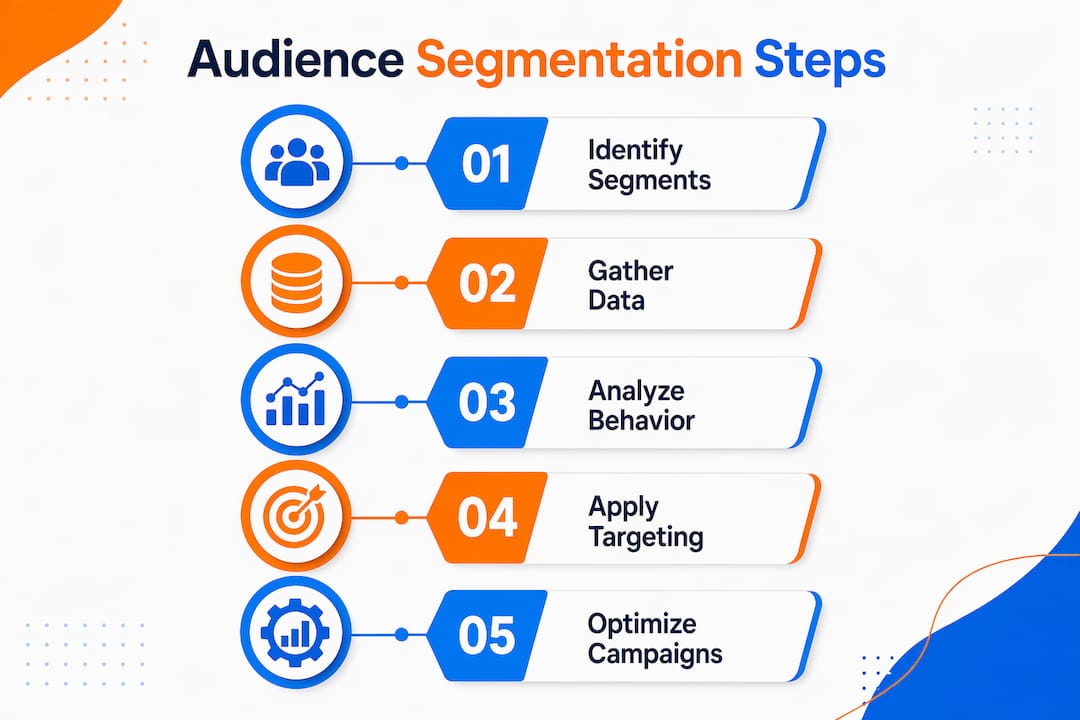
Geographic segmentation by zip code, neighborhood demographics, home age, and competitor density enables focused marketing and higher ROI. Older neighborhoods predict demand for overhauls. Newer subdivisions predict demand for enhancements and preventive maintenance. Knowing which you are targeting changes your entire message.
Practical geographic segmentation methods for home service providers:
- Zip code layering: Combine zip code data with median home age and median household income to identify your highest-potential service areas.
- Climate-based targeting: HVAC contractors in the South should target cooling system maintenance in spring. Roofing contractors in the Midwest should target storm damage inspection after severe weather seasons.
- Competitor density mapping: Avoid saturated areas where three established contractors already dominate. Focus budget on underserved pockets where your cost per lead drops.
- Neighborhood-level clustering: Geo-demographic clustering combines location with home age, income, and purchase data to identify high-value pockets rather than broad zip codes.
| Segmentation layer | Data source | Service implication |
|---|---|---|
| Home age (pre-1980) | County assessor records | Electrical, plumbing, roof overhauls |
| Median household income | Census data | Project scope, financing offers |
| Climate zone | NOAA regional data | Seasonal service timing |
| Competitor density | Local search results | Budget allocation by area |
Pro Tip: Before running any paid ads, pull your last 12 months of customer addresses and map them. You will almost always find two or three zip codes that generate 60% of your revenue. Start your geographic targeting there, then expand outward.
What role do behavioral and intent signals play in optimizing audience targeting?
Demographic data tells you who someone is. Behavioral data tells you what they are about to do. The gap between those two things is where most home service marketing budgets get wasted.
Passive demographic targeting reaches everyone who fits a profile. Intent-based targeting reaches people who are actively looking for a solution right now. Active intent signals like repeat visits to financing pages or emergency service pages yield higher ROI than demographic targeting alone. A homeowner who visits your emergency plumbing page twice in one week is not browsing. They have a problem and are deciding who to call.
Here is a practical framework for applying behavioral signals to your campaigns:
- Track specific page visits. Set up audience segments in Google Ads for visitors to your financing page, your emergency services page, and your individual service category pages. These visitors convert at a higher rate than general site traffic.
- Use search query data. Homeowners search specific problems, not generic terms. “Toilet keeps running” outperforms “plumber near me” for lead quality because the intent is explicit. Build ad groups around problem-based queries for each service category.
- Layer retargeting by intent stage. Show a general brand awareness ad to first-time visitors. Show a specific offer or testimonial to repeat visitors. Show a direct call-to-action with a phone number to anyone who visited your contact page but did not submit a form.
- Match ad copy to the behavior. If someone visited your HVAC page in july, your retargeting ad should mention cooling system efficiency, not a generic “we do it all” message.
- Avoid generic remarketing. Showing the same ad to every past visitor is the most common behavioral targeting mistake. Segment your retargeting audiences by which pages they visited and how many times.
Pro Tip: Connect your Google Ads account to your CRM. When a lead converts to a booked job, feed that data back into your ad platform. Over time, the algorithm learns which behavioral patterns predict actual revenue, not just clicks.
How do generational differences influence audience targeting strategies in home services?
Generation shapes how a homeowner finds you, evaluates you, and decides to hire you. Treating all homeowners the same across age groups is one of the fastest ways to burn through a marketing budget.
Millennials use social media 39% more than Boomers for home improvement research, and YouTube dominates as their primary inspiration and tutorial platform. They want to see the work before they call. Video walkthroughs, before-and-after reels, and detailed project galleries on social media for home services convert this group better than any other format.
Gen X sits between the two extremes. They research online but trust personal referrals heavily. They respond well to detailed written content, case studies, and verified review platforms. Younger generations plan more home projects and rely on digital tutorials and guides to organize and execute those plans. Gen X is the segment most likely to read a long-form service page before calling.
Baby Boomers prefer in-store recommendations and trust signals from established retailers and brands. They are less likely to find you through Instagram and more likely to find you through Google search, a neighbor’s recommendation, or a direct mail piece. Key differences by generation:
- Millennials: Video content, social proof, mobile-first experience, financing options
- Gen X: Detailed written content, case studies, Google reviews, referral programs
- Baby Boomers: Direct mail, Google search, phone calls, in-person consultations
A multi-channel approach covers all three. Digital advertising platforms let you run separate creative for each generation without increasing your total budget significantly.
What are best practices for implementing audience targeting in home services?
Knowing your segments is step one. Building a system that reaches them consistently is what produces results.
- Audit your existing customer data first. Pull your last two years of jobs and identify the zip codes, home ages, and service types that generated your highest-margin work. That data is your targeting baseline.
- Build geographic clusters before running ads. Define your primary, secondary, and tertiary service zones based on profitability, not just distance. Allocate budget proportionally.
- Create segment-specific landing pages. A Millennial searching for a bathroom remodel and a Boomer searching for accessibility upgrades should land on different pages with different messaging and different calls to action.
- Use seasonality to shape your offers. Roofing contractors should pivot to storm inspection messaging immediately after severe weather. HVAC contractors should push maintenance plans in early spring and early fall. Timing your message to the homeowner’s need cycle dramatically improves conversion rates.
- Combine retargeting with direct mail for high-value segments. Peak-earning empty nesters respond to physical mail. Running a digital retargeting campaign alongside a direct mail drop to the same zip code creates multiple touchpoints without doubling your budget.
- Measure cost per booked job, not cost per click. Click data tells you who visited. Job data tells you who converted. Track the full funnel and cut segments that generate traffic but not revenue.
Content that converts on your website works the same way: match the message to the visitor’s intent and segment, and your close rate improves without any change to your ad spend.
Key Takeaways
Audience targeting in home services works when you combine geographic precision, behavioral intent signals, and generational messaging into a single, data-driven system.
| Point | Details |
|---|---|
| Segment by three homeowner groups | First-time buyers, empty nesters, and multigenerational families drive the majority of remodeling spend. |
| Layer geographic data | Combine zip code, home age, income, and competitor density to find your highest-value service pockets. |
| Prioritize intent signals | Repeat visitors to emergency or financing pages convert at higher rates than broad demographic audiences. |
| Tailor content by generation | Millennials respond to video and social proof; Boomers respond to search, phone, and direct mail. |
| Measure booked jobs, not clicks | Track the full funnel from ad impression to completed job to identify which segments generate real revenue. |
Why most home service targeting misses the mark
The contractors I see waste the most money share one habit: they define their audience once and never revisit it. They set up a Google Ads campaign targeting homeowners within 20 miles, pick a handful of keywords, and assume the work is done. Six months later, they wonder why their cost per lead keeps climbing.
The real problem is that audience targeting is not a setup task. It is an ongoing process. The homeowner who ignored your HVAC ad in march may be your best lead in june when their system fails during a heat wave. The zip code that underperformed last year may be your best territory this year after a competitor closed. Markets shift, and your targeting has to shift with them.
The contractors who consistently win on paid channels do three things differently. They track which specific pages their best customers visited before converting. They update their geographic clusters quarterly based on actual job data. And they test different creative for different segments instead of running one ad to everyone.
The most counterintuitive lesson I have seen play out repeatedly: narrowing your audience almost always lowers your cost per lead. Contractors resist this because it feels like leaving money on the table. It is the opposite. Broad targeting inflates your click volume with low-intent traffic. Tight targeting puts your budget in front of people who are ready to book.
— TONY
How Ibrand helps home service businesses reach the right customers
Home service providers who apply precise audience targeting still need a website and local presence that converts the traffic they generate. Ibrand works with small and medium-sized home service businesses to build the digital foundation that makes targeting pay off: local SEO, mobile-ready web design, and real-time performance tracking that shows you exactly which campaigns produce booked jobs.
If you are ready to stop guessing which customers to pursue, Ibrand’s local customer marketing guide walks through the exact steps to attract and convert homeowners in your service area. For businesses that want to improve how they show up in local search, the small business SEO guide covers the fastest ways to increase visibility without a large budget. Both resources are built specifically for local service providers who want results, not theory.
FAQ
What is audience targeting in home services?
Audience targeting in home services is the process of segmenting prospective customers by demographics, geography, and behavior to deliver marketing messages that match their specific service needs and intent.
Which homeowner segments spend the most on home services?
Baby Boomers accounted for 38% of the $254 billion remodeling market in 2024, making peak-earning empty nesters aged 55–64 the highest-spending segment for home service providers.
How does geographic segmentation improve home service marketing?
Geographic segmentation by zip code, home age, income level, and competitor density identifies high-value service pockets, reducing wasted ad spend and improving cost per booked job.
What behavioral signals indicate a high-intent home service lead?
Repeat visits to emergency service pages or financing pages signal active buying intent and convert at higher rates than traffic from broad demographic campaigns.
How do Millennials and Baby Boomers differ in how they find home service providers?
Millennials rely on social media, YouTube, and online reviews, while Baby Boomers favor Google search, direct mail, and phone-based recommendations before hiring a contractor.
Recommended
- Audience Targeting for Small Businesses: 2026 Guide – Ibrandmedia
- Target audience identification guide for small businesses – Ibrandmedia
- Social Media for Home Services: Proven Strategies for 2025 | Ibrandmedia
- Best 6 Digital Advertising Platforms for Home Services – Expert Comparison 2025 | Ibrandmedia
Recent Comments