
Small business owners face a critical challenge: attracting consistent, quality website traffic without draining budgets. Many assume paid ads are the only quick path, but a smart combination of SEO, content marketing, and strategic social media delivers better long-term results. This guide reveals proven, affordable tactics to grow your website traffic in 2026, from AI-optimized search strategies to high-ROI email campaigns that convert visitors into loyal customers.
Table of Contents
- Prerequisites: What You Need Before You Start
- Building A Strong SEO Foundation
- Content Marketing And Lead Magnets To Grow Traffic
- Leveraging Social Media And Paid Ads
- Email Marketing To Convert And Retain Traffic
- Technical SEO And Website Performance
- Optimizing For AI And Future Search
- Common Mistakes And Troubleshooting
- Data Analytics And Continuous Improvement
- Expected Results And Timelines For Traffic Growth
- Discover Tailored Solutions To Boost Your Website Traffic
- Frequently Asked Questions
Key takeaways
| Point | Details |
|---|---|
| SEO and AI-aware content | Organic search and Answer Engine Optimization capture one-third of all website traffic affordably. |
| Balanced organic and paid | Combining organic social with targeted ads extends reach without overspending on one channel. |
| Email marketing ROI | Email campaigns offer high returns by nurturing leads and driving repeat visits cost-effectively. |
| Technical SEO matters | Site speed and mobile optimization directly influence rankings and user engagement. |
| Data-driven improvement | Continuous testing and analytics refine traffic quality and maximize ROI over time. |
Prerequisites: what you need before you start
Before implementing advanced traffic strategies, you need the right foundation. Without proper tools and technical readiness, even the best tactics will underperform.
Start by setting up Google Analytics and Search Console to track visitor behavior and search performance. These free tools reveal which pages attract traffic and where visitors drop off. Next, invest in keyword research tools like SEMrush or Ahrefs to identify search terms your target audience actually uses.
Understand your business goals clearly. Are you seeking leads, sales, or brand awareness? Your traffic strategy shifts based on objectives. Define your ideal customer profile, their pain points, and where they search for solutions online.
Ensure your website loads quickly and works flawlessly on mobile devices. Google prioritizes mobile-friendly sites, and slow pages kill conversions. Test your site speed using PageSpeed Insights and fix critical issues before launching campaigns.
Finally, develop content creation capabilities. You’ll need regular blog posts, social updates, and email copy. Either build an in-house skill set or partner with writers who understand affordable digital marketing tactics for small businesses. Quality content fuels every traffic channel, so this investment pays dividends across all your marketing efforts.
Building a strong SEO foundation
SEO remains the most cost-effective way to drive sustainable website traffic. A solid foundation requires keyword strategy, technical optimization, and demonstrable expertise.
Start with comprehensive keyword research. Target long-tail phrases like “affordable accounting software for freelancers” instead of broad terms like “accounting.” Long-tail keywords face less competition and attract visitors closer to purchase decisions. Use question-based keywords that match how people search: “how to,” “what is,” “best way to.”
Optimize every page’s meta tags and URLs. Your title tags should include target keywords within 60 characters. Meta descriptions summarize page content in 155 characters, enticing clicks from search results. Clean URLs like “yoursite.com/seo-guide” perform better than “yoursite.com/page?id=12345.”
Implement schema markup to help search engines understand your content structure. Schema boosts your chances of appearing in rich snippets, those enhanced search results with star ratings, prices, or FAQs. These features increase click-through rates significantly.
Apply the EEAT framework: Experience, Expertise, Authority, and Trustworthiness. Show your credentials, cite reputable sources, and demonstrate real-world results. Google’s algorithms favor content from recognized experts, especially for topics affecting health, finances, or major life decisions.
Pro Tip: Focus on mobile optimization first. Over 60% of searches happen on mobile devices. A responsive design that adapts to any screen size is non-negotiable. Test your site on multiple devices and fix any usability issues immediately.
SEO optimization checklist
| Task | Impact | Priority |
|---|---|---|
| Keyword research | High | Critical |
| Meta tag optimization | High | Critical |
| Schema markup | Medium | Important |
| Mobile responsiveness | High | Critical |
| EEAT content signals | Medium | Important |
These SEO foundations for small business growth create compounding returns. Every optimized page becomes a permanent traffic asset, attracting visitors for months or years without ongoing ad spend.
Content marketing and lead magnets to grow traffic
Content marketing attracts visitors organically while establishing your brand as an industry authority. Lead magnets convert that traffic into an owned audience you can nurture.
Create evergreen blog content targeting niche topics your competitors ignore. Write detailed guides answering specific questions your customers ask repeatedly. Evergreen content continues attracting search traffic long after publication, unlike timely news pieces that lose relevance quickly.
Repurpose your best content across multiple channels. Transform a comprehensive blog post into a YouTube tutorial, Instagram carousel, LinkedIn article, and email series. This multiplies your reach without creating entirely new material. Each format attracts different audience segments and reinforces your message through repetition.
Develop valuable lead magnets that solve immediate problems. Offer downloadable checklists, templates, ebooks, or exclusive webinars in exchange for email addresses. A pest control company might offer a “Seasonal Home Maintenance Checklist,” while a marketing consultant could provide a “30-Day Social Media Content Calendar.”
Use content to demonstrate expertise in your niche. Share case studies, behind-the-scenes insights, and lessons from real projects. Authentic stories build trust faster than generic advice.
Pro Tip: Gate your best content strategically. Offer shorter guides freely to attract readers, then require email signups for premium resources. This balanced approach builds your list without frustrating casual visitors who aren’t ready to commit yet.
Lead magnets grow your email list, the foundation for sustained engagement. Once someone joins your list, you control the relationship. You’re no longer dependent on algorithm changes or platform policies. This owned channel lets you boost website traffic consistently through direct communication with interested prospects.
Leveraging social media and paid ads
Social media extends your reach beyond search engines, connecting you with audiences where they spend time daily. A smart blend of organic and paid social maximizes visibility affordably.
Post engaging organic content regularly. Short-form videos on TikTok and Instagram Reels capture attention quickly. Share tips, quick tutorials, and behind-the-scenes glimpses that humanize your brand. Educational content performs best: teach something useful in under 60 seconds.
Use trending hashtags strategically. Research which tags your target audience follows, then incorporate them naturally. Mix popular broad hashtags with niche-specific tags to balance reach and relevance. Interactive posts like polls, questions, and challenges boost engagement and algorithm visibility.
Partner with micro-influencers who align with your brand values. Influencers with 5,000 to 50,000 followers often charge $100 to $500 per post, far less than celebrities, while maintaining high engagement rates. Their recommendations feel authentic because they genuinely connect with their audience.
Balance organic efforts with targeted paid ads for faster growth. Facebook and Instagram ads let you define precise audience demographics, interests, and behaviors. Start with small daily budgets of $10 to $20, test multiple ad variations, then scale what works.
Organic vs. paid social media comparison
| Factor | Organic Social | Paid Ads |
|---|---|---|
| Cost | Time investment only | Direct budget required |
| Speed | Gradual audience building | Immediate traffic |
| Longevity | Sustainable over time | Stops when budget ends |
| Targeting | Broad follower base | Precise demographic targeting |
| Best for | Brand building, community | Quick launches, promotions |
Combining both approaches creates stability. Organic social builds lasting relationships while paid ads accelerate visibility during campaigns or product launches. Learn more about effective social media management benefits for small business growth.
Email marketing to convert and retain traffic
Email marketing delivers the highest ROI of any digital channel, averaging $42 returned for every dollar spent. It transforms one-time visitors into repeat customers through strategic nurturing.

Build your email list using lead magnets and website signup forms. Place opt-in forms in high-visibility locations: homepage, blog sidebars, exit popups. Offer clear value: “Get weekly marketing tips” beats “Subscribe to our newsletter.”
Segment your list based on user behavior and interests. Send different messages to new subscribers versus loyal customers. A visitor who downloaded your SEO guide wants different content than someone who browsed pricing pages. Segmentation increases open rates and reduces unsubscribes.
Automate email sequences based on triggers and actions:
- Welcome series for new subscribers introducing your brand and best resources
- Abandoned cart reminders for e-commerce visitors who didn’t complete purchases
- Re-engagement campaigns targeting subscribers who haven’t opened recent emails
- Post-purchase follow-ups requesting reviews and suggesting complementary products
- Educational drip campaigns delivering valuable content over weeks
Track open rates, click-through rates, and conversions religiously. These metrics reveal which subject lines, content types, and calls-to-action resonate. Test one variable at a time: try two subject line styles, keep everything else identical, then analyze which performs better.
Pro Tip: Write subject lines that spark curiosity without clickbait. “3 mistakes killing your SEO” works better than “You won’t believe this SEO secret.” The first sets clear expectations while the second feels manipulative.
Email marketing complements all your traffic strategies. It extends the value of every blog post, social campaign, and ad by maintaining ongoing communication. Affordable digital marketing relies heavily on email because it’s inexpensive to execute but incredibly effective at driving repeat visits and purchases.
Technical SEO and website performance
Technical excellence keeps visitors engaged and signals quality to search engines. Poor technical performance sabotages even the best content.
Improve page load speed immediately. Visitors abandon sites that take over three seconds to load. Compress images using tools like TinyPNG, enable browser caching, and minimize CSS and JavaScript files. Consider a content delivery network (CDN) to serve assets from servers closest to each visitor.
Ensure complete mobile responsiveness. Your site must adapt seamlessly to phones, tablets, and desktops. Test every page on multiple devices. Buttons should be thumb-friendly, text readable without zooming, and forms easy to complete on small screens.
Implement schema markup for your business type. Local businesses need LocalBusiness schema with address, hours, and contact info. Articles should include Article schema with publication dates and author info. Product pages benefit from Product schema showing prices and availability directly in search results.
Regularly audit for technical issues using tools like Screaming Frog or Sitebulb. Check for broken links, duplicate content, missing alt tags, and crawl errors. Fix problems promptly before they accumulate and hurt rankings.
Secure your site with HTTPS encryption. Google penalizes non-secure sites, and visitors see scary warnings before accessing them. SSL certificates are inexpensive and essential for trust.
Technical optimization supports everything else you do. Fast, mobile-friendly sites keep visitors engaged longer, reducing bounce rates. Search engines reward technical excellence with higher rankings. These website design best practices form the infrastructure your traffic strategies depend on.
Optimizing for AI and future search
AI-powered search is transforming how people find information in 2026. Generative AI features like Google’s Search Generative Experience and ChatGPT integrations surface direct answers, changing traditional SEO dynamics.
Understand how AI search differs from traditional results. AI systems synthesize information from multiple sources to answer queries conversationally. Your content must provide clear, authoritative answers that AI can extract and cite.
Craft content that directly answers questions. Structure articles with clear headings framing common questions, then provide concise, factual answers. Use simple language and define technical terms. AI systems favor content that’s easy to parse and understand.
Structure content for featured snippets and answer boxes. Use numbered lists, bulleted steps, and short paragraphs. Define terms clearly in one or two sentences. These formats make your content easy for AI to extract and display prominently.
Target long-tail conversational keywords. People ask AI assistants full questions: “What’s the best way to reduce cart abandonment for small e-commerce stores?” Optimize for natural language queries, not just short keyword phrases.
Leverage Answer Engine Optimization (AEO) to capture high-intent traffic at lower cost than paid search. When your content appears in AI-generated answers, you gain visibility without paying per click. This emerging channel offers early-mover advantages before competition intensifies.
Cite authoritative sources throughout your content. AI systems check factual accuracy and prioritize content with credible citations. Link to research studies, government data, and recognized industry experts to boost trustworthiness.
These top SEO techniques for 2026 position your business for the AI-first search landscape. Early adopters gain visibility advantages while competitors still optimize for yesterday’s algorithms.
Common mistakes and troubleshooting
Even experienced marketers make errors that undermine traffic growth. Recognizing and fixing these mistakes saves time and budget.
Ignoring mobile optimization creates high bounce rates. If your site looks broken or loads slowly on phones, visitors leave immediately. Test your mobile experience weekly and prioritize fixes for any usability issues.
Poor keyword research wastes content efforts. Targeting overly broad terms like “marketing” puts you against impossible competition. Chasing irrelevant keywords attracts visitors who never convert. Invest time in thorough keyword research before creating content.
Neglecting internal linking and backlinks weakens SEO potential. Internal links help search engines understand your site structure and spread authority across pages. Backlinks from reputable sites signal credibility. Build both systematically.
Relying solely on paid ads creates fragile traffic. When you stop spending, traffic disappears. Paid ads work best complementing a solid organic foundation. Balance immediate paid visibility with long-term organic growth.
Lack of ongoing analysis and testing prevents improvement. Many business owners launch campaigns then ignore the data. Regular review reveals what’s working and what’s wasting money. Schedule monthly analytics reviews and quarterly strategy adjustments.
Understanding SEO versus paid advertising trade-offs helps you allocate budgets wisely. Each channel serves different purposes, and the right mix depends on your business stage, goals, and resources.
Data analytics and continuous improvement
Sustainable traffic growth requires constant measurement and refinement. Data reveals opportunities invisible to intuition alone.
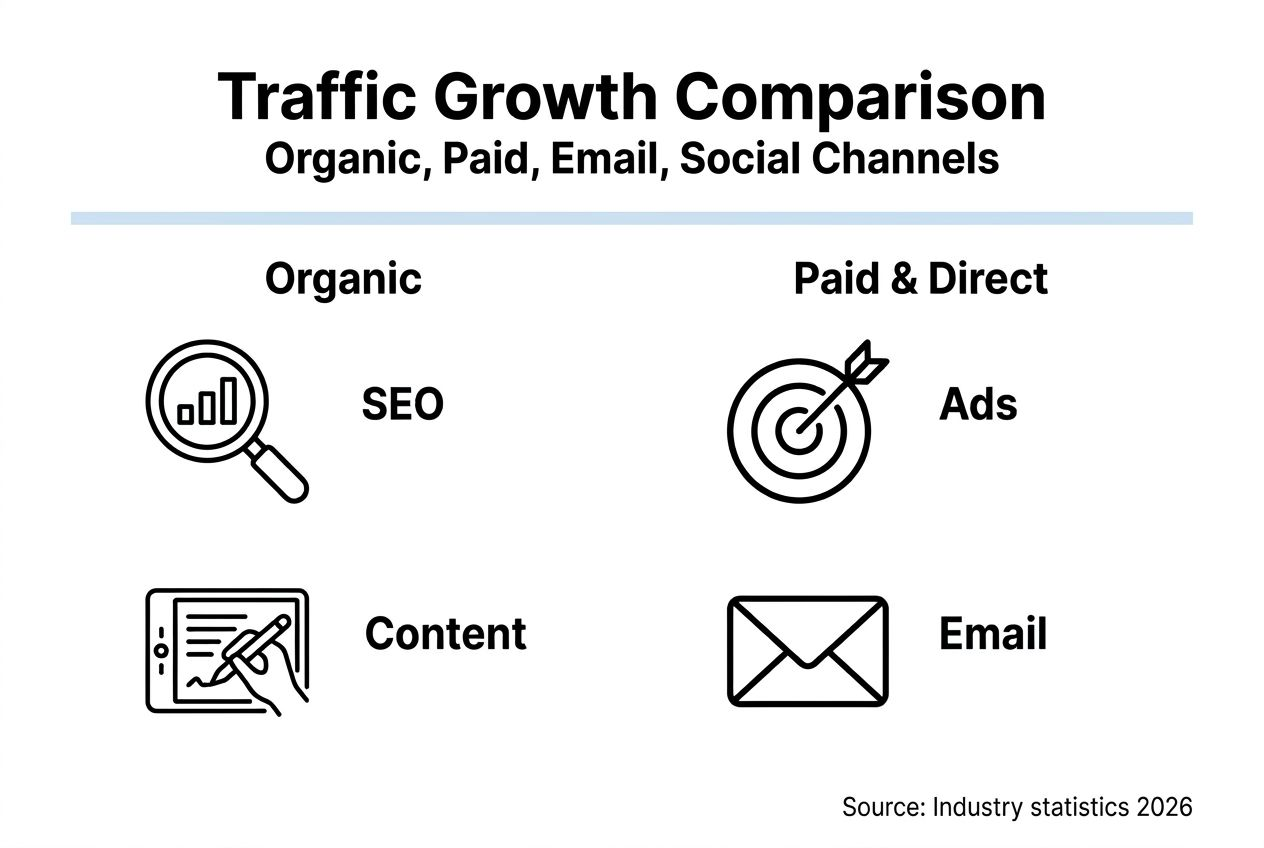
Use Google Analytics to monitor traffic sources daily. Which channels drive the most visitors? Which pages have the highest bounce rates? Where do conversions happen? Understanding these patterns guides optimization efforts.
Conduct A/B tests systematically. Test headlines, call-to-action buttons, page layouts, and email subject lines. Change one element at a time, split traffic evenly between versions, then analyze which performs better. Small improvements compound over time.
Regularly review and adjust tactics based on performance data. If blog posts about specific topics consistently attract traffic, create more similar content. If certain ad campaigns drain budgets without conversions, pause them and reallocate spending.
Focus on conversion rate optimization alongside traffic volume. Doubling traffic matters little if visitors don’t take desired actions. Sometimes improving conversion rates delivers better ROI than increasing visitor numbers.
Pro Tip: Create a simple dashboard tracking your top five metrics weekly. Choose metrics that directly impact revenue: organic traffic, email list growth, conversion rate, cost per acquisition, and customer lifetime value. Weekly tracking keeps you accountable and reveals trends early.
Regular monitoring and optimization prevents wasted spending on ineffective tactics. Data-driven decisions consistently outperform guesswork. Learn how to effectively track campaign performance for growth using straightforward analytics workflows.
Expected results and timelines for traffic growth
Realistic expectations prevent frustration and premature strategy abandonment. Different tactics deliver results on different timelines.
SEO results typically manifest in three to six months with sustained growth thereafter. Search engines need time to crawl, index, and rank new content. Early months focus on foundation building. Patient consistency pays off as organic rankings compound over time.
Content marketing builds authority gradually. Your first posts may attract minimal traffic. As you publish consistently, search engines recognize your expertise and older content gains momentum. By month six, you’ll see meaningful organic growth.
Email marketing yields ROI quickly after initial list building. Once you have 500+ engaged subscribers, campaigns can drive immediate traffic and sales. The challenge is building that initial audience, which takes several months of consistent lead magnet promotion.
Paid ads provide instant traffic but require careful management. You’ll see visitors within hours of launching campaigns. However, profitability demands ongoing optimization. Most businesses need four to eight weeks of testing before ads become reliably profitable.
Traffic growth timeline comparison
| Strategy | Initial Results | Sustainable Growth | Ongoing Effort |
|---|---|---|---|
| SEO | 3-6 months | 6+ months | Moderate |
| Content Marketing | 2-4 months | 4+ months | High |
| Email Marketing | 1-3 months | Immediate with list | Moderate |
| Paid Ads | Immediate | Ongoing | High |
| Social Media | 1-3 months | 3+ months | High |
A balanced approach combining multiple tactics maximizes stability. When paid ads underperform, organic search and email continue delivering. When algorithm updates temporarily hurt SEO, social media and email maintain traffic flow. Diversification protects against channel-specific disruptions. Explore comprehensive strategies in our guide to SEO for small businesses in 2026.
Discover tailored solutions to boost your website traffic
Implementing these strategies requires time, expertise, and consistent effort. Many small business owners benefit from professional support to accelerate results while focusing on core operations.
Professional SEO services handle the technical complexity of optimizing websites for search, from keyword research to schema implementation. Expert social media management maintains consistent posting schedules and engagement while you run your business. Strategic support tailored for small budgets helps you compete against larger competitors without overspending. Explore how SEO strategies designed for 2026 can drive sustainable growth for your specific business goals. Partnering with experienced marketers lets you focus on what you do best while traffic grows steadily in the background.
Frequently asked questions
How long does it take to see results from SEO?
Most businesses notice measurable traffic increases within three to six months of consistent SEO work. Initial efforts focus on technical setup and content creation, with rankings gradually improving as search engines recognize your authority. Patience and consistency are essential, as SEO delivers compounding returns over time rather than immediate spikes.
Can small businesses compete with larger companies for website traffic?
Absolutely. Small businesses can win by targeting niche keywords, creating highly specific content, and building genuine community connections. Large companies often ignore specialized topics and local audiences. Focus on long-tail keywords and demonstrate deep expertise in your specific area rather than competing for broad, expensive terms.
What’s more cost-effective: paid ads or organic strategies?
Organic strategies like SEO and content marketing cost less per visitor long term but require months of effort before results appear. Paid ads deliver immediate traffic but stop when spending ends. The most effective approach combines both: use paid ads for quick wins and special promotions while building organic foundations for sustainable, affordable long-term traffic.
How often should I publish new content?
Consistency matters more than frequency. Publishing one high-quality post weekly outperforms daily low-value content. Aim for at least two to four substantial articles monthly, ensuring each piece thoroughly addresses reader questions. Quality and consistency build authority, while sporadic posting or thin content wastes effort without traffic gains.
Do I need a large email list to see results from email marketing?
Even a small, engaged list delivers results. A list of 200 subscribers who open emails and click links generates more value than 2,000 uninterested contacts. Start sending valuable content immediately, focusing on engagement rates over list size. As you consistently provide value, your list grows naturally through word-of-mouth and lead magnets.
Recent Comments