
Five habits separate people who stay productive at work from people who just stay busy: protecting one deep-work block daily, single-tasking instead of switching between jobs, confining email and chat to set windows, taking real microbreaks, and closing each day with a shutdown ritual. Start today by blocking 90 minutes on your calendar right now, before you read further.
- Protect one deep-work block, single-task through it, batch your messages, take real breaks, shut down on purpose.
Pro Tip: Block tomorrow’s deep-work session before you finish reading this article. A calendar invite you send yourself is far more likely to survive the day than a plan sitting in your head.
Key Takeaways
Staying productive at work depends less on any single technique and more on protecting energy, attention, and communication boundaries at the same time.
| Point | Details |
|---|---|
| Protect one deep-work block | Reserve 90 minutes daily for your single biggest task, ideally during your peak energy window. |
| Single-task instead of switching | Minimizing context switches can boost output by roughly 40% compared with multitasking. |
| Batch communication | Set two or three fixed inbox windows and use schedule-send for after-hours drafts. |
| Take real breaks | Short recovery periods, like the 52/17 pattern, replenish attention across a full workday. |
| Close with a shutdown ritual | A to-done list plus tomorrow’s top three reduces after-hours rumination. |
Table of Contents
- Five-Minute Setup Checklist You Can Use Today
- Time-Management Techniques That Actually Work
- How to Cut Interruptions From Email, Meetings, and Messaging
- Manage Energy, Not Just Time
- Workspace Setup and Daily Rituals That Cue Focus
- Three Sample Day Templates You Can Copy
- Why Your Productivity Plan Fails and Quick Fixes
- The Research Behind Schedule-Send and Shutdown Rituals
- A Working Marketer’s Take on Staying Focused
- Sources
- FAQ
Five-Minute Setup Checklist You Can Use Today
You don’t need a new system to feel the difference tomorrow morning. You need five small commitments made in the next five minutes, before your inbox talks you out of it.
- Block one 90 minute window on your calendar tomorrow and label it “focus.”
- Turn on “do not disturb” on your phone and computer for that window.
- Schedule any late-evening emails to send during business hours instead of at 11 p.m.
- Clear your calendar of anything optional during that 90 minute block.
- Write your top three priorities for tomorrow before you log off tonight.
Pro Tip: Keep a “parking lot” note open during your focus block. When a stray idea or interruption pops into your head, write it down and get back to work instead of chasing it.
Expect the first day to feel a little uncomfortable. Most people feel the pull to check email within twenty minutes. That pull fades by day three.
Time-Management Techniques That Actually Work
No single method covers every kind of work, which is why the people who stay productive at work usually run two or three techniques side by side instead of picking one and forcing everything through it.
- Time blocking: Reserve specific calendar hours for specific work. Best for deep, creative, or complex tasks that need uninterrupted attention.
- Pomodoro: Work in 25 minute sprints with 5 minute breaks. Best for short, well-defined, or tedious tasks where momentum matters more than depth.
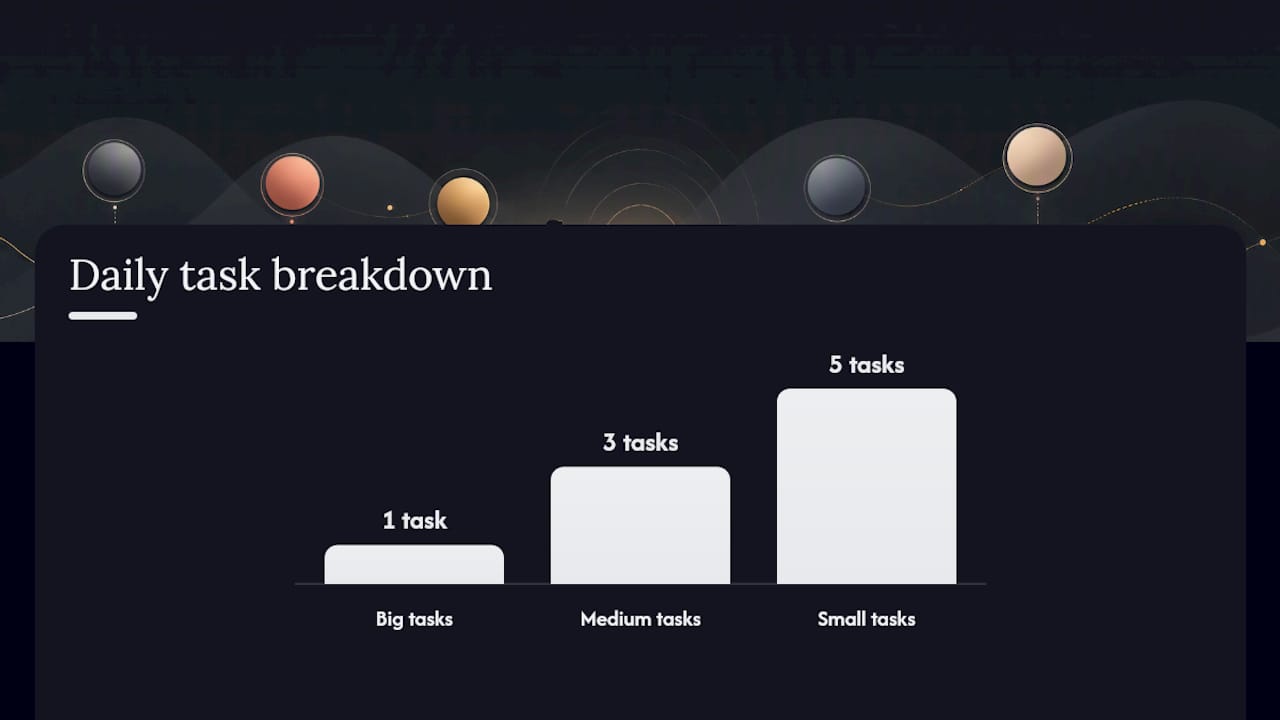
- 1-3-5 method: Pick 1 big task, 3 medium tasks, and 5 small tasks for the day. Best for days with mixed workloads and no single dominant priority.
- 52/17: Work 52 minutes, rest 17. Best for sustained knowledge work over a full eight-hour day.
- Eisenhower matrix: Sort tasks by urgent versus important. Best for deciding what belongs on your list at all before you schedule anything.
A workable combination for most days looks like this:
- Plan tonight: pick tomorrow’s 1-3-5 list before you leave your desk.
- Morning: run your one big task inside a 90 minute time-blocked window, since time blocking measurably improves output and reduces reactive work.
- Afternoon: batch the smaller tasks using Pomodoro sprints once your energy dips.
How to Cut Interruptions From Email, Meetings, and Messaging
Most lost focus doesn’t come from big crises. It comes from a hundred small context switches, and minimizing those switches through single-tasking can boost productivity by roughly 40% compared with multitasking.

At the team level, push for async-first norms: documented decisions instead of status meetings, and protected no-meeting blocks that everyone respects. McKinsey’s research on breaking the productivity ceiling found this shift alone reduces interruptions and raises organizational efficiency without adding headcount.
On your own, set two or three fixed inbox-check windows a day and turn off notifications between them. A structured client communication workflow helps here too, especially if you work with outside clients who expect fast replies.
- Set notification rules that silence everything except true emergencies.
- Use schedule-send for anything you draft outside work hours.
- Say to a coworker: “I’m heads down until 11. Can this wait, or is it urgent?”
Pro Tip: Tell your manager once, in writing, which two hours you’re unreachable each day. One clear message beats explaining yourself every single time someone pings you.
Manage Energy, Not Just Time
Time management gets you a schedule. Energy management gets you results, because the sharpest hour on your calendar is worthless if you’re mentally drained when it arrives.
Ultradian rhythms run roughly 90 minutes, which is why the 52/17 pattern and 90 minute deep-work blocks both work: they roughly track your natural attention cycle instead of fighting it. The American Psychological Association’s coverage of workplace breaks confirms that regular short breaks replenish attention and help sustain focus across a full day, rather than just feeling like a pause from work.
- Take a 2 minute stretch every hour, even if it’s just standing up.
- Go for a 20 minute walk after lunch instead of scrolling your phone.
- Eat lunch away from your screen at least three days a week.
Nearly 70% of workers admit to working during vacation, which erodes the recovery that makes the next stretch of focused work possible. Protecting your breaks matters as much as protecting your deep-work block.
Workspace Setup and Daily Rituals That Cue Focus
Your environment either signals “work mode” or it doesn’t. A cluttered desk facing a busy hallway keeps pulling your attention outward.
- Clear your desk of anything unrelated to your current task.
- Face away from foot traffic or, in a shared home space, face away from the door.
- Use headphones or white noise as a visual and audible “don’t interrupt” signal.
Start your day with a 2 minute review of your top three priorities instead of opening email first. End it with a shutdown ritual: write down what you actually finished, then set tomorrow’s top three. Research on cognitive residue shows this small habit measurably reduces after-hours rumination about unfinished work.
Pro Tip: Remote workers can close a laptop lid as a physical shutdown cue. Office workers can use the commute itself, even a short walk to the parking lot, as that same mental off-switch.
Three Sample Day Templates You Can Copy
Pick the template closest to your actual calendar, then swap in your own tasks.
- Deep-work morning: 8:00 to 9:30 focus block on your one big task, 9:30 to 10:00 email window, 10:00 to 12:00 meetings or shallow tasks, afternoon Pomodoro batches for smaller items.
- Meetings-heavy day: Protect one 60 minute block first thing before meetings start, batch all remaining tasks into 25 minute Pomodoro sprints between calls, review priorities at lunch.
- Hybrid remote day: Morning deep-work block at home with notifications off, midday overlap hours for team collaboration and messaging, afternoon shallow-task batch before shutdown ritual.
Since most people are genuinely productive for only about four effective hours a day, place your single biggest task inside whichever window matches your personal energy peak, morning or evening, rather than defaulting to 9 a.m. because that’s when the calendar starts.
Why Your Productivity Plan Fails and Quick Fixes
Most plans don’t fail because the techniques are wrong. They fail because people try to install five new habits on day one and abandon all five by day four.
- Multitasking creeps back in: Fix it by defining a clear “done” condition for each task before you start.
- Priorities stay vague: Fix it by writing your top three the night before, not the morning of.
- Decision fatigue builds by afternoon: Fix it by batching similar decisions together instead of spreading them across the day.
- Notifications keep breaking focus: Fix it by muting everything except true emergencies during your deep-work block.
Change one habit at a time. A short nightly planning routine, layered in first, tends to make every other tactic easier to sustain.
The Research Behind Schedule-Send and Shutdown Rituals
One small, well-documented finding deserves more attention than it gets: manager disclaimers about flexible hours often fail to reduce after-hours response pressure. What actually works is scheduling outgoing messages to send during business hours, so recipients never feel the pull to reply at 10 p.m. Georgia Magazine’s reporting on work-life boundaries backs this directly.
Pair that with the shutdown ritual described earlier and you address both sides of the boundary problem.
A short “to-done” list plus tomorrow’s top three priorities reduces the cognitive residue that keeps unfinished work looping through your mind after hours.
- Set schedule-send as your default for any message drafted outside standard hours.
- Close each day with two minutes of writing, not scrolling.
A Working Marketer’s Take on Staying Focused
My own deep-work block sits from 8:00 to 9:30, before client calls start. I keep messaging apps closed until 10, and I write tomorrow’s top three before shutting my laptop. It’s not complicated. It’s just protected.
If your team’s own communication habits are part of what’s draining your focus, Ibrand builds custom digital marketing plans, from SEO optimization to social media management, so business owners can reclaim the hours currently lost to marketing busywork and put them back into actual deep work.
Sources
- 3 Practical Ways to Be More Productive – Harvard Business Review
- Living to work or working to live? – Georgia Magazine
- The case for taking breaks – APA Monitor
- Want to break the productivity ceiling? Rethink the way work gets done – McKinsey
FAQ
What Is the 1-3-5 Rule for Productivity?
It’s a daily planning method where you choose one big task, three medium tasks, and five small tasks to complete, giving you a realistic and prioritized to-do list instead of an endless one.
What Is the 52/17 Rule for Productivity?
It’s a work-rest cycle where you work for 52 minutes and then rest for 17, roughly matching your natural ultradian attention rhythm to sustain focus across a full workday.
Why Can’t I Stay Productive at Work?
The usual culprits are multitasking, vague priorities, and constant notification interruptions rather than a lack of effort or willpower. Fixing even one, like batching notifications or writing a clear task list the night before, often produces a noticeable shift within a few days.
How Many Hours a Day Am I Actually Productive?
Most people are genuinely focused for only about four hours out of a standard workday, which is why protecting that window for your hardest task matters more than trying to extend total hours worked.
Do Shutdown Rituals Really Help After Work?
Yes. A short end-of-day routine that lists what you finished and sets tomorrow’s top three priorities has been shown to reduce the mental replay of unfinished tasks once you’ve logged off.
Recent Comments