
TL;DR:
- Online visual identity encompasses all visual elements like logos, colors, and typography that shape perceptions and recognition instantly. A cohesive and distinctive system builds trust and credibility that can significantly increase revenue for small businesses. Regular audits and consistent application across platforms deepen brand recognition and customer trust, making visual identity a vital ongoing investment.
Visual identity online is the complete system of visual elements — logos, color palettes, typography, imagery, and motion — that communicates your brand’s personality before a single word is read. According to VistaPrint, visual identity is a visible language that shapes perception and recognition, distinct from the broader brand identity that operates behind the scenes. For small business owners, this distinction matters because your website, social profiles, and digital ads are often the first and only impression a potential customer gets. Get the visual system right, and you build trust instantly. Get it wrong, and visitors leave before they ever read your offer.
What is the role of visual identity online?
The role of visual identity online goes far beyond making things look attractive. It functions as a trust signal, a recognition system, and a competitive differentiator, all at once. VistaPrint’s 2026 overview identifies the core components as logos, color palettes, typography, imagery, motion graphics, and scalable graphic systems applied consistently across every channel. Each element carries meaning and, when combined into a coherent system, tells your audience exactly who you are.
Here is what each element does in a digital context:
- Logo: Your most portable brand asset. It appears on your website header, social media profiles, email signatures, and digital ads. A well-designed logo works at 16px favicon size and at full banner scale.
- Color palette: Colors trigger emotional associations and aid recall. A defined palette of two to four colors applied consistently across platforms creates visual cohesion.
- Typography: Font choices communicate personality. A law firm and a children’s toy brand use different typefaces for a reason. Online, readability at multiple screen sizes is non-negotiable.
- Imagery and photography style: Stock photo choices, illustration styles, and photo filters all contribute to a recognizable visual tone.
- Motion: Animated logos, loading screens, and micro-interactions are now part of modern digital brand systems. Motion adds personality and reinforces identity in ways static assets cannot.
The system only works when these elements are designed to function together. A strong logo paired with inconsistent typography and random color use creates visual noise, not brand recognition. Think of it as a visual vocabulary: each element is a word, and the system is the sentence that makes meaning.
Pro Tip: Before designing any visual asset, list every digital platform where your brand appears, including your website, Instagram, Google Business Profile, and email newsletters. Each platform has different image dimensions and display contexts. Design your visual identity system to work across all of them from day one.

How does visual identity influence online credibility and customer trust?
Brand trust begins before users read any content. The Stanford Web Credibility Project found that 46.1% of people base their judgment of a website’s credibility on its overall visual design, including layout and color. That is nearly half of all visitors forming an opinion about your business based purely on how it looks. No amount of compelling copy can recover from a visual first impression that signals unprofessionalism.
“Users decide in seconds to leave or stay based on the combined experience of web design and branding.” — Tapscape, 2026
The mechanics of this trust response are worth understanding. Layout stability, readable font sizes, and a coherent color scheme all signal that a business is organized and legitimate. A cluttered homepage with three competing fonts and mismatched button colors communicates the opposite, regardless of how good the product actually is. Web design and branding function as a unified trust-building system, not two separate concerns.
Typography deserves special attention here. Font choices affect both personality perception and readability. A font that looks elegant on a desktop monitor may become illegible at 14px on a mobile screen. The Stanford Web Credibility Project specifically highlights that visual identity rules must map to web usability standards, including readable font sizes and consistent button styles, to survive real browsing conditions. This is where many small businesses lose credibility without realizing it.
Pro Tip: Run your website through Google’s PageSpeed Insights and check your typography at mobile screen sizes. If your body text falls below 16px or your buttons look different across pages, fix those issues before investing in new brand assets. Usability and visual identity are inseparable when it comes to building online credibility.
Which visual elements create the strongest brand recognition online?
Not all visual elements are equally effective at making your brand recognizable. Research from the Ehrenberg-Bass Institute reveals a striking finding: people are twice as likely to recognize mascots and logos correctly compared to color alone. Color is the most commonly used brand element, yet it is also the least distinctive. A full 82% of color assets are shared across multiple brands, which means relying on color as your primary identity signal puts you in a crowd, not ahead of it.
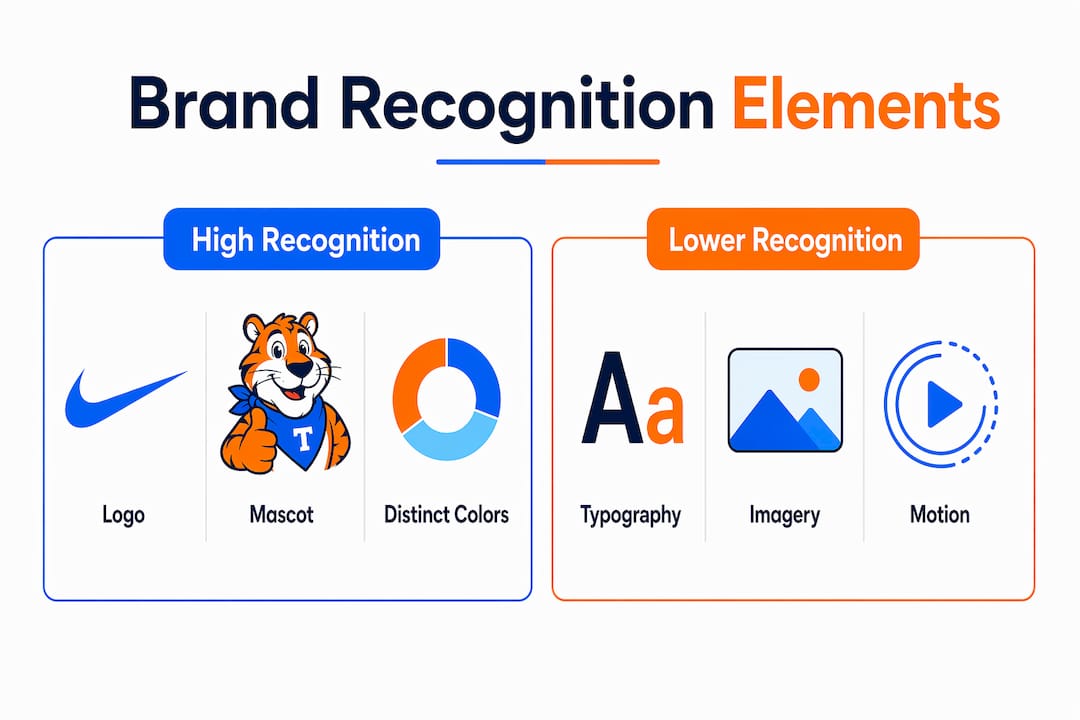
| Visual element | Recognition strength | Distinctiveness risk |
|---|---|---|
| Logo | High | Low (unique by design) |
| Mascot | High | Low (unique by design) |
| Custom typography | Medium-High | Low (ownable) |
| Color palette | Medium | High (82% shared across brands) |
| Layout patterns | Medium | Low (ownable with consistency) |
The practical implication for small businesses is clear. Build your recognition strategy around your logo, a distinctive typeface, and a consistent layout pattern. Color supports the system but should not carry it alone. The Ehrenberg-Bass Institute’s analysis also emphasizes that distinctiveness requires a bundle of visual elements working together. A single strong logo combined with a proprietary font and a recognizable image style creates a recognition fingerprint that color alone never could.
Consider how this plays out in practice. A local bakery using a warm terracotta color palette shares that palette with dozens of other food businesses. But if that bakery pairs the color with a hand-drawn logo, a specific serif typeface, and a consistent flat-lay photography style, the combination becomes ownable. Customers start to recognize the brand before they even see the name. That is the goal of effective visual branding.
How can small businesses build and maintain a consistent visual identity online?
Consistency is the single most powerful lever small businesses have when it comes to visual identity. Consistent brand presentation increases revenue by an average of 23%, with top-performing brands reaching 33%. That number reflects what happens when customers see the same visual signals repeatedly across every touchpoint: recognition builds, trust deepens, and purchase decisions become easier. Consistency is not a creative choice. It is an operational discipline with a measurable return.
Here is a practical process for building and maintaining visual consistency as a small business:
- Create a brand style guide. Document your logo usage rules, color hex codes, approved fonts, image style guidelines, and spacing standards. A one-page PDF works fine for a small business. The point is to have a reference that every designer, contractor, or team member can use.
- Build a library of digital templates. Create pre-sized templates in Canva, Adobe Express, or Figma for your most common formats: social media posts, email headers, blog featured images, and digital ads. Templates remove the guesswork and prevent visual drift.
- Apply your identity across every channel. Your website, Instagram profile, Google Business Profile, email newsletter, and any paid ads should all look like they belong to the same brand. Audit each platform quarterly and update any assets that have drifted from your guidelines.
- Treat your visual identity as a living system. As your business grows, your visual identity should evolve with it. A rebrand does not mean starting from scratch. It means refining and updating your existing system to reflect where your business is now.
- Integrate brand with usability. Your online brand presence only works if the design is also functional. Accessible color contrast ratios, legible font sizes, and consistent navigation patterns are part of your visual identity, not separate from it.
Pro Tip: Set a calendar reminder every six months to audit your visual identity across all platforms. Check that your logo files are current, your color codes are applied correctly, and your templates reflect your latest brand guidelines. Small inconsistencies compound over time and quietly erode the trust you have worked to build.
Key takeaways
A strong visual identity online combines a distinctive logo, ownable typography, and consistent application across every digital channel to build trust and drive measurable revenue growth.
| Point | Details |
|---|---|
| Visual identity is a system | Logos, color, typography, imagery, and motion must work together, not in isolation. |
| Trust forms before reading | Nearly half of visitors judge website credibility on visual design alone, per the Stanford Web Credibility Project. |
| Color alone is not enough | 82% of color assets are shared across brands; logos and custom fonts create stronger recognition. |
| Consistency drives revenue | Brands with consistent visual presentation see an average 23% revenue increase. |
| Usability and identity are linked | Font legibility, layout stability, and button consistency are visual identity decisions that affect trust. |
Why visual identity is the most underrated investment a small business can make
Most small business owners I work with treat visual identity as a one-time task. They get a logo designed, pick a couple of colors, and consider it done. That approach misses the point entirely. Visual identity is not a deliverable. It is a discipline that compounds over time, and the businesses that treat it that way are the ones that build genuine brand equity online.
The most common mistake I see is prioritizing color over everything else. A business will spend weeks debating whether their brand color should be navy or cobalt, then launch with three different fonts across their website and social profiles. Color is the least ownable element you have. Your logo and typography are what customers actually remember.
The second mistake is treating visual identity as separate from web usability. I have reviewed websites where the brand guidelines were genuinely beautiful, but the body text was 13px on mobile and the call-to-action buttons changed color between pages. Those usability failures undermine every dollar spent on brand design. Trust is built through coherence, and coherence means the visual system works at every touchpoint, not just in the brand deck.
My honest advice: start with clarity on your brand personality before you design anything. Know whether you are warm or authoritative, playful or precise. That clarity should drive every visual decision, from font weight to image style. Then document it, apply it consistently, and audit it regularly. Visual identity is not a cost. It is the most visible investment you make in your business’s credibility.
— TONY
How Ibrand can help you build a stronger visual identity online
Building a consistent, credible visual identity across your website, social media, and digital ads takes more than good taste. It takes a system, and that system needs to be built on a foundation of strong web design and search visibility.
Ibrand works with small businesses to create digital presences that look professional and perform. From website optimization for search to social media management and web design, every service Ibrand offers is built around making your brand recognizable and trustworthy online. If your visual identity is inconsistent across platforms, or if your website design is costing you credibility, Ibrand’s team can audit, redesign, and align everything into a system that works. Explore how Ibrand’s approach to brand consistency can translate directly into stronger customer trust and higher revenue for your business.
FAQ
What is visual identity online?
Visual identity online is the complete system of logos, colors, typography, imagery, and motion that communicates your brand across digital platforms. It is the visible layer of your brand that shapes perception before any content is read.
Why does visual identity matter for small businesses?
The Stanford Web Credibility Project found that 46.1% of people judge a website’s credibility based on visual design alone. For small businesses, a professional and consistent visual identity directly affects whether potential customers stay or leave.
Which visual elements build the strongest brand recognition?
Logos and mascots generate roughly twice the recognition of color alone, according to Ehrenberg-Bass Institute research. Building a bundle of distinctive assets, including a unique logo, custom typography, and a consistent layout pattern, creates far stronger recognition than color by itself.
How often should a small business update its visual identity?
A full rebrand is rarely necessary. Auditing your visual identity every six months to check for inconsistencies across platforms, and refreshing individual assets as your business evolves, is enough to keep your brand current and coherent.
How does visual identity connect to revenue?
Consistent brand presentation increases revenue by an average of 23%, with top brands reaching 33%, according to Lucidpress and Demand Metric research. The revenue lift comes from repeated recognition building trust, which shortens the customer decision cycle.
Recent Comments