
You invested years mastering dentistry, but potential patients can’t find your practice online. While competitors appear at the top of search results, your website sits buried on page three where 75% of users never look. This guide delivers proven SEO strategies specifically designed for dental practices to boost visibility, attract local patients, and grow your practice through targeted digital marketing that actually works.
Table of Contents
- Prepare Your Dental Practice For SEO Success
- Execute Targeted Local SEO Strategies To Attract Nearby Patients
- Create Valuable Content And Optimize Website For Dental SEO
- Manage Your Online Reputation And Leverage Digital Marketing Channels
- Boost Your Dental Practice SEO With Expert Help
- Frequently Asked Questions
Key takeaways
| Point | Details |
|---|---|
| Local SEO drives nearby patients | Optimized Google Business Profile and local keywords help your practice appear when patients search for dentists in your area. |
| Website optimization improves rankings | Fast, mobile-friendly sites with clear service pages and booking options rank higher and convert more visitors into patients. |
| Online reviews build trust and visibility | Positive patient reviews enhance credibility and influence local search rankings significantly. |
| Content marketing attracts organic traffic | Regular blog posts and educational content targeting dental keywords bring consistent new visitors to your site. |
| Performance tracking refines strategy | Analytics reveal what works so you can adjust tactics and maximize patient acquisition results. |
Prepare your dental practice for SEO success
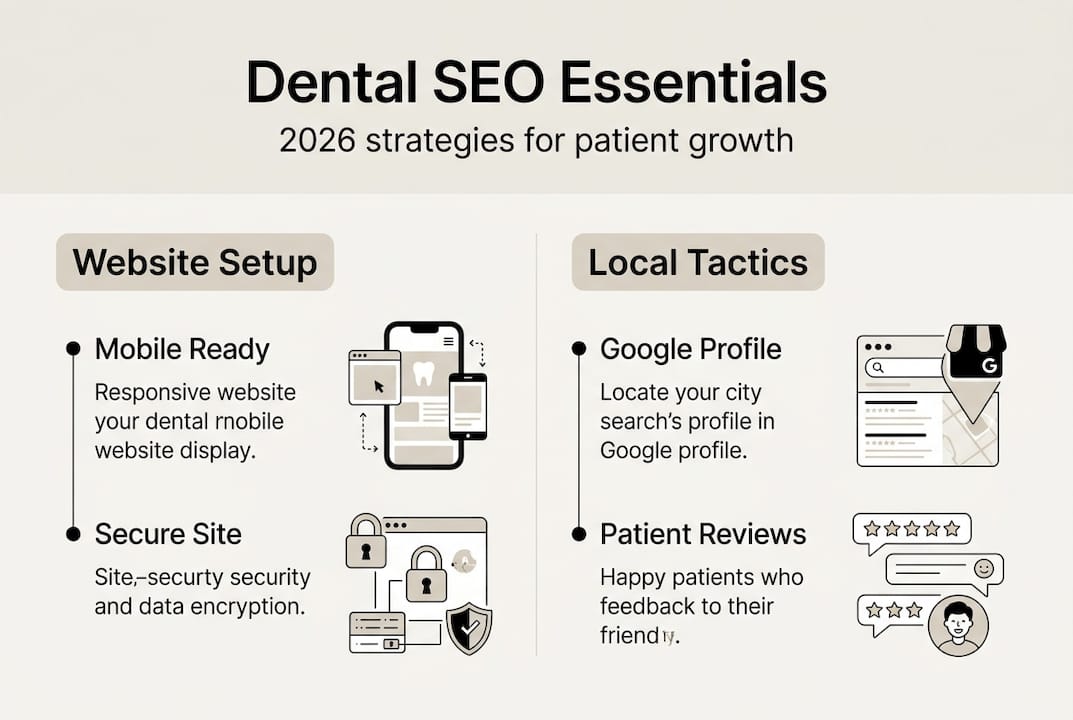
Your website serves as the digital front door to your practice. Before diving into advanced tactics, ensure your foundation is solid. Optimizing dental clinic websites improves ranking and patient engagement, making this preparation phase critical.
Start with mobile optimization. Over 60% of dental searches happen on smartphones, so your site must load quickly and display perfectly on all devices. Test your site speed using free tools and aim for load times under three seconds. Slow sites frustrate users and hurt rankings.
Essential website elements include:
- Clear contact information on every page with click to call buttons
- Simple online appointment booking system
- Dedicated service pages for each treatment you offer
- High quality photos of your office and team
- Patient testimonials and before/after galleries
Set up your Google Business Profile immediately if you haven’t already. This free tool puts your practice on Google Maps and local search results. Complete every section with accurate hours, services, and photos. Update it regularly with posts about promotions or helpful dental tips.
Keyword research reveals exactly what potential patients type into search engines. Use tools like Google Keyword Planner to find terms like “teeth whitening near me” or “emergency dentist open now.” Focus on phrases combining your services with your location for maximum local impact.
Technical SEO basics matter more than you think. Install an SSL certificate so your URL starts with HTTPS, signaling security to visitors and search engines. Add structured data markup to help Google understand your business type, services, and reviews. These behind the scenes elements significantly influence how search engines evaluate and rank your site.
Pro Tip: Create a simple spreadsheet tracking your target keywords, current rankings, and monthly search volumes to monitor progress and identify opportunities.
Execute targeted local SEO strategies to attract nearby patients
Local SEO separates thriving practices from struggling ones. Patients searching for dental care want nearby options, making local marketing crucial for small businesses to drive nearby customer growth. Your goal is appearing in the local pack, those three businesses Google highlights with map pins.
Optimize your Google Business Profile beyond basic setup. Upload fresh photos monthly showing your team, office, and happy patients. Respond to every review within 24 hours, thanking positive reviewers and addressing concerns professionally. Post weekly updates about services, tips, or special offers to signal active engagement.
NAP consistency (name, address, phone number) across the web builds trust with search engines. Audit your listings on Yelp, Healthgrades, Facebook, and dental directories. Ensure every mention matches exactly, down to abbreviations and suite numbers. Inconsistent information confuses search algorithms and hurts rankings.
Follow these local SEO priorities in order:
- Claim and optimize your Google Business Profile completely
- Build citations on top dental and local directories
- Embed a Google Map on your contact page
- Create location specific content mentioning neighborhoods you serve
- Earn backlinks from local organizations and dental associations
Target local keywords naturally throughout your site. Instead of generic “dental implants,” use “dental implants in downtown Seattle” or “affordable implants near Pike Place Market.” Weave these phrases into service page headers, content, and meta descriptions without forcing them.
| Local SEO Tactic | Impact Level | Implementation Time |
|---|---|---|
| Google Business Profile optimization | Very High | 2-3 hours |
| NAP citation building | High | 4-6 hours |
| Local keyword integration | High | 3-5 hours |
| Location landing pages | Medium | 6-8 hours per page |
| Local backlink acquisition | Medium | Ongoing |
Encourage patient reviews systematically. Send follow up emails after appointments with direct links to your Google profile. Make the process effortless. Train front desk staff to ask satisfied patients in person. More reviews mean better rankings and higher conversion rates when prospects compare options.
Create neighborhood specific landing pages if you serve multiple areas. A page titled “Family Dentist in Ballard” targeting that Seattle neighborhood performs better than generic content. Include local landmarks, community events, and area specific dental concerns to demonstrate genuine connection.
Pro Tip: Set up Google Alerts for your practice name and location to catch new mentions and citation opportunities across the web automatically.
Create valuable content and optimize website for dental SEO
Content quality directly impacts how search engines rank your site and whether visitors become patients. Well-optimized website content and structure boost search rankings and retain visitors through clear information and intuitive design.

Write detailed service pages for every treatment you offer. Don’t just list procedures. Explain what patients can expect, how long treatments take, typical costs, and recovery details. Use natural keyword variations like “cosmetic dentistry,” “smile makeovers,” and “porcelain veneers” throughout without stuffing.
Different content types serve different SEO purposes:
| Content Type | SEO Benefit | Best Use Case |
|---|---|---|
| Service pages | High keyword targeting | Rank for specific treatments |
| Blog posts | Long tail traffic | Answer common patient questions |
| FAQ sections | Featured snippet capture | Quick answers to searches |
| Video content | Engagement and dwell time | Explain complex procedures |
| Patient stories | Trust and conversion | Build credibility |
User experience affects rankings more than ever. Organize your navigation logically with clear categories for services, about, and contact. Eliminate pop ups that block content on mobile devices. Use readable fonts at least 16px and plenty of white space. Frustrated visitors bounce quickly, signaling poor quality to search engines.
Implement on page SEO elements consistently:
- Title tags under 60 characters with primary keyword near the beginning
- Meta descriptions 150-160 characters that compel clicks
- Header tags (H1, H2, H3) structuring content logically
- Alt text describing every image for accessibility and SEO
- Internal links connecting related pages naturally
Internal linking distributes SEO value across your site while helping visitors find relevant information. When mentioning teeth whitening in a blog post, link to your whitening service page. Connect related procedures like implants and crowns. This keeps users engaged longer and shows search engines your site depth.
Optimize images before uploading. Compress files to reduce size without losing quality. Name files descriptively like “dental-implant-procedure.jpg” instead of “IMG_1234.jpg.” These small details accumulate into meaningful ranking improvements.
Publish blog content consistently addressing patient concerns. Target questions like “how long do veneers last” or “is teeth whitening safe.” Answer thoroughly in 800-1200 words with clear headers. This builds authority and captures long tail search traffic competitors miss.
Manage your online reputation and leverage digital marketing channels
Your online reputation directly influences both search rankings and patient decisions. Online reputation management increases patient trust and search visibility through proactive review generation and response strategies.
Proactively request reviews from satisfied patients immediately after successful treatments. Timing matters. Patients feel most positive right after great experiences. Send personalized emails or texts with direct links to your Google Business Profile, Yelp, and Healthgrades. Make leaving a review take less than two minutes.
Respond to every review, positive or negative, within 24 hours. Thank patients for positive feedback specifically mentioning details they shared. Address negative reviews professionally, apologizing for poor experiences and offering to discuss offline. Public responses show prospects you care about patient satisfaction.
Social media extends your reach beyond search engines. Post regularly on Facebook and Instagram sharing dental tips, team photos, and patient success stories (with permission). Engage with comments and messages promptly. While social signals don’t directly impact rankings, they drive traffic and build community awareness.
Key reputation management practices:
- Monitor review sites and social media daily for new mentions
- Create a review generation system integrated into patient workflows
- Showcase positive reviews prominently on your website
- Address negative feedback quickly and professionally
- Build relationships with local influencers and community organizations
Consider targeted digital advertising to complement organic SEO efforts. Google Ads for high intent keywords like “emergency dentist” deliver immediate visibility while your SEO builds. Facebook ads targeting local demographics promote specific services to ideal patients. Start with small budgets, test different approaches, and scale what works.
Social media engagement for dental marketing in 2026 focuses on authentic connection rather than hard selling. Share educational content, behind the scenes glimpses, and community involvement. Patients choose dentists they trust, and social media builds that trust before the first appointment.
Combine SEO and reputation management for powerful synergy. High ratings and numerous reviews improve local pack rankings. Better rankings generate more visibility and reviews. This positive cycle accelerates practice growth when managed strategically.
Monitor your online presence using Google Alerts and reputation management tools. Catch new reviews, mentions, and potential issues immediately. Quick responses prevent small problems from becoming reputation crises that hurt both patient trust and search visibility.
Boost your dental practice SEO with expert help
Implementing comprehensive SEO while running a busy practice challenges even the most organized dentists. Professional services tailored for dental practices accelerate results by applying proven strategies and avoiding costly mistakes. Expert guidance helps you stay current with algorithm updates and emerging tactics that impact rankings.
Access detailed resources covering everything from website optimization fundamentals to SEO basics for beginners. Comprehensive guides on marketing to local customers provide frameworks you can implement immediately. Leverage specialized expertise to maximize your digital marketing investment and attract more patients consistently.
Frequently asked questions
What is dental SEO and why does it matter for my practice?
Dental SEO optimizes your online presence to rank higher when potential patients search for dental services in your area. It combines website optimization, local listings, quality content, and reputation management to increase visibility. Effective dental SEO attracts more local patients by ensuring your practice appears prominently in search results when people need dental care. Learn more about mastering dental practice online marketing to grow your patient base.
How can I encourage patients to leave positive online reviews?
Ask satisfied patients directly after successful appointments when they feel most positive about their experience. Send follow up emails or text messages with direct links to your Google Business Profile and other review platforms within 24 hours. Make the process simple by providing clear instructions and ensuring links work on mobile devices. Respond professionally to all reviews to encourage ongoing feedback and show prospects you value patient opinions. Discover strategies for managing your online reputation effectively.
What local SEO tactics work best for dental practices?
Optimize your Google Business Profile completely with accurate information, regular posts, and fresh photos. Maintain consistent NAP citations across all online directories and dental listing sites. Target local keywords naturally in your website content and meta descriptions. Encourage and respond to patient reviews systematically. Create location specific landing pages if you serve multiple neighborhoods or cities. These tactics help you appear in the local pack and attract nearby patients actively searching for dental services. Explore why local marketing drives growth for dental practices.
How do I track the effectiveness of my dental SEO efforts?
Use Google Analytics to monitor website traffic, user behavior, and conversion rates from organic search. Google Search Console reveals which keywords drive traffic and how your pages rank. Track key metrics like new patient appointments from online sources, phone calls from your website, and form submissions. Set up goal tracking for specific actions like booking requests. Review these metrics monthly to identify what works and adjust your strategy accordingly. Understanding why tracking marketing performance matters helps you optimize your investment and maximize patient acquisition results.
Recommended
- 7 Affordable Marketing Strategies for Dentists | Ibrandmedia
- Dental Marketing in 2026: 40% More Engagement with Videos | Ibrandmedia
- How to attract new patients online: 2026 guide | Ibrandmedia
- 7 Essential Dentist Website Design Tips for More Patients | Ibrandmedia
- Digital marketing checklist 2026: practical steps for small business success
Recent Comments