
Over 90 percent of American consumers trust testimonials from other customers more than traditional advertising. For small business owners across North America, this means authentic client stories are not just nice to have—they are essential for standing out online without breaking the bank. By sharing real experiences and measurable results, you can turn satisfied customers into persuasive advocates who attract new business and strengthen your reputation in a competitive market.
Table of Contents
- Defining Business Testimonials And Their Role
- Types Of Testimonials Used By Businesses
- How Testimonials Influence Buying Decisions
- Best Ways To Collect And Display Testimonials
- Common Pitfalls And How To Avoid Them
Key Takeaways
| Point | Details |
|---|---|
| Importance of Testimonials | Testimonials serve as powerful marketing tools that provide social proof and enhance customer trust. |
| Diverse Formats | Utilizing various testimonial formats, such as videos and social media mentions, can enhance engagement and credibility. |
| Strategic Collection | Request testimonials at peak satisfaction moments to capture authentic customer experiences. |
| Maintaining Authenticity | Regularly review testimonials to ensure they are current and genuine to avoid damaging credibility. |
Defining Business Testimonials and Their Role
Business testimonials are powerful customer endorsements that capture authentic experiences with a product or service. These firsthand accounts provide potential customers with social proof, helping them understand real-world value through genuine narratives. By sharing stories of successful problem resolution, testimonials transform abstract marketing claims into tangible, relatable experiences that build online credibility.
Testimonials go beyond simple recommendations, serving as strategic marketing tools that communicate trust and reliability. They typically feature detailed accounts from satisfied customers who describe specific challenges they encountered and how a particular product or service effectively addressed those issues. Understanding social proof in marketing reveals that these personal narratives are significantly more persuasive than traditional advertising because they present unfiltered, real-world perspectives.
The most effective testimonials include key elements that resonate with potential customers: clear problem statements, specific outcomes, and measurable results. They might highlight quantitative improvements like percentage increases in productivity, revenue growth, or time saved. By presenting concrete evidence through customer experiences, businesses can dramatically reduce purchase hesitation and demonstrate genuine value propositions.
Pro tip: When collecting testimonials, encourage customers to be specific about their challenges and provide measurable results to create more compelling and credible endorsements.
Types of Testimonials Used by Businesses
Businesses leverage multiple testimonial formats to create compelling social proof and build customer trust. Types of testimonial strategies range from traditional written endorsements to dynamic multimedia approaches that capture authentic customer experiences. The goal remains consistent: transforming customer satisfaction into persuasive marketing assets that resonate with potential buyers.
The most common testimonial types include written statements, video testimonials, social media mentions, and comprehensive case studies. Written testimonials remain a foundational strategy, offering detailed narratives that potential customers can quickly scan and understand. Video testimonials, by contrast, provide an emotional dimension, allowing real customers to share their experiences with genuine enthusiasm and body language that written text cannot convey.
Platform-based testimonials have gained significant traction in the digital marketing landscape. These include online reviews on third-party websites, social media recommendations, and industry-specific rating platforms. Such testimonials carry additional credibility because they appear unfiltered and represent unsolicited feedback from actual customers. Businesses can strategically showcase these diverse testimonial types to create a multifaceted approach to building trust and demonstrating their value proposition.
Pro tip: Diversify your testimonial collection by actively requesting feedback across multiple formats to create a comprehensive and authentic representation of customer experiences.
Here is a comparison of common testimonial formats and their marketing value:
| Format Type | Unique Strength | Ideal Use Case |
|---|---|---|
| Written Statement | Fast to produce, easy to scan | Website landing pages |
| Video Testimonial | Adds emotion and credibility | Social media and ads |
| Social Media Mention | Provides timeliness and broad reach | Highlighting brand engagement |
| Case Study | Shows detailed, measurable outcomes | B2B sales presentations |
How Testimonials Influence Buying Decisions
Testimonials play a profound role in shaping consumer purchasing behaviors by addressing fundamental psychological barriers in the buying process. Systematic research on consumer behavior reveals that online ratings and reviews significantly reduce purchase uncertainty and foster trust among potential buyers. When consumers encounter authentic experiences shared by previous customers, they gain confidence in a product or service’s ability to meet their specific needs.

The psychological mechanism behind testimonials centers on social proof and risk mitigation. Potential buyers naturally seek validation from peers before making purchasing decisions, viewing detailed testimonials as trustworthy indicators of a product’s actual performance. Factors such as the credibility of the testimonial source, the specificity of the experience shared, and the emotional resonance of the narrative all contribute to their persuasive power. Consumers are more likely to trust testimonials that provide concrete details about problem-solving and tangible benefits rather than generic, vague praise.
Testimonials function as powerful decision-making tools by bridging the information gap between marketing claims and real-world experiences. They offer potential customers insights into how a product or service performs in practical scenarios, addressing specific concerns and demonstrating value beyond traditional advertising methods. By presenting authentic stories of customer success, businesses can effectively lower buyer resistance and create a more compelling narrative that speaks directly to potential customers’ pain points and aspirations.
Pro tip: Collect testimonials that include specific, measurable outcomes and personal stories to maximize their impact on potential buyers’ decision-making process.
Best Ways to Collect and Display Testimonials
Collecting compelling testimonials requires a strategic and systematic approach that goes beyond simple feedback collection. Systematic testimonial acquisition strategies emphasize the importance of timing, authenticity, and clear objectives. Businesses should focus on requesting testimonials when customer satisfaction is at its peak, typically shortly after a successful service delivery or product experience.
The most effective testimonial collection methods involve structured interviews and multiple format options. Businesses can gather powerful narratives by using probing questions that encourage customers to share specific, measurable outcomes. Authentic testimonials should highlight concrete benefits, including quantifiable results like percentage improvements, time saved, or financial gains. Offering customers choices in testimonial formats – such as written statements, video recordings, or audio interviews – increases the likelihood of obtaining genuine and detailed feedback.
Displaying testimonials requires careful strategic placement and contextual relevance. Businesses should integrate testimonials throughout their customer journey, positioning them strategically on websites, marketing materials, and sales platforms. The most impactful testimonials are those that align closely with potential customers’ specific pain points and demonstrate how a product or service solves real-world problems. Ensuring legal permissions and maintaining ethical standards during collection and display processes further enhances the credibility of these powerful marketing tools.
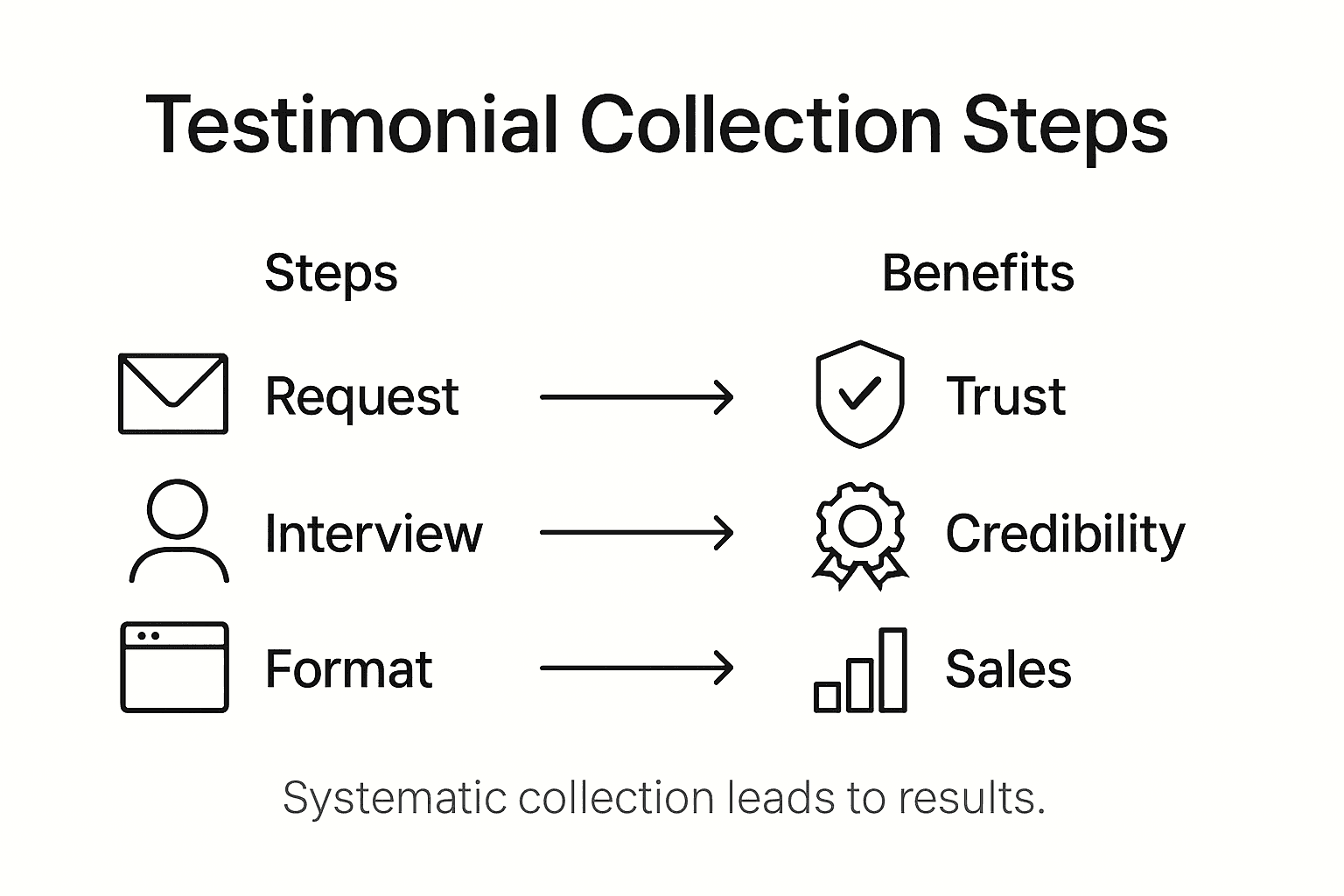
Pro tip: Create a systematic testimonial collection process that includes multiple touchpoints and format options to capture the most authentic and compelling customer stories.
This summary highlights strategic testimonial collection best practices for businesses:
| Step | Key Focus | Business Benefit |
|---|---|---|
| Request timing | Post-purchase peaks | Captures authentic satisfaction |
| Format diversity | Written, video, audio | Appeals to varied audiences |
| Strategic placement | Customer journey fit | Maximizes persuasive impact |
| Regular review | Quarterly audits | Maintains relevancy |
Common Pitfalls and How to Avoid Them
Testimonial strategies can quickly unravel when businesses fail to maintain authenticity and relevance. Common testimonial mistakes can significantly undermine a company’s credibility and potentially damage its reputation. The most critical errors include using outdated testimonials, displaying irrelevant customer experiences, and worst of all, presenting fabricated endorsements that can destroy customer trust.
Authenticity and recency are paramount when selecting and displaying testimonials. Businesses must regularly review their testimonial portfolio, removing outdated endorsements that no longer reflect current service quality or product capabilities. Stale testimonials can mislead potential customers and create unrealistic expectations. Instead, companies should implement a systematic approach to collecting fresh, relevant testimonials that showcase current performance and address contemporary customer challenges.
The most dangerous pitfall is the temptation to create fake or artificially enhanced testimonials. While the short-term gain might seem appealing, the long-term consequences can be devastating. Sophisticated consumers can often detect inauthentic endorsements, and any hint of manipulation can instantly erode brand credibility. Successful businesses focus on generating genuine, verifiable testimonials by creating exceptional customer experiences that naturally encourage positive feedback. This means investing in product quality, customer service, and maintaining open communication channels that invite honest customer reflections.
Pro tip: Implement a quarterly review process to audit your testimonials, ensuring they remain current, relevant, and accurately represent your current business capabilities.
Harness the Power of Authentic Testimonials to Boost Your Business
Building trust with real customer stories is essential for driving sales and overcoming buyer hesitation. This article highlights how detailed testimonials create priceless social proof by showcasing specific challenges and measurable results. At iBrandmedia, we understand the critical role authentic endorsements play in converting prospects into loyal customers. Our tailored digital marketing solutions help businesses collect, showcase, and leverage strong testimonials that resonate emotionally and boost credibility.
Ready to turn your satisfied customers into your most persuasive sales tool? Explore our expert services that include SEO optimization, social media management, and mobile-friendly web design to amplify your testimonials’ impact. Visit our Uncategorized | Ibrandmedia page to learn more about building trust with your audience. Don’t wait to elevate your brand’s credibility and start seeing quick, affordable results by partnering with iBrandmedia. Take the first step today to create a personalized plan that drives real growth.
Frequently Asked Questions
What are business testimonials?
Business testimonials are customer endorsements that capture authentic experiences with a product or service, providing social proof and building online credibility. They showcase specific challenges faced by customers and how a product effectively resolved those issues.
How do testimonials influence buying decisions?
Testimonials influence buying decisions by reducing purchase uncertainty and fostering trust. Authentic experiences shared by previous customers act as social proof, guiding potential buyers towards making informed choices based on real-world outcomes.
What are the best types of testimonials for businesses to collect?
The best types of testimonials for businesses to collect include written statements, video testimonials, social media mentions, and case studies. Each format has unique strengths, such as emotional appeal in video testimonials and detailed narratives in written statements.
How can businesses collect and display testimonials effectively?
Businesses can collect testimonials by requesting them when customer satisfaction is high, using structured interviews and offering various formats. To display testimonials effectively, they should be strategically placed throughout the customer journey, aligning with specific pain points and demonstrating real-world solutions.
Recommended
- Why Use Social Proof: Building Trust for Small Businesses | Ibrandmedia
- Building Online Credibility: Keys to Attracting Customers | Ibrandmedia
- Understanding Social Proof in Marketing: The Key to Trust | Ibrandmedia
- 7 Smart Social Media Post Ideas for Small Business Growth | Ibrandmedia
- 7 Voorbeelden van gebruikerservaring voor uw bedrijf | BYTE24
Recent Comments