
Over 60 percent of American businesses rely on website analytics to shape their marketing decisions. This data-driven approach reveals which online strategies are working and which fall flat, turning raw numbers into a competitive edge. As the digital marketplace grows more crowded, understanding how to decode website analytics gives you the power to outmaneuver competitors and create smarter growth strategies.
Table of Contents
- Website Analytics Defined and Debunked
- Key Metrics That Reveal Growth Opportunities
- Comparing Analytics Tools and Platforms
- Interpreting Data to Drive Decisions
- Avoiding Common Analytics Mistakes
Key Takeaways
| Point | Details |
|---|---|
| Website Analytics Enable Growth | Website analytics help businesses track user behavior and transform data into actionable insights, optimizing online performance and aligning with business goals. |
| Focus on Key Metrics | Key performance indicators like conversion rate and bounce rate are essential for assessing online success and uncovering growth opportunities. |
| Choose the Right Tools | Selecting the appropriate web analytics platform is crucial, as it can enhance understanding and optimization of online strategies. |
| Avoid Analytics Pitfalls | Businesses must avoid common mistakes like vanity metric obsession and ignoring context to make informed decisions based on data. |
Website Analytics Defined and Debunked
Website analytics represents the strategic process of collecting, measuring, and interpreting digital data about website visitor interactions. Web traffic analysis enables businesses to understand how users navigate and engage with their online platforms, transforming raw data into actionable insights that drive growth.
At its core, website analytics involves tracking critical metrics like page views, user sessions, bounce rates, and conversion pathways. According to research from TechTarget, the primary goal is to provide comprehensive insights that optimize website performance and align digital experiences with specific business objectives. This means going beyond simple visitor counting and diving deep into understanding user behavior patterns.
The most powerful website analytics strategies focus on several key dimensions:
- User Engagement Tracking: Measuring time spent on pages, click-through rates, and interaction depth
- Traffic Source Analysis: Understanding where visitors originate (search engines, social media, direct traffic)
- Conversion Path Mapping: Identifying the routes users take before completing desired actions
- Performance Benchmarking: Comparing current metrics against industry standards and historical data
By leveraging these analytical approaches, small businesses can make data-driven decisions that directly impact their online success. The key is transforming complex data into clear, strategic insights that reveal opportunities for improvement and growth.
Key Metrics That Reveal Growth Opportunities
Understanding key performance indicators (KPIs) is crucial for transforming website data into meaningful business insights. Digital marketing performance tracking allows businesses to measure their online success through precise, actionable metrics that reveal hidden growth opportunities.
Research from Eindhoven University highlights the significance of measuring both quantitative and qualitative data to continuously improve digital strategies. Small businesses can leverage several critical metrics to gauge their online performance:
- Conversion Rate: Percentage of visitors who complete a desired action
- Traffic Sources: Identifying which channels drive most valuable visitors
- Bounce Rate: Measuring user engagement and content relevance
- Average Session Duration: Understanding visitor interaction depth
- Cost Per Acquisition: Calculating marketing efficiency
These metrics provide a comprehensive view of website performance. By systematically analyzing digital marketing ROI, businesses can make data-driven decisions that optimize their online presence. Successful digital strategies transform raw numbers into strategic insights, helping entrepreneurs identify strengths, address weaknesses, and create targeted improvements that directly impact business growth.

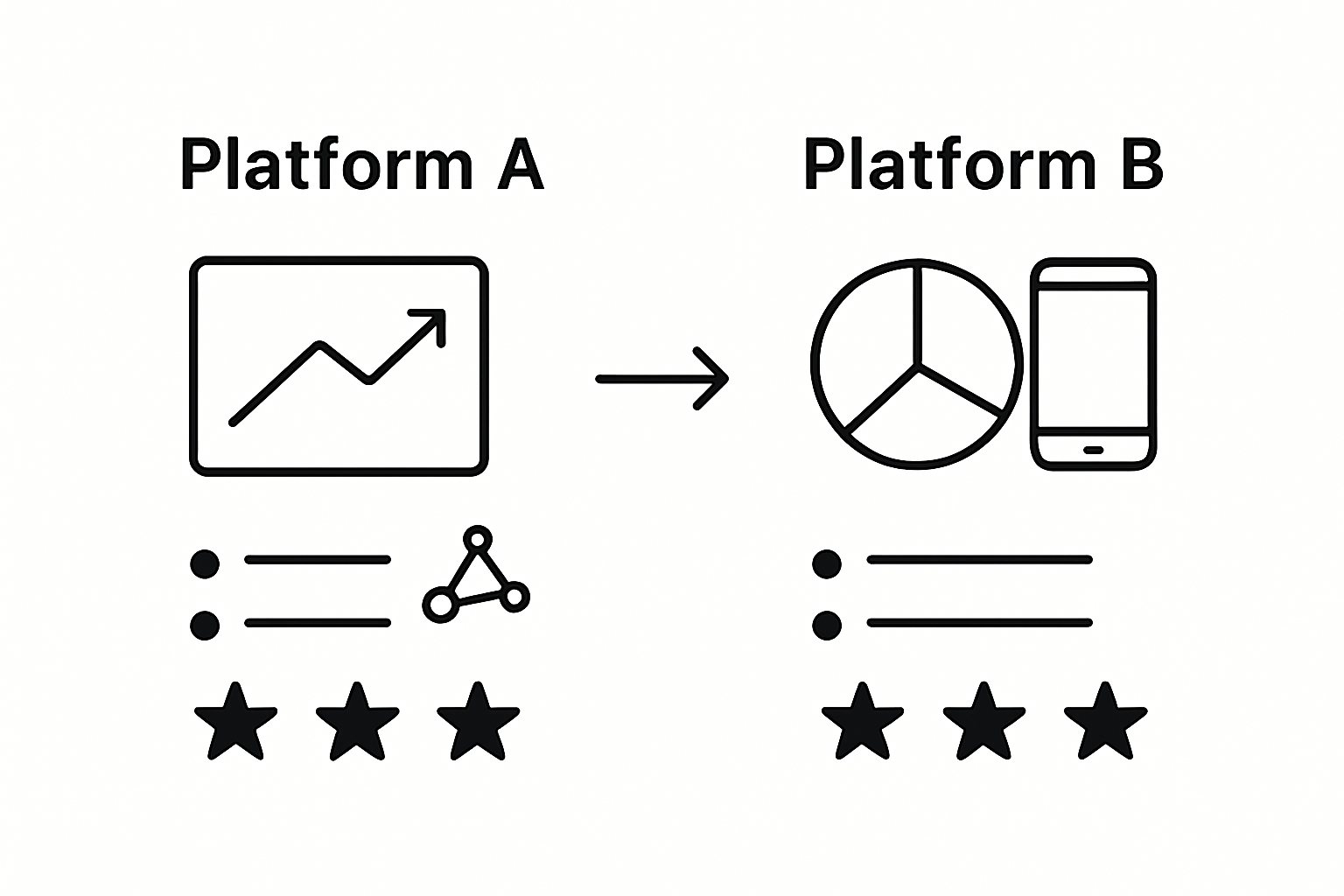
Comparing Analytics Tools and Platforms
Selecting the right web analytics platform can dramatically transform how small businesses understand and optimize their online performance. Digital marketing tool comparisons provide critical insights into the complex landscape of analytical resources available to entrepreneurs seeking data-driven growth strategies.
Research from SCITEPRESS highlights the importance of choosing analytics tools that align precisely with specific business objectives. Small businesses should evaluate platforms across several key dimensions:
- Ease of Use: Intuitive interfaces that don’t require advanced technical skills
- Cost Effectiveness: Scalable pricing models suitable for growing businesses
- Depth of Reporting: Comprehensive metrics beyond basic website traffic
- Integration Capabilities: Seamless connections with existing marketing technologies
- Real-Time Analytics: Immediate insights into website performance
The most powerful analytics platforms go beyond simple visitor tracking. By systematically analyzing platform features, businesses can uncover nuanced insights that transform raw data into actionable strategic intelligence. Successful digital entrepreneurs understand that the right analytics tool is not just a measurement device, but a strategic partner in continuous business improvement.
Interpreting Data to Drive Decisions
Transforming raw website analytics into strategic business intelligence requires more than just collecting numbers. Digital marketing performance analysis empowers small businesses to decode complex data patterns and make informed decisions that directly impact growth.
Research from Eindhoven University highlights the critical process of aligning data interpretation with specific business objectives. Effective data analysis involves several strategic approaches:
- Contextual Interpretation: Understanding metrics within broader business goals
- Trend Identification: Recognizing patterns of user behavior over time
- Comparative Analysis: Benchmarking performance against industry standards
- Predictive Insights: Anticipating future user interactions and potential opportunities
- Actionable Reporting: Translating complex data into clear strategic recommendations
Successful entrepreneurs view data as a strategic narrative. By systematically analyzing marketing performance metrics, businesses can uncover hidden opportunities, optimize user experiences, and create targeted strategies that transform website visitors into loyal customers. The most powerful insights emerge when data tells a story beyond simple numbers.
Avoiding Common Analytics Mistakes
Website analytics can quickly become a minefield of misinterpretation without the right strategic approach. Digital marketing mistake prevention provides critical insights into navigating the complex landscape of data analysis and avoiding potential pitfalls that could derail business growth.
Research from Eindhoven University reveals several critical mistakes small businesses frequently make when analyzing website data. These common errors can significantly undermine strategic decision making:
- Vanity Metric Obsession: Focusing on impressive-looking numbers that don’t reflect actual business performance
- Ignoring Context: Analyzing data without understanding the broader business objectives
- Confirmation Bias: Seeking only data that supports preexisting assumptions
- Neglecting Qualitative Insights: Relying exclusively on quantitative metrics
- Inconsistent Tracking: Failing to maintain consistent measurement standards
Successful businesses understand that effective online marketing strategies require a nuanced approach to data interpretation. The goal is not just to collect numbers, but to transform raw information into actionable intelligence that drives meaningful business improvements. Smart entrepreneurs treat analytics as a strategic tool for continuous learning and optimization.
Unlock the Power of Website Analytics to Accelerate Your Business Growth
Understanding complex data like user engagement, traffic sources, and conversion pathways is just the first step. Many small business owners struggle with turning overwhelming website analytics into clear, actionable strategies that drive real growth and boost online sales. The challenge lies in avoiding common pitfalls such as focusing on vanity metrics or ignoring critical context that aligns data with your unique goals.
At ibrand.media, we specialize in transforming your website analytics into impactful digital marketing campaigns that deliver quick, measurable results. Our expert team offers personalized SEO optimization, local marketing, and real-time performance tracking—all designed to help you interpret your data confidently and increase conversions. See how businesses like yours have succeeded by partnering with us through our success stories on our Uncategorized page.

Don’t let complex web data hold you back. Visit ibrand.media now to explore tailored marketing solutions and start turning your analytics into growth. Take the next step today with a strategy built for your business’s success.
Frequently Asked Questions
What are website analytics?
Website analytics is the process of collecting, measuring, and interpreting digital data about website visitor interactions to gain insights that optimize online performance and support business objectives.
Why are key performance indicators (KPIs) important in website analytics?
KPIs are essential in website analytics as they help businesses transform data into meaningful insights that reveal growth opportunities, allowing for data-driven decision making and enhanced digital strategies.
How can small businesses choose the right analytics platform?
Small businesses should consider factors like ease of use, cost effectiveness, depth of reporting, integration capabilities, and real-time analytics features to select an analytics platform that aligns with their specific business goals.
What common mistakes should be avoided in website analytics?
Common mistakes include obsession with vanity metrics, ignoring the context of data, confirmation bias, neglecting qualitative insights, and inconsistent tracking, all of which can undermine effective decision making.
Recommended
- Complete Guide to Online Analytics for Business | Ibrandmedia
- Tracking Digital Marketing Success: Complete Guide | Ibrandmedia
- Increase Website Conversions: Proven Strategies for 2025 Success | Ibrandmedia
- Understanding Why Track Marketing Performance Matters | Ibrandmedia
- Master Shopify Performance Tracking Solutions to Boost Sales – Shopify Experts: Grow Your eCommerce Revenue
Recent Comments