
Many local service business owners in the United States wrestle with what professional branding really means and how much it matters. It is easy to believe that branding is just about a logo or catchy phrase, but that misses the bigger picture. Professional branding is a strategic process that shapes how clients see your business through consistent messaging, visual choices, and every interaction. This guide unpacks the real concept and clears up common myths, providing practical steps to make your service stand out in your community.
Table of Contents
- Professional Branding Defined And Debunked
- Key Elements That Shape Strong Brands
- Types Of Branding: Local, Personal, Digital
- How Branding Drives Customer Loyalty And Trust
- Financial Impact: Value, Pricing, And Growth
- Common Branding Mistakes To Avoid
Key Takeaways
| Point | Details |
|---|---|
| Professional Branding is Essential | It’s not just logos; it’s about creating a trustworthy identity that resonates with clients across various platforms. |
| Consistency is Crucial | Maintaining a consistent message and visual identity reinforces brand recognition and trust among clients. |
| Embrace Local and Digital Strategies | Combining local, personal, and digital branding can significantly enhance visibility and client relationships. |
| Branding Impacts Financial Success | A strong brand allows businesses to charge more while attracting better clients, leading to increased revenue and growth. |
Professional Branding Defined and Debunked
Professional branding isn’t just a logo or a catchy tagline. It’s about creating a distinctive identity that clients recognize and trust. For service-based small businesses, this means positioning yourself as the solution to your customers’ problems through consistent messaging, visual elements, and interactions across all touchpoints.
What professional branding actually is starts with understanding the core definition: creating distinctive brand identities that communicate your unique value. This goes beyond surface-level aesthetics. It involves developing your service’s personality, voice, and promise to clients. A plumber with professional branding doesn’t just fix pipes. They position themselves as the reliable expert who solves urgent problems without stress or surprise costs.
Here’s where many small business owners get confused. They think professional branding requires expensive agencies, perfect photography, or elaborate campaigns. Not true. Professional branding is fundamentally a strategic process focused on positioning your business in the minds of your target audience. You can start small and build from there.
The most common misconception is that branding equals logo design. Your logo matters, but it’s one small piece. Professional branding encompasses your website, social media voice, customer service approach, pricing strategy, and how you describe your services. When someone recommends your business to a friend, the words they use reflect your brand. That’s branding at work.
Another myth: professional branding requires constant reinvention. Actually, the opposite is true. Strong branding demands consistency and ongoing maintenance. A consulting business that changes its messaging every quarter confuses potential clients. The goal is to maintain a consistent impression that builds trust over time through regular assessment and refinement of what’s working.
For local service providers, professional branding becomes especially powerful because it differentiates you in a crowded market. When a homeowner searches for a contractor, they’re not just comparing prices. They’re evaluating who feels trustworthy, professional, and responsive. Your brand answers those questions before you even meet.
Pro tip: Start by defining three core words that describe how your business should be perceived (reliable, innovative, compassionate), then ensure every client interaction and marketing message reflects those values consistently.
Key Elements That Shape Strong Brands
Strong brands don’t happen by accident. They’re built on specific, intentional elements that work together to create recognition and trust. For your service business, understanding these core components helps you build a brand that stands out and sticks in clients’ minds.
The foundation starts with visual identity. This includes your logo, color palette, typography, and imagery. These aren’t decorative choices. Visual identity components create distinctiveness and recognizability in competitive markets. A plumber using consistent blue and orange across their truck, website, and business cards becomes instantly recognizable. When a homeowner sees those colors, they think of your company.

Your brand voice and messaging come next. This is how you talk to clients. Are you formal and professional? Friendly and approachable? A tax accountant sounds different from a social media manager. Your tone, word choices, and how you describe your services shape how clients perceive you. This voice should remain consistent across your website, social media, emails, and in-person interactions.
Reputational management forms another critical pillar. Your brand isn’t just what you say about yourself. It’s what clients say about you. Online reviews, testimonials, and word-of-mouth recommendations build emotional attachments that strengthen your brand. One negative review doesn’t destroy a strong brand with solid reputation management, but consistent poor experiences will.
Your values and heritage matter too. Clients want to know what you stand for. Do you prioritize sustainability? Community support? Transparency with pricing? When your brand reflects authentic organizational values, it creates deeper connections with the right clients. A renovation company that genuinely values craftsmanship will attract clients willing to invest in quality work.
Finally, your online presence ties everything together. Your website, social media profiles, and email communications must reflect your brand identity consistently. This unified presence builds trust because potential clients see the same message and visuals everywhere they encounter you.
Pro tip: Audit your current brand elements across all platforms (website, social media, business cards, email signature) and document any inconsistencies in colors, fonts, tone, or messaging, then create a simple brand guide to maintain consistency going forward.
Types of Branding: Local, Personal, Digital
Branding isn’t one-size-fits-all. Different approaches work for different business goals. Understanding the three main types helps you choose the right strategy for your service business and how they can work together to strengthen your overall presence.
Local branding focuses on dominating your geographic area. This is where most service businesses start. When a homeowner in your zip code needs a plumber, your name should come to mind first. Local branding relies on community presence, local partnerships, word-of-mouth referrals, and being visible where your customers actually search. Google Maps visibility, local business directories, community event sponsorships, and neighborhood reputation all matter here. A handyman service thrives on local branding because clients prefer someone nearby they can trust.
Personal branding is different. It’s about you as the business owner becoming the recognizable face of your company. Personal brand equity encompasses visibility, credibility, differentiation, and reputation built around your professional identity. For service businesses, this matters enormously. A contractor known for integrity and quality work builds personal brand equity that attracts clients directly. When you show up on social media sharing expertise, responding to questions, and demonstrating your process, you’re building personal brand equity that transfers to your business.
Digital branding extends across online platforms. This includes your website, social media presence, email marketing, and how you appear in search results. Digital branding uses technology to reach beyond your immediate geography. A tax accountant using LinkedIn to share filing tips reaches potential clients statewide. Digital branding allows you to target local customers online through paid advertising, content marketing, and strategic visibility.
These three types work together. Strong local branding combined with personal branding and digital presence creates a powerful, multi-layered approach. A landscaper might dominate local search results (local branding), be known personally in the community (personal branding), and maintain an active Instagram showing past projects (digital branding).
The key is recognizing that modern small businesses rarely rely on just one type. You need all three working in harmony to maximize your reach and credibility.
Here is a comparison of the three branding types and their primary business benefits:
| Branding Type | Core Focus | Best Channel Examples | Main Business Impact |
|---|---|---|---|
| Local Branding | Geographic recognition | Business directories, events | Increased trust in local market |
| Personal Branding | Owner’s expertise visibility | Social media, networking | Stronger referrals and loyalty |
| Digital Branding | Online authority and reach | Website, digital ads, SEO | Broadened client acquisition |
Pro tip: Choose one type to develop first based on where your ideal clients spend most of their time, then gradually build the other two to create a comprehensive branding strategy that reinforces all three elements.
How Branding Drives Customer Loyalty and Trust
Customers don’t stay loyal to businesses they don’t trust. Trust is the foundation that transforms one-time buyers into repeat clients who recommend you to others. Professional branding builds this trust systematically through consistency, reliability, and authentic communication.
When a customer encounters your brand multiple times across different touchpoints, something powerful happens. Your logo, colors, messaging, and service quality all reinforce the same promise. A cleaning service with a polished website, professional truck wrapping, detailed email estimates, and consistent quality sends a clear message: this business is organized and reliable. That consistency builds confidence that you’ll deliver what you promise.
Consumer trust significantly influences repeat purchasing and positive behavior patterns over time. When customers trust your brand, they buy again without extensive research. They skip the comparison shopping and the stress of evaluating options. A plumber with strong branding doesn’t need to negotiate prices because clients trust the quality justifies the cost.
Brand trust directly translates to customer retention. New customers are expensive to acquire. You spend money on advertising, content creation, and outreach. Existing customers who trust you require minimal marketing. They return, spend more per transaction, and become your best marketers through referrals and positive reviews.
Loyalty emerges from repeated positive experiences under a trusted brand. When you deliver consistently good service while maintaining a professional brand presence, customers develop emotional attachment to your business. They choose you over cheaper competitors because switching feels risky. They know what they get with you. That certainty has real value.
The relationship works both ways. A strong brand gives customers confidence to try your services. That initial trust from your professional positioning gives you the opportunity to deliver great work. The combination creates a cycle where brand reputation and actual service quality reinforce each other, building loyalty that lasts.
Pro tip: Systematically collect and showcase customer testimonials and reviews across your website and social media, as social proof reinforces the trust your branding establishes and accelerates customer loyalty.
Financial Impact: Value, Pricing, and Growth
Professional branding isn’t just about looking good. It directly impacts your bottom line. When you invest in building a strong brand, you’re essentially investing in your ability to charge more, attract better clients, and grow faster than competitors without professional branding.
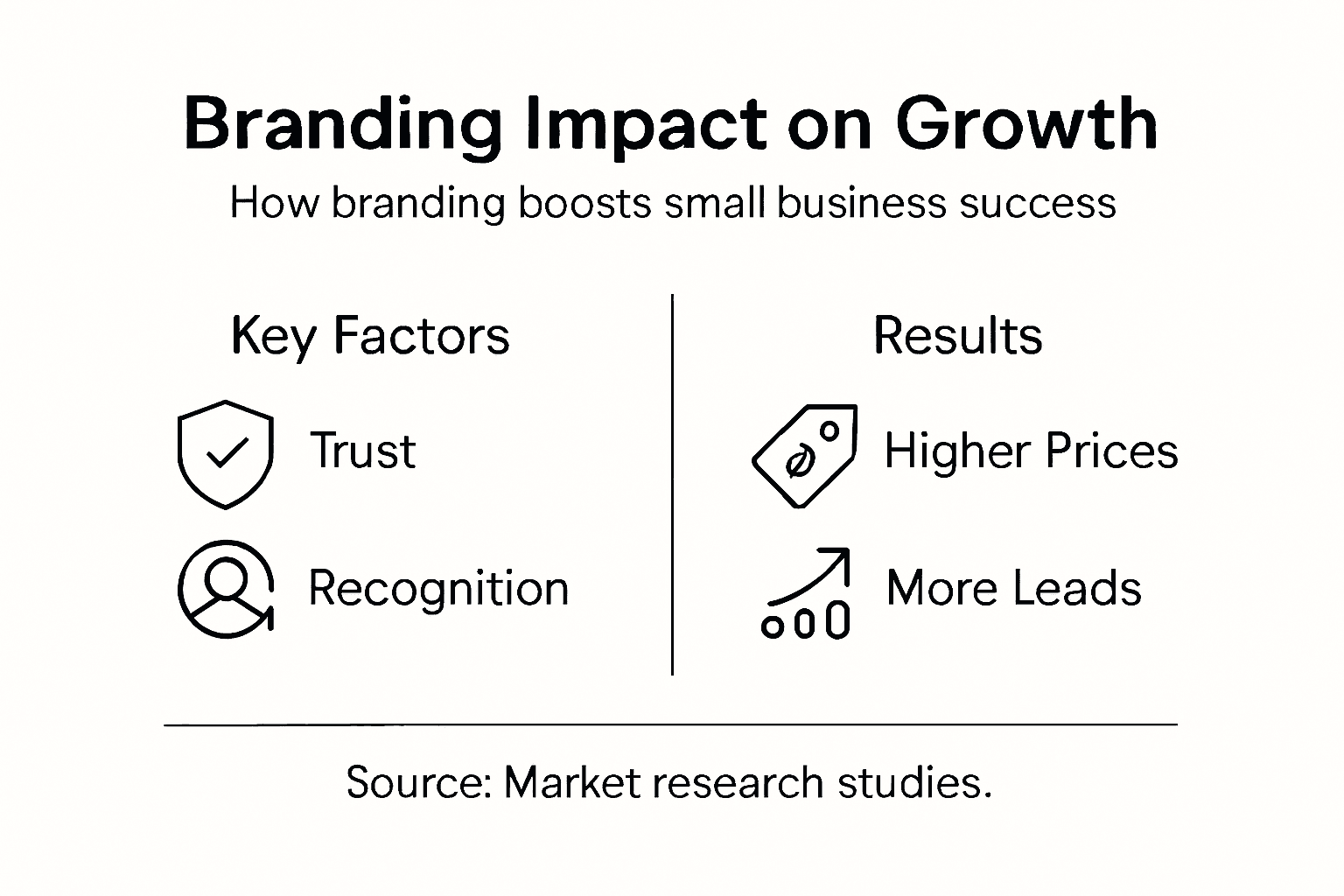
Strong brands command premium pricing. A contractor with a polished website, professional portfolio, consistent messaging, and solid reputation can charge 15-25 percent more than an equally skilled competitor with no brand presence. Clients perceive premium brands as worth the premium price. They’re not comparing you to the cheapest option. They’re evaluating quality, reliability, and professionalism.
Strategic branding investments strengthen customer loyalty and directly contribute to revenue growth and firm valuation. When you invest in your brand, you’re not spending money on vanity. You’re building an asset that generates measurable returns through higher prices, repeat business, and referrals that cost you nothing.
Branded businesses grow faster because they generate more leads and convert at higher rates. A service business with strong branding needs fewer marketing dollars to reach the same revenue targets. That marketing efficiency directly improves profitability. You spend less to acquire customers who trust you before they even call.
Strong brands significantly enhance profitability metrics and long-term financial value across markets. The financial data shows this isn’t theoretical. Companies investing strategically in branding see measurable improvements in profit margins and valuation. For small service businesses, this translates to higher take-home income and a more valuable business if you ever sell.
Consider the numbers. A plumbing service charging 15 percent more per job due to strong branding generates substantially more revenue on the same number of jobs. Add in 20 percent more leads from referrals and improved conversion rates, and you’ve doubled your business value without doubling your effort. That’s the financial power of professional branding.
Pro tip: Document your current pricing, lead volume, and conversion rate, then track these metrics quarterly after implementing professional branding improvements to quantify your exact financial return on investment.
Common Branding Mistakes to Avoid
Most branding failures don’t happen because businesses tried too hard. They happen because businesses don’t fully appreciate how important branding is or they approach it haphazardly. Avoiding these common pitfalls protects your investment and accelerates your results.
The biggest mistake is inconsistent branding. Your logo looks different on your website than on your business cards. Your messaging shifts depending on which platform you’re using. Your colors change from your truck to your social media. This inconsistency confuses potential clients and weakens your brand memory. Every touchpoint should reinforce the same identity. A contractor who presents differently online, on the phone, and in person sends mixed signals about professionalism.
Another critical error is lacking a clear brand strategy. Many small businesses invest in a logo but never define who they’re trying to reach or what makes them different. Without strategy, branding becomes decoration. You need to know your target audience, understand what they value, and communicate specifically to them. Common branding mistakes include ignoring your target audience entirely and overcomplicating your brand message with industry jargon or too many value propositions.
Businesses often underestimate the importance of brand strategy altogether. Strategic branding appreciation is critical for brand effectiveness. When you don’t invest thoughtfully in branding, you guarantee mediocre results. You’re essentially hoping clients find you by accident rather than building a system where they seek you out.
Ignoring the need to evolve is another trap. Your brand isn’t static. Markets change. Competitors emerge. Client preferences shift. A brand that looked modern five years ago might look dated today. This doesn’t mean constantly reinventing yourself. It means periodically evaluating whether your brand still resonates and making thoughtful updates when needed.
Finally, many businesses treat branding as a one-time project rather than an ongoing effort. You build a brand once and then neglect it. Strong branding requires consistent maintenance, regular quality delivery, and continued communication. Treat it as a system you manage continuously, not a task you check off.
Here is a summary of common branding mistakes and practical ways to prevent them:
| Mistake | Why It Harms Business | Preventive Action |
|---|---|---|
| Inconsistent branding | Confuses potential clients | Use a unified brand guide |
| No clear brand strategy | Fails to attract target audience | Define audience and core message |
| Neglecting brand updates | Appears outdated to clients | Review brand elements annually |
| Treating branding as one-time | Loses effectiveness over time | Schedule regular brand check-ins |
Pro tip: Conduct a branding audit every six months by checking consistency across your website, social media, email signature, business cards, and in-person materials, then document any inconsistencies you find and fix them immediately.
Unlock the Full Potential of Your Professional Branding Today
Struggling to build a consistent and trustworthy professional brand that truly connects with your local customers and grows your business? The article highlights key challenges like inconsistent messaging, lack of clear strategy, and limited online presence that stop many small businesses from standing out in crowded markets. If you want to transform these pain points into strengths by developing a cohesive brand voice, strong local recognition, and digital reach, you need a partner who understands these specific needs.
At ibrand.media, we specialize in helping small to medium-sized businesses like yours craft and maintain strong professional brands through tailored digital marketing services. From SEO optimization that boosts your local visibility to mobile-friendly web design and engaging social media management, we ensure your brand remains consistent and attracts loyal customers. Take the next step now by exploring insights and proven strategies on our Uncategorized | Ibrandmedia page and discover how our customized plans can bring your professional branding to life. Don’t wait another day to build the trust and loyalty every small business deserves. Visit ibrand.media to start your journey today.
Frequently Asked Questions
What are the main benefits of professional branding for small businesses?
Professional branding helps small businesses establish a recognizable identity, build trust with customers, and differentiate themselves from competitors. It can lead to increased customer loyalty, the ability to charge premium prices, and enhanced overall market value.
How can professional branding impact customer loyalty?
Professional branding creates consistency and trust in customer experiences. When customers repeatedly encounter a reliable and professional brand, they develop emotional attachments, leading to repeat business and recommendations.
What elements should be included in a professional branding strategy?
A professional branding strategy should include visual identity (logo, color palette), brand voice (communication style), reputational management (customer reviews), and a cohesive online presence across all platforms.
Is it necessary to hire a professional agency for branding?
No, small businesses can begin building their brand with strategic planning and consistency without hiring an expensive agency. Starting small and maintaining consistency is key to effective professional branding.
Recommended
- What Is Branding – Why It Shapes Small Business Success | Ibrandmedia
- Why Branding Matters for Small Businesses Today | Ibrandmedia
- Creating a Brand for Small Businesses: A 2025 Step-by-Step Guide | Ibrandmedia
- Creating a Brand for Small Businesses: A 2025 Step-by-Step Guide | Ibrandmedia
- Content Personalization Explained: Boosting Authenticity Online
Recent Comments