
Most American service businesses underestimate the power of consistent branding when reaching new customers. Studies show that businesses with a strong brand presence can see up to 23 percent higher revenue than those with unclear messaging. For small business owners in fields like HVAC and plumbing, getting noticed in your local market starts with building an identity that customers instantly trust. Learn practical tactics to create a memorable brand without stretching your budget.
Table of Contents
- Defining Branding And Its Core Elements
- Different Types Of Branding Strategies
- Branding’s Role In Local Visibility
- How Branding Drives Sales And Growth
- Common Branding Pitfalls To Avoid
Key Takeaways
| Point | Details |
|---|---|
| Importance of Branding | Branding is not just a logo; it’s about creating a distinct identity that resonates with customers and differentiates your business. |
| Choosing the Right Strategy | Select a branding strategy that aligns with your values and audience for effective market presence. |
| Local Visibility | Develop a brand narrative that reflects community values to enhance local recognition and trust. |
| Avoiding Common Pitfalls | Maintain consistent messaging and avoid imitating competitors to foster a strong brand identity. |
Defining Branding and Its Core Elements
Branding represents far more than just a logo or visual design – it’s the strategic process of creating a unique identity that distinguishes a business in a competitive marketplace. Organizational branding activities combine visual elements, messaging, and reputation to generate emotional connections with potential customers.
At its core, branding encompasses several critical components. These include visual identity (logos, color schemes, typography), consistent messaging, brand personality, and the overall experience a customer has with your business. Small businesses often overlook these elements, but they are fundamental to creating a memorable and trustworthy presence. Effective branding helps potential customers understand what makes your business unique and why they should choose you over competitors.
The most successful brands develop a comprehensive strategy that aligns their visual design, communication tone, and core values. For service-based businesses like HVAC or plumbing companies, this means creating a professional image that communicates reliability, expertise, and customer care. Your brand should tell a story that resonates with your target audience and differentiates you in a crowded market.
Pro tip: Start by defining your business’s core values and unique selling propositions, then consistently reflect these in every aspect of your visual and verbal communication.
Different Types of Branding Strategies
Small businesses can leverage multiple branding approaches to establish their unique market presence. Branding strategies synthesize various elements like visual identity, online presence, and reputation to create emotional connections with potential customers. Understanding these different strategies helps businesses craft a more targeted and effective brand approach.
The primary branding strategies include product branding, corporate branding, service branding, and personal branding. Product branding focuses on creating a distinct identity for specific goods, emphasizing unique features and benefits. Corporate branding takes a broader approach, representing the entire organization’s values and reputation. Service branding – particularly crucial for small businesses like HVAC or plumbing companies – centers on building trust, reliability, and expertise through consistent customer interactions.
For local service-based businesses, public sector branding principles offer valuable insights. These strategies emphasize stakeholder engagement, communication consistency, and building trust through transparent, authentic interactions. Small businesses can adapt these approaches by focusing on clear communication, demonstrating community commitment, and creating a brand that resonates with local customers’ specific needs and expectations.
Pro tip: Choose a branding strategy that aligns closely with your business’s core values and target audience, and consistently apply it across all customer touchpoints.
Here is a quick comparison of major branding strategies commonly used by small businesses:
| Strategy Type | Primary Focus | Best For | Unique Advantages |
|---|---|---|---|
| Product Branding | Individual products | Retail and consumer brands | Highlights product features |
| Corporate Branding | Entire organization | Multi-service companies | Builds company reputation |
| Service Branding | Customer interaction | Service-based small businesses | Promotes reliability, expertise |
| Personal Branding | Individual identity | Entrepreneurs, consultants | Builds personal trust |
Branding’s Role in Local Visibility
Local visibility is critical for small businesses, and strategic branding plays a pivotal role in capturing community attention. Effective branding by local organizations enhances public awareness by creating clear, consistent visual identities that build trust and recognition within the community.

Local branding goes beyond simple logo design – it’s about creating a narrative that resonates with your specific geographic market. For service-based businesses like HVAC companies or local plumbers, this means developing a brand identity that reflects community values, demonstrates local expertise, and establishes credibility. Potential customers are more likely to choose businesses that feel connected to their neighborhood and understand local needs.
The key components of successful local branding include consistent visual messaging, authentic storytelling, and demonstrating genuine community involvement. This might involve participating in local events, supporting community initiatives, or highlighting your team’s local roots. By positioning your brand as a trusted neighborhood resource, you create an emotional connection that transcends traditional marketing approaches and transforms your business from a service provider into a community partner.
Pro tip: Develop a localized brand story that highlights your business’s unique connection to the community, using local landmarks, shared experiences, or neighborhood-specific challenges as storytelling anchors.
How Branding Drives Sales and Growth
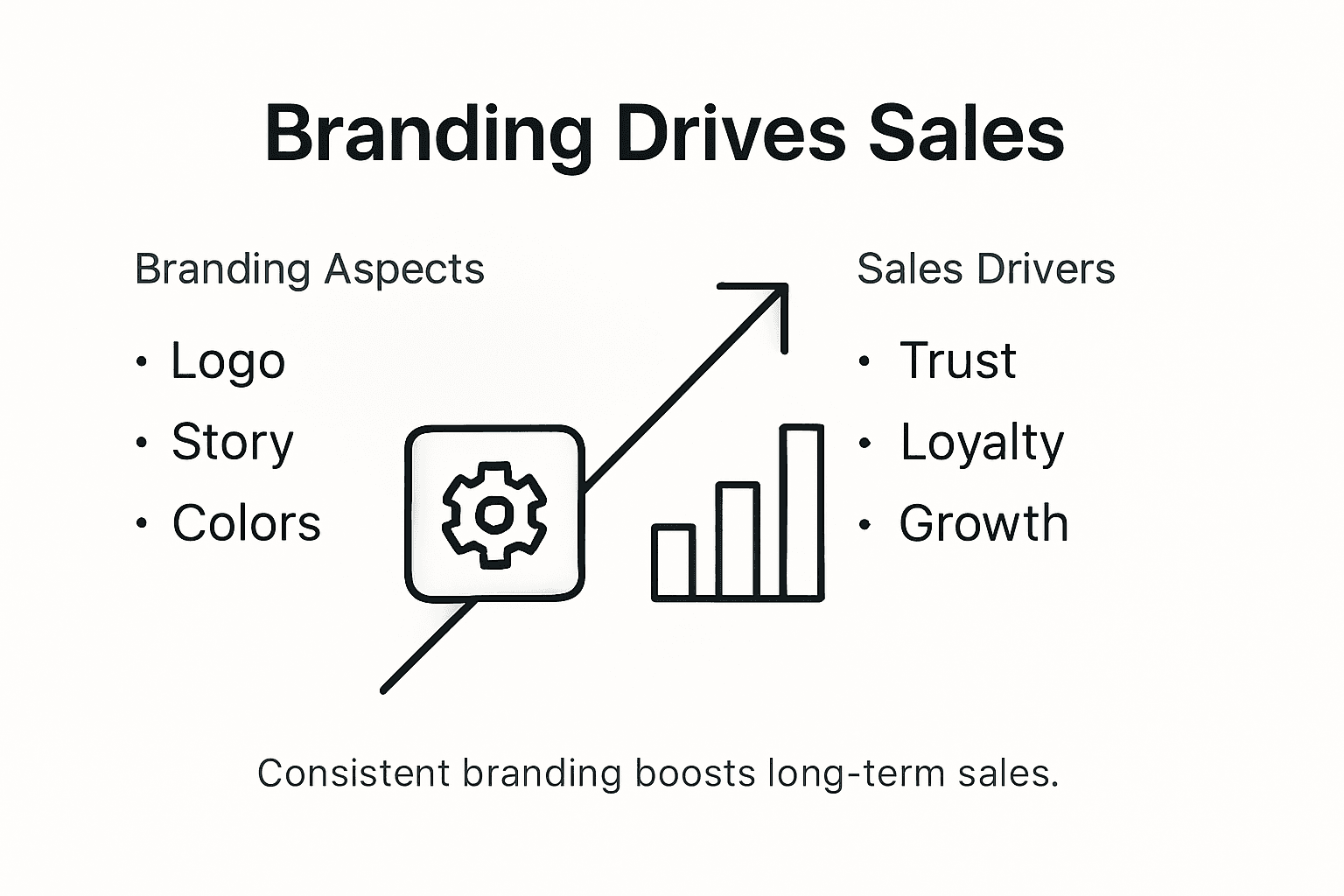
Branding is not just about aesthetics – it’s a powerful driver of business growth and sales potential. Corporate brand identity directly influences sales revenue by strengthening customer loyalty and creating emotional connections that transform casual consumers into committed brand advocates.
Sales growth through branding occurs by differentiating your business in a crowded marketplace. For small service businesses like HVAC companies or local plumbers, this means developing a unique value proposition that goes beyond price. Customers are more likely to choose businesses that communicate professionalism, reliability, and understanding of their specific needs. A strong brand signals competence and builds trust before a customer even makes direct contact.
Marketing research confirms that strategic branding efforts generate competitive advantages by increasing market share and fostering customer loyalty. This process involves consistent messaging, visual identity, and demonstrating your business’s unique value. By investing in a cohesive brand strategy, small businesses can create perception of higher value, justify premium pricing, and attract customers who are looking for quality over the cheapest option.
Pro tip: Develop a brand narrative that clearly communicates your unique value proposition and differentiates you from competitors, focusing on solving specific customer pain points.
Common Branding Pitfalls to Avoid
Small businesses often stumble into critical branding mistakes that can undermine their market potential. Frequent branding errors include inconsistent messaging and neglecting core brand values, which can quickly erode customer trust and confuse potential clients about what your business truly represents.
Brand inconsistency represents one of the most dangerous pitfalls for small businesses. This occurs when visual design, communication tone, and core messaging lack alignment. For service-based businesses like HVAC companies or local plumbers, inconsistent branding can make your business appear unprofessional and unreliable. Potential customers want to see a coherent, trustworthy image that demonstrates competence and attention to detail – something that scattered or contradictory branding fundamentally undermines.
Another significant branding mistake is mimicking competitors instead of developing a unique identity. Small businesses should focus on articulating their distinctive value proposition, highlighting what genuinely sets them apart. This means understanding your specific target audience, communicating your unique strengths, and creating a brand narrative that resonates authentically with local customers. Generic, copycat branding signals a lack of creativity and fails to establish the emotional connection that drives customer loyalty.
Pro tip: Conduct a comprehensive brand audit every six months to ensure your messaging, visual identity, and customer experience remain consistent and aligned with your core business values.
Below is a summary of common branding pitfalls and their impact on small businesses:
| Branding Pitfall | Typical Cause | Business Impact | Prevention Tip |
|---|---|---|---|
| Inconsistency | Mixed visuals/messaging | Erodes trust, confuses customers | Align all brand elements |
| Copycat Branding | Imitating competitors | Lacks uniqueness, fails to stand out | Focus on your strengths |
| Ignoring Brand Values | Unclear core values | Weak identity, poor customer loyalty | Define and communicate values |
Elevate Your Small Business Brand for Lasting Growth
Building a strong brand identity that communicates your values clearly and consistently can transform your small business into a trusted community partner. The challenges of inconsistent messaging and lack of a unique voice discussed in the article highlight how crucial it is to create a cohesive brand story that connects emotionally with your local audience. At ibrand.media, we specialize in helping small businesses like yours overcome these hurdles by crafting tailored digital marketing strategies centered on your brand’s strengths.
Ready to stand out and build customer loyalty that drives real sales growth? Explore our range of services, including SEO optimization, local marketing, and mobile-friendly web design, all designed to establish a professional, reliable brand presence. Visit Uncategorized | Ibrandmedia for insights and start transforming your brand today. Take the first step toward elevating your business by contacting us at ibrand.media and secure your future with a personalized plan crafted to highlight what makes your business unique.
Frequently Asked Questions
What is the importance of branding for small businesses?
Branding is crucial for small businesses as it establishes a unique identity, builds trust with potential customers, and differentiates the business in a competitive marketplace.
How can effective branding drive sales and growth for a small business?
Effective branding drives sales and growth by creating emotional connections with customers, enhancing customer loyalty, and communicating a unique value proposition that sets the business apart from competitors.
What are common branding strategies that small businesses can use?
Common branding strategies for small businesses include product branding, corporate branding, service branding, and personal branding. These strategies help in communicating the values and uniqueness of the business to its target audience.
What pitfalls should small businesses avoid when developing their brand?
Small businesses should avoid branding pitfalls such as inconsistency in messaging and visuals, copying competitors instead of establishing their unique identity, and neglecting core brand values, as these can erode customer trust and weaken brand identity.
Recommended
- Creating a Brand for Small Businesses: A 2025 Step-by-Step Guide | Ibrandmedia
- Creating a Brand for Small Businesses: A 2025 Step-by-Step Guide | Ibrandmedia
- 7 Essential Branding Tips for Small Business Success | Ibrandmedia
- Understanding the Importance of Branding Online | Ibrandmedia
- blog | siift | Branding for New Businesses: A 2025 Guide for Beginners
- 7 Branding Mistakes to Avoid for Business Growth
Recent Comments