
Over half of American small businesses say they struggle to attract enough quality leads each month. For local service providers trying to stand out without a big online footprint, finding affordable ways to connect with potential customers can make all the difference. This guide shares clear steps for building an effective lead generation system that helps American businesses increase sales and earn more consistent revenue through simple, actionable strategies.
Table of Contents
- Step 1: Identify Target Audience And Goals
- Step 2: Build Optimized Landing Pages
- Step 3: Implement Multichannel Lead Capture
- Step 4: Nurture Leads With Follow-Up Automation
- Step 5: Analyze Results And Refine Strategies
Quick Summary
| Key Takeaway | Explanation |
|---|---|
| 1. Understand Your Target Audience | Analyze customer demographics and behavior to create detailed audience personas for targeted marketing. |
| 2. Optimize Landing Pages Effectively | Design landing pages that focus on a single goal, with a clear call to action and optimized for performance. |
| 3. Utilize Multichannel Lead Capture | Engage potential customers across various platforms and channels to maximize your reach and opportunities. |
| 4. Automate Lead Nurturing Follow-Up | Implement automated communication workflows to maintain personalized engagement and prevent leads from falling through the cracks. |
| 5. Continuously Analyze Results | Regularly review and adjust your marketing strategies based on key performance indicators to enhance lead generation efforts. |
Step 1: Identify target audience and goals
Successful lead generation begins with understanding precisely who will most benefit from your products or services. By creating detailed audience personas, you can strategically target your marketing efforts and dramatically improve conversion rates.
To effectively identify your target audience, start by analyzing your current customer base and gathering comprehensive demographic information. Research shows that understanding audience behaviors helps businesses tailor communications more precisely. Consider key characteristics like age, income level, professional background, geographic location, and specific challenges your potential customers face. Use tools like customer surveys, website analytics, and market research to build accurate profiles that reveal not just basic demographics but also deeper motivations and pain points.
Next, translate these audience insights into clear marketing goals that align with their specific needs. Determine measurable objectives such as increasing website traffic, generating qualified leads, or improving conversion rates. Each goal should be specific, trackable, and directly connected to your audience’s preferences. Target audience communication strategies emphasize the importance of understanding audience knowledge levels and communication preferences to maximize engagement.
Pro tip: Create a living document of your target audience personas that you update quarterly to ensure your marketing strategies remain current and responsive to changing customer dynamics.
Here is a summary of key tools and techniques for identifying and understanding your target audience:
| Technique | Key Benefit | Example Tool |
|---|---|---|
| Customer Surveys | Reveals customer motivations and needs | SurveyMonkey |
| Website Analytics | Tracks visitor demographics and behavior | Google Analytics |
| Market Research | Identifies industry trends and preferences | Statista |
| Social Listening | Discovers real-time audience opinions | Brandwatch |
Step 2: Build optimized landing pages
Building an effective landing page is a critical step in transforming website visitors into potential leads. These specialized web pages serve as powerful tools to capture audience attention and drive specific marketing actions.
Landing pages designed for marketing campaigns must remove distractions and focus visitors on a single, compelling goal. Start by crafting a clear headline that immediately communicates your unique value proposition. Incorporate persuasive content that highlights the key benefits of your offer, using concise language and visually appealing design elements. Strategically place a prominent call to action that stands out and guides visitors toward the desired conversion.
Technical optimization is equally important for landing page success. Website optimization techniques emphasize the need for fast loading speeds, mobile responsiveness, and seamless user experience. Integrate social proof elements like customer testimonials, case studies, or trust badges to build credibility. Ensure your page design is clean, professional, and aligned with your brand identity. Implement tracking tools to monitor visitor behavior and continuously refine your landing page performance.

Pro tip: A/B test different landing page elements like headlines, images, and call to action buttons to incrementally improve your conversion rates and understand what resonates most with your target audience.
Step 3: Implement multichannel lead capture
Multichannel lead capture is a powerful strategy to expand your business reach and create multiple opportunities for potential customers to engage with your brand. By diversifying your lead generation approach, you can capture prospects across different platforms and communication channels.
Multichannel marketing strategies require a comprehensive approach that integrates various digital and offline touchpoints. Begin by identifying the most relevant channels for your target audience, which might include social media platforms, email marketing, website contact forms, LinkedIn networking, professional events, and targeted advertising. Each channel should have a consistent brand message while being tailored to its specific audience interactions. For example, your LinkedIn approach might be more professional and detailed, while your Instagram strategy could be more visual and casual.
Effective multichannel lead capture goes beyond simply being present on multiple platforms. Customer interaction methods demand strategic integration and data synchronization. Implement customer relationship management (CRM) software to track interactions across different channels, ensuring you can follow up consistently and personalize communication. Create unique value propositions for each channel, design channel specific lead magnets, and develop a systematic approach to nurturing leads from initial contact through conversion.
Pro tip: Create a centralized tracking system that consolidates lead data from all channels, allowing you to analyze which platforms generate the most qualified leads and optimize your marketing resources accordingly.
Step 4: Nurture leads with follow-up automation
Lead nurturing through automated follow-up systems transforms potential customer interactions from sporadic contact to strategic relationship building. This approach ensures no promising lead falls through the cracks by maintaining consistent and personalized communication.
Marketing automation platforms enable businesses to create intelligent communication workflows that track and respond to lead behaviors automatically. Design a series of targeted email sequences that deliver value at each stage of the customer journey. Start by segmenting your leads based on their interests, engagement levels, and demographic information. Develop content that addresses specific pain points and progressively moves leads closer to making a purchase decision. Use triggers like website visits, download interactions, or email opens to initiate personalized follow-up sequences that feel timely and relevant.
Follow-up automation strategies require careful orchestration of communication touchpoints. Implement a CRM system that allows dynamic content personalization and tracks lead interactions across multiple channels. Create automated workflows that adapt based on lead responses, sending increasingly targeted content as prospects show more interest. Monitor key metrics such as email open rates, click through rates, and conversion progression to continuously refine your automation strategy.
Pro tip: Test and iterate your automation workflows regularly, using a small percentage of leads to experiment with different messaging approaches and timing intervals to maximize engagement and conversion rates.
Compare common lead nurturing automation methods and their main advantages:
| Automation Method | Benefit | Best Used For |
|---|---|---|
| Drip Email Campaigns | Delivers ongoing content automatically | Lead education |
| Behavior-Based Triggers | Sends messages based on actions | Personalization |
| Dynamic Segmentation | Adapts messages to profiles | Improving relevance |
| Multi-Channel Sequences | Engages leads via multiple platforms | Increasing touchpoints |
Step 5: Analyze results and refine strategies
Successful lead generation demands continuous evaluation and strategic adaptation. By systematically analyzing your marketing performance, you can transform raw data into actionable insights that drive business growth and optimize your lead capture efforts.
Performance measurement techniques help businesses move beyond surface level metrics to understand the deeper dynamics of their marketing strategies. Begin by identifying key performance indicators that directly reflect your lead generation goals such as conversion rates, cost per lead, lead quality scores, and engagement metrics. Use advanced analytics tools to track these indicators across different channels and campaigns. Compare the performance of various marketing initiatives to understand which strategies generate the most qualified leads and provide the highest return on investment.
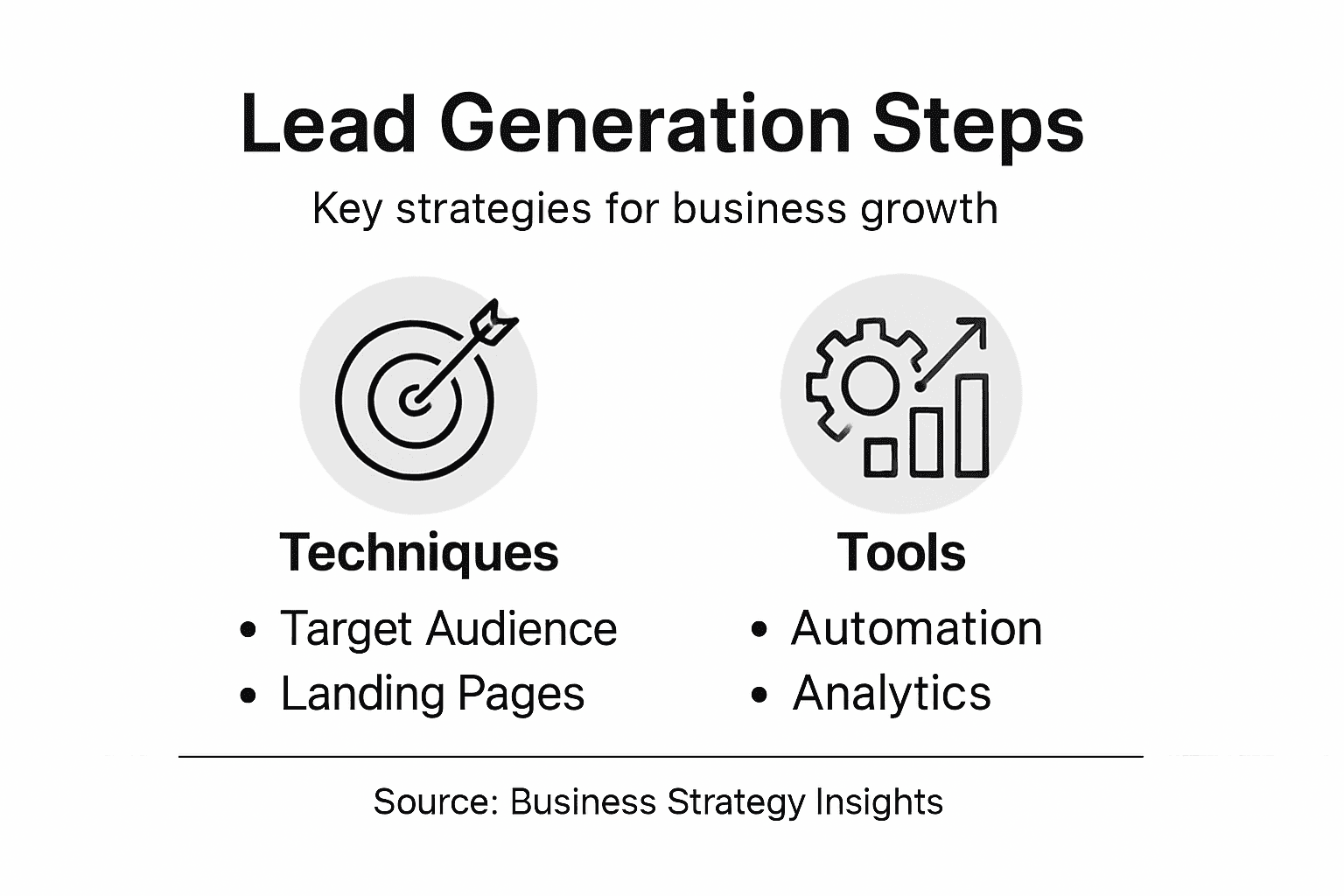
Marketing strategy evaluation requires a nuanced approach that considers the broader context of your business lifecycle. Regularly conduct comprehensive reviews of your lead generation tactics, examining not just quantitative metrics but also qualitative factors like lead quality, customer feedback, and market trends. Create a systematic process for reviewing and adjusting your strategies quarterly, allowing for rapid adaptation to changing market conditions. Look for patterns in successful lead interactions and use those insights to refine your targeting, messaging, and overall marketing approach.
Pro tip: Implement a quarterly review process that involves cross functional team discussions, ensuring that insights from sales, marketing, and customer service teams are integrated into your lead generation strategy refinement.
Drive Your Business Growth with Proven Lead Generation Solutions
If you want to overcome the challenges of identifying your target audience, optimizing landing pages, and nurturing leads through automation, our team at ibrand.media is ready to help you succeed. This article highlights key pain points like converting visitors into leads and implementing multichannel strategies—all areas where expert guidance can make a real difference. Take control of your marketing efforts by partnering with professionals who understand how to turn insights into actionable results.
Explore tailored digital marketing services designed specifically for small to medium-sized businesses on our Uncategorized | Ibrandmedia page. We focus on SEO optimization, web design, social media management, and real-time performance tracking that align with your growth goals. Visit our main site today to start crafting a personalized plan that boosts your online presence, drives quality leads, and accelerates your sales growth. Don’t wait—your next customer is just a campaign away.
Frequently Asked Questions
What steps should I take to identify my target audience for lead generation?
To identify your target audience, analyze your current customer base and gather demographic information. Utilize customer surveys and website analytics to build audience personas that reflect their motivations and challenges.
How can I create an optimized landing page for lead generation?
To create an effective landing page, craft a compelling headline and focus on a single call to action. Ensure the page is visually appealing, loads quickly, and is mobile-friendly to improve user experience and increase conversions.
What are some effective multichannel lead capture strategies?
Effective multichannel lead capture involves using various platforms such as social media, email marketing, and website contact forms to engage with potential customers. Tailor your messaging for each channel to ensure it resonates with its specific audience.
How do I nurture leads using follow-up automation?
You can nurture leads by setting up automated email sequences that deliver targeted content based on lead behavior. Segment your leads and create personalized communication strategies to keep them engaged throughout their customer journey.
What metrics should I analyze to measure the success of my lead generation strategies?
Focus on key performance indicators such as conversion rates, cost per lead, and engagement metrics to assess your strategies’ effectiveness. Regularly review and adjust your tactics based on the data to optimize your lead generation efforts.
Recent Comments