
Most American small business websites lose over half their mobile visitors if pages take more than three seconds to load. Imagine how many potential customers exit before even seeing what local plumbers or HVAC experts offer. For service providers worldwide, website speed is now a deciding factor for customer trust, search ranking, and sales. This guide reveals why slow performance hurts your business and how simple fixes can drive real results.
Table of Contents
- What Website Speed Means For Your Business
- Top Causes Behind A Slow Website
- How Slow Performance Impacts Seo & Sales
- Mobile Friendliness And Speed Issues
- Fixing And Preventing Website Slowdowns
Key Takeaways
| Point | Details |
|---|---|
| Website speed is crucial for business success | Slow loading times can lead to significant revenue loss and reduced customer trust. |
| Mobile optimization is essential | More users access websites via mobile; slower mobile sites result in higher abandonment rates. |
| Regular performance audits can enhance website speed | Conduct monthly or quarterly audits to identify and fix speed bottlenecks effectively. |
| Optimizing images and minimizing code improves user experience | Strategies like image compression and reducing unnecessary plugins can lead to faster load times and better customer engagement. |
What Website Speed Means for Your Business
Website speed represents more than just how quickly your web pages load – it’s a critical metric directly impacting your business’s online success. When potential customers visit your site, they expect an instantaneous, smooth experience. A slow website can quickly transform an interested prospect into a lost opportunity.
In practical terms, website speed measures how rapidly your web pages render content and become fully interactive for visitors. This performance metric encompasses multiple technical elements – page load time, time to first byte, rendering speed, and overall responsiveness. Small business performance metrics reveal that websites taking longer than 3 seconds to load can lose up to 53% of potential mobile visitors, translating into significant revenue losses.
For service-based businesses like HVAC contractors or plumbers, website speed directly influences customer trust and conversion rates. Your website serves as a digital storefront, and just like a physical shop with a difficult-to-open door, a slow website creates unnecessary friction. Potential customers will quickly abandon sites that don’t provide instant information, searching instead for competitors who offer faster, more responsive online experiences.
Pro tip: Conduct a monthly website speed audit using free tools to identify and resolve performance bottlenecks before they impact your customer acquisition efforts.
Top Causes Behind a Slow Website
Website performance issues stem from multiple technical and design factors that can dramatically impact your online business effectiveness. Extensive performance research reveals several critical bottlenecks that routinely plague small business websites, transforming what should be a smooth digital experience into a frustrating user journey.
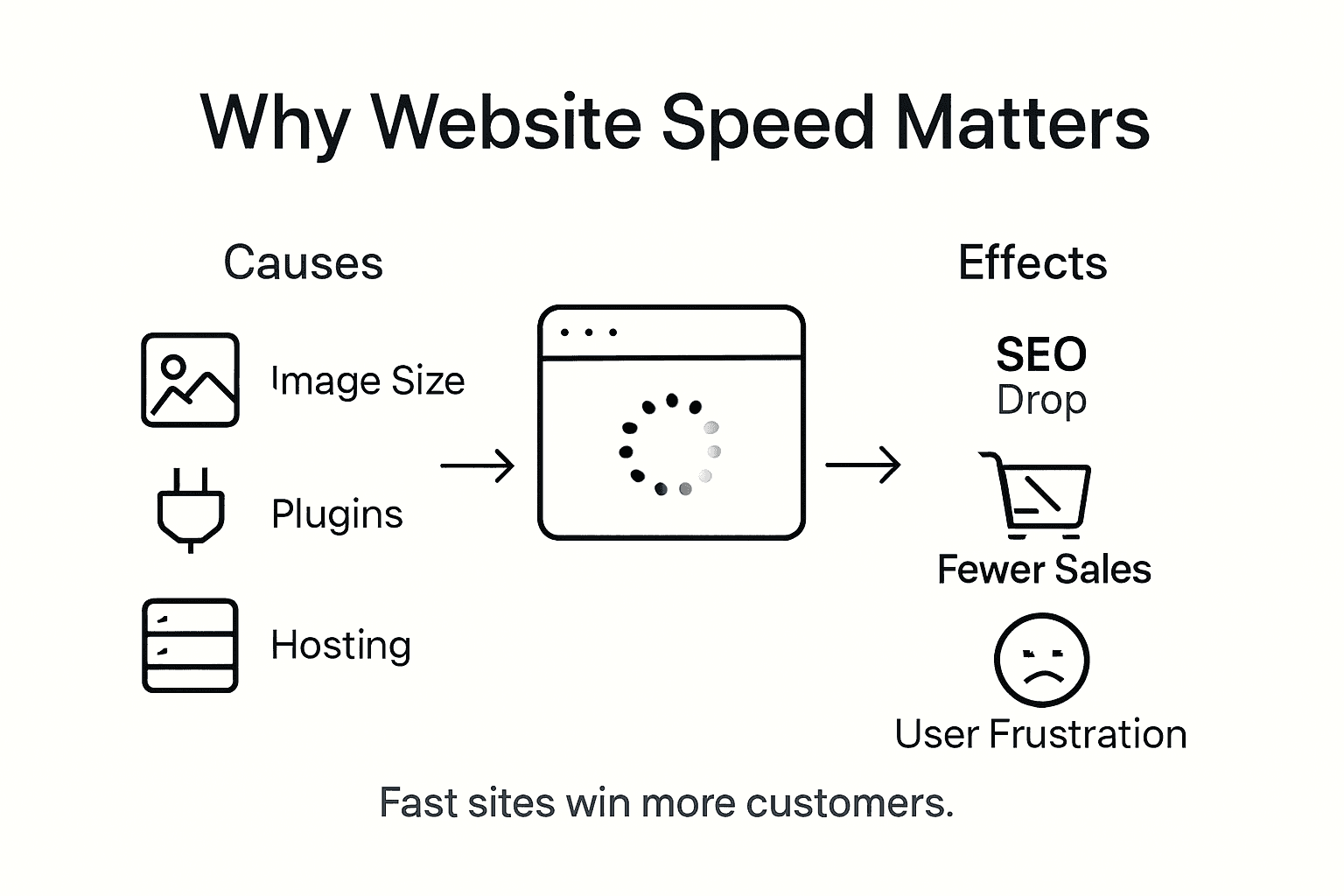
The most common culprits behind slow website performance include oversized image files, excessive plugins, and unoptimized code structures. Large media files can exponentially increase page load times, with high-resolution images often consuming significant bandwidth. Similarly, websites cluttered with unnecessary widgets and plugins create additional HTTP requests that slow down rendering speeds. Many small business owners inadvertently compromise their site’s performance by installing multiple plugins without considering their collective impact.

Server-side issues also play a substantial role in website sluggishness. Outdated server infrastructure, insufficient hosting resources, and poorly configured caching mechanisms can create significant performance bottlenecks. Small service businesses like plumbers or HVAC contractors might not realize that their basic hosting package could be restricting their website’s potential speed and responsiveness. These technical constraints can mean the difference between capturing a potential customer’s interest and losing them to a competitor with a faster, more responsive website.
Here’s a comparison of the main technical and business impacts of common website speed issues:
| Cause of Slowdown | Technical Effect | Business Impact |
|---|---|---|
| Oversized images | Increases page load time | Higher bounce rates |
| Excessive plugins | Extra HTTP requests, slower code | Lower conversion rates |
| Outdated hosting | Reduced server responsiveness | Loss of potential revenue |
| Unoptimized code | Slow rendering and processing | Poor customer experience |
Pro tip: Conduct a quarterly performance audit using free online speed testing tools to systematically identify and eliminate website performance bottlenecks before they impact your customer acquisition efforts.
How Slow Performance Impacts SEO & Sales
Website performance is not just a technical metric – it’s the digital lifeline of your business. Comprehensive research on digital performance reveals that website speed directly influences both search engine rankings and potential customer conversions. Search engines like Google prioritize fast-loading websites, understanding that user experience is paramount in the digital marketplace.
From an SEO perspective, slow websites suffer multiple critical disadvantages. Search engines allocate a specific crawl budget to each website, and sluggish performance means search bots spend less time indexing your content. Increased bounce rates signal to search algorithms that your site provides poor user experience, which can dramatically lower your search rankings. This means potential customers might never discover your business simply because your website loads too slowly.
The financial implications are equally stark. Even a single second of delay can translate into substantial revenue loss. Research indicates that a one-second loading delay can reduce conversions by approximately 7%, which for small service businesses like plumbing or HVAC companies could mean thousands of dollars in lost potential income. Visitors expect near-instantaneous access to information, and they will quickly abandon sites that don’t meet their speed expectations, often navigating directly to faster-loading competitor websites.
Pro tip: Regularly monitor your website’s loading speed using free tools like Google PageSpeed Insights to identify and address performance bottlenecks before they impact your search rankings and sales potential.
Mobile Friendliness and Speed Issues
Mobile optimization has become critical for small businesses, with smartphone users now representing the majority of internet traffic. Research on mobile usability challenges highlights the complex landscape of mobile web performance, revealing unique constraints that dramatically impact user experience. Small screen sizes, limited connectivity, and reduced processing power create significant obstacles for websites seeking to deliver seamless mobile experiences.
The technical challenges of mobile optimization extend far beyond simple screen resizing. Websites must dynamically adapt their content, compress images, minimize code, and streamline navigation to function effectively on mobile devices. Responsive design is no longer optional – it’s a fundamental requirement for businesses wanting to capture and retain mobile audiences. Each second of loading delay exponentially increases the likelihood that potential customers will abandon the site, searching for faster, more accessible alternatives.
For service-based businesses like plumbers, HVAC technicians, or local contractors, mobile performance can make or break customer acquisition. Mobile users typically seek immediate information – location details, service offerings, contact methods – and expect instantaneous access. A poorly optimized mobile site not only frustrates potential customers but also signals unprofessionalism. Search engines penalize websites with subpar mobile experiences, further reducing visibility and potential customer reach. The message is clear: mobile optimization is not a luxury, but a critical business survival strategy in the digital marketplace.
Pro tip: Conduct monthly mobile performance audits using free tools like Google Mobile-Friendly Test to identify and resolve optimization issues before they impact your customer engagement.
Fixing and Preventing Website Slowdowns
Addressing website performance requires a systematic approach to diagnosing and resolving speed issues. Comprehensive performance optimization strategies reveal multiple critical areas where small businesses can significantly improve their website speed. Performance bottlenecks often stem from technical elements that can be methodically identified and resolved through targeted interventions.
The most common culprits behind slow websites include oversized image files, bloated code, excessive plugins, and inefficient hosting infrastructure. Website owners should focus on strategic optimization techniques such as image compression, using modern file formats like WebP, minimizing JavaScript execution, and implementing browser caching. Technical solutions like deferring non-critical script loading and leveraging content delivery networks can dramatically reduce page load times without requiring extensive technical expertise.
Small service businesses like plumbers, HVAC technicians, and local contractors must recognize that website performance directly impacts customer perception and conversion rates. A slow website signals unprofessionalism and can drive potential clients to competitors with faster, more responsive online platforms. Regular performance audits using free tools like Google PageSpeed Insights provide actionable insights into specific areas requiring optimization. By proactively addressing technical performance issues, businesses can create smoother user experiences that translate into increased customer engagement and potential revenue.
Pro tip: Schedule quarterly website performance reviews and set up automated monitoring to catch and resolve speed issues before they negatively impact your online business presence.
Below is a summary of key website optimization strategies and the benefits they deliver:
| Optimization Method | Outcome for Visitors | Business Benefit |
|---|---|---|
| Image compression | Faster image display | Retain impatient users |
| Browser caching | Quicker repeat visits | Improved engagement |
| Minimized JavaScript | Faster page interactivity | Higher customer satisfaction |
| Mobile-responsive design | Smooth mobile browsing | Broader customer reach |
Speed Up Your Website to Boost SEO and Sales Today
Struggling with slow website performance that hurts your search rankings and drives customers away is a real challenge faced by many small businesses. This article highlights how issues like oversized images, excessive plugins, and outdated hosting can damage your online presence and sales revenue. Understanding these pain points is the first step toward delivering a seamless, fast-loading user experience that keeps visitors engaged and ready to convert.
Experience the power of tailored digital marketing solutions designed specifically for businesses seeking to improve website speed, enhance SEO, and maximize online sales. At Ibrandmedia, we specialize in delivering mobile-friendly web design, performance optimization, and ongoing support that together create fast, efficient websites that win more customers.

Ready to transform slow-loading pages into rapid customer magnets Try our expert team who will identify your unique bottlenecks and provide affordable, tailored strategies that drive quick, measurable results. Don’t let website delays cost you sales Visit our Uncategorized | Ibrandmedia page now to discover how you can start improving today and reach out through Ibrandmedia for a custom plan that puts your business ahead of the competition.
Frequently Asked Questions
What are the main causes of a slow website?
Common causes of a slow website include oversized image files, excessive use of plugins, outdated hosting infrastructure, and unoptimized code. These factors can dramatically increase page load times and negatively impact user experience.
How does website speed affect SEO?
Website speed directly impacts SEO because search engines like Google prioritize fast-loading sites. Slow websites can lead to higher bounce rates, which signals poor user experience to search algorithms, potentially lowering your search rankings and visibility.
How can slow website performance impact sales?
Even a one-second delay in page loading can reduce conversions by approximately 7%. Slow websites frustrate users, leading them to abandon your site and seek faster alternatives, resulting in potential revenue loss for your business.
What steps can I take to improve my website’s speed?
To improve your website’s speed, you can compress images, minimize the use of plugins, optimize your code, implement browser caching, and consider using a content delivery network (CDN). Regular performance audits can also help identify and fix bottlenecks.
Recommended
- Complete Guide to Why Website Speed Matters | Ibrandmedia
- Website Speed: Impact on Small Business Growth | Ibrandmedia
- How to Optimize Website Speed: Faster Sites for Small Businesses 2025 | Ibrandmedia
- 8 Essential Website Optimization Tips for Small Businesses | Ibrandmedia
- Why an AI Website Chatbot Is Essential — and How ChatPirate Helps — ChatPirate
- Top 10 Fastest VPNs for Internet Connection in 2024
Recent Comments