
Every American business owner knows that simply having a great product or service rarely guarantees steady growth in today’s crowded market. With countless competitors fighting for attention online, success depends on targeted digital marketing strategies rather than relying on word of mouth alone. This guide helps you cut through digital marketing myths and explains how small businesses can make smart, affordable choices to boost visibility and attract qualified customers.
Table of Contents
- Digital Marketing Defined And Common Myths
- Types Of Digital Marketing And Key Strategies
- How Digital Marketing Drives Visibility And Sales
- Measurable Results And Real-Time Campaign Tracking
- Costs, ROI, And Risks Of Digital Marketing
- Comparing Digital Marketing With Traditional Advertising
Key Takeaways
| Point | Details |
|---|---|
| Understanding Myths | A great product does not sell itself; effective marketing is essential for attracting customers. |
| Strategic Digital Approaches | Employ targeted marketing strategies to maximize engagement and conversion rates. |
| Measurable Insights | Utilize real-time analytics to track performance and make data-driven decisions. |
| Cost Efficiency Over Tradition | Digital marketing offers lower costs and more flexibility compared to traditional methods, making it ideal for small businesses. |
Digital marketing defined and common myths
Digital marketing represents a powerful approach to reaching and engaging customers through electronic channels and internet technologies. Digital marketing strategies encompass multiple online platforms including websites, search engines, social media, email, and video content to connect with potential customers dynamically and interactively.
Understanding digital marketing requires dispelling several persistent myths that can hinder small business growth. Contrary to popular belief, a great product does not automatically sell itself. Effective marketing plays a crucial role in attracting and converting potential customers, especially in today’s competitive digital landscape.
Key myths about digital marketing include:
- Myth 1: More marketing spending always guarantees more customers
- Myth 2: Digital marketing works instantly for every business
- Myth 3: A good product doesn’t need marketing
- Myth 4: Digital marketing is only for large corporations
Realistic digital marketing demands strategic targeting and consistent effort. Targeted marketing approaches focus on qualified leads rather than broad, expensive campaigns. Small businesses can achieve significant results by understanding their specific audience and crafting personalized digital engagement strategies.
Pro tip: Start with a focused digital marketing plan targeting your specific customer demographic, and be prepared to adjust your strategy based on real performance data.
Types of digital marketing and key strategies
Digital marketing offers a diverse array of strategic approaches for businesses to connect with their target audience across multiple online channels. Digital marketing strategies encompass several key types designed to maximize online visibility and customer engagement.
The primary types of digital marketing include:
- Search Engine Marketing (SEM): Paid advertising strategies to increase website visibility in search results
- Social Media Marketing: Leveraging platforms like Facebook, Instagram, and LinkedIn to build brand awareness
- Email Marketing: Direct communication with potential and existing customers
- Content Marketing: Creating valuable, relevant content to attract and retain a specific audience
- Affiliate Marketing: Partnering with other businesses to promote products
- Influencer Marketing: Collaborating with online personalities to reach broader audiences
Search Engine Optimization (SEO) remains a critical component of digital marketing. Online marketing channels require strategic optimization to ensure businesses can effectively reach their target demographic. This involves carefully crafting website content, utilizing relevant keywords, and building credible online connections.
Here’s a comparison of digital marketing types and their primary business uses:
| Digital Marketing Type | Main Business Goal | Typical Channel Example |
|---|---|---|
| Search Engine Marketing | Boost immediate leads | Google Ads platform |
| Social Media Marketing | Grow brand awareness | Instagram or Facebook |
| Email Marketing | Retain loyal customers | Email automation tool |
| Content Marketing | Educate and attract visitors | Company blog |
| Affiliate Marketing | Expand sales through partners | Affiliate networks |
| Influencer Marketing | Access new audience segments | Sponsored social posts |
Successful digital marketing demands a comprehensive approach that combines multiple strategies tailored to specific business goals. Small businesses can benefit most by identifying their unique audience and selecting the most appropriate digital channels for their specific market segment.
Pro tip: Start by analyzing your target audience’s online behavior and choose 2-3 digital marketing channels that align most closely with their preferences and online engagement patterns.
How digital marketing drives visibility and sales
Digital marketing channels provide businesses with powerful tools to increase online visibility and directly drive sales growth. By leveraging internet-based platforms, companies can reach potential customers precisely where they spend most of their time – online platforms like social media, search engines, and email networks.
Key mechanisms for driving visibility and sales include:
- Targeted Advertising: Reach specific demographics with precision
- Real-Time Analytics: Track campaign performance instantly
- Personalized Content: Create tailored messaging for different audience segments
- Cost-Effective Strategies: Maximize marketing budgets with measurable results
- Global Reach: Connect with potential customers beyond traditional geographic limits
Digital marketing transforms traditional sales approaches by enabling businesses to interact with customers through data-driven, interactive strategies. Consumer behavior insights demonstrate that personalized, targeted communications significantly increase conversion rates compared to generic marketing methods.

Successful digital marketing requires a strategic approach that combines multiple channels, continuously adapts to audience responses, and focuses on creating genuine value for potential customers. Small businesses can compete effectively by understanding their unique market segment and crafting highly targeted digital experiences.
Pro tip: Focus on creating valuable, relevant content that solves your target audience’s specific problems, rather than simply pushing sales messages.
Measurable results and real-time campaign tracking
Digital marketing measurement tools provide unprecedented transparency and accountability for businesses seeking to understand their marketing performance. Unlike traditional marketing methods, digital platforms offer instant insights into campaign effectiveness, enabling companies to make data-driven decisions quickly and efficiently.
Key metrics businesses can track in real-time include:
- Click-Through Rates (CTR): Measure audience engagement with ads
- Conversion Rates: Track how many visitors complete desired actions
- Cost Per Acquisition (CPA): Calculate exact spending for each new customer
- Website Traffic Sources: Understand where customers originate
- Audience Demographics: Analyze precise customer characteristics
Real-Time Analytics transform marketing from a guessing game to a precise science. Campaign performance tracking allows businesses to adjust strategies instantly, optimizing marketing budgets and maximizing return on investment. This dynamic approach means companies can pivot quickly, eliminating ineffective tactics and doubling down on what works.
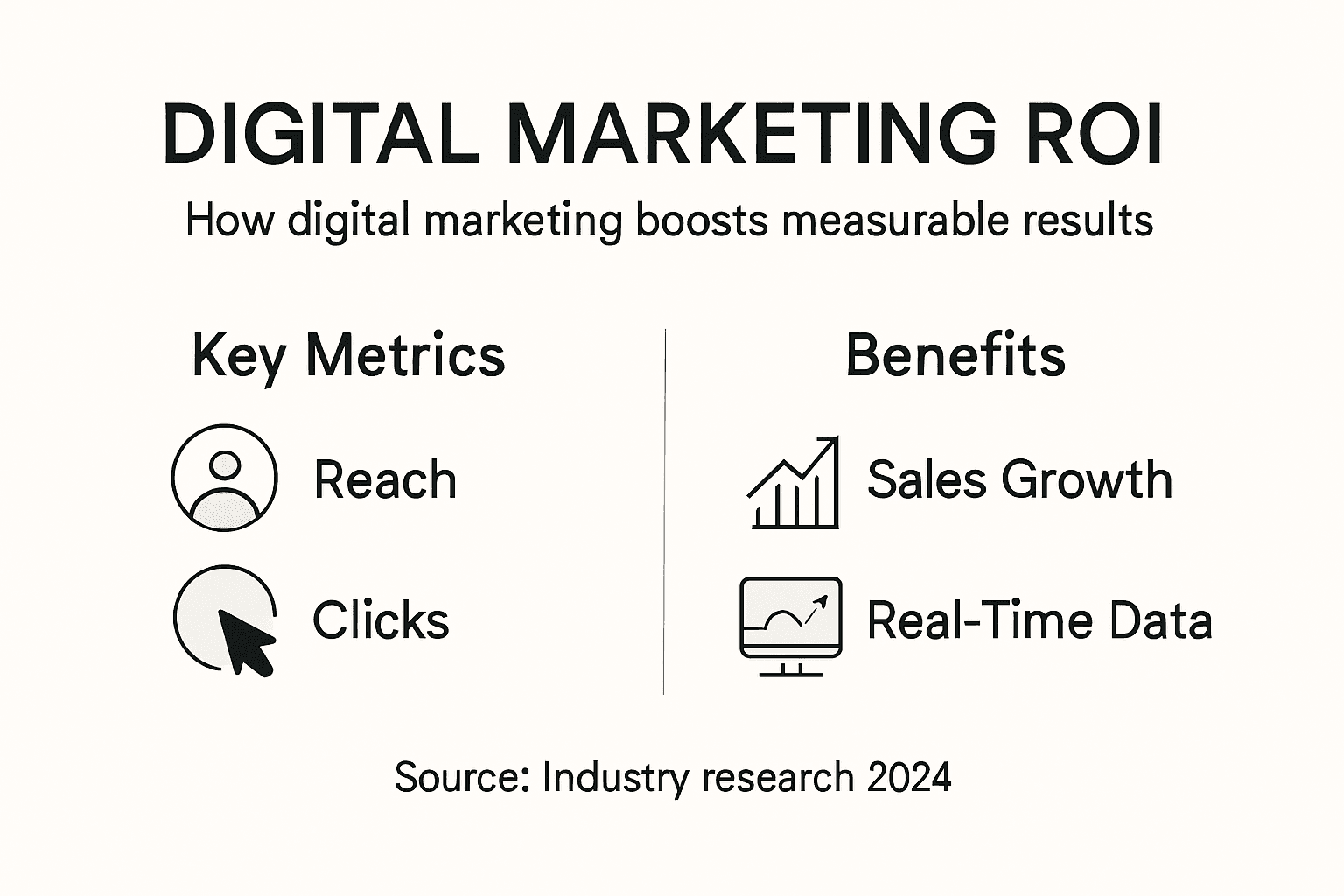
Small businesses particularly benefit from these granular insights. By understanding exactly how each marketing dollar performs, they can compete effectively with larger competitors, making strategic decisions based on concrete data rather than intuition or guesswork.
Pro tip: Set up conversion tracking and review your marketing analytics at least weekly, focusing on trends and patterns rather than daily fluctuations.
Costs, ROI, and risks of digital marketing
Digital marketing expenses represent a more flexible and cost-effective approach compared to traditional marketing channels. Small businesses can start with minimal budgets, scaling their investments as they see tangible results, which significantly reduces financial risk and allows for more strategic spending.
Key considerations for digital marketing costs and risks include:
- Budget Flexibility: Start small and incrementally increase spend
- Precise Targeting: Reduce wasted marketing dollars
- Real-Time Performance Tracking: Quickly adjust strategies
- Lower Entry Barriers: Minimal upfront investment required
- Scalable Campaign Management: Adapt spending to business growth
Potential risks in digital marketing require careful navigation. Marketing investment strategies must account for challenges such as rapidly changing platform algorithms, data privacy concerns, and potential ad fraud. Successful digital marketing demands continuous learning and adaptation to maintain effective campaign performance.
Return on Investment (ROI) in digital marketing can be substantially higher than traditional methods when businesses invest time in understanding their audience, crafting targeted messages, and consistently analyzing campaign data. Small businesses can level the playing field by leveraging cost-effective digital marketing tools that provide granular insights and performance metrics.
Pro tip: Allocate 10-15% of your initial marketing budget for testing and experimenting with different digital channels, using performance data to guide future investment decisions.
Comparing digital marketing with traditional advertising
Traditional marketing channels have long been the standard for business promotion, but digital marketing has dramatically transformed how companies connect with potential customers. While print, radio, and television advertisements offer broad reach, they lack the precision and interactivity that modern businesses require.
Key differences between digital and traditional marketing include:
- Cost Efficiency: Digital marketing typically requires lower investment
- Targeting Capabilities: Pinpoint specific audience demographics
- Performance Tracking: Real-time analytics versus delayed measurement
- Engagement Level: Interactive versus one-way communication
- Global Reach: Unlimited geographic potential at minimal additional cost
Two-Way Communication sets digital marketing apart. Advertising communication strategies now enable businesses to receive instant feedback, adapt campaigns quickly, and create more personalized consumer experiences. Traditional advertising remains a static, broadcast-style approach with limited interaction possibilities.
Below is a concise look at digital vs. traditional marketing differences for small businesses:
| Factor | Digital Marketing | Traditional Marketing |
|---|---|---|
| Cost Flexibility | Easily adjustable budgets | Fixed, often higher costs |
| Audience Precision | Detailed demographic targeting | General, broad targeting |
| Performance Feedback | Real-time analytics | Delayed, less specific data |
| Interaction Level | Two-way, interactive | One-way, static messaging |
| Global Reach | Worldwide, instant | Mainly local or regional |
Small businesses particularly benefit from digital marketing’s flexibility, as they can start with minimal budgets and scale strategies based on real-time performance data. The ability to precisely target potential customers and adjust campaigns instantaneously provides a significant competitive advantage over traditional marketing methods.
Pro tip: Create a hybrid marketing approach that leverages both digital and traditional channels to maximize overall marketing effectiveness and reach.
Elevate Your Business With Tailored Digital Marketing Solutions
Facing the challenge of boosting sales fast and standing out online requires more than just hope. The article highlights how strategic targeting, real-time tracking, and personalized content are essential to overcoming the myth that good products sell themselves. If your goal is to increase visibility while maximizing ROI through cost-effective, data-driven methods, you need a partner who understands those exact pain points and can deliver quick results.
Discover how Uncategorized | Ibrandmedia provides small to medium-sized businesses with expert SEO optimization, social media management, and real-time performance analytics designed to capture your audience precisely where they engage.
Ready to transform your digital marketing challenges into success stories? Visit ibrand.media today to get a personalized plan that fits your budget and goals. Take the first step now to boost your sales with targeted strategies that work.
Frequently Asked Questions
What are the key benefits of investing in digital marketing?
Investing in digital marketing enhances online visibility, drives sales growth, and allows businesses to engage with audiences through targeted and personalized strategies. It leverages platforms where potential customers spend most of their time, maximizing marketing effectiveness.
How does digital marketing improve customer engagement?
Digital marketing fosters two-way communication between businesses and consumers, allowing for personalized content that resonates with various audience segments. This interaction can significantly increase customer retention and satisfaction.
What types of digital marketing strategies should I consider?
Common digital marketing strategies include Search Engine Marketing (SEM), Social Media Marketing, Email Marketing, Content Marketing, Affiliate Marketing, and Influencer Marketing. Choosing the right mix depends on your specific audience and business goals.
How can I measure the success of my digital marketing efforts?
You can measure success using real-time analytics tools that track metrics such as Click-Through Rates (CTR), Conversion Rates, and Cost Per Acquisition (CPA). Regularly analyzing these data points allows for quick adjustments and improved campaign performance.
Recommended
- Digital Marketing for Retailers: Proven Strategies for 2025 | Ibrandmedia
- Top Benefits of Online Marketing for Small Businesses in 2025 | Ibrandmedia
- Digital Marketing for Retailers: Proven Strategies for 2025 | Ibrandmedia
- What Is Digital Marketing? A Simple Guide for Small Businesses (2025) | Ibrandmedia
Recent Comments