
Nearly 80 percent of american businesses say attracting the right customers is their biggest marketing challenge. In a world flooded with ads, people crave information they can trust instead of interruptive sales messages. Understanding inbound marketing gives you a way to meet customers where they are, building trust and driving real results by offering value from the very start.
Table of Contents
- Defining Inbound Marketing And Its Core Concepts
- Types Of Inbound Marketing Strategies
- Key Stages Of The Inbound Marketing Funnel
- Popular Tools And Techniques For Success
- Comparing Inbound Marketing With Outbound Methods
- Common Mistakes And How To Avoid Them
Key Takeaways
| Point | Details |
|---|---|
| Inbound Marketing Focus | Inbound marketing prioritizes creating valuable content that attracts potential customers, contrasting with disruptive outbound methods. |
| Key Components | Essential strategies include content creation, SEO optimization, social media engagement, and lead nurturing for effective audience connection. |
| Funnel Stages | The inbound marketing funnel comprises four stages: attract, convert, close, and delight, guiding potential customers through their journey. |
| Common Mistakes | Avoid pitfalls such as inconsistent content, neglecting SEO, and failing to personalize engagement to enhance inbound marketing success. |
Defining Inbound Marketing and Its Core Concepts
Inbound marketing represents a strategic approach that fundamentally transforms how businesses attract and engage potential customers. Unlike traditional outbound marketing methods that interrupt consumers with aggressive advertising, inbound marketing focuses on creating valuable, relevant content that naturally draws interested individuals toward your business. This approach is built on the principle of attracting customers through compelling content that addresses their specific needs and interests.
At its core, inbound marketing operates on a customer-centric philosophy that prioritizes providing genuine value over pushing sales messages. The strategy involves creating high-quality, informative content designed to solve problems, answer questions, and offer insights that potential customers are actively searching for online. By leveraging techniques like search engine optimization (SEO), content marketing, and strategic social media engagement, businesses can position themselves as trusted resources in their industry. This method allows companies to build meaningful relationships with prospects by demonstrating expertise and understanding their unique challenges.
The fundamental components of inbound marketing typically include:
- Content Creation: Developing blog posts, videos, podcasts, and resources that provide real value
- SEO Optimization: Ensuring content ranks highly in search engine results
- Social Media Engagement: Sharing and promoting content across relevant digital platforms
- Lead Nurturing: Converting interested visitors into potential customers through targeted, helpful interactions
By implementing a thoughtful inbound marketing strategy, businesses can transform their approach from interruption-based tactics to attraction-based relationship building. The goal is not just to generate leads, but to create meaningful connections that position your brand as a trusted advisor in your industry.
Types of Inbound Marketing Strategies
Inbound marketing encompasses a diverse range of strategic approaches designed to attract and engage potential customers through valuable, targeted content. Content marketing strategies form the backbone of effective inbound marketing, enabling businesses to create meaningful connections with their target audience by addressing their specific needs and challenges. These strategies go beyond traditional advertising by focusing on providing genuine value and building trust through informative, relevant content.
The primary types of inbound marketing strategies include:
- Blog Content Creation: Developing in-depth, informative articles that answer customer questions and showcase industry expertise
- Search Engine Optimization (SEO): Optimizing content to rank higher in search results and attract organic traffic
- Social Media Marketing: Sharing valuable content and engaging with potential customers across digital platforms
- Email Marketing: Nurturing leads through personalized, targeted email communications
- Video Content: Creating educational and entertaining video resources that provide real value to potential customers
Social media plays a crucial role in modern inbound marketing strategies. By developing targeted website leads, businesses can leverage platforms like LinkedIn, Facebook, and Instagram to share content, engage with potential customers, and build brand awareness. Each platform offers unique opportunities to connect with specific audience segments, allowing companies to tailor their approach and create more meaningful interactions.

Successful inbound marketing requires a holistic approach that combines multiple strategies. Small businesses can particularly benefit from affordable marketing tactics that maximize impact while minimizing cost. The key is to create a cohesive strategy that provides consistent, valuable content across multiple channels, ultimately building trust and positioning your brand as a helpful resource in your industry.
Key Stages of the Inbound Marketing Funnel
The inbound marketing funnel represents a strategic approach to guiding potential customers through a carefully designed journey from initial awareness to loyal advocacy. Getting more leads requires understanding these critical stages that transform casual website visitors into committed customers. The traditional inbound marketing funnel consists of four interconnected stages that systematically build trust and value for potential clients.
The four key stages of the inbound marketing funnel include:
- Attract: Drawing potential customers through valuable, relevant content
- Convert: Transforming visitors into leads by capturing their contact information
- Close: Nurturing leads and guiding them toward making a purchase
- Delight: Providing exceptional post-purchase support to create brand advocates
Each stage requires specific strategies and tactics to effectively move potential customers through the funnel. In the attract phase, businesses create compelling content that addresses customer pain points and generates interest. The conversion stage focuses on capturing lead information through strategic offers like downloadable resources, webinars, or email sign-ups. Closing involves targeted communication that demonstrates how your solution solves specific problems, while the delight stage ensures ongoing customer satisfaction and potential referrals.
Successful implementation of the inbound marketing funnel demands strategic customer engagement across multiple touchpoints. Small businesses can leverage these stages to create a more personalized marketing approach that builds genuine relationships rather than relying on intrusive traditional advertising methods. The ultimate goal is to create a seamless, value-driven experience that naturally guides potential customers toward becoming loyal brand supporters.
Popular Tools and Techniques for Success
Inbound marketing success hinges on leveraging powerful tools and strategic techniques that help businesses attract, engage, and convert potential customers. DIY digital marketing strategies empower small businesses to implement sophisticated marketing approaches without breaking the bank. The right combination of tools can transform how companies connect with their target audience and drive meaningful engagement.
Key inbound marketing tools and techniques include:
- Content Management Systems: WordPress for creating and managing blog content
- SEO Tools: Ahrefs for keyword research and backlink analysis
- Social Media Management: Platforms like Hootsuite for scheduling and tracking social content
- Email Marketing: Mailchimp for creating targeted email campaigns
- Analytics: Google Analytics for tracking website performance and user behavior
- Customer Relationship Management (CRM): HubSpot for managing lead interactions
Implementing these tools requires a strategic approach. Social media plays a critical role in developing comprehensive marketing strategies that extend beyond simple posting. Businesses must create content that resonates with their target audience, using analytics to refine their approach continuously. The most effective inbound marketing techniques focus on providing genuine value, addressing customer pain points, and creating meaningful connections that go far beyond traditional advertising methods.
Small businesses can maximize their marketing impact by developing a cohesive strategy that integrates multiple tools and techniques. The key is to create a seamless ecosystem of content, engagement, and analysis that allows for continuous improvement and more targeted marketing efforts. By combining the right tools with a deep understanding of customer needs, businesses can create a powerful inbound marketing approach that drives growth and builds lasting customer relationships.
Comparing Inbound Marketing With Outbound Methods
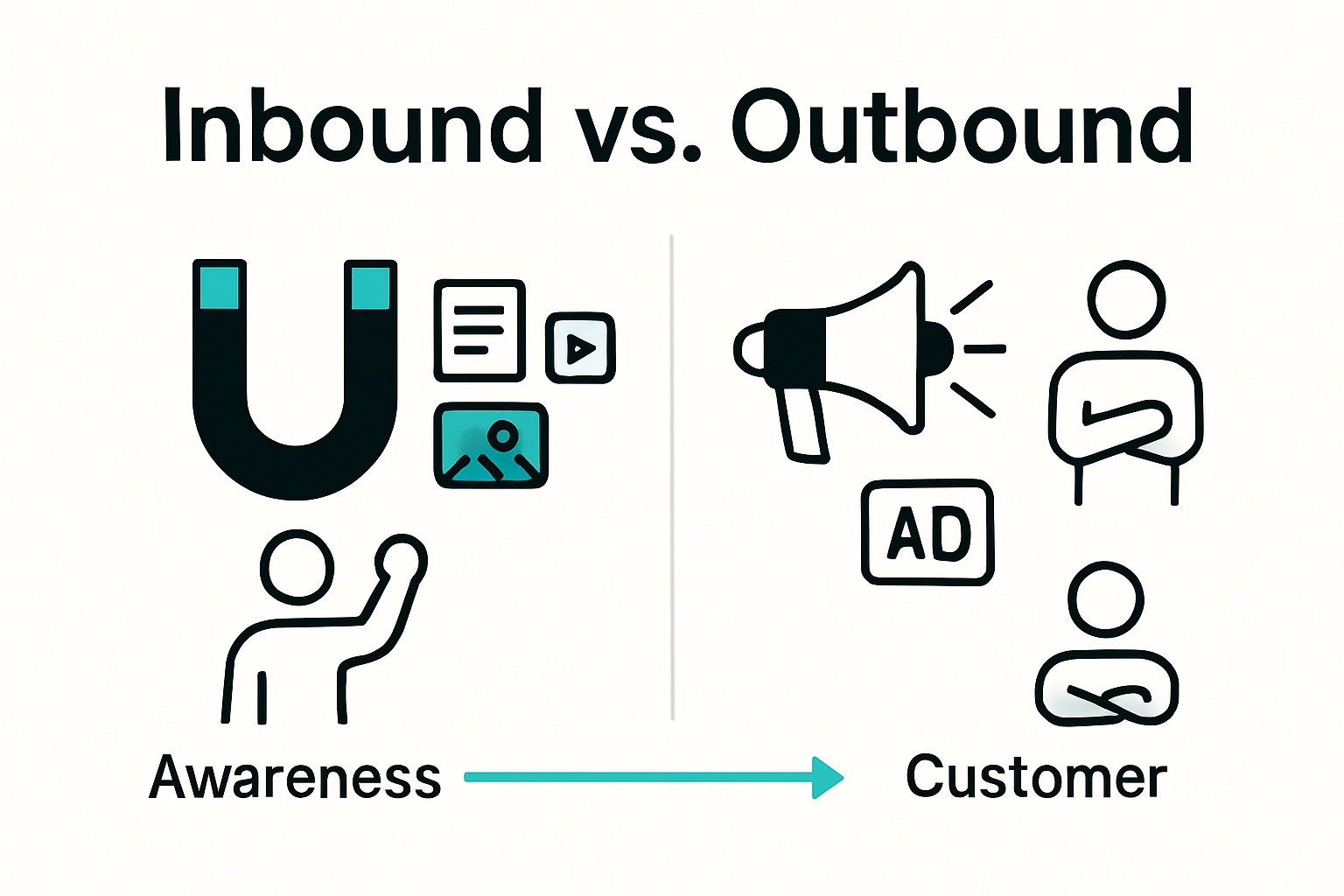
Marketing strategies have dramatically evolved, with inbound marketing emerging as a powerful alternative to traditional outbound approaches. Balancing online and offline marketing channels requires understanding the fundamental differences between these two distinct methodologies. While outbound marketing pushes messages to a broad audience, inbound marketing creates a more targeted, relationship-driven approach that resonates with modern consumers.
Key differences between inbound and outbound marketing include:
- Approach: Inbound attracts customers through valuable content, outbound interrupts with direct advertising
- Cost: Inbound marketing typically offers lower customer acquisition costs
- Engagement: Inbound methods create two-way conversations, outbound relies on one-way communication
- Targeting: Inbound precisely targets interested audiences, outbound uses broader, less focused methods
- Customer Relationship: Inbound builds trust and long-term connections, outbound focuses on immediate sales
Small businesses often find strategic marketing channels more effective when they prioritize inbound techniques. Traditional outbound methods like cold calling and print advertisements interrupt potential customers, whereas inbound marketing provides valuable content that customers actively seek out. This approach allows businesses to position themselves as trusted resources, creating meaningful connections that go beyond transactional interactions. The shift represents a fundamental change in marketing philosophy – moving from pushing messages to pulling interested customers through genuine value and relevant information.
Common Mistakes and How to Avoid Them
Inbound marketing requires a nuanced approach, with many small businesses falling into predictable traps that can derail their marketing efforts. Digital marketing basics provide a foundation, but understanding and avoiding common pitfalls is crucial for success. The most critical mistakes often stem from a lack of strategic planning and inconsistent execution.
The most prevalent inbound marketing mistakes include:
- Inconsistent Content Creation: Sporadic posting that fails to maintain audience engagement
- Neglecting SEO: Producing content without optimizing for search engine visibility
- Poorly Defined Target Audience: Creating generic content that doesn’t speak to specific customer needs
- Ignoring Analytics: Failing to track and analyze marketing performance
- Lack of Personalization: Treating all potential customers with a one-size-fits-all approach
- Overlooking Social Media Engagement: Treating social platforms as broadcast channels instead of interactive spaces
Small businesses can dramatically improve their inbound marketing by avoiding common digital marketing mistakes. The key is to develop a consistent, data-driven approach that focuses on creating genuine value for your target audience. This means investing time in understanding customer needs, creating high-quality content, and continuously refining your strategy based on performance metrics. Successful inbound marketing is not about perfect execution, but about continuous improvement and authentic customer connection.
Transform Your Inbound Marketing Strategy Into Real Growth
Understanding inbound marketing means recognizing the power of attracting customers through valuable content rather than interruptive ads. If you struggle with inconsistent content, low search visibility, or weak engagement, you are not alone. This article highlights common challenges like neglecting SEO and ignoring analytics—issues that can stall your progress and keep you from connecting with your ideal customers.
At ibrand.media we specialize in turning these pain points into opportunities. Our tailored digital marketing services deliver expert SEO optimization, strategic content planning, and social media management designed to build trust and drive qualified leads. We help small and medium-sized businesses implement the key inbound marketing concepts discussed in this article with quick, affordable results you can track in real time.
Explore how we can support your brand’s growth at Uncategorized | Ibrandmedia.
Don’t wait for your competitors to capture the leads you deserve. Visit ibrand.media today to start your journey toward stronger inbound marketing. Request a personalized plan or launch a campaign that puts your business in front of customers actively searching for solutions.
Frequently Asked Questions
What is inbound marketing?
Inbound marketing is a strategic approach that focuses on attracting potential customers through valuable content and experiences tailored to their interests, rather than pushing advertising at them.
What are the core components of inbound marketing?
The core components of inbound marketing include content creation, SEO optimization, social media engagement, and lead nurturing, all aimed at building relationships with potential customers.
How does the inbound marketing funnel work?
The inbound marketing funnel consists of four stages: Attract, Convert, Close, and Delight. Each stage is designed to guide potential customers from initial awareness to long-term loyalty through engaging and valuable interactions.
What are some common mistakes in inbound marketing?
Common mistakes in inbound marketing include inconsistent content creation, neglecting SEO, poorly defined target audiences, ignoring analytics, and lacking personalization in customer interactions.
Recent Comments