
Only about one in four American dental websites meet basic accessibility standards, leaving many patients with disabilities unable to find important care information online. Navigating these digital barriers can create real obstacles for people searching for dental services or answers to urgent questions. Understanding web accessibility is key for any American dental practice that aims to provide equal care and build trust with every patient, regardless of ability.
Table of Contents
- Defining Web Accessibility for Dental Practices
- Common Barriers Faced by Patients Online
- Legal Requirements for Dental Websites
- Best Practices for Accessible Dental Website Design
- Risks of Non-Compliance and Mitigation Strategies
Key Takeaways
| Point | Details |
|---|---|
| Web Accessibility Importance | Web accessibility ensures that dental practice websites are usable by individuals with disabilities, making healthcare information accessible to all. |
| Legal Compliance Necessity | Compliance with accessibility regulations like the ADA is mandatory for dental practices, with significant legal and financial risks associated with non-compliance. |
| Common Patient Barriers | Patients face numerous challenges online, such as technological discomfort and privacy concerns, which can hinder their access to dental services. |
| Best Practices | Implementing design standards based on WCAG 2.1 can enhance website accessibility, improving patient engagement and compliance. |
Defining Web Accessibility for Dental Practices
Web accessibility transforms digital experiences for patients with disabilities, ensuring every individual can seamlessly navigate dental practice websites regardless of their physical or cognitive abilities. At its core, web accessibility means designing online platforms that accommodate diverse user needs, enabling everyone to access critical healthcare information without barriers.
For dental practices, web accessibility involves implementing specific design strategies that make websites comprehensible and navigable for users with various disabilities. The American Dental Hygienists’ Association standards emphasize compliance with W3C guidelines, which cover accommodations for visual, auditory, physical, speech, cognitive, and neurological differences. These standards require thoughtful approaches like providing alternative text for images, ensuring keyboard navigation compatibility, and creating clear, structured content that screen readers can interpret.
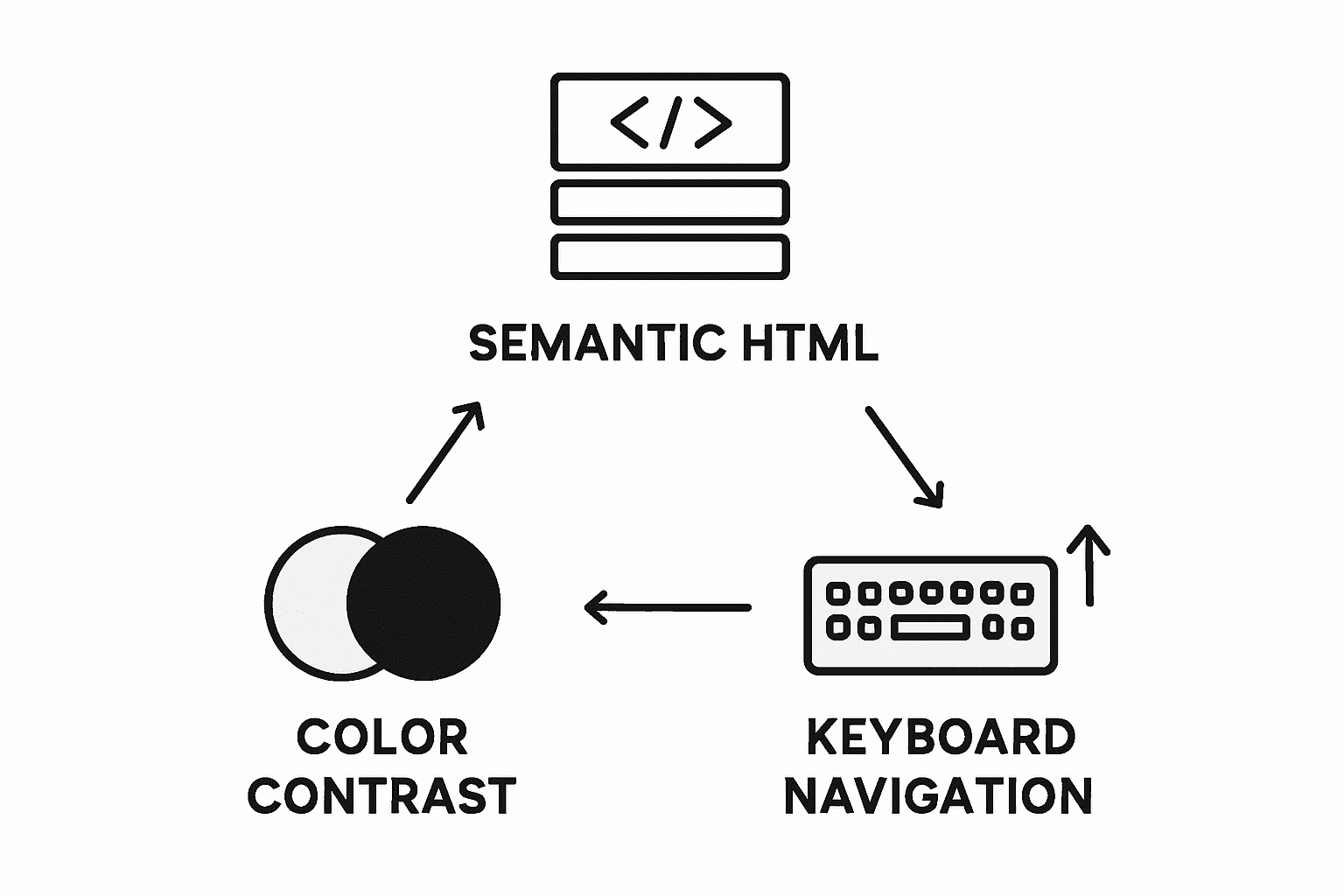
Key components of web accessibility in dental websites include semantic HTML structure, color contrast considerations, adaptable text sizing, and multimedia alternatives. Modern dental practices recognize that accessibility is not just a legal requirement but a fundamental aspect of patient communication. Inclusive design means creating digital spaces where information about services, appointment scheduling, patient education, and contact details are universally understandable.
Pro Tip for Digital Inclusivity: Conduct a quarterly accessibility audit of your dental website, using free online tools that simulate different user experiences and identify potential navigation or comprehension barriers for patients with disabilities.
Common Barriers Faced by Patients Online
Patients navigating online healthcare platforms encounter multiple obstacles that can significantly impede their ability to access critical medical information and services. These barriers range from technological challenges to psychological concerns that prevent seamless digital interactions with dental websites and health portals.
The national survey on patient portal adoption reveals several key challenges patients experience when engaging with online healthcare platforms. These include a pronounced preference for traditional in-person communication, limited perceived value of digital tools, technological discomfort, and substantial privacy and security apprehensions. Such barriers are particularly pronounced among older demographics and individuals with limited technological literacy.
Technological accessibility issues extend beyond simple navigation difficulties. The American Academy of Family Physicians highlights that many patients struggle with fundamental digital interactions due to limited internet access, language barriers, and varying levels of technological comfort. These challenges disproportionately impact vulnerable populations, including seniors, low-income communities, and individuals with disabilities who may find complex digital interfaces overwhelming or inaccessible.

Here is a summary of common barriers faced by patients using dental websites and their real-world impacts:
| Barrier Type | Typical Issue Example | Impact on Patients |
|---|---|---|
| Technological | Difficult navigation menus | Patients abandon site quickly |
| Language & Literacy | Complex or jargon-heavy content | Misunderstanding treatment information |
| Accessibility | No screen reader compatibility | Visually impaired patients excluded |
| Privacy & Security | Unclear data protection measures | Patients fear sharing sensitive details |
| Usability | Small fonts and low color contrast | Older adults struggle to read/content |
Pro Tip for Patient Digital Engagement: Design dental websites with simplified navigation, large readable text, high color contrast, and clear instructions to reduce technological barriers and create a more inclusive online experience for all patients.
Legal Requirements for Dental Websites
Web accessibility for dental practices is no longer optional—it is a critical legal requirement with significant implications for healthcare providers. Dental practices must navigate complex legal frameworks designed to ensure equal digital access for patients with disabilities, transforming their online platforms from mere marketing tools to inclusive communication channels.
The legal obligations under the Americans with Disabilities Act represent a fundamental shift in how dental websites must be designed and maintained. Non-compliance can result in potential legal claims, financial penalties, and damage to a practice’s professional reputation. These regulations mandate that digital platforms provide meaningful access to information for individuals with visual, auditory, motor, and cognitive disabilities.
Section 1557 of the Affordable Care Act further reinforces these accessibility requirements, stipulating that healthcare-related websites must provide technology interfaces that can be navigated and understood by individuals with diverse abilities. This legislation applies to dental practices receiving federal funding and extends comprehensive protections to patients who might otherwise be marginalized by complex or inaccessible digital interfaces. Key compliance areas include providing alternative text for images, ensuring keyboard navigation, maintaining sufficient color contrast, and offering multiple ways to consume critical healthcare information.
Pro Tip for Legal Compliance: Conduct an annual web accessibility audit with a certified digital accessibility expert to proactively identify and remediate potential legal vulnerabilities in your dental website’s design and functionality.
Best Practices for Accessible Dental Website Design
Accessible website design transforms digital experiences for patients with diverse abilities, creating inclusive online environments that welcome and support all users. For dental practices, this means developing websites that are not just visually appealing, but functionally adaptable to different user needs and technological capabilities.
Web Content Accessibility Guidelines (WCAG) 2.1 standards provide a comprehensive framework for creating truly accessible digital platforms. These guidelines emphasize critical design elements like text zooming capabilities, seamless keyboard navigation, and robust screen reader compatibility. Implementing these standards means dental websites must offer clear visual hierarchies, consistent navigation patterns, and multiple pathways for information consumption.
Technical accessibility goes beyond basic compliance. Dental practices should integrate features that accommodate diverse user experiences, such as adjustable font sizes, high-contrast color schemes, descriptive alternative text for images, and multimedia content with captions. Interactive elements like appointment scheduling forms and service information must be designed with clear instructions, logical tab sequences, and error prevention mechanisms that guide users effectively.
Pro Tip for Inclusive Design: Regularly test your dental website with actual users who have different abilities, using assistive technologies to identify and resolve potential navigation or comprehension barriers.
Risks of Non-Compliance and Mitigation Strategies
Dental practices operate in a complex digital landscape where website accessibility is not just an ethical consideration, but a critical legal and financial imperative. Non-compliance with accessibility regulations can expose practices to significant risks that extend far beyond potential legal penalties.
HIPAA regulations for website compliance represent a fundamental framework for protecting patient information and ensuring digital inclusivity. Practices that fail to implement comprehensive accessibility measures may face substantial financial penalties, potential lawsuits, reputational damage, and the loss of patient trust. These risks are particularly acute for dental offices that receive federal funding or serve populations with diverse technological capabilities.
The following table outlines key legal frameworks affecting dental website accessibility and the risks of non-compliance:
| Regulation | Applies To | Risk of Non-Compliance |
|---|---|---|
| Americans with Disabilities Act (ADA) | All dental practices | Lawsuits, legal penalties |
| Section 1557, Affordable Care Act | Practices with federal funding | Funding loss, regulatory action |
| HIPAA | Any handling patient information | Fines, loss of patient trust |
Mitigation strategies require a proactive and systematic approach to digital accessibility. Dental practices should develop a comprehensive accessibility audit process that includes regular website evaluations, user testing with individuals representing different abilities, and continuous staff training on inclusive digital design principles. This might involve implementing adaptive technologies, creating alternative navigation pathways, ensuring robust privacy protections, and developing clear communication mechanisms for patients with varying technological needs.
Pro Tip for Risk Management: Develop a formal accessibility compliance checklist that includes quarterly reviews, user feedback mechanisms, and documented remediation processes to demonstrate ongoing commitment to inclusive digital experiences.
Strengthen Your Dental Website with Inclusive Design and Reach More Patients
Web accessibility is essential for dental practices seeking to remove barriers and deliver seamless online experiences for all patients. This article highlights key challenges like technological navigation, legal risks, and compliance with standards such as the ADA and WCAG. If your dental website is not fully accessible, you risk losing patients and facing costly penalties. It is crucial to improve usability with clear navigation, readable content, and compatibility with assistive technologies.

Take control of your digital presence today by partnering with a digital marketing agency that understands the unique needs of dental websites. At ibrand.media, we provide tailored web design and optimization services that prioritize accessibility, ensuring your site is compliant, engaging, and easy for all patients to use. Learn how to enhance your site and protect your practice by visiting our Uncategorized | Ibrandmedia resource page for expert insights. Start transforming your online patient experience now and request a custom plan designed specifically for your dental practice.
Frequently Asked Questions
What is web accessibility for dental websites?
Web accessibility for dental websites refers to designing and maintaining online platforms that ensure all individuals, including those with disabilities, can navigate and access critical healthcare information without barriers.
Why is web accessibility important for dental practices?
Web accessibility is crucial for dental practices because it ensures compliance with legal requirements, enhances patient communication, and allows all patients, regardless of ability, to access essential services and information.
What are some key components of web accessibility?
Key components include semantic HTML structure, high color contrast, keyboard navigation compatibility, alternative text for images, and clear, structured content to assist screen readers in interpreting information.
How can dental practices ensure their websites are accessible?
Dental practices can ensure accessibility by conducting regular audits, testing the website with users of varying abilities, and adhering to the Web Content Accessibility Guidelines (WCAG) to create inclusive digital environments.
Recent Comments