
Most American small businesses see a direct link between higher Google rankings and increased sales. With over 90% of local service searches starting online, the battle for visibility can shape business growth. For plumbing and HVAC contractors, understanding what Google actually values is the first step toward earning real customer trust and steady leads. Discover why strong rankings go far beyond technical tricks and how they can genuinely transform your local business reputation.
Table of Contents
- What Google Rankings Really Mean For Business
- Major Types: Organic, Local, And Map Results
- How Google’s Algorithm Evaluates Websites
- Essential Ranking Factors For Small Businesses
- Common Ranking Myths And Costly Mistakes
- Effective Strategies To Improve Rankings
Key Takeaways
| Point | Details |
|---|---|
| Google Rankings Reflect Value | Google rankings assess a business’s online relevance, credibility, and user experience, significantly impacting customer acquisition. |
| Optimize for Result Types | Local businesses should focus on Organic, Local Pack, and Google Maps results to maximize visibility in different search environments. |
| Avoid Ranking Myths | Misunderstanding SEO can lead to costly mistakes; focus on genuine content quality and user engagement instead of outdated tactics. |
| Implement Holistic Strategies | Successful ranking improvement requires addressing content quality, technical performance, and meaningful user engagement consistently. |
What Google Rankings Really Mean for Business
Google rankings represent far more than just a position on a search results page – they are a comprehensive assessment of a business’s online relevance, credibility, and user experience. For local businesses, these rankings translate directly into customer acquisition and revenue potential. Google’s latest algorithm updates demonstrate that rankings now reflect whether a business genuinely delivers helpful, relevant experiences for potential customers.
At its core, Google rankings measure three critical dimensions: content quality, user engagement, and technical performance. Content quality means producing information that directly answers user queries. User engagement tracks how visitors interact with your website – do they stay and explore or quickly leave? Technical performance evaluates website speed, mobile responsiveness, and overall user experience. When these elements align effectively, businesses can dramatically improve their search visibility and attract more local customers.
Local service providers like HVAC contractors and plumbers have unique opportunities to leverage these ranking factors. By creating location-specific content, maintaining an updated Google Business Profile, and ensuring their website provides clear, actionable information, they can significantly boost their local search presence. The goal isn’t just to rank higher, but to become the most trusted and helpful resource for potential customers searching for specific services in their area.
Pro tip: Invest 30 minutes each month reviewing your Google Business Profile, updating service descriptions, and adding recent customer photos to improve your local search credibility.
Major Types: Organic, Local, and Map Results
Google search results are not a monolithic entity but a complex ecosystem comprised of three distinct result types: Organic Results, Local Results, and Google Maps Results. Detailed comparisons between these search types reveal that each serves a unique purpose and requires specialized optimization strategies. Organic results represent traditional website listings that rank based on content relevance and domain authority, while local and map results focus more on geographic proximity and immediate user intent.

The Local Pack represents the map-based business listings appearing at the top of search results, typically showcasing three businesses matching a user’s local query. These results are dynamically generated based on factors like proximity, relevance, and user ratings. Organic results, in contrast, provide more comprehensive information and support long-term brand authority. Local Pack rankings differ significantly from traditional organic listings, emphasizing immediate action-oriented information such as contact details, business hours, and customer reviews.
For small businesses like HVAC contractors and local service providers, understanding these result types is crucial. Google Maps results, powered by Google Business Profiles, prioritize businesses with complete profiles, consistent citations, and positive customer interactions. By strategically optimizing for each result type – creating high-quality website content, maintaining an updated Google Business Profile, and generating positive local reviews – businesses can maximize their visibility across different search environments.
Here’s a quick comparison of the three main Google result types and how local businesses benefit from each:
| Result Type | Primary Focus | Key Benefit for Local Business | Optimization Priority |
|---|---|---|---|
| Organic Results | Content and authority | Builds long-term trust and traffic | High-quality, in-depth website content |
| Local Pack | Proximity and relevance | Immediate visibility to searchers | Complete Google Business Profile |
| Google Maps Results | Location accuracy and interaction | Attracts mobile and map users | Accurate, consistent citations |
Pro tip: Develop a multi-channel optimization strategy that targets organic content depth, local profile completeness, and geographic relevance to improve performance across all Google search result types.
How Google’s Algorithm Evaluates Websites
Google’s algorithm is a sophisticated system that goes far beyond simple keyword matching, evaluating websites through hundreds of complex ranking signals. Modern search algorithms like RankBrain and BERT utilize artificial intelligence to understand context, user intent, and content quality with remarkable precision. The evaluation process considers multiple dimensions including content relevance, technical performance, user experience, and expertise signals.
The core ranking factors can be broken down into several key categories. Content Quality remains paramount, with Google examining the depth, accuracy, and usefulness of information. Technical Performance evaluates website speed, mobile responsiveness, and security protocols. User Experience tracks metrics like click-through rates, time spent on page, and bounce rates. Expertise, Authoritativeness, and Trustworthiness (E-A-T) have become increasingly critical, with the algorithm prioritizing content created by recognized experts in specific fields.
For local service businesses like plumbers and HVAC contractors, this means more than just having a website. The algorithm rewards businesses that provide comprehensive, locally relevant content, maintain consistent online citations, and demonstrate genuine expertise through detailed service descriptions, customer testimonials, and regularly updated information. Strategic optimization requires a holistic approach that addresses technical performance, content quality, and local relevance simultaneously.
Pro tip: Conduct a quarterly content and technical audit of your website, focusing on updating service information, improving page load speeds, and ensuring mobile responsiveness to align with Google’s evolving ranking criteria.
Essential Ranking Factors for Small Businesses
Comprehensive research on small business success factors reveals a strategic blueprint for digital visibility that goes far beyond traditional marketing approaches. For local businesses like plumbing and HVAC contractors, digital success hinges on a multifaceted approach combining online reputation, technical optimization, and localized content strategy. The most successful businesses understand that Google rankings are not just about keywords, but about delivering genuine value to potential customers.
The essential ranking factors break down into several critical categories. Local Citations and Consistency require businesses to maintain accurate, identical business information across all online platforms. Google Business Profile Optimization demands complete, regularly updated profiles with high-quality images, current service descriptions, and prompt customer interaction. Customer Reviews and Reputation Management have become increasingly important, with positive, authentic reviews significantly influencing search rankings and customer trust.
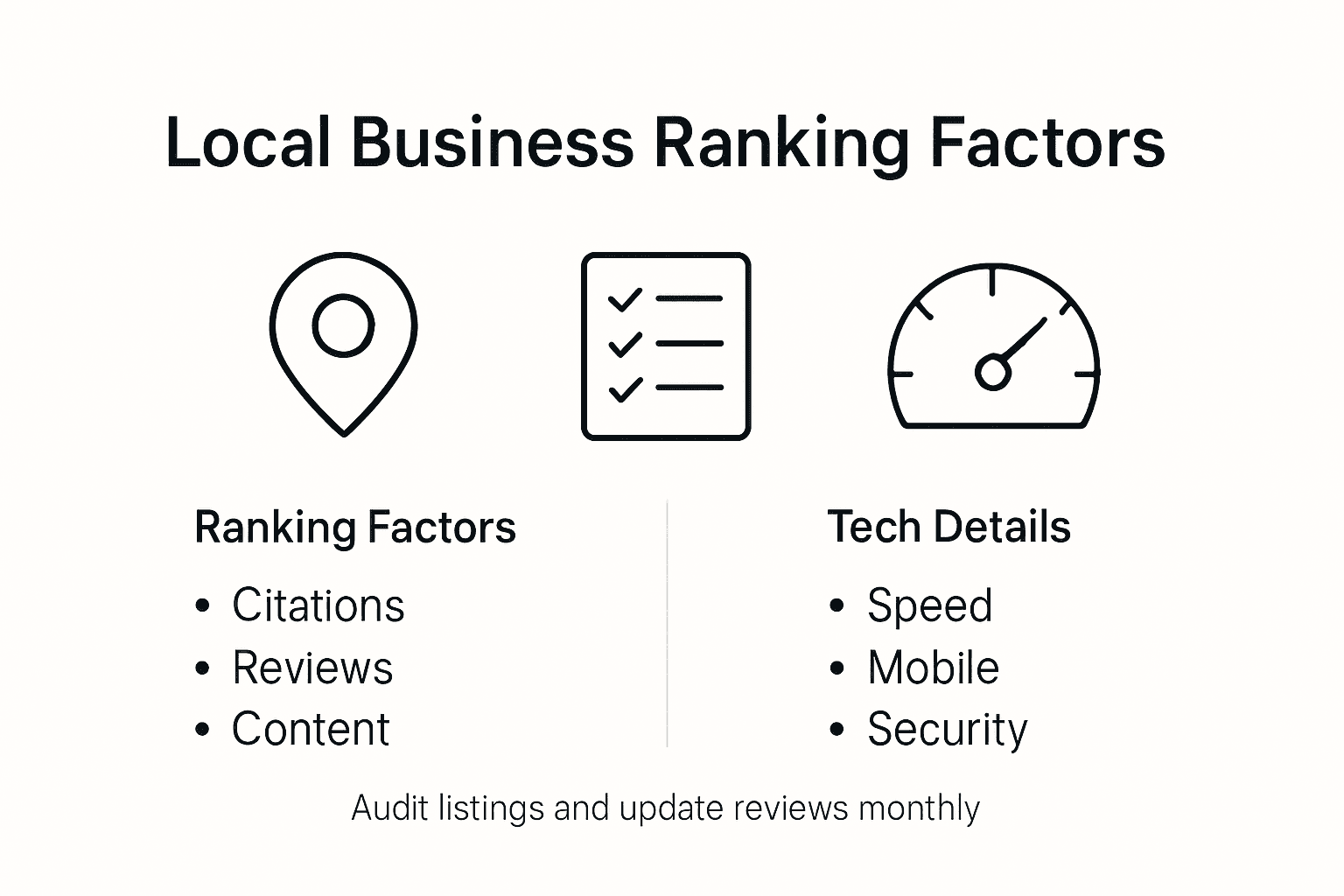
Technical performance plays an equally crucial role in ranking success. Website speed, mobile responsiveness, secure hosting, and clean, structured code are no longer optional but mandatory for competitive local businesses. Local service providers must create content that demonstrates deep expertise, answers specific customer questions, and provides clear, actionable information about their services. This means developing location-specific service pages, maintaining an informative blog, and showcasing local expertise through detailed, helpful content.
Pro tip: Dedicate two hours monthly to auditing your online business listings, responding to customer reviews, and updating your Google Business Profile with recent projects and customer testimonials.
Common Ranking Myths and Costly Mistakes
Academic research analyzing search engine ranking techniques reveals a stark reality about digital marketing misconceptions that can devastate small business online performance. Many local service providers fall prey to outdated or misguided SEO strategies that not only fail to improve rankings but can actively harm their digital presence. The most dangerous myths persist because they sound logical on the surface but fundamentally misunderstand how modern search algorithms actually work.
Some of the most costly ranking myths include believing that keyword density is still a primary ranking factor, that purchasing backlinks will automatically improve search position, or that website traffic alone determines search ranking. These misconceptions lead businesses to waste resources on ineffective tactics. In reality, Google’s algorithm prioritizes genuine user value, content relevance, technical performance, and authentic user engagement. Manipulative strategies like keyword stuffing, link farms, or creating low-quality content designed solely to game the system are quickly detected and can result in significant ranking penalties.
Local businesses must understand that sustainable search visibility comes from a holistic approach. This means creating genuinely helpful content that directly answers customer questions, maintaining a technically sound website, building authentic local citations, and focusing on delivering real value to potential customers. Search engines have become sophisticated enough to distinguish between genuine expertise and superficial content designed purely for ranking manipulation. The most successful local businesses invest in understanding their customers’ needs and creating digital experiences that truly serve those needs.
The following table summarizes costly SEO myths versus effective strategies for sustainable rankings:
| Common SEO Myth | Why It’s Misleading | Sustainable Strategy |
|---|---|---|
| Keyword density focus | Ignores user intent and context | Write for user questions |
| Buy backlinks | Risks penalties, often low quality | Build genuine local citations |
| Traffic equals rank | Traffic alone doesn’t improve rank | Boost engagement and reputation |
| Link farms work | Detected and penalized by Google | Earn reviews, build expertise |
Pro tip: Conduct a quarterly content and SEO audit that focuses on removing low-quality pages, updating outdated information, and ensuring your online content genuinely helps potential customers solve their problems.
Effective Strategies to Improve Rankings
Professional step-by-step guides for improving Google rankings reveal that successful search optimization is not about quick tricks, but strategic, holistic approaches. For local service businesses like plumbing and HVAC contractors, improving search rankings requires a multifaceted strategy that addresses technical performance, content quality, and user experience. Strategic optimization means understanding that Google’s algorithm rewards websites that genuinely serve user needs and demonstrate consistent, high-quality digital presence.
The core strategies for improving search rankings can be categorized into three primary dimensions: Content Optimization, Technical Performance, and User Engagement. Content optimization involves creating comprehensive, locally relevant content that directly answers potential customer questions. This means developing service pages that explain processes, showcase expertise, and provide clear, actionable information. Technical performance requires maintaining a fast, mobile-responsive website with clean code, secure hosting, and structured metadata. User engagement tracks metrics like time on page, interaction rates, and conversion potential.
Local businesses must also focus on building authentic digital credibility. This involves maintaining an updated Google Business Profile, generating genuine customer reviews, creating location-specific content, and developing a consistent online presence across multiple platforms. The goal is not just to rank higher, but to become the most trusted and helpful resource for potential customers in your specific service area. By focusing on delivering real value and maintaining technical excellence, businesses can create a sustainable approach to search visibility that transcends short-term ranking manipulation.
Pro tip: Implement a quarterly content and technical audit that systematically evaluates your website’s performance, updates outdated information, and ensures your online presence genuinely serves potential customer needs.
Elevate Your Local Business with Proven Digital Marketing Strategies
Struggling to boost your Google Rankings and attract more local customers is a challenge every small business faces. This article highlights how factors like content quality, local relevance, and user engagement drive success in search results. If you want to turn those insights into real growth, a tailored approach is key. At Ibrandmedia, we specialize in helping businesses like yours overcome these exact hurdles through expert SEO optimization, local marketing, and mobile-friendly web design.
Don’t wait to lose potential customers to competitors. Visit our Uncategorized | Ibrandmedia page to learn how strategic content and technical site improvements improve your rankings sustainably. Take control of your online presence now and explore how our personalized plans at Ibrandmedia can deliver quick results within your budget. Start transforming your digital marketing today for measurable local business success.
Frequently Asked Questions
What are the main factors that influence Google rankings for local businesses?
The main factors that influence Google rankings include content quality, user engagement, and technical performance. Businesses must focus on creating relevant content, analyzing user interaction on their websites, and ensuring their sites are technically sound and optimized for speed and mobile use.
How can local businesses improve their Google Business Profile?
Local businesses can improve their Google Business Profile by maintaining accurate and complete information, regularly updating service descriptions, and adding high-quality images. Prompt responses to customer reviews and interactions also enhance credibility and visibility.
What is the difference between organic search results and local search results?
Organic search results are traditional website listings that rank based on content relevance and domain authority, while local search results focus primarily on geographic proximity to the user and immediate user intent, often displayed in the Local Pack or Google Maps Results.
How does user engagement affect a business’s ranking on Google?
User engagement metrics, such as click-through rates, time spent on the site, and bounce rates, directly affect a business’s ranking on Google. Higher engagement indicates that users find the content valuable, which positively influences rankings.
Recommended
- Understanding Local SEO Ranking Factors for Businesses | Ibrandmedia
- Understanding the Benefits of Local SEO for Small Businesses | Ibrandmedia
- Local SEO Strategies for Small Business Success | Ibrandmedia
- What is Search Engine Ranking? A Complete Guide | Ibrandmedia
- Why Every Business Needs Local SEO Services for Success – LSA SEO Agency
Recent Comments