
Over 60 percent of American HVAC companies report that reaching the right local customers is their biggest marketing challenge. With so many options for heating and cooling services, it can be tough to stand out and capture attention in the crowded American market. This guide offers clear, actionable strategies to help your business identify your best audience, strengthen your online presence, and generate higher quality leads that turn into real customers.
Table of Contents
- Step 1: Assess Your Target Local Audience And Needs
- Step 2: Build A High-Converting HVAC Website
- Step 3: Implement Local SEO And Google Business Strategies
- Step 4: Launch Paid Ads And Track Performance
- Step 5: Optimize Campaigns Based On Lead Quality
Quick Summary
| Main Insight | Explanation |
|---|---|
| 1. Understand Your Local Audience | Analyze local demographics and specific segments like homeowners and property managers to tailor services effectively. |
| 2. Create a Powerful Website | Design a user-friendly website that highlights services, builds trust, and makes contact easy for potential clients. |
| 3. Optimize for Local SEO | Claim and refine your Google Business Profile with accurate details and encourage customer reviews to boost visibility. |
| 4. Use Targeted Paid Ads | Develop focused advertising campaigns on platforms like Google and Facebook to reach local customers effectively. |
| 5. Focus on Quality Leads | Implement a lead scoring system to prioritize high-value potential customers for more effective resource allocation. |
Step 1: Assess Your Target Local Audience and Needs
Understanding your target local HVAC market requires strategic research and precise audience segmentation. Successful businesses recognize that not all customers have the same heating and cooling requirements, which means developing a nuanced approach to targeting local customers becomes essential for generating quality leads.
To effectively assess your target audience, start by analyzing local demographics, seasonal weather patterns, and specific customer segments. Research demonstrates that HVAC businesses should divide potential clients into distinct categories: residential homeowners, commercial property managers, and industrial facilities. Each segment presents unique maintenance needs and budgetary considerations. For instance, residential customers might prioritize energy efficiency and comfort, while commercial clients focus more on system reliability and long-term operational costs.
Warning: Never make assumptions about your customer base. Market needs evolve rapidly, so conduct periodic reviews of your target audience characteristics. Regularly updating your understanding prevents missed opportunities and ensures your marketing strategies remain relevant and precisely targeted to local customer requirements.
Step 2: Build a High-Converting HVAC Website
Creating a powerful online presence requires more than just a basic website. Your HVAC website must serve as a strategic lead generation tool that immediately captures potential customer interest and demonstrates your professional expertise. Website design plays a critical role in converting casual visitors into qualified leads.
Focus on developing a clean, user-friendly design that highlights your services, showcases customer testimonials, and provides clear pathways for potential clients to contact you. Include essential elements like service descriptions, transparent pricing information, service area details, and prominent contact forms. Make sure your website is mobile responsive, loads quickly, and presents a professional image that builds trust. Integrate high quality images of your team, completed projects, and equipment to help potential customers visualize the quality of your services.

Warning: A poorly designed website can actually drive potential customers away. Ensure your site looks modern, functions smoothly across all devices, and provides immediate value to visitors seeking HVAC solutions. Your website should answer customer questions quickly and make scheduling service or requesting a quote as simple as possible.
Step 3: Implement Local SEO and Google Business Strategies
Mastering local online visibility is crucial for HVAC businesses looking to attract nearby customers. Local SEO strategies can dramatically improve your chances of being found by potential clients searching for heating and cooling services in your specific area.
Start by claiming and optimizing your Google Business Profile with complete and accurate information about your HVAC company. Ensure your business name, address, phone number, and service areas are precisely listed. Include high quality photos of your team, work vehicles, and completed projects. Encourage satisfied customers to leave detailed reviews, as positive feedback significantly enhances your local search rankings. Add relevant service keywords that potential customers might use when searching for HVAC solutions, such as emergency repair, air conditioning installation, or heating system maintenance.
Warning: Inconsistent or incomplete online business information can harm your local search visibility. Regularly audit your online listings across different platforms to maintain accuracy. Update your Google Business Profile frequently with recent photos, current service offerings, and any seasonal promotions to keep your online presence dynamic and engaging.
Step 4: Launch Paid Ads and Track Performance
Paid advertising offers a powerful mechanism for HVAC businesses to rapidly expand their customer reach. Effective online advertising strategies can help you connect with potential clients precisely when they need your services. Research indicates that small businesses can see significant benefits from targeted paid advertising campaigns, with 87% experiencing measurable growth through strategic digital marketing.
Start by creating focused Google and Facebook ad campaigns that target specific local demographics interested in HVAC services. Develop multiple ad variations testing different headlines, images, and call to action messages to determine which resonate most with your potential customers. Set clear budget limits and use geographic targeting to ensure your ads appear only to residents in your service area. Track key performance indicators like click through rates, cost per lead, and conversion rates to continuously optimize your advertising strategy.
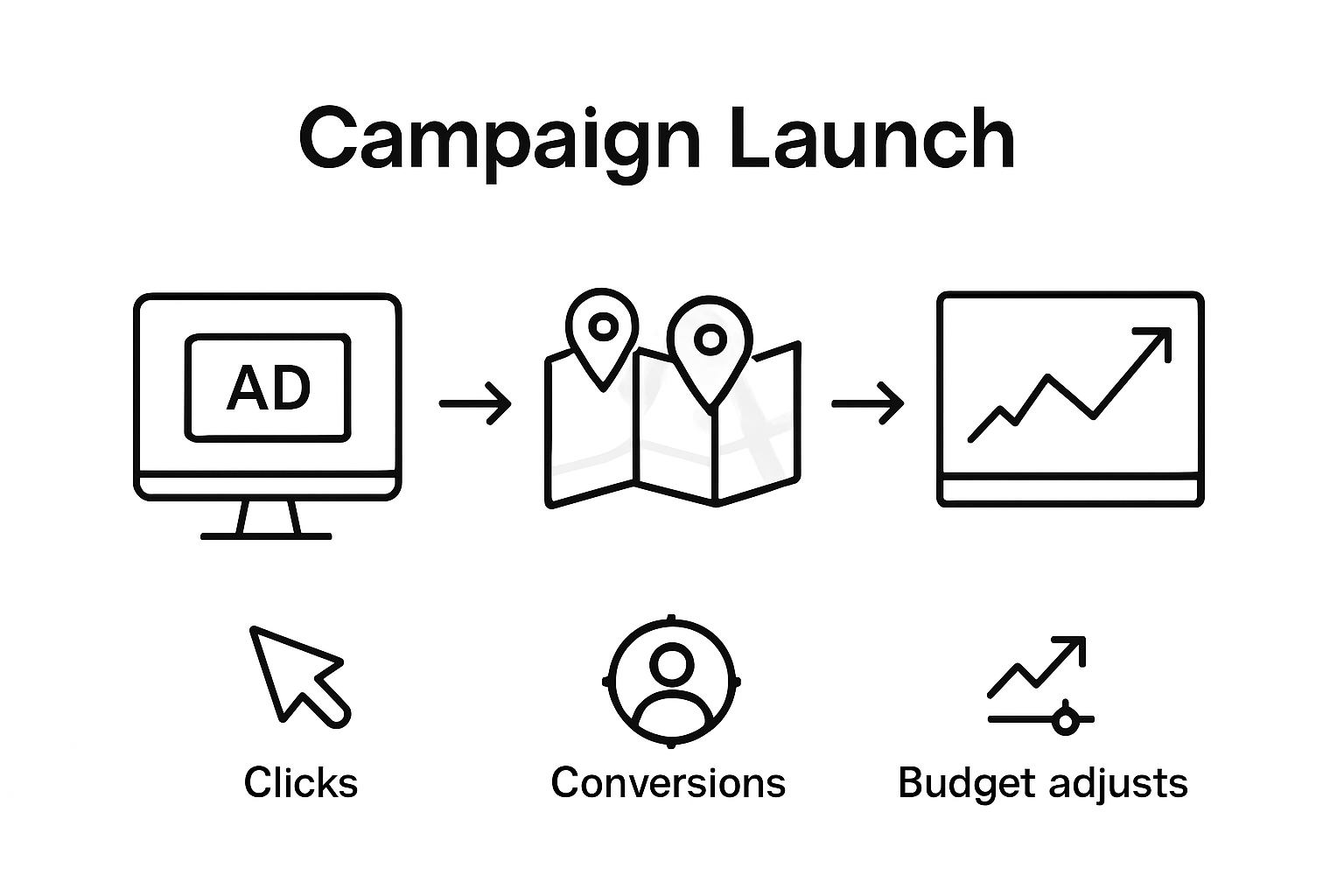
Warning: Paid advertising requires constant monitoring and refinement. Avoid setting ads on autopilot and walking away. Regularly review your campaign performance, adjust targeting parameters, and reallocate budget based on which ads generate the most qualified leads for your HVAC business.
Step 5: Optimize Campaigns Based on Lead Quality
Getting more website leads requires a strategic approach to understanding and segmenting the quality of your incoming customer inquiries. Digital marketing strategies for HVAC businesses should focus not just on generating volume, but on attracting high value potential customers who are most likely to convert into long term service contracts.
Implement a robust lead scoring system that evaluates each potential customer based on specific criteria such as their immediate service needs, budget, property type, and responsiveness. Develop a scoring matrix that assigns numerical values to different lead characteristics. For instance, commercial property managers might receive higher scores than residential customers seeking one time repairs, or customers requesting comprehensive system installations could rank above those seeking minor maintenance. Use customer relationship management software to track these metrics and automatically prioritize the most promising leads.
Warning: Not all leads are created equal. Resist the temptation to treat every inquiry with the same level of urgency. Focus your time and resources on leads that demonstrate the highest potential for generating substantial revenue and long term business relationships.
Boost Your HVAC Leads with Proven Digital Strategies
Generating more HVAC leads means overcoming challenges like effectively targeting local customers, optimizing your website, and refining ads based on lead quality. This article highlights common pain points such as lack of a high-converting website, inconsistent local SEO efforts, and the difficulty of tracking paid campaign performance. At ibrand.media, we specialize in solving these exact problems by offering tailored digital marketing solutions focused on local SEO, mobile-friendly web design, and precision advertising that delivers measurable growth.
Our expert team works closely with HVAC businesses to build websites designed to convert, craft targeted local marketing campaigns, and implement ongoing performance tracking to optimize for the highest quality leads. You do not need to navigate the complex world of HVAC marketing alone. Taking swift action with a partner who understands your unique needs means higher lead conversion rates and sustainable business growth.
Ready to transform your HVAC lead generation and capitalize on every opportunity in your local market
Explore how our expertise in local SEO strategies and website design can help you attract more quality customers from your area today. Visit ibrand.media to start your customized campaign or request a free consultation now.
Frequently Asked Questions
How can I assess my local HVAC audience effectively?
To assess your local HVAC audience, analyze local demographics, seasonal weather patterns, and specific customer segments. Focus on identifying distinct groups such as residential homeowners, commercial property managers, and industrial facilities to tailor your services accordingly.
What are the essential elements of a high-converting HVAC website?
A high-converting HVAC website should include a clean, user-friendly design, service descriptions, transparent pricing, service area details, and prominent contact forms. Ensure your website is mobile-responsive and loads quickly to capture potential leads effectively.
How can I optimize my Google Business Profile for better visibility?
To optimize your Google Business Profile, ensure all information is complete and accurate, including your business name, address, phone number, and service areas. Regularly update the profile with recent photos, current services, and customer reviews to enhance your local search rankings.
What should I consider when launching paid ads for my HVAC business?
When launching paid ads, create targeted campaigns on platforms like Google and Facebook that focus on specific local demographics. Set clear budget limits and track key performance indicators to refine your advertising efforts and maximize lead quality.
How do I implement a lead scoring system for my HVAC inquiries?
Implement a lead scoring system by evaluating inquiries based on criteria such as service needs, budget, and property type. Create a scoring matrix to prioritize leads, focusing your efforts on those most likely to convert into long-term contracts.
Recommended
- Master HVAC Digital Marketing Strategies for Success | Ibrandmedia
- How to Get More Website Leads: 8 Proven Strategies for 2025 | Ibrandmedia
- How to Get More Leads: A Step-by-Step Guide for 2025 | Ibrandmedia
- How to Get More Website Leads: 8 Proven Strategies for 2025 | Ibrandmedia
- Master Seasonal Allergen Management for Your Business – Probe IT
- 7 Indoor Air Quality Solutions Every Property Owner Needs – HVAC Service and Repair | Louisville, KY | Project Heating & Cooling
Recent Comments