
Every small service business faces the challenge of standing out in a crowded local market. As traditional advertising loses steam, social media has emerged as a strategic channel for digital transformation and customer relationship management. By enabling direct, real-time communication, these platforms help HVAC and plumbing companies not only connect with customers but also build trust and showcase expertise. Discover how focused social media strategies can lead to stronger relationships, increased visibility, and meaningful growth.
Table of Contents
- What Social Media Means For Service Businesses
- Key Social Platforms And Their Distinctions
- Building Visibility And Customer Engagement
- Content Types And Winning Strategies
- Common Mistakes And How To Avoid Them
- Measuring Impact And Maximizing Results
Key Takeaways
| Point | Details |
|---|---|
| Leverage Social Media for Engagement | Service businesses should use social media to connect with customers through real-time communication, showcasing expertise and building trust. |
| Create Targeted Content | Tailor content for each social media platform, focusing on the specific interests and demographics of the audience to enhance effectiveness. |
| Measure and Adapt Strategy | Regularly track key performance metrics to understand engagement levels and adjust strategies accordingly for optimal results. |
| Avoid Common Pitfalls | Ensure consistent posting, respond promptly to customer interactions, and create authentic, valuable content to maintain brand reputation. |
What Social Media Means for Service Businesses
Social media has fundamentally transformed how service businesses connect with customers, creating unprecedented opportunities for engagement and growth. Unlike traditional marketing channels, social platforms enable direct, real-time communication that allows service providers to build trust, showcase expertise, and respond instantly to customer needs.
For service businesses like HVAC, plumbing, and home repair companies, social media represents more than just a marketing tool. It’s a strategic channel for digital transformation and customer relationship management. Through these platforms, businesses can:
- Demonstrate technical skills and professionalism
- Share helpful maintenance tips and tutorials
- Highlight customer success stories
- Provide rapid customer support
- Build community trust and credibility
The strategic value of social media extends beyond simple promotion. Two-way communication becomes possible, allowing service businesses to gain real-time consumer insights, understand market preferences, and adapt their offerings accordingly. By creating interactive content that resonates with local customers, service providers can differentiate themselves in competitive markets.
Unlike traditional advertising, social media offers cost-effective, targeted engagement. Small service businesses can now compete with larger companies by creating authentic, value-driven content that speaks directly to their community’s needs. Platforms like Facebook, Instagram, and LinkedIn provide powerful tools for showcasing expertise, sharing customer testimonials, and building a strong local reputation.
Pro tip: Focus on creating educational content that solves real problems for your target audience, positioning your service business as a trusted local expert.
Key Social Platforms and Their Distinctions
Service businesses have a powerful array of social media platforms to choose from, each offering unique advantages for marketing and customer engagement. Different social media platforms serve distinct communication purposes, making strategic platform selection critical for business success.
Here’s a breakdown of key social platforms for service businesses:
- Facebook: Broad demographic reach, excellent for local community engagement
- Instagram: Visual platform perfect for showcasing before/after service work
- LinkedIn: Professional networking and B2B service connections
- X (Twitter): Real-time customer service and quick updates
- TikTok: Short-form video content for younger demographic
Targeted Platform Strategies become essential when understanding each platform’s unique characteristics. For instance, LinkedIn works best for professional services like consulting or technical trades, while Instagram excels at visual storytelling for home repair, landscaping, or aesthetic service businesses.
Professional service providers can leverage platform-specific features to maximize engagement. A plumbing company might use Facebook for community events and recommendations, Instagram for visual repair demonstrations, and LinkedIn to highlight technical expertise and professional certifications. Audience targeting becomes more precise when businesses understand the demographic nuances of each platform.

Here’s how major social platforms differ for service businesses:
| Platform | Best Use Case | Content Style | Typical Audience |
|---|---|---|---|
| Local community engagement | Photos, events, posts | Homeowners, families | |
| Showcasing visual work | Images, stories, reels | Younger adults, creatives | |
| Networking and B2B | Articles, updates | Professionals, companies | |
| X (Twitter) | Customer service, updates | Short posts, replies | Tech-savvy, news-seekers |
| TikTok | Entertaining tutorials | Short videos | Teens, young adults |
Effective social media strategy requires matching platform characteristics with your specific business communication objectives.
Pro tip: Create platform-specific content that speaks directly to each audience’s expectations and preferences, rather than using a one-size-fits-all approach.
Building Visibility and Customer Engagement
Social media strategies significantly enhance service business visibility by creating direct communication channels with potential customers. Small service businesses can transform their marketing approach by leveraging these digital platforms to showcase expertise, build trust, and connect with local communities.
Key strategies for building visibility include:
- Create consistent, high-quality content
- Showcase behind-the-scenes work
- Share customer testimonials and success stories
- Demonstrate technical expertise through educational posts
- Respond quickly to comments and messages
Audience Engagement goes beyond simply posting content. Service businesses must develop a strategic approach that speaks directly to their target market’s needs and interests. This means understanding your audience’s pain points and creating content that provides genuine value, whether through troubleshooting tips, maintenance advice, or helpful industry insights.
Visual content plays a critical role in customer engagement. Before-and-after photos, short tutorial videos, and live demonstrations can dramatically increase audience interaction. A plumbing service might share a quick video about preventing pipe freezing, while an HVAC company could post seasonal maintenance checklists that provide real value to followers.
Successful social media engagement requires consistent, authentic communication that builds trust and demonstrates expertise.
Pro tip: Develop a content calendar that balances educational posts, customer stories, and interactive content to maintain consistent audience interest.
Content Types and Winning Strategies
Strategic content creation drives social media success for service businesses by engaging potential customers through diverse and targeted communication approaches. The key lies in understanding how different content types can capture audience attention and communicate brand value effectively.
Effective content types for service businesses include:
- Educational tutorial videos
- Behind-the-scenes work process clips
- Customer success story testimonials
- Technical troubleshooting guides
- Quick maintenance tip infographics
- Live Q&A sessions with industry experts
Visual Storytelling emerges as a powerful strategy for service businesses. Short-form videos demonstrating repair techniques, before-and-after transformations, or complex technical processes can dramatically increase audience engagement. For instance, an HVAC technician could create a 60-second video explaining how to change an air filter, providing immediate value to potential customers.
Successful social media content requires a strategic approach that balances educational material, entertainment, and direct customer interaction. Service businesses should aim to create content that not only showcases technical expertise but also humanizes their brand. This might involve sharing employee stories, highlighting community involvement, or providing genuine solutions to common customer problems.
Effective social media content transforms technical expertise into compelling storytelling that resonates with your target audience.
Pro tip: Develop a content mix that provides 80% valuable information and 20% soft promotional content to maintain audience trust and engagement.
Common Mistakes and How to Avoid Them
Social media mistakes can significantly undermine service business marketing efforts by damaging brand reputation and reducing customer engagement. Understanding and avoiding these common pitfalls is crucial for small service businesses looking to leverage digital platforms effectively.
Key mistakes service businesses frequently make include:
- Posting inconsistently or sporadically
- Neglecting to respond to customer comments
- Using generic, impersonal content
- Failing to track social media performance
- Overselling instead of providing value
- Ignoring platform-specific content requirements
Content Strategy plays a critical role in avoiding social media failures. Service businesses must develop a nuanced approach that balances professional expertise with genuine, approachable communication. This means creating content that solves real customer problems, showcases technical skills, and builds trust through transparency and consistent interaction.
Technology can help mitigate social media risks. Using scheduling tools, setting up response protocols, and implementing analytics tracking can prevent common pitfalls like irregular posting or missed customer interactions. Small service businesses should invest time in understanding each platform’s unique communication style and audience expectations, tailoring content to maximize engagement and demonstrate professionalism.
Successful social media management requires a strategic, intentional approach that prioritizes customer value over promotional noise.
Pro tip: Create a detailed social media content calendar and response guidelines to ensure consistent, high-quality engagement across all platforms.
Measuring Impact and Maximizing Results
Strategic social media measurement drives business growth by providing actionable insights into customer engagement and marketing effectiveness. Service businesses must move beyond vanity metrics to understand the true impact of their digital strategies.
Key performance metrics service businesses should track include:
- Engagement rate
- Reach and impressions
- Click-through rates
- Conversion rates
- Customer sentiment
- Lead generation
- Website traffic from social channels
Analytics Tools transform raw data into meaningful insights. Platforms like Google Analytics and native social media insights provide comprehensive views of performance, enabling businesses to understand which content resonates most with their audience. For a plumbing or HVAC service, this might mean tracking which maintenance tips generate the most shares or which before-and-after posts drive the most customer inquiries.
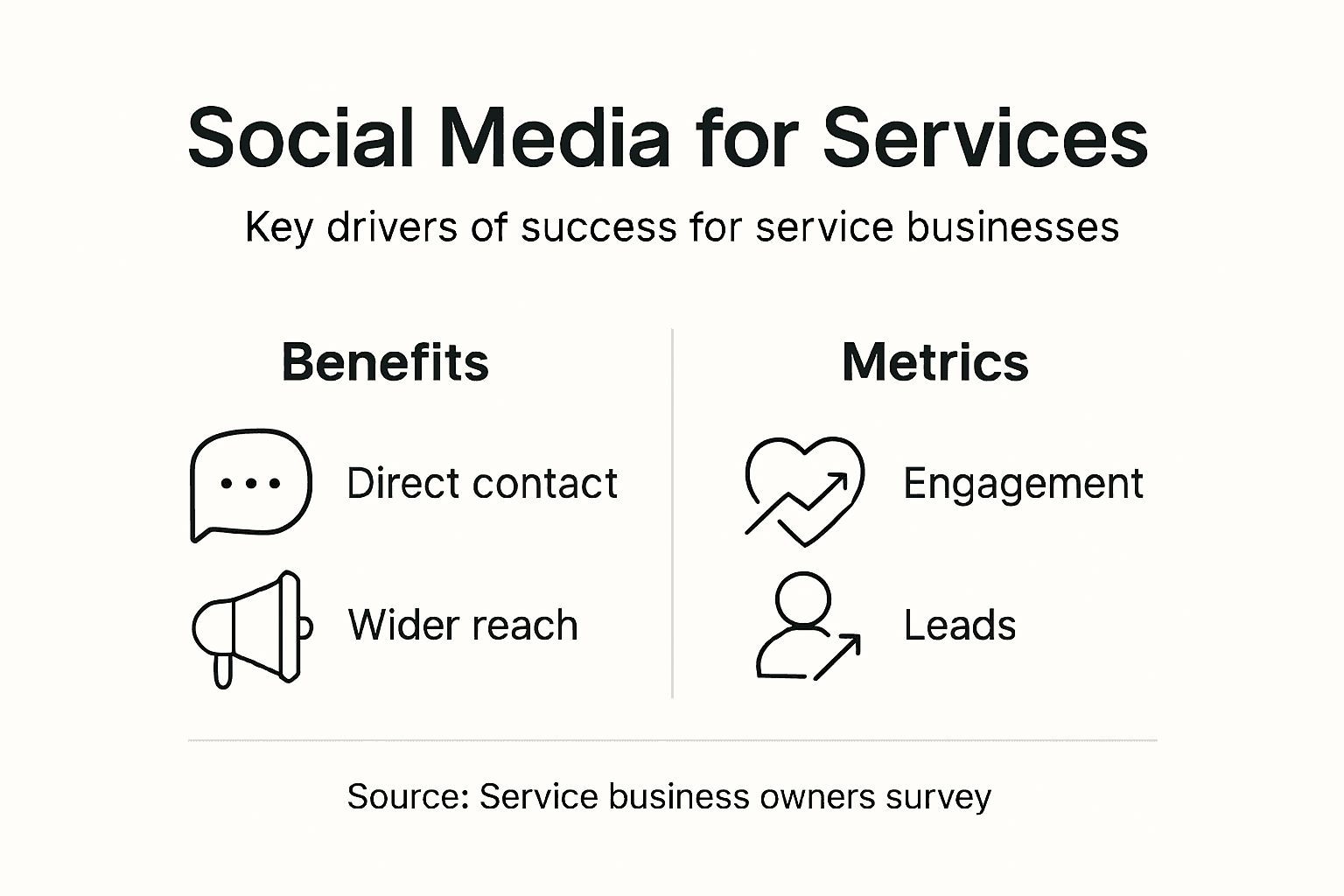
Below is a summary of essential metrics and what they reveal:
| Metric | What It Measures | Business Insight |
|---|---|---|
| Engagement Rate | Audience interaction level | Content relevance and appeal |
| Reach & Impressions | Number of viewers | Brand awareness growth |
| Conversion Rate | Leads generated | Effectiveness of campaigns |
| Customer Sentiment | Positive or negative feedback | Brand trust and reputation trends |
| Website Traffic | Clicks from social media | Sales funnel impact |
Successful social media measurement requires setting clear, measurable objectives from the start. Service businesses should establish specific goals like increasing service bookings by 20%, improving customer response times, or expanding local community engagement. By creating benchmark metrics and regularly reviewing performance, businesses can continuously refine their social media approach to maximize impact and return on investment.
Continuous measurement and adaptation are the keys to social media success for service businesses.
Pro tip: Schedule monthly analytics reviews to identify trends, adjust strategies, and double down on what’s working best for your specific audience.
Elevate Your Service Business with Expert Social Media Strategies
Struggling to turn social media engagement into real growth for your service business? This article highlights key challenges like inconsistent posting, generic content, and missing targeted platform strategies that hold many businesses back. If you want to build trust, boost local visibility, and convert followers into loyal customers you need more than just random posts — you need a tailored digital marketing strategy that connects and converts.
At ibrand.media, we specialize in crafting personalized social media management solutions for small to medium-sized service businesses. Our proven approach focuses on strategic content creation, local market targeting, and real-time performance tracking so you gain measurable results fast. Don’t let the complexities of social media slow your business down. Take action now with a customized plan that maximizes your customer engagement and expands your online presence. Visit us today and start transforming your social media channels into powerful growth engines.
Frequently Asked Questions
What is the role of social media in service business growth?
Social media enables service businesses to connect directly with customers, showcase expertise, and engage in real-time communication, leading to increased trust and customer loyalty.
How can service businesses effectively use social media for customer engagement?
Service businesses can utilize social media by creating quality content, showcasing behind-the-scenes work, sharing customer testimonials, and responding promptly to customer inquiries.
What types of content should service businesses focus on for social media?
Effective content types include educational tutorial videos, customer success stories, behind-the-scenes process clips, and maintenance tip infographics to engage and inform the audience.
What are common mistakes service businesses make on social media?
Common mistakes include inconsistent posting, neglecting to engage with customers, using generic content, and failing to track performance metrics, which can harm brand reputation and engagement.
Recommended
- Social Media Marketing: Everything You Need to Know | Ibrandmedia
- Social Media Marketing for Businesses: Strategies That Work in 2025 | Ibrandmedia
- Why Is Social Media Important for Small Businesses in 2025? | Ibrandmedia
- How Social Media Works for Small Businesses in 2025 | Ibrandmedia
- Social Media Marketing: What You May Not Know | Kickass Online
Recent Comments