
Running a local service business can feel like navigating a maze when your marketing efforts lack clear direction. Defining precise goals and metrics gives your campaign a strong foundation, turning scattered activity into focused growth. This guide shows you how to apply the SMART framework for objective setting and build a simple tracking system, so you can confidently measure results and make affordable, meaningful improvements.
Table of Contents
- Step 1: Define Campaign Goals And Key Metrics
- Step 2: Set Up Tracking Tools And Analytics
- Step 3: Implement Tracking Links And Conversion Tags
- Step 4: Monitor Real-Time Campaign Data
- Step 5: Evaluate Results And Adjust Strategy
Quick Summary
| Key Point | Explanation |
|---|---|
| 1. Define SMART Goals | Use the SMART framework to establish specific, measurable, achievable, relevant, and time-bound campaign objectives. |
| 2. Implement Tracking Tools | Set up analytics tools to collect data that help you understand and evaluate your campaign performance. |
| 3. Use Tracking Links | Create unique tracking links and conversion tags to gather detailed insights about customer interactions. |
| 4. Monitor Real-Time Data | Regularly check real-time campaign data to make timely adjustments and optimize performance. |
| 5. Evaluate Campaign Results | Analyze results against goals and adjust strategies based on quantitative data and qualitative feedback. |
Step 1: Define Campaign Goals and Key Metrics
Defining clear campaign goals and metrics is the strategic foundation that transforms vague marketing efforts into targeted, measurable initiatives. By establishing precise objectives, you create a roadmap that guides your entire marketing approach and enables accurate performance tracking.
To successfully define campaign goals, start by following the SMART framework for objective setting. This approach ensures your goals are:
- Specific: Clearly articulate what you want to achieve
- Measurable: Include quantifiable indicators of progress
- Achievable: Set realistic targets based on your current capabilities
- Relevant: Align goals with broader business objectives
- Time-bound: Establish concrete timelines for goal completion
For small businesses, typical campaign goals might include increasing website traffic, generating more qualified leads, boosting social media engagement, or improving conversion rates. Each goal requires corresponding key performance indicators (KPIs) that will help you track progress. These KPIs transform abstract objectives into concrete, trackable metrics.

This table summarizes the link between campaign goals and recommended KPIs:
| Campaign Goal | Suggested KPI | Example Metric |
|---|---|---|
| Boost website traffic | Sessions & Users | 10,000 unique visits/month |
| Drive qualified leads | Qualified Leads Generated | 100 new leads/quarter |
| Increase conversion rates | Conversion Percentage | 5% form completion rate |
| Enhance social engagement | Engagement Rate | 500 shares per campaign |
| Improve ROI | Return on Ad Spend (ROAS) | $4 revenue per $1 spent |
Successful campaigns are built on clear, measurable goals that directly connect marketing efforts to business growth.
Pro tip: Always link your campaign metrics directly to revenue potential to demonstrate tangible business impact and justify marketing investments.
Step 2: Set up tracking tools and analytics
Setting up robust tracking tools and analytics is crucial for transforming raw marketing data into actionable insights that drive business growth. The right analytics infrastructure will help you understand your campaign’s performance and make data-driven decisions.
Start by selecting comprehensive data collection tools that align with your specific marketing objectives. Key tools to consider include:
- Web analytics platforms: Google Analytics, Mixpanel
- Social media tracking tools: Hootsuite, Sprout Social
- Conversion tracking systems: Facebook Pixel, Google Tag Manager
- Customer relationship management (CRM) software: Salesforce, HubSpot
When implementing these tools, focus on tracking critical metrics that directly relate to your campaign goals. This might include:
- Website traffic volume
- Conversion rates
- Engagement metrics
- Customer acquisition cost
- Return on ad spend
Effective analytics require more than just collecting data – they demand strategic interpretation and actionable insights.
Connect your tracking tools to create a comprehensive view of your marketing performance. This integrated approach allows you to see how different channels and campaigns contribute to your overall business objectives.
Here’s how common tracking tools support different marketing needs:
| Tool Type | Example Platforms | Primary Use | Main Business Benefit |
|---|---|---|---|
| Web Analytics | Google Analytics, Mixpanel | Monitor site activity | Understand visitor behavior trends |
| Social Media Tracking | Hootsuite, Sprout Social | Measure engagement | Optimize social media investments |
| Conversion Tracking Systems | Facebook Pixel, GTM | Attribute conversions | Improve ad campaign effectiveness |
| CRM Software | Salesforce, HubSpot | Manage leads/customers | Enhance customer lifecycle value |
Pro tip: Configure custom dashboards that display your most important KPIs to quickly assess campaign performance without getting lost in overwhelming data.
Step 3: Implement tracking links and conversion tags
Implementing precise tracking links and conversion tags is essential for capturing detailed campaign performance data that reveals exactly how your marketing efforts drive business results. By strategically embedding these tracking mechanisms, you’ll transform generic website interactions into meaningful insights about customer behavior.
To effectively set up your tracking infrastructure, configure event tracking with precision across your digital platforms. This involves creating unique tracking parameters for each marketing channel and campaign. Key steps include:
- Generate custom UTM parameters for every marketing link
- Create unique conversion tracking tags for specific campaign goals
- Map conversion paths across different marketing channels
- Define specific event categories for user interactions
- Configure goal tracking in your analytics platform
The most critical conversion tags to implement typically track:
- Form submissions
- Button clicks
- Product purchases
- Email sign-ups
- Download completions
Effective tracking links are like digital breadcrumbs that reveal exactly how customers interact with your marketing campaigns.
Ensure your tracking implementation maintains user privacy while capturing comprehensive performance data. This means using anonymized data collection methods and being transparent about your tracking practices.
Pro tip: Test your tracking links and conversion tags before launching campaigns to verify they’re capturing the exact data points you need for meaningful analysis.
Step 4: Monitor real-time campaign data
Monitoring real-time campaign data empowers you to make immediate, strategic adjustments that optimize your marketing performance and maximize return on investment. By establishing a robust real-time tracking system, you can transform raw data into actionable insights that drive business growth.
Learn to track campaign metrics dynamically using advanced analytics dashboards that provide instant visibility into your marketing efforts. Your monitoring strategy should focus on several critical performance indicators:
- Conversion rates in real-time
- Traffic sources and visitor behavior
- Engagement metrics across channels
- Cost per acquisition tracking
- Revenue generated per campaign
To effectively monitor your campaign data, implement these key practices:
- Set up live dashboard displays
- Configure automated alerts
- Create custom reporting templates
- Schedule regular performance reviews
- Compare metrics across different campaigns
Real-time data monitoring transforms your marketing from reactive guesswork to proactive strategic management.
Choose analytics platforms that offer intuitive, visual representations of your campaign performance. Look for tools that provide comprehensive views of your marketing metrics and enable quick drill-down analysis.
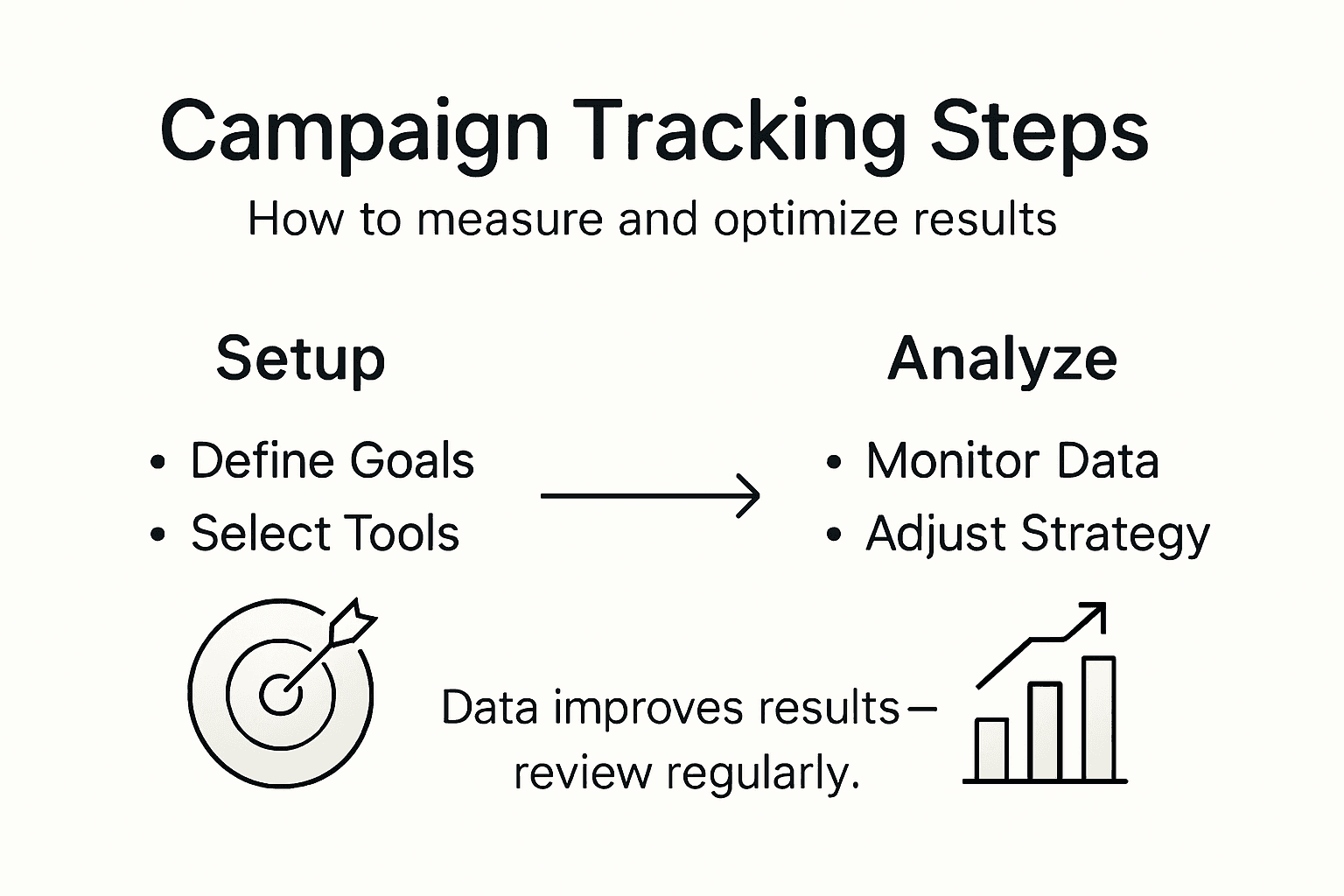
Pro tip: Dedicate 15-30 minutes daily to reviewing your real-time campaign dashboards to catch emerging trends and make rapid, data-driven decisions.
Step 5: Evaluate results and adjust strategy
Evaluating campaign results and strategically adjusting your approach is the critical final step that transforms raw data into meaningful business growth. This process helps you understand what worked, what didn’t, and how to optimize future marketing efforts for maximum impact.
Comprehensive campaign monitoring requires a systematic approach to measuring both outputs and outcomes. Your evaluation strategy should include:
- Quantitative performance metrics
- Qualitative audience feedback
- Comparative analysis across campaigns
- ROI calculation for each marketing initiative
- Competitive benchmarking
To effectively analyze and adjust your strategy, follow these key steps:
- Compare actual results against initial goals
- Identify top-performing and underperforming elements
- Analyze root causes of performance variations
- Develop specific improvement recommendations
- Create an actionable optimization plan
Data-driven strategy adjustments are the difference between marketing that guesses and marketing that knows.
Remember that evaluation is an ongoing process. The most successful marketers view each campaign as a learning opportunity, continuously refining their approach based on empirical evidence and strategic insights.
Pro tip: Schedule quarterly strategy review sessions where you conduct deep-dive analyses of your campaign performance, looking beyond surface-level metrics to uncover meaningful patterns and opportunities.
Unlock Measurable Growth with Expert Campaign Tracking from iBrand.media
Tracking campaign performance demands precision and real-time insights to turn your marketing goals into measurable success. If you find yourself struggling to set clear KPIs, manage conversion tags, or monitor analytics effectively, you are not alone. Many small and medium-sized businesses face these exact challenges when aiming to connect marketing efforts directly to revenue growth.
At iBrand.media, we specialize in helping businesses like yours master every step of the tracking process—from defining goals and setting up custom tracking links to analyzing real-time data and optimizing strategies for maximum ROI. Our comprehensive digital marketing services include SEO optimization, advertising, social media management, and real-time performance tracking designed to keep you informed and agile.
Don’t let unclear data slow your growth. Visit our Uncategorized | Ibrandmedia page to learn how our personalized, affordable campaigns can convert your marketing efforts into measurable results. Take the first step today at https://ibrand.media and start your journey to clear, actionable insights that drive business success.
Frequently Asked Questions
How can I define clear campaign goals for tracking performance?
To define clear campaign goals, follow the SMART framework, ensuring your goals are Specific, Measurable, Achievable, Relevant, and Time-bound. For example, aim to increase website traffic by 10,000 unique visits per month within the next quarter.
What key performance indicators (KPIs) should I track for my campaign?
Focus on KPIs that align with your specific campaign goals, such as conversion rates and engagement metrics. For instance, if your goal is to drive leads, track the number of qualified leads generated each month.
How do I set up tracking tools for my marketing campaigns?
Select comprehensive data collection tools and integrate them with your marketing platforms to monitor performance effectively. Set up tools to track critical metrics such as website traffic volume and customer acquisition cost.
What are tracking links, and why are they important?
Tracking links are unique URLs that include parameters to capture data about user interactions with your campaigns. Use them to monitor events such as form submissions or product purchases, enabling you to analyze customer behavior effectively.
How should I monitor campaign performance in real time?
Monitor campaign performance by setting up live dashboards that display key metrics such as conversion rates and traffic sources. Schedule daily reviews for 15-30 minutes to quickly identify trends and make data-driven adjustments.
What steps should I take to evaluate campaign results and adjust my strategy?
Evaluate results by comparing actual performance against your initial goals and analyzing both quantitative metrics and qualitative feedback. Develop an actionable optimization plan based on your findings to enhance future campaign effectiveness.
Recent Comments