
Every small business owner knows the sting when an unexpected online review threatens their reputation. In the crowded markets of Canadian and American cities, your digital perception can shape customer decisions long before they step in the door. This guide covers affordable and practical strategies to safeguard your brand, including a thorough online reputation audit and real-time monitoring methods that help you stay ahead of emerging feedback.
Table of Contents
- Step 1: Assess Current Reputation Across All Platforms
- Step 2: Implement Proactive Monitoring Tools and Alerts
- Step 3: Respond Promptly to Reviews and Feedback
- Step 4: Promote Positive Customer Experiences Online
- Step 5: Verify Improvements Through Regular Reputation Audits
Quick Summary
| Key Point | Explanation |
|---|---|
| 1. Conduct an online reputation audit | Assess your brand’s digital presence across platforms to understand perception and identify areas for improvement. |
| 2. Set up proactive monitoring tools | Use tools like Google Alerts and social media monitors to track mentions and respond to potential threats in real time. |
| 3. Respond promptly to reviews | Address both positive and negative customer feedback quickly to enhance trust and show commitment to service. |
| 4. Promote positive customer experiences | Leverage digital tools and personalized interactions to engage customers and build loyalty. |
| 5. Regularly perform reputation audits | Conduct audits to track online performance and make data-driven decisions to enhance your brand’s image. |
Step 1: Assess current reputation across all platforms
Assessing your online business reputation requires a systematic review of how your brand appears across multiple digital platforms. This crucial step helps you understand your current digital perception and identify potential areas for improvement.
Start by conducting a comprehensive online reputation audit that covers multiple channels. Digital content analysis reveals crucial reputation insights across search engines, review platforms, and social media networks. Here are the key areas to investigate:
- Google search results for your business name
- Review sites like Yelp, Google Reviews, and industry-specific platforms
- Social media mentions and comments
- Professional networking sites
- Local business directories
To perform an effective audit, use these strategic approaches:
- Search your business name in multiple search engines
- Review all public comments and ratings
- Check social media channels for customer interactions
- Analyze sentiment and tone of online discussions
Systematic reputation assessment provides critical insights into your brand’s digital perception and potential improvement opportunities.
Documenting each finding helps create a baseline for future reputation management efforts. Track both positive and negative mentions, categorizing them by platform and sentiment to develop a comprehensive understanding of your online reputation.

Pro tip: Use free and paid online reputation monitoring tools to automate and streamline your reputation tracking process.
Step 2: Implement proactive monitoring tools and alerts
Establishing proactive monitoring tools for your online business reputation helps you stay ahead of potential digital threats and manage your brand’s perception effectively. This critical step involves setting up strategic systems to track and respond to online mentions in real time.
Proactive monitoring strategies detect reputation risks early, allowing small businesses to mitigate potential damage quickly. Consider implementing the following monitoring approaches:
- Free Google Alerts for business name and key terms
- Social media monitoring platforms
- Review site tracking tools
- Reputation management software
- Brand mention tracking services
To set up effective monitoring, follow these strategic steps:
- Choose 2-3 monitoring tools that cover different platforms
- Configure custom alert settings for your business name
- Set up email or mobile notifications
- Create keyword lists related to your business
Digital monitoring allows small businesses to respond rapidly to emerging reputation challenges before they escalate.
Understanding the technical aspects of monitoring helps you create a comprehensive system. Most modern tools use AI and machine learning to help you detect potential reputation issues before they become significant problems.
Here’s how popular reputation monitoring tools differ in functionality and business benefits:
| Tool Type | Unique Feature | Ideal For | Business Impact |
|---|---|---|---|
| Google Alerts | Free web-based notifications | Small businesses | Early warning of brand mentions |
| Social Media Monitoring | Real-time sentiment analysis | Customer-facing brands | Quick response to viral issues |
| Reputation Management Software | AI-driven insights | Growing enterprises | Strategic brand protection |
| Review Site Trackers | Aggregated feedback reports | Service industries | Targeted customer improvements |
Pro tip: Allocate 15-30 minutes weekly to review your monitoring tool reports and track emerging trends in your online reputation.
Step 3: Respond promptly to reviews and feedback
Managing your online reputation requires a strategic approach to handling customer reviews and feedback across multiple platforms. Responding quickly and professionally can transform potential negative experiences into opportunities for building trust and demonstrating your commitment to customer satisfaction.
Effective review response strategies are critical for small businesses seeking to maintain a positive online presence. Develop a systematic approach to addressing both positive and negative feedback:
- Respond within 24-48 hours of receiving a review
- Personalize each response
- Acknowledge specific details mentioned in the review
- Offer solutions for negative experiences
- Express genuine appreciation for positive feedback
When crafting your responses, follow these important guidelines:
- Stay professional and calm
- Avoid becoming defensive
- Take responsibility when appropriate
- Move detailed problem resolution to private channels
Thoughtful and timely responses demonstrate your business’s commitment to customer care and can significantly improve your online reputation.
Each review is an opportunity to showcase your customer service skills. For negative reviews, focus on understanding the customer’s concern and presenting a constructive solution. With positive reviews, express sincere gratitude and highlight the specific aspects of service that made the customer happy.
Use this summary to distinguish types of customer feedback and recommended response approaches:
| Feedback Type | Main Challenge | Best Response Strategy | Potential Outcome |
|---|---|---|---|
| Positive Review | Reinforcing satisfaction | Personalized thank you message | Increased customer loyalty |
| Negative Review | Addressing dissatisfaction | Calm, solution-focused reply | Reputation recovery opportunity |
| Neutral Comment | Clarifying expectations | Clear information and follow-up | Improved customer understanding |
Pro tip: Create a template response framework to ensure consistent, professional communication while allowing room for personalization.
Step 4: Promote positive customer experiences online
Creating exceptional online customer experiences is crucial for small businesses looking to build a strong digital reputation and differentiate themselves from competitors. By strategically leveraging digital tools and personalized interactions, you can transform casual customers into loyal brand advocates.
Digital strategies enhance customer engagement by building trust and delivering tailored experiences that resonate with individual preferences. Implement these key approaches to promote positive online interactions:
- Create personalized email communications
- Develop interactive social media content
- Share customer success stories
- Offer responsive customer support channels
- Use targeted digital marketing techniques
To effectively promote positive experiences, focus on these strategic actions:
- Map out your customer journey
- Identify key touchpoints for engagement
- Develop consistent communication strategies
- Track and analyze customer interaction data
Exceptional digital experiences transform transactional relationships into meaningful customer connections.
Understand that each digital interaction is an opportunity to showcase your business’s commitment to customer satisfaction. Use data-driven insights to continuously refine your approach and create more meaningful, personalized experiences that exceed customer expectations.
Pro tip: Implement a customer feedback loop that allows you to continuously learn and adapt your online engagement strategies.
Step 5: Verify improvements through regular reputation audits
Regular reputation audits are essential for small businesses to track their online performance, identify emerging trends, and continuously improve their digital presence. By systematically evaluating your online reputation, you can make data-driven decisions that protect and enhance your brand’s image.
Comprehensive reputation audit strategies help businesses objectively assess their digital standing and guide strategic improvements. Develop a structured approach to monitoring your online reputation:
- Track review site ratings and comments
- Monitor social media sentiment
- Analyze search engine results
- Review customer feedback channels
- Compare current performance against previous audits
To conduct an effective reputation audit, follow these key steps:
- Establish baseline metrics
- Set specific evaluation criteria
- Collect comprehensive data
- Compare against industry benchmarks
- Develop improvement strategies
Consistent reputation audits transform reactive management into proactive brand protection.
Each audit should provide actionable insights that help you refine your online strategy. Look for patterns in customer feedback, identify potential reputation risks, and develop targeted interventions to address any emerging challenges.
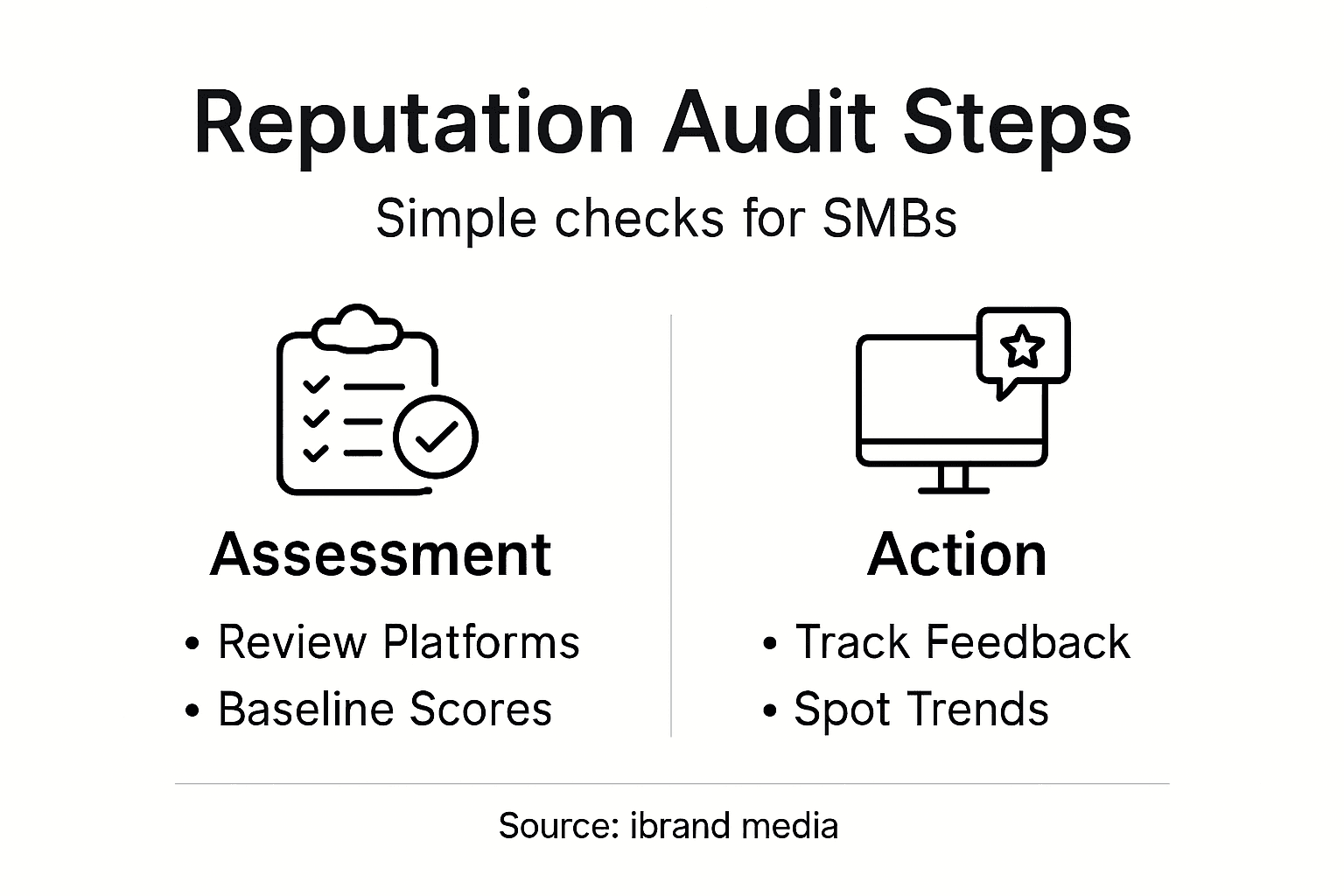
Pro tip: Schedule quarterly reputation audits and create a standardized tracking system to ensure consistent and comprehensive evaluation.
Take Control of Your Online Reputation with Expert Digital Support
Protecting your online business reputation is essential for small to medium-sized businesses facing challenges like negative reviews, scattered feedback, and real-time monitoring needs. This article highlights the importance of systematic reputation audits, proactive monitoring tools, and timely responses that build trust and enhance customer loyalty. If you want to move from simply managing reputation issues to actively promoting positive customer experiences that attract and retain clients, partnering with a specialized agency makes all the difference.
At ibrand.media, we understand how critical reputation management is for small businesses. Our tailored solutions include SEO optimization, social media management, and real-time performance tracking designed to boost your online presence and transform your digital brand perception. Don’t wait for problems to escalate. Start your journey with us today to safeguard and elevate your reputation with personalized strategies that deliver quick and affordable results.
Frequently Asked Questions
How can I assess my SMB’s current online reputation?
Assess your online business reputation by conducting a comprehensive reputation audit. Start by reviewing your business name across search engines, review sites, and social media platforms to identify both positive and negative mentions.
What are effective tools for monitoring my SMB’s online reputation?
Set up proactive monitoring tools such as Google Alerts, social media monitoring platforms, and review site trackers. Choose 2-3 tools that fit your needs and configure custom alerts for your business name to stay informed about mentions in real time.
How quickly should I respond to customer reviews?
Aim to respond to customer reviews within 24-48 hours to demonstrate your commitment to customer care. Personalize your responses and address specific details mentioned in the reviews to foster trust and improve your reputation.
What strategies can I implement to promote positive customer experiences online?
Promote positive customer experiences by creating personalized email communications, sharing customer success stories, and offering responsive support. Focus on engaging with customers at key touchpoints to develop stronger connections and encourage positive feedback.
How often should I conduct reputation audits for my SMB?
Conduct reputation audits quarterly to track your online performance and identify trends. Set specific evaluation criteria and compare your metrics against previous audits to ensure continuous improvement in your digital presence.
Recommended
- Complete Guide to Managing Online Business Reputation | Ibrandmedia
- How to Manage Online Reputation: A 2025 Guide for Local Businesses | Ibrandmedia
- How to Manage Online Reputation: A 2025 Guide for Local Businesses | Ibrandmedia
- Why Is Online Reputation Important for Small Businesses in 2025? | Ibrandmedia
- What Best Practices Should You Follow For Reputation Management In Digital Marketing? – City Web Company | Digital Marketing Agency
Recent Comments