
Feeling drained by endless digital marketing tasks is a familiar struggle for many American small business owners. Burnout goes beyond ordinary exhaustion and is officially recognized by the World Health Organization as an occupational phenomenon, marked by emotional exhaustion, cynicism, and inefficacy. Understanding this deeper reality and its common misconceptions is vital for anyone who wants to build a stronger online presence while protecting their well-being. Discover practical insights to help you stay resilient and effective in managing both business and stress.
Table of Contents
- Defining Business Burnout And Misconceptions
- Common Causes Of Burnout In Small Businesses
- Recognizing Early Signs And Symptoms
- Actionable Prevention Tactics For Owners
- Recovery Strategies And Long-Term Well-Being
Key Takeaways
| Point | Details |
|---|---|
| Understanding Burnout | Business burnout is a complex syndrome characterized by emotional exhaustion, cynicism, and reduced professional efficacy. It is a systemic issue, not just fatigue from long hours. |
| Identifying Causes | Common causes in small businesses include resource constraints, role ambiguity, and lack of support systems, which exacerbate burnout risk. |
| Early Recognition | Entrepreneurs should monitor emotional, physical, and performance signals to detect early signs of burnout for timely intervention. |
| Focus on Prevention | Implementing strategies such as workload management, open communication, and employee support can significantly reduce burnout risk in small business environments. |
Defining Business Burnout And Misconceptions
Business burnout is more complex than simple workplace exhaustion. Recognized by the World Health Organization as an occupational phenomenon, burnout represents a serious psychological state resulting from chronic, unmanaged workplace stress.
Understanding burnout requires recognizing its three core dimensions:
- Emotional Exhaustion: Feeling drained and overwhelmed by work demands
- Cynicism: Developing a detached, negative attitude toward professional responsibilities
- Reduced Professional Efficacy: Experiencing diminished confidence in work performance
Contrary to popular belief, burnout isn’t just about feeling tired. Workplace burnout involves psychological complexity that extends far beyond temporary fatigue. It represents a systemic breakdown in an individual’s relationship with their professional environment.
Common misconceptions about burnout often stem from misunderstanding its multidimensional nature. Many professionals mistakenly believe burnout is:
- Simply a result of working too many hours
- Something that can be solved by taking a short vacation
- Identical to general stress or depression
- A sign of personal weakness
In reality, burnout is a sophisticated syndrome involving intricate psychological mechanisms. It emerges from sustained workplace conditions that consistently outstrip an individual’s adaptive capabilities.
Here’s a summary of common misconceptions versus the realities of business burnout:
| Misconception | Why It Falls Short | The Reality |
|---|---|---|
| Only about long hours | Ignores emotional impact | Chronic stress is the root cause |
| Solved by time off | Overlooks system issues | Needs workplace changes, not just rest |
| Same as depression | Conflates different conditions | Burnout is unique to work context |
| Personal weakness | Blames the individual | Systemic factors drive burnout |
Pro Tip: Recognize burnout early by tracking your emotional responses, energy levels, and professional motivation regularly.
Common Causes Of Burnout In Small Businesses
Small businesses face unique challenges that can rapidly accelerate workplace burnout. Chronic exposure to high job demands creates a perfect storm of psychological and professional strain that overwhelms even the most resilient entrepreneurs.
The primary causes of burnout in small business environments include:
- Resource Constraints: Limited staffing and budget forcing excessive workloads
- Role Ambiguity: Employees wearing multiple hats without clear boundaries
- Economic Uncertainty: Constant pressure to survive and grow
- Lack of Support Systems: Minimal professional development and mentorship
- Inadequate Work-Life Boundaries: Blurred lines between personal and professional time
Economic instability plays a significant role in burnout dynamics. Workplace burnout emerges from persistent stress related to market unpredictability, where small business owners must continuously adapt to changing conditions without traditional corporate safety nets.

Individual psychological factors also contribute substantially. Entrepreneurs with high neuroticism or perfectionist tendencies are more susceptible to burnout, as their internal expectations often exceed realistic performance metrics. This psychological vulnerability combines with external stressors to create a complex burnout ecosystem.
Moreover, small businesses frequently struggle with recognition and reward systems. Without structured career progression or consistent acknowledgment, employees experience diminished motivation and increasing emotional exhaustion. The lack of clear professional development pathways further compounds these challenges.
Pro Tip: Implement monthly check-ins to assess team stress levels and proactively identify potential burnout indicators before they become critical.
Recognizing Early Signs And Symptoms
Burnout can creep up silently, making early detection critical for intervention. Small business owners and entrepreneurs must develop keen awareness of the subtle signals that indicate approaching professional exhaustion.
The most prominent early warning signs of burnout include:
- Emotional Signals:
- Persistent irritability
- Increased cynicism about work
- Feeling emotionally drained
- Physical Indicators:
- Chronic fatigue
- Frequent unexplained illnesses
- Sleep disruptions
- Performance Markers:
- Declining productivity
- Increased procrastination
- Reduced creativity and problem-solving skills
Systematic monitoring reveals complex burnout symptoms that extend beyond simple workplace dissatisfaction. Psychological manifestations often include cognitive difficulties like impaired concentration, memory issues, and an overwhelming sense of detachment from professional responsibilities.
Interestingly, burnout symptoms aren’t uniform across individuals. Some professionals might experience intense physical exhaustion, while others primarily struggle with emotional and mental challenges. Small business owners are particularly vulnerable due to their multifaceted roles and constant pressure to maintain business sustainability.
Psychological research indicates that burnout is not just about feeling tired—it represents a comprehensive breakdown of an individual’s professional resilience. Entrepreneurs should pay special attention to persistent negative thought patterns, loss of enthusiasm, and a growing sense of professional futility.
Pro Tip: Create a weekly self-assessment journal tracking your emotional, physical, and professional well-being to catch burnout indicators early.
Actionable Prevention Tactics For Owners
Balancing job demands with adequate resources represents the cornerstone of burnout prevention for small business owners. Understanding and implementing strategic interventions can transform workplace dynamics and protect both personal and professional well-being.
Effective prevention strategies include:
- Workload Management:
- Implement clear priority systems
- Distribute tasks strategically
- Use time-blocking techniques
- Communication Strategies:
- Hold regular team check-ins
- Encourage open dialogue
- Create transparent feedback mechanisms
- Employee Support:
- Recognize individual contributions
- Provide professional development opportunities
- Foster a collaborative work culture
Workplace strategies emphasize holistic well-being through flexible work arrangements and intentional boundary setting. Small business owners must proactively design environments that support mental health and professional resilience.
Leadership plays a crucial role in burnout prevention. By modeling healthy work behaviors, owners can create organizational cultures that prioritize sustainable performance over unsustainable hustle. This means demonstrating work-life balance, managing personal stress visibly, and showing genuine care for team members’ holistic well-being.
Technology and systematic approaches can also support burnout prevention. Implementing digital tools for workload tracking, establishing clear communication protocols, and creating structured yet flexible work environments can significantly reduce psychological strain.
Pro Tip: Conduct quarterly personal and team burnout assessments to identify and address potential stress points before they escalate.
Recovery Strategies And Long-Term Well-Being
Successful burnout recovery requires multi-level interventions that address physical, emotional, and professional dimensions simultaneously. Small business owners must adopt comprehensive strategies that restore both individual resilience and organizational health.
Key recovery strategies include:
- Physical Recovery:
- Prioritize consistent sleep schedules
- Incorporate regular exercise
- Practice mindfulness and meditation
- Emotional Restoration:
- Seek professional counseling
- Rebuild social connections
- Practice self-compassion
- Professional Rehabilitation:
- Temporarily reduce workload
- Establish clear boundaries
- Redesign work processes
Science-backed recovery techniques emphasize holistic healing that goes beyond temporary fixes. This means creating sustainable lifestyle adjustments that support ongoing mental and professional well-being.
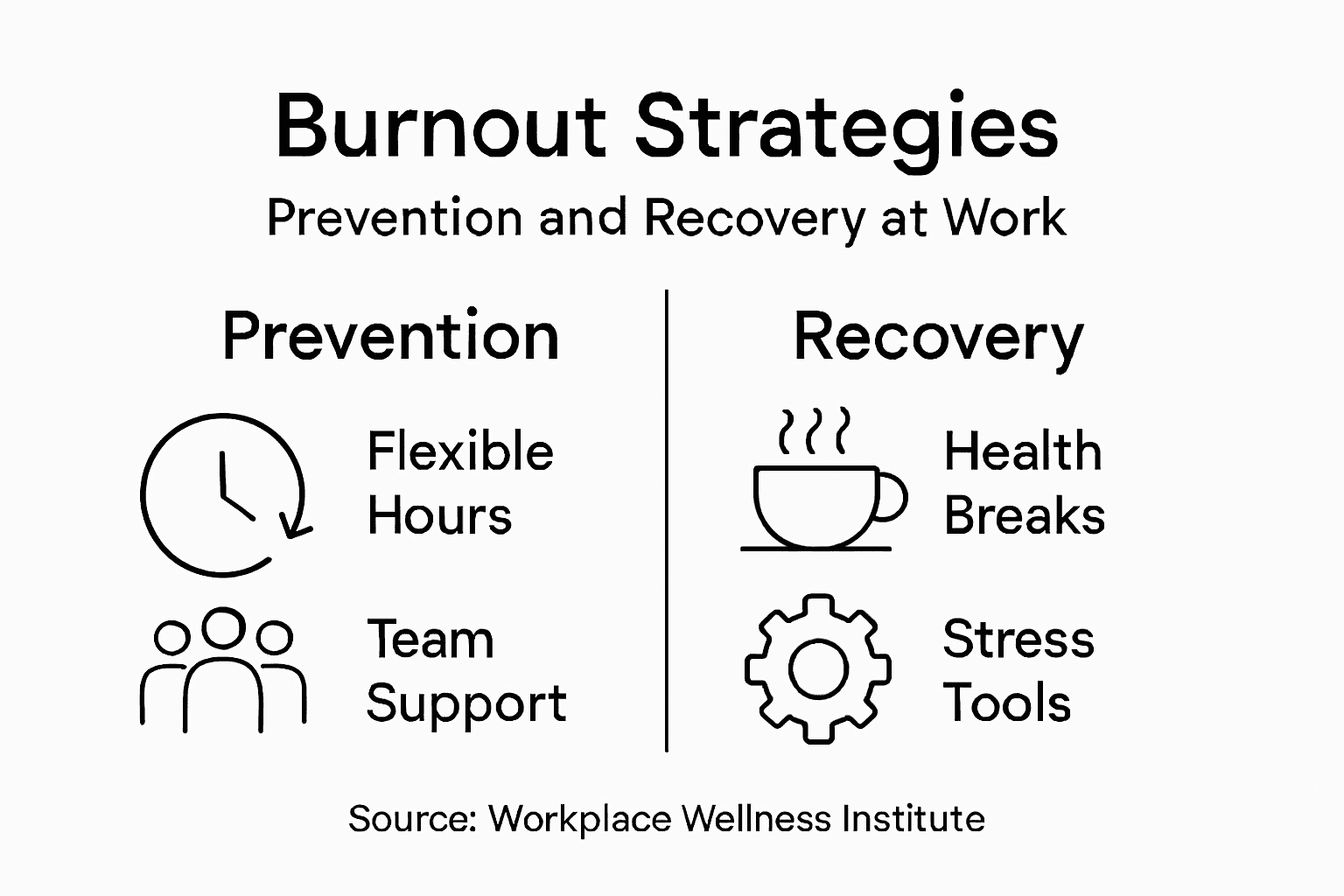
Long-term recovery demands a proactive approach to managing workplace stress. Entrepreneurs must develop resilience frameworks that include regular self-assessment, continuous skill development, and adaptive leadership practices. This involves creating flexible work environments that prioritize psychological safety and individual growth.
Technology and systematic support play crucial roles in sustained recovery. Digital tools for stress tracking, virtual counseling platforms, and automated workload management systems can provide small business owners with real-time insights and support mechanisms to prevent burnout recurrence.
The table below compares prevention and recovery strategies for burnout:
| Approach | Prevention Focus | Recovery Focus | Business Benefit |
|---|---|---|---|
| Workload management | Clear task distribution | Temporary reduction of tasks | Sustains productivity and morale |
| Communication | Regular team check-ins | Rebuilding social support | Promotes trust and engagement |
| Employee support | Professional growth opportunities | Counseling and self-care | Increases retention, well-being |
| Technology tools | Track workload, set boundaries | Monitor and guide recovery | Enables early intervention |
Pro Tip: Develop a personalized recovery dashboard tracking mental, physical, and professional well-being metrics to enable early intervention.
Strengthen Your Business Against Burnout with Tailored Digital Solutions
Burnout can drain your energy, blur work-life boundaries, and hurt your professional productivity. If you are facing role ambiguity, resource constraints, or constant economic pressure, there is a way to regain control. At Ibrandmedia, we understand how critical preventing burnout is to your business success. Our expert team offers customized SEO optimization, targeted local marketing, and efficient social media management designed specifically for small and medium-sized businesses. These services reduce your workload stress while boosting your online presence and sales, allowing you to focus on what matters most.

Discover how strategic digital marketing can serve as a powerful prevention tactic against business burnout. Visit our Uncategorized | Ibrandmedia category to explore insights that complement this approach. Take the first step today by connecting with us at Ibrandmedia for a free consultation. Make burnout recovery part of your business growth plan now.
Frequently Asked Questions
What is business burnout and how is it different from regular stress?
Business burnout is a complex psychological state characterized by emotional exhaustion, cynicism, and diminished professional efficacy, whereas regular stress may not have the same depth of emotional and psychological impact.
What are some common causes of burnout in small businesses?
Common causes include resource constraints, role ambiguity, economic uncertainty, lack of support systems, and inadequate work-life boundaries that can overwhelm employees.
How can I recognize the early signs of burnout in myself or my team?
Early signs of burnout may include persistent irritability, chronic fatigue, sleep disruptions, declining productivity, and an overall sense of detachment from work responsibilities.
What preventive measures can be implemented to avoid burnout in the workplace?
Effective preventive measures include workload management, regular team communication, providing employee support, and using technology to track stress levels and manage tasks efficiently.
Recommended
- 7 Productivity Hacks for Small Business Owners to Boost Results | Ibrandmedia
- 7 Essential Communication Skills for Business Owners | Ibrandmedia
- 7 Essential Networking Tips for Small Business Owners | Ibrandmedia
- 7 Essential Networking Tips for Small Business Growth | Ibrandmedia
- Fifty1 Consulting
- 7 Top Print Marketing Strategies for Business Success
Recent Comments