
Hidden fees drain profits for nearly half of American small businesses, especially those in home services and healthcare. With every unclear contract or unexpected charge, owners face uncertainty that threatens growth and trust. Understanding transparent marketing pricing puts control back in your hands, so you know exactly what you pay for and why it matters for your online presence and sales success.
Table of Contents
- Defining Transparent Marketing Pricing
- Popular Pricing Models For Marketing Services
- How Transparency Builds Client Trust
- Cost Breakdown And Typical Inclusions
- Avoiding Pitfalls And Hidden Fees
Key Takeaways
| Point | Details |
|---|---|
| Transparent Marketing Pricing | Clear communication of pricing helps build trust with clients by eliminating hidden fees and misunderstandings. |
| Effective Pricing Models | Understanding various pricing models, such as cost-plus and value-based, empowers businesses to select strategies that align with client expectations. |
| Building Client Trust | Transparent pricing fosters integrity and professionalism, reducing client anxiety and enhancing long-term relationships. |
| Avoiding Hidden Fees | Requesting detailed contracts and documentation can help businesses avoid unexpected costs and financial pitfalls in marketing services. |
Defining Transparent Marketing Pricing
Transparent marketing pricing represents a strategic approach where businesses clearly communicate their costs, fees, and pricing structures to potential clients. Pricing transparency is more than just listing numbers – it’s about creating an open, trustworthy relationship between service providers and customers.
At its core, transparent pricing means eliminating hidden fees, providing detailed breakdowns of services, and ensuring clients understand exactly what they are paying for. This approach goes beyond simple cost disclosure, focusing on building trust through clear, upfront communication about pricing inputs, potential additional expenses, and the value clients will receive. By removing ambiguity, businesses can help clients make more informed decisions and reduce potential frustration or misunderstandings.
Effective transparent pricing typically involves several key elements: itemized service lists, clear rate explanations, potential variable cost indicators, and easy-to-understand documentation. Small business owners, particularly in service industries like home services and healthcare, benefit significantly from this approach. Transparent pricing models enable clients to compare services more accurately, understand the value proposition, and feel more confident in their purchasing decisions.
Pro tip: Create a standardized pricing worksheet that breaks down every potential service cost, helping potential clients understand exactly what they will pay before making a commitment.
Popular Pricing Models for Marketing Services
Marketing services encompass diverse pricing strategies that help businesses effectively communicate their value proposition to potential clients. Strategic pricing approaches typically fall into several core categories that small businesses can leverage to meet their specific marketing needs.
The most common pricing models include cost-based pricing, where services are priced according to direct expenses plus a predetermined profit margin, and value-based pricing, which sets rates based on the perceived value delivered to clients. Cost-plus pricing remains popular among small businesses, allowing them to ensure basic expenses are covered while generating a consistent profit. Value-based pricing, in contrast, enables marketing agencies to charge premium rates when demonstrating clear, measurable outcomes for clients.
Unified pricing frameworks also introduce more nuanced approaches like performance-based pricing and subscription models. Performance-based pricing ties compensation directly to achieving specific marketing goals, such as lead generation or conversion rates. Subscription models provide clients with predictable monthly services at a fixed rate, which can be particularly attractive for businesses seeking consistent marketing support without variable costs. Small service businesses in home services and healthcare can especially benefit from these flexible pricing structures that align service delivery with client expectations.
Pro tip: Develop a transparent pricing calculator that allows potential clients to estimate costs based on their specific service requirements, helping them understand the value and breakdown of your marketing services.
Here’s how popular marketing service pricing models differ:
| Pricing Model | Best For | Payment Basis | Client Benefit |
|---|---|---|---|
| Cost-plus | Budget-conscious clients | Fixed plus margin | Predictable, covers expenses |
| Value-based | Outcome-focused projects | Perceived client value | Higher ROI opportunity |
| Performance-based | Goal-driven campaigns | Goal or metric achieved | Pay for results only |
| Subscription/Retainer | Ongoing support needs | Monthly/yearly flat fee | Consistent services, easy budget |
How Transparency Builds Client Trust
Client trust represents the foundational element of successful business relationships, particularly in marketing services where perceived value directly impacts purchasing decisions. Transparent pricing policies fundamentally transform how potential customers view and interact with businesses by eliminating uncertainty and demonstrating genuine commitment to fairness.
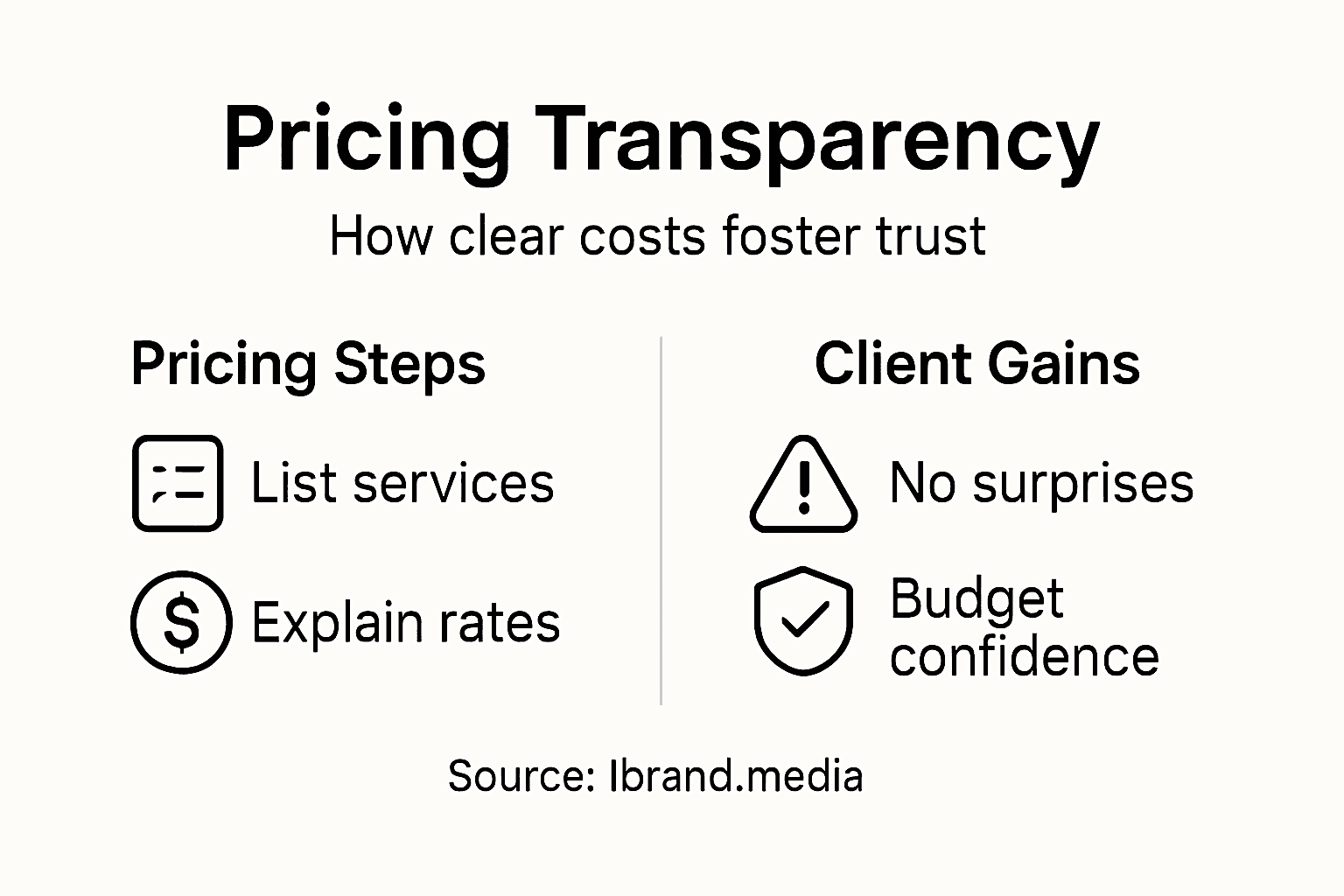
The psychological impact of pricing transparency cannot be overstated. When businesses provide clear, upfront cost breakdowns, they signal integrity and professionalism. Honest communication about pricing helps reduce client anxiety, eliminate potential misunderstandings, and create a sense of partnership. Small businesses in service industries like home services and healthcare can particularly benefit from this approach, as clients often feel vulnerable when making purchasing decisions about complex services.
Marketing transparency principles extend beyond simple price listing. They involve comprehensive disclosure of service expectations, potential additional costs, and realistic outcomes. By proactively sharing information, businesses build credibility and differentiate themselves from competitors who might use obscure pricing strategies. This approach transforms transactional interactions into trust-based relationships, where clients feel informed, respected, and confident in their choices.
Pro tip: Create a detailed pricing document that not only lists costs but explains the value behind each service, helping clients understand exactly what they’re paying for and why.
Cost Breakdown and Typical Inclusions
Marketing service pricing typically involves a complex mix of components that small businesses need to understand before investing. Digital marketing services generally break down into several core cost categories that reflect the complexity and resources required to deliver effective promotional strategies.
A standard marketing service cost breakdown usually includes several key elements. Core service fees encompass fundamental activities like strategy development, content creation, and campaign management. Additional line items might include platform-specific expenses such as ad spend, graphic design costs, analytics tracking, and reporting. Small businesses in home services and healthcare should anticipate variable pricing based on project complexity, with most agencies offering tiered packages ranging from basic foundational services to comprehensive, fully managed marketing programs.
Pricing structures often include both fixed and variable components to provide flexibility for different client needs. Typical inclusions might range from monthly retainer fees for ongoing support to project-based pricing for specific marketing initiatives. Clients should expect transparent documentation that clearly outlines what services are covered, potential additional costs, and expected deliverables. This approach ensures businesses can budget effectively and understand exactly what they’re purchasing.

Pro tip: Request a detailed service breakdown from potential marketing providers, ensuring each line item is clearly explained and includes specific deliverables to avoid unexpected expenses.
Use this reference to identify common marketing service cost components:
| Cost Component | Typical Example | Impact on Budget |
|---|---|---|
| Core Service Fees | Strategy, content creation | Foundation of overall pricing |
| Platform Expenses | Ad spend, software fees | May fluctuate monthly |
| Design/Revision Fees | Custom graphics, edits | Can add up with changes |
| Analytics/Reporting | Data tracking, reports | Recurring, may be extra |
| Additional Services | Rush jobs, extra consulting | Often not in base package |
Avoiding Pitfalls and Hidden Fees
Marketing service contracts often become minefields of unexpected expenses for small businesses, making transparent pricing strategies critically important for protecting financial interests. Understanding potential fee structures and common pricing traps can help businesses navigate marketing investments more confidently.
Common hidden fee categories that small businesses should watch for include setup charges, platform fees, additional consultation hours, rush delivery fees, and reporting expenses. Variable cost components can quickly escalate project budgets if not carefully negotiated upfront. Service providers might include charges for graphic design revisions, stock image purchases, analytics tracking, or specialized software subscriptions. Home service and healthcare businesses should request comprehensive documentation that explicitly lists all potential additional costs before signing any marketing service agreement.
Pricing policy mechanisms recommend several defensive strategies for protecting against unexpected expenses. Businesses should request detailed contracts with fixed-rate provisions, negotiate caps on variable expenses, and establish clear communication protocols about potential additional charges. Requesting itemized estimates, understanding billing cycles, and establishing written agreements about scope changes can significantly reduce financial uncertainty and prevent budget overruns.
Pro tip: Request a written cost guarantee that outlines exact pricing, specifies maximum allowable overages, and includes penalties if the marketing agency introduces undisclosed fees.
Discover Clear and Honest Marketing Pricing with Ibrand.media
Understanding transparent marketing pricing is key to building trust and making confident decisions for your business growth. If you are seeking to avoid hidden fees and want a clear cost breakdown that matches your goals, Ibrand.media offers tailored digital marketing solutions designed specifically for small to medium-sized businesses. Our approach embraces the very principles of transparency and value-based pricing highlighted in the article.
Take control of your marketing budget with Ibrand.media’s affordable, upfront pricing plans that cover SEO optimization, social media management, local marketing, and more. Visit our Uncategorized | Ibrandmedia page to explore how we provide clear cost estimates and real-time performance tracking. Ready to see how transparent marketing pricing works in practice? Reach out now at https://ibrand.media and start a personalized plan built on trust and measurable results.
Frequently Asked Questions
What is transparent marketing pricing?
Transparent marketing pricing is a strategy where businesses openly communicate their costs, fees, and pricing structures to clients, ensuring there are no hidden fees or surprises.
Why is transparent pricing important for small businesses?
Transparent pricing helps build trust with clients, reduces misunderstandings, and allows clients to make informed decisions about their marketing investments.
What are common pricing models used in marketing services?
Common pricing models include cost-plus pricing, value-based pricing, performance-based pricing, and subscription models, each catering to different client needs and project types.
How can businesses avoid hidden fees in marketing agreements?
To avoid hidden fees, businesses should request detailed contracts, negotiate fixed-rate provisions, and seek itemized estimates that clearly outline all potential costs before committing to a marketing service.
Recommended
- Choosing a Marketing Agency in 2025: A Small Business Guide | Ibrandmedia
- Understanding Balancing Promotion and Value Online | Ibrandmedia
- Choosing a Marketing Agency in 2025: A Small Business Guide | Ibrandmedia
- Affordable Digital Marketing for Small Businesses in 2025 | Ibrandmedia
- Instagram DMs: Complete Guide to Monetizing Conversations
Recent Comments