
Over eighty percent of American businesses acknowledge that online visibility now determines long-term success. Consumers expect instant access to reliable information before making purchasing decisions, putting pressure on companies to stand out in a crowded digital marketplace. Understanding what online visibility really means and how it shapes business growth can help you develop smarter strategies that attract genuine attention and build lasting trust.
Table of Contents
- Defining Online Visibility For Businesses
- Next Steps: Enhancing Business Visibility Online
- Major Types And Channels Explained
- Understanding Channel Dynamics
- How Search Engines And Social Media Impact Visibility
- Navigating Digital Visibility Strategies
- Key Metrics And Tools For Tracking Success
- Navigating Digital Performance Analysis
- Costs, Risks, And Common Pitfalls For SMBs
- Strategic Digital Marketing For SMBs
Key Takeaways
| Point | Details |
|---|---|
| Importance of Online Visibility | A strong online presence is essential for businesses to attract and retain customers and remains pivotal for growth in competitive markets. |
| Channel Strategy | Integrating multiple digital channels such as SEO, social media, and content marketing maximizes visibility and enhances customer engagement. |
| Metrics for Success | Tracking key metrics like organic search rankings and engagement rates is crucial for refining digital strategies and measuring effectiveness. |
| Budget Management | Small businesses should focus on low-cost, high-impact digital marketing strategies and continuously measure their performance to optimize spending. |
Defining Online Visibility for Businesses
Online visibility represents a business’s digital footprint and accessibility across internet platforms, determining how easily potential customers can discover, interact with, and understand a company’s offerings. A systematic literature review analyzing digital business presence revealed significant complexity in defining and measuring online visibility, highlighting the nuanced nature of digital representation.
At its core, online visibility encompasses multiple strategic elements: search engine rankings, social media presence, website performance, digital content quality, and customer engagement metrics. Businesses cannot simply exist online – they must actively cultivate a compelling digital identity that attracts and retains customer attention. This means creating targeted content, maintaining consistent branding across platforms, and developing a responsive digital ecosystem that communicates value propositions effectively.
The digital landscape has transformed online visibility from a marketing advantage to a fundamental business necessity. Contemporary research explores how online visibility generates a new form of symbolic digital capital, suggesting that a strategic digital presence directly correlates with business credibility, customer trust, and potential revenue generation. Modern consumers expect instantaneous, comprehensive information about businesses, making robust online visibility critical for survival and growth in competitive markets.
Pro Tip: Digital Visibility Strategy: Conduct a comprehensive audit of your current online presence every six months, analyzing website traffic, social media engagement, and search engine rankings to identify and address potential visibility gaps.
Next Steps: Enhancing Business Visibility Online
Transitioning from understanding online visibility to actively improving it requires strategic planning and consistent execution. In the following sections, we will explore practical techniques for boosting your digital footprint and transforming online presence into a powerful business growth engine.
Major Types and Channels Explained
Businesses today must strategically leverage multiple digital channels to maximize their online visibility and reach potential customers effectively. Digital marketing encompasses a diverse range of strategic communication platforms that enable companies to connect with their target audiences through varied interactive touchpoints. These channels are not standalone entities but interconnected strategies designed to create a comprehensive online presence.

The primary types of online visibility channels include search engine marketing, social media marketing, content marketing, email marketing, and paid digital advertising. Search engine marketing focuses on improving website rankings and visibility through organic search optimization and targeted advertising. Social media marketing leverages platforms like Facebook, Instagram, LinkedIn, and Twitter to build brand awareness, engage directly with customers, and create shareable content that expands digital reach. Multichannel marketing strategies blend different distribution and promotional approaches to create a seamless and integrated customer experience across digital platforms.
Each digital channel offers unique advantages and requires specialized strategies. Search engine optimization (SEO) helps businesses appear prominently in search results, while social media marketing builds community and brand loyalty. Content marketing establishes thought leadership through blogs, videos, and informative resources. Email marketing provides direct communication with potential and existing customers, and paid digital advertising allows precise targeting and immediate visibility. The most successful businesses integrate these channels strategically, ensuring consistent messaging and a cohesive digital brand identity.
Here’s a comparison of major online visibility channels and their business benefits:
| Channel | Primary Purpose | Typical Business Benefit |
|---|---|---|
| Search Engine Marketing | Improve site ranking and traffic | Increases discoverability and leads |
| Social Media Marketing | Engage audience and share content | Builds brand loyalty and awareness |
| Content Marketing | Provide informational resources | Establishes authority and trust |
| Email Marketing | Direct communication with users | Drives conversions and retention |
| Paid Digital Advertising | Targeted promotion and reach | Generates immediate visibility |
Pro Tip: Channel Integration Strategy: Develop a unified content calendar that synchronizes messaging across different digital platforms, ensuring consistent brand voice and maximizing cross-channel engagement potential.
Understanding Channel Dynamics
Successful online visibility requires understanding the unique dynamics and audience preferences of each digital marketing channel, enabling businesses to create targeted, effective communication strategies.
How Search Engines and Social Media Impact Visibility
Search engines and social media platforms have become the primary gateway for businesses to connect with potential customers, fundamentally transforming how companies establish and maintain their online presence. Research on online visibility reveals intricate strategies for improving search engine indexing, highlighting the critical importance of creating semantically aligned content that resonates with both algorithmic requirements and user search intent.
Search engine optimization (SEO) represents the cornerstone of digital visibility, with businesses competing to achieve higher rankings through strategic content creation, keyword optimization, and technical website performance. Social media platforms extend this visibility by providing dynamic channels for direct audience engagement, brand storytelling, and content distribution. Nonprofit online publications demonstrate how targeted SEO techniques can dramatically enhance digital presence, proving that intelligent content strategies can level the playing field for businesses with limited marketing budgets.
The interplay between search engines and social media creates a complex ecosystem of digital visibility. Search engine algorithms increasingly consider social signals such as shares, likes, and user interactions when determining content relevance and ranking. Businesses must therefore develop a holistic approach that simultaneously optimizes website content for search engines while creating compelling, shareable social media content. This means crafting high-quality, relevant content that not only answers user queries but also encourages social engagement and builds meaningful online communities.
Pro Tip: Visibility Synchronization Strategy: Develop content that is simultaneously optimized for search engine algorithms and designed to generate social media engagement, creating a powerful multiplier effect for your online presence.
Navigating Digital Visibility Strategies
Successful online visibility requires a nuanced understanding of how search engines and social media platforms interact, demanding continuous learning and adaptive digital marketing strategies.
Key Metrics and Tools for Tracking Success
Tracking online visibility requires a comprehensive approach that goes beyond surface-level analytics. Advanced e-service quality models provide sophisticated frameworks for evaluating digital performance, encompassing critical dimensions such as reliability, security, user experience, and overall effectiveness. These metrics transform raw data into actionable insights that businesses can use to refine their digital strategies.
Digital performance metrics are categorized into several key areas: traffic analytics, engagement rates, conversion metrics, and brand visibility indicators. Web analytics tools like Google Analytics and specialized platforms enable businesses to track website visitors, page views, bounce rates, and user behavior patterns. Social media platforms offer native analytics that reveal audience demographics, content performance, and engagement levels. Comprehensive e-visibility maturity models help businesses benchmark their online presence, providing a structured approach to understanding and improving digital performance.
The most critical metrics for online visibility include organic search rankings, website traffic sources, conversion rates, social media reach, and customer interaction indicators. Businesses should focus on metrics that directly correlate with their specific goals, such as lead generation, brand awareness, or direct sales. Advanced tracking tools now offer real-time dashboards that integrate multiple data sources, allowing businesses to create a holistic view of their digital performance and make data-driven decisions quickly and efficiently.
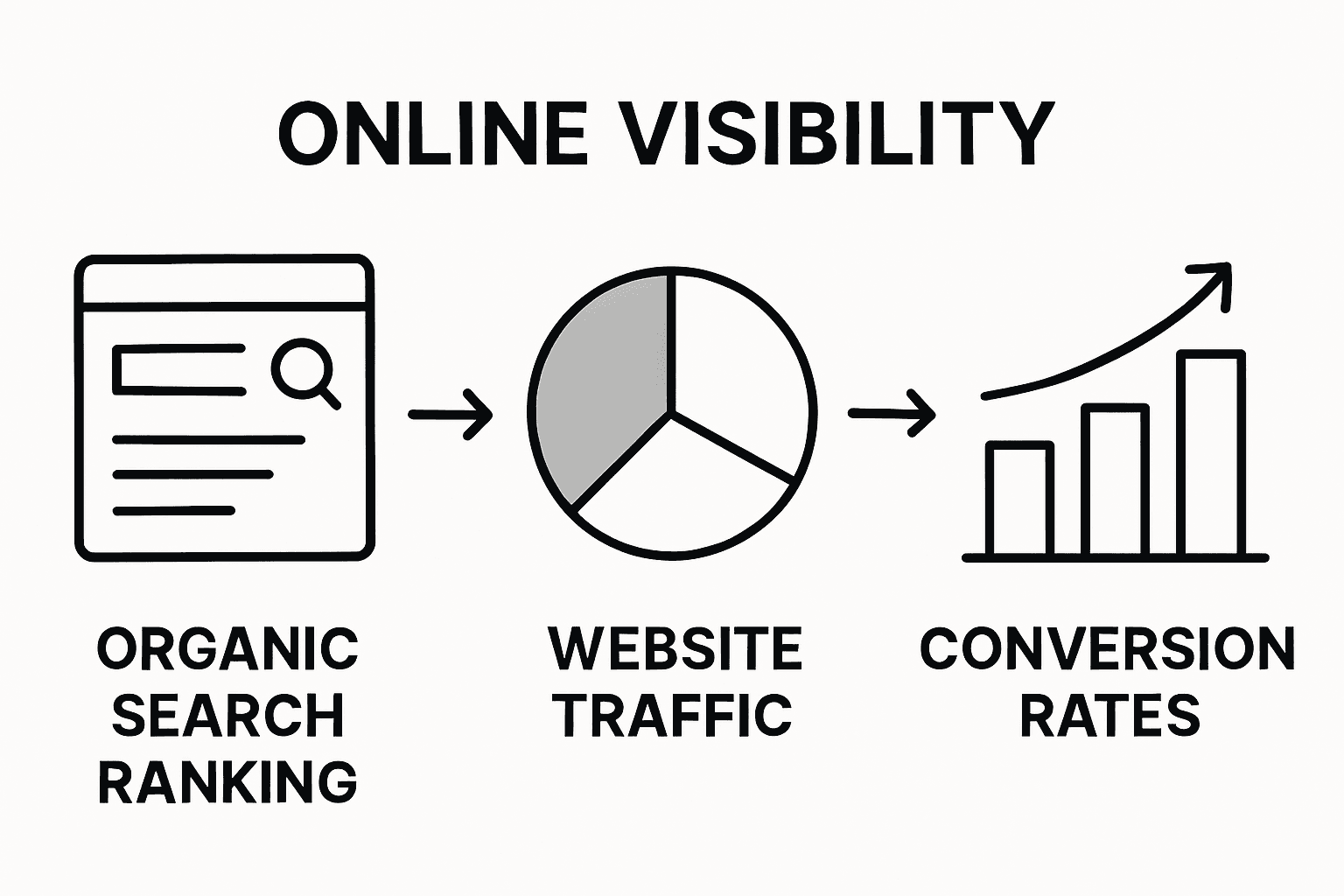
Below is a summary of key metrics for tracking online visibility and their strategic importance:
| Metric | What It Measures | Why It Matters |
|---|---|---|
| Organic Search Ranking | Page position in search | Indicates SEO effectiveness |
| Website Traffic Source | Origin of site visitors | Reveals effective channels |
| Conversion Rate | Visitors to customers ratio | Measures marketing success |
| Social Media Reach | Content exposure on platforms | Assesses audience growth |
| Engagement Rate | User interactions | Gauges content relevance |
Pro Tip: Metric Prioritization Strategy: Select 3-5 key performance indicators that directly align with your business objectives, and create a monthly review process to track progress and adjust your digital marketing approach accordingly.
Navigating Digital Performance Analysis
Successful online visibility requires a strategic approach to measuring and interpreting digital performance metrics, transforming raw data into meaningful business insights.
Costs, Risks, and Common Pitfalls for SMBs
Digital marketing challenges for small businesses reveal complex obstacles that extend far beyond simple financial investments. Small and medium-sized businesses frequently encounter significant barriers including limited digital literacy, restricted budgets, and insufficient understanding of online marketing strategies. These challenges can transform digital marketing from a potential growth opportunity into a potentially expensive and frustrating endeavor.
The primary financial risks associated with online visibility include unexpected marketing expenses, technology investments, and potential ineffective spending. Small businesses often struggle with allocating limited resources across multiple digital channels, leading to scattered and inefficient marketing approaches. Typical pitfalls include overspending on ineffective advertising, failing to target the right audience, and neglecting critical elements like website optimization and consistent content strategy. Research demonstrates the crucial impact of online presence on business sustainability, underscoring the importance of strategic digital investment.
Successful online visibility requires small businesses to navigate complex technological and strategic challenges. Common mistakes include attempting to be present on every digital platform, ignoring analytics and performance metrics, and failing to adapt strategies based on real-world data. Businesses must develop a nuanced approach that balances financial constraints with strategic digital marketing investments, focusing on targeted, measurable, and cost-effective online visibility techniques.
Pro Tip: Budget Optimization Strategy: Allocate your digital marketing budget incrementally, starting with low-cost, high-impact strategies like local SEO and targeted social media advertising, and continuously measure and adjust your approach based on actual performance metrics.
Strategic Digital Marketing for SMBs
Navigating the digital marketing landscape requires small businesses to be strategic, adaptable, and focused on measurable outcomes that directly support business growth.
Boost Your Online Visibility and Drive Business Growth Today
Struggling to stand out in a crowded digital market is a common challenge for small to medium-sized businesses. This article highlights the critical importance of strategic online visibility, covering everything from SEO and social media engagement to tracking key performance metrics. If you want to overcome these hurdles and build a strong digital presence that attracts and converts customers, specialized guidance is essential.
At ibrand.media, we understand the unique pain points of limited budgets, complex digital ecosystems, and the need for measurable results. Our tailored services include SEO optimization, local marketing, social media management, and real-time tracking so your business gains the online visibility it deserves. Explore our insights in the Uncategorized category to see how we combine proven strategies with personalized digital marketing plans. Take the first step toward transforming your online presence and boosting sales by visiting ibrand.media now. Act today to unlock the power of effective digital marketing and accelerate your business growth.
Frequently Asked Questions
What is online visibility and why is it important for businesses?
Online visibility refers to a business’s digital footprint and accessibility across internet platforms. It is crucial for businesses because it determines how easily potential customers can discover, interact with, and understand a company’s offerings, thereby impacting customer trust and revenue generation.
How can businesses improve their online visibility?
Businesses can improve their online visibility through strategic practices such as search engine optimization (SEO), engaging in social media marketing, creating high-quality content, and maintaining consistent branding across platforms. Conducting regular audits of their online presence can also help identify and address visibility gaps.
What are the key digital marketing channels to enhance online visibility?
The primary channels include search engine marketing, social media marketing, content marketing, email marketing, and paid digital advertising. Each channel has specific strategies that can be integrated to maximize a business’s overall digital presence.
What metrics should businesses track to measure online visibility success?
Businesses should focus on several key metrics including organic search rankings, website traffic sources, conversion rates, social media reach, and engagement rates. These metrics provide insights into the effectiveness of digital strategies and help businesses make data-driven decisions.
Recent Comments