
Most American small businesses underestimate the impact of thorough On-Page SEO, yet studies show that companies with strong digital strategies see up to 30 percent higher growth. In a crowded online marketplace, simply having a website is not enough for local visibility or customer reach. Understanding the essentials of On-Page SEO can help business owners attract more visitors and stand out against larger national competitors.
Table of Contents
- Defining On-Page SEO for Small Businesses
- Core Elements Impacting Search Rankings
- Optimizing Content for User Intent
- Mobile Responsiveness and Site Performance
- Common On-Page SEO Mistakes to Avoid
Key Takeaways
| Point | Details |
|---|---|
| On-Page SEO Definition | On-Page SEO involves optimizing website elements to enhance search engine rankings and attract local customers through targeted strategies. |
| Core Elements for Rankings | Successful rankings depend on content relevance, technical performance, user experience, and effective metadata. |
| Mobile Responsiveness | A mobile-responsive website is essential as over 60% of web traffic comes from mobile devices, impacting user engagement and search visibility. |
| Common Mistakes to Avoid | Small businesses should avoid keyword stuffing, duplicate content, and poor metadata, which can negatively affect their online presence. |
Defining On-Page SEO for Small Businesses
On-Page SEO represents the strategic optimization of website elements to improve search engine rankings and attract targeted local customers. For small businesses, this means carefully crafting digital content that speaks directly to potential clients while meeting search engine algorithmic requirements.
At its core, On-Page SEO involves optimizing individual web pages through precise technical and content strategies. Small business managers can leverage strategic website features to create digital experiences that attract and engage consumers more effectively. These strategies include:
- Keyword optimization within page titles and headings
- Creating high-quality, relevant content
- Improving website loading speed
- Ensuring mobile responsiveness
- Using descriptive image alt text
The significance of these efforts cannot be overstated. Research indicates that small and medium-sized enterprises investing in SEO activities experience substantially higher growth compared to businesses with minimal digital optimization. By understanding and implementing targeted On-Page SEO techniques, local businesses can significantly improve their online visibility and customer acquisition potential.
Successful On-Page SEO isn’t about tricking search engines but creating genuine value for potential customers. It requires a holistic approach that balances technical optimization with meaningful, user-focused content that addresses specific customer needs and search intentions.
Core Elements Impacting Search Rankings
Search rankings are determined by a complex interplay of technical, content, and user engagement factors that search engines meticulously evaluate. Small businesses must understand these critical elements to improve their online visibility and attract targeted web traffic.
Search Engine Results Page (SERP) features significantly influence organic click-through rates, with key elements including knowledge panels, media galleries, and rich snippets that capture user attention. Professional SEO strategies focus on optimizing these core ranking components:
- Content Relevance: High-quality, original content matching user search intent
- Technical Performance: Website speed, mobile responsiveness, secure connections
- User Experience: Low bounce rates, longer site engagement, intuitive navigation
- Metadata Optimization: Strategic title tags, meta descriptions, header tags
- Link Signals: Quality backlinks, internal linking structure
SEO experts consistently highlight that on-page elements and organic user behavior remain the most influential ranking factors. This means businesses must create content that not only includes strategic keywords but genuinely answers user questions and provides valuable information.

Successful search ranking requires a holistic approach that balances technical optimization with authentic, user-focused content. By understanding and implementing these core elements, small businesses can improve their search visibility, attract more qualified leads, and compete effectively in their digital marketplace.
Optimizing Content for User Intent
Understanding and addressing user intent is the cornerstone of effective content strategy for small businesses seeking to improve their online visibility. Content optimization goes far beyond simply inserting keywords – it requires a deep comprehension of what potential customers are truly seeking when they conduct online searches.
Successful content creation begins with comprehensive keyword research that reveals the underlying motivations behind search queries. Content marketing strategies must align with four primary user intent categories:
- Informational Intent: Users seeking answers or knowledge
- Navigational Intent: Searching for a specific website or page
- Commercial Intent: Researching products or services before purchasing
- Transactional Intent: Ready to make a purchase or take action
Local businesses must craft content that directly addresses these specific intent types, creating targeted material that speaks precisely to customer needs. This means developing nuanced, contextually rich content that anticipates and answers potential questions before customers even ask them.
The most effective content strategies transform user intent into a powerful connection. By understanding the psychological triggers behind search behavior, small businesses can create compelling, relevant content that not only ranks well in search results but also genuinely serves their target audience’s needs. This approach transforms SEO from a technical exercise into a meaningful conversation with potential customers.
Mobile Responsiveness and Site Performance
In today’s digital landscape, mobile responsiveness is no longer optional for small businesses – it’s a critical requirement for online success. With over 60% of web traffic now coming from mobile devices, websites must deliver seamless experiences across smartphones, tablets, and desktop platforms.
Page load speed plays a crucial role in user experience and search rankings, making optimization a top priority for local businesses. Key strategies for improving mobile performance include:
- Responsive Design: Automatically adapting layout to different screen sizes
- Image Optimization: Compressing visual content without sacrificing quality
- Code Minimization: Reducing unnecessary JavaScript and CSS
- Caching Techniques: Storing frequently accessed website elements
- Mobile-First Indexing: Prioritizing mobile version for search ranking
Technical performance directly impacts user engagement and search visibility. Websites that load quickly and display correctly on mobile devices are more likely to retain visitors, reduce bounce rates, and achieve higher search engine rankings. Small businesses must view mobile optimization as an ongoing process, continuously testing and improving their digital presence.
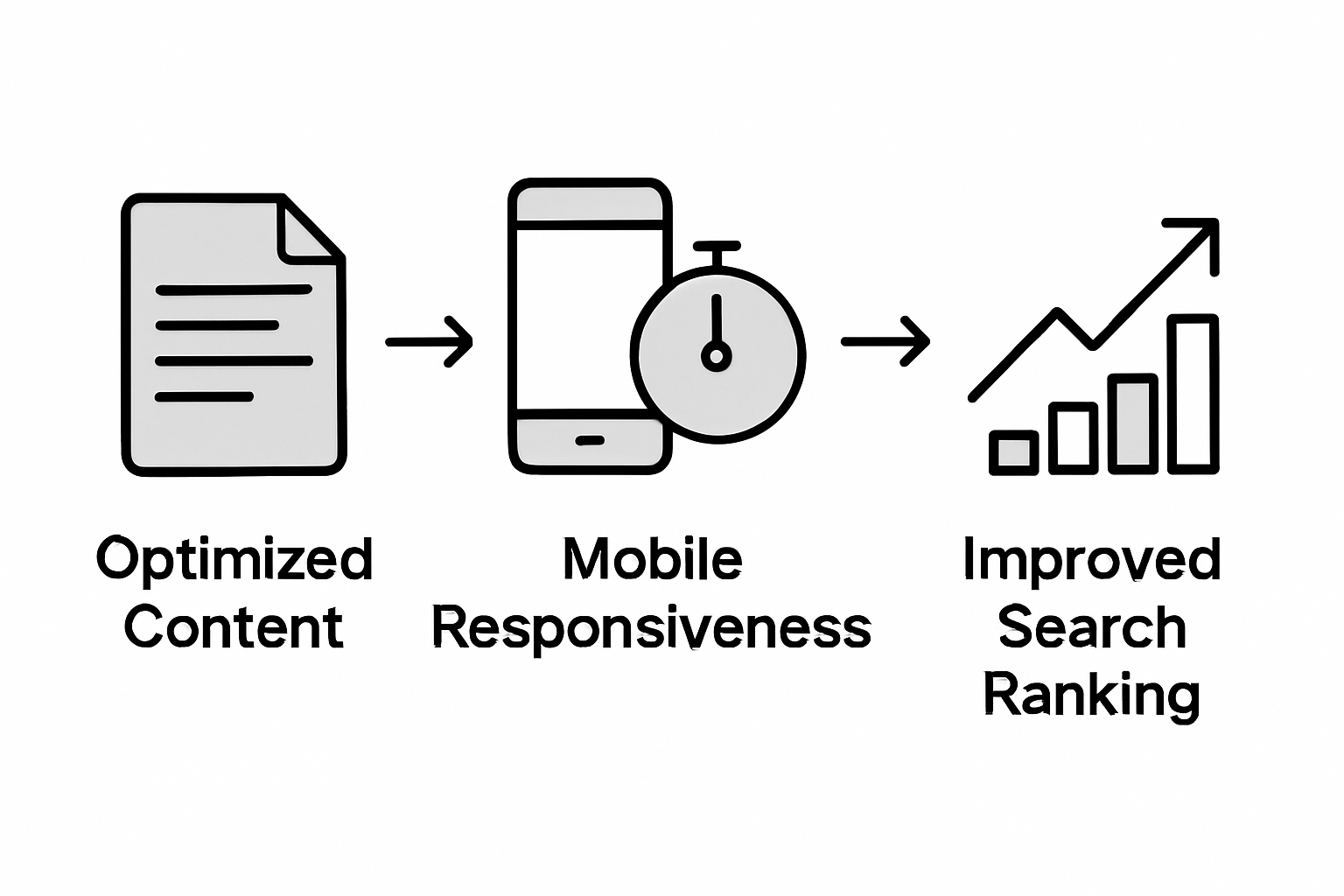
Successful mobile responsiveness transforms websites from static information platforms into dynamic, user-friendly experiences. By prioritizing speed, accessibility, and seamless design, local businesses can create digital destinations that not only attract customers but also keep them engaged and coming back for more.
Common On-Page SEO Mistakes to Avoid
Navigating the complex world of SEO requires small businesses to understand and avoid critical pitfalls that can dramatically undermine their online visibility. Many local businesses inadvertently sabotage their search rankings by implementing outdated or unethical optimization strategies that can harm their digital presence.
Search engine algorithms penalize websites employing manipulative techniques such as keyword stuffing, duplicate content, and unnatural link building. The most common on-page SEO mistakes that small businesses must avoid include:
- Keyword Stuffing: Overloading content with repetitive keywords
- Duplicate Content: Copying text across multiple pages
- Ignoring Mobile Optimization: Failing to create responsive designs
- Slow Page Load Times: Neglecting website performance
- Poor Metadata: Using generic or missing title tags and descriptions
- Inconsistent NAP Information: Varying business name, address, phone details
Successful SEO demands a strategic, ethical approach that prioritizes genuine value for users over quick ranking tricks. Small businesses must continuously audit their websites, ensuring content remains original, relevant, and genuinely helpful to potential customers.
The most effective SEO strategy focuses on creating high-quality, user-centric content that naturally addresses customer needs. By avoiding these common mistakes and maintaining a commitment to authentic, valuable online experiences, local businesses can build sustainable digital visibility that attracts and retains customers.
Boost Your Local Business with Expert On-Page SEO Solutions
Struggling to improve your website’s search rankings or attract the right local customers? The article “On-Page SEO Explained: Driving Local Business Results” highlights key challenges such as keyword optimization, mobile responsiveness, and crafting content that aligns with user intent. These pain points can hold back your business growth in a competitive online marketplace. At ibrand.media, we specialize in turning these challenges into opportunities with tailored SEO strategies that boost visibility and drive real results.
Ready to transform your website into a powerful local marketing tool? Explore our proven digital marketing services on the Uncategorized | Ibrandmedia page and learn how we can help you implement effective on-page SEO techniques that improve site speed, enhance user experience, and generate qualified leads. Don’t let common SEO mistakes stall your growth when expert help is just a click away at https://ibrand.media. Take control of your online presence now and watch your local business thrive.
Frequently Asked Questions
What is On-Page SEO?
On-Page SEO involves optimizing individual web pages to improve search engine rankings and attract targeted traffic. It includes strategies like keyword optimization, creating quality content, and enhancing user experience.
How can small businesses optimize their website for local search?
Small businesses can optimize their website by focusing on high-quality, relevant content, optimizing meta tags, ensuring mobile responsiveness, and improving page load speed. This creates a better user experience and helps attract local customers.
What are common mistakes to avoid in On-Page SEO?
Common mistakes include keyword stuffing, duplicate content, neglecting mobile optimization, and poor metadata. These practices can negatively impact search rankings and user engagement.
Why is mobile responsiveness important for On-Page SEO?
Mobile responsiveness is crucial because over 60% of web traffic comes from mobile devices. A responsive design ensures a seamless user experience, which can lead to lower bounce rates and improved search rankings.
Recommended
- Top SEO Techniques for Small Business Owners in 2025 | Ibrandmedia
- Understanding the Benefits of Local SEO for Small Businesses | Ibrandmedia
- Understanding Local SEO Ranking Factors for Businesses | Ibrandmedia
- Local SEO: Everything You Need to Know | Ibrandmedia
- Suchmaschinenoptimierung/SEO Rosenheim
Recent Comments